

The United Nations Office at Geneva
Multimedia Newsroom
Lebanon: The UN peacekeepers helping communities who’ve stayed behind
The killing of three UN peacekeepers in south Lebanon in the past two days has highlighted the grave dangers for the 10,000 military personnel who make up the bulk of UNIFIL, the UN Interim Force in Lebanon – and for the communities caught up in intense clashes between the Israeli military and Hezbollah fighters.
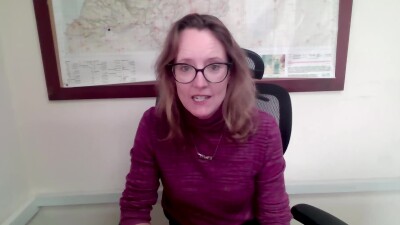
“It's extremely volatile, extremely dangerous, and you know, we see the situation for us as peacekeepers, also for the civilians who remain in certain areas, because there are civilians who have chosen to stay and peacekeepers are supporting them in any way that we can,” said UNIFIL spokesperson Kandice Ardiel.
This help involves coordinating and delivering humanitarian aid, she explained, speaking from the force’s headquarters in Naqoura, southwest Lebanon.
Peacekeepers have also assisted in relocating civilians to safer areas upon request and continue to conduct patrols to monitor the situation and provide reassurance to those who remain.
Battleground
During our interview with Ms. Ardiel, gunfire could be heard in the background.
An estimated 2,000 villagers still live close to the Blue Line that separates Israel from Lebanon.
“These villages are obviously in a very difficult position. They're increasingly cut off from the rest of Lebanon, and they're having a hard time getting supplies,” Ms. Ardiel explained. “So, there are agencies that are helping to bring food, medicine, and hygiene supplies to them in the south, and UNIFIL is helping to coordinate their movements to ensure that they can safely get to the places where they need to go.”
In addition to recording rocket and missile fire across the Blue Line, the UN mission has reported Israeli troop movements in southern Lebanon and frequent violations of UN Security Council Resolution 1701 – a critical UN Security Council text adopted in 2006 that calls for a full cessation of hostilities.
Read our Resolution 1701 explainer here.
“We've seen a great deal of Israeli incursions into South Lebanon in different areas, including near our headquarters in Naqoura,” Ms. Ardiel said. “About a week ago and in recent days, we witnessed very violent battles that we could hear taking place.”
Peacekeeper commitment
Ms. Ardiel emphasized that, unless the Security Council mandate to UNIFIL changes, peacekeepers are determined to stay and continue their mission: “It's not the first time, unfortunately, that one of our positions has suffered harm, attack, and damage because of the ongoing violence.”
Point of impact
UNIFIL’s headquarters has been visibly damaged by bullets, shrapnel and rockets, while Israeli military operations have been observed across multiple areas, in Naqoura and further east.
“This is, of course, a violation of Resolution 1701. Every projectile that is fired, every bullet, these are also violations, coming from both sides on a constant basis,” the UNIFIL spokesperson stressed.
“It is extremely dangerous for peacekeepers to operate at the moment,” Ardiel concluded, “but this is something we are doing to help protect civilians who choose to remain in South Lebanon.”
STORY: Lebanon update - UNIFIL
TRT: 4’38”
SOURCE: UNTV CH
RESTRICTIONS: For B-roll please credit UNIFIL
LANGUAGE: ENGLISH/NATS
ASPECT RATIO: 16:9
DATELINE: 31 MARCH 2026 GENEVA, SWITZERLAND
1. Exterior wide shot: Palais des Nations, Flag Alley.
2. SOUNDBITE (English) – Kandice Ardiel, spokesperson UN Interim Force in Lebanon (UNIFIL), from Naqoura - Lebanon: “Peacekeepers continue to remain here in South Lebanon, despite the challenging and very dangerous situation, as we've seen. It's not the first time, unfortunately, that one of our positions has suffered harm and attack and damage because of the ongoing violence that we've seen.”
3. Wide shot of the UNIFIL Force Commander’s Reserve peacekeepers patrolling in UNIFIL area of operations in the South of Lebanon, 31 January 2026. Please credit UNIFIL.
4. SOUNDBITE (English) – Kandice Ardiel, spokesperson UN Interim Force in Lebanon (UNIFIL), from Naqoura - Lebanon: “I'm just hearing gunfire outside, as we're giving this interview. I mean, this is the situation here in South Lebanon. It's extremely volatile, extremely dangerous, and you know, we see the situation for us as peacekeepers, also for the civilians who remain in certain areas, because there are civilians who have chosen to stay and peacekeepers are supporting them in any way that we can in terms of getting humanitarian aid, to them through humanitarian agencies, through our liaison and coordination mechanisms.”
5. Wide shot of the destruction in South Lebanon, filmed by the UNIFIL Force Commander's Reserve peacekeepers patrolling in UNIFIL area of operations in the South of Lebanon, 31 January 2026. Please credit UNIFIL.
6. SOUNDBITE (English) – Kandice Ardiel, spokesperson UN Interim Force in Lebanon (UNIFIL), from Naqoura - Lebanon: “We've seen a great deal of Israeli incursions into South Lebanon in different areas, including near our headquarters in Naqoura, where about a week or so ago, in past days, we had some very violent battles that we could hear taking place. Our headquarters here was impacted by bullets, by shrapnel. Rockets even impacted, in our headquarters, so it was a very dangerous and volatile situation.”
7. Wide shot of the UNIFIL Force Commander's Reserve peacekeepers patrolling in UNIFIL area of operations in the South of Lebanon. 31 January 2026. Please credit UNIFIL.
8. SOUNDBITE (English) – Kandice Ardiel, spokesperson UN Interim Force in Lebanon (UNIFIL), from Naqoura - Lebanon: “We've seen Israeli presence, of course, moving in different parts of the area of operations, not just around Naqoura, including in the east, and peacekeepers continue to monitor and report what is happening, but certainly there is a huge presence of Israeli forces here in South Lebanon. This, of course, is a violation of Resolution 1701, and every projectile that is fired, every bullet that is fired, these are also violations of 1701 that are coming from both sides on a constant basis.”
9. Wide shot of aid coming being distributed to a school turned as a refugee centre in Tyre by UNIFIL, 23 March 2026. Peacekeepers and Lebanese soldiers escorted a convoy with 2.5 tons of food and care products to Tyre, where tens of thousands of people still live. Please credit UNIFIL.
10. SOUNDBITE (English) – Kandice Ardiel, spokesperson UN Interim Force in Lebanon (UNIFIL), from Naqoura - Lebanon: “We don't have our own estimates, but we've heard that there are a few thousand people in villages that are near the Blue Line who have chosen to remain. And so, these villages are obviously in a very difficult position. They're increasingly cut off from the rest of Lebanon, and they're having a hard time getting supplies. So, there are agencies that are helping to bring food, medicine, and hygiene supplies to them in the south, and UNIFIL is helping to coordinate their movements to ensure that they can safely get to the places where they need to go.”
11. Medium shot of peacekeepers helping discharge a truck full of aid to be distributed to the Lebanese refugees in Tyre, 23 March 2026. Peacekeepers and Lebanese soldiers escorted a convoy with 2.5 tons of food and care products to Tyre, where tens of thousands of people still live. Please credit UNIFIL.
12. SOUNDBITE (English) – Kandice Ardiel, spokesperson UN Interim Force in Lebanon (UNIFIL), from Naqoura - Lebanon: “We have also, as peacekeepers, helped communities who have requested it to relocate people to safer areas, if they would like to leave their villages, but find themselves in a position where they can't go safely. So we've been facilitating that as well, and peacekeepers are also conducting patrols just to monitor the situation and provide some reassurance to the people that we're there, that we're doing what we can, even though the situation is extremely difficult, and it is extremely dangerous for peacekeepers to operate at the moment, but this is something that we're doing in order to help protect the civilians who choose to remain in South Lebanon.”
13. Wide shot of peacekeepers helping discharge a truck full of aid to be distributed to the Lebanese refugees in Tyre, 23 March 2026. Peacekeepers and Lebanese soldiers escorted a convoy with 2.5 tons of food and care products to Tyre, where tens of thousands of people still live. Please credit UNIFIL.
Similar Stories

1
1
1
Edited News | UNICEF
A little over one year since a ceasefire agreement was announced between Hamas fighters and Israel, more than 340 children have been reported killed and hundreds more injured, the UN Children’s Fund, UNICEF, said on Friday.

1
1
1
Edited News | UNICEF , IFRC
Six weeks after Nepal’s deadly flooding disaster, communities are still struggling to rebuild their lives, but they will need sustained help as global warming increases the risk of another Himalayan catastrophe, the UN Children’s Fund (UNICEF) said on Friday.

1
1
1
Edited News | WHO
In suspected Russia plague death, testing and monitoring underway – WHO
The death of a lab worker in Russia’s Siberia region has sparked concerns about plague being the cause, the UN World Health Organization (WHO) said on Tuesday, adding that it was following the situation closely.

1
1
Edited News | OHCHR , UNOG
UN Human Rights Chief Volker Türk on Friday provided and oral update to the 63rd session of the Human rights Council on Ukraine.

1
1
1
Edited News | OHCHR , UNOG
UN Human Rights Chief Volker Türk on Friday provided and oral update to the 63rd session of the Human rights Council on the human rights situation in Haiti.

1
1
1
Edited News | WHO
Repeated delays in bringing lifesaving medicines, prosthetics and more from Israel into Gaza risk having devastating consequences on Palestinians who urgently need them in the wartorn enclave, the UN World Health Organization (WHO) said on Friday. “A truck full of non-priority supplies or the right supplies arriving too late, doesn't save lives. That's the question that actually matters," said Dr Reinhilde Van De Weerdt, WHO Representative in the OPT.

1
1
1
Edited News | WHO
DRC: Early access to care and oxygen decisive for Ebola patients’ survival – WHO
In the Democratic Republic of the Congo (DRC), health workers fighting the country’s largest-ever Ebola outbreak are struggling to overcome critical challenges to patient care, the UN World Health Organization (WHO) warned on Tuesday.

1
1
1
Edited News | OCHA , UN
Civilians in Iran are continuing to feel the consequences of months of conflict and military escalation, the UN’s top official in the country has said, as loss of life, damage to civilian infrastructure and mounting economic pressures leave many facing continued uncertainty.

1
1
1
Edited News | WHO , UNICEF
Aid agencies in Yemen highlighted the growing hunger emergency sparked by renewed fighting between Houthi opposition forces and Government troops, after mobile health clinics reported that hundreds of children displaced by the violence are suffering from the most deadly form of malnutrition.
1
1
1
Edited News | UNHCR
Displacement on the rise in Yemen as fighting continues - UNHCR
As hostilities worsen in Yemen, more people have been fleeing their homes, further intensifying the humanitarian crisis within the region, the UN Refugee Agency (UNHCR) warned on Tuesday.
1
1
1
Edited News | IOM , OHCHR , UNFPA , UNOG , UNHCR , WHO
Yemen’s humanitarian crisis growing by the hour amid spike in displacement
Yemenis displaced by renewed fighting have described fleeing for their lives amid shelling and gunfire, aid agencies reported on Friday, while highlighting the dramatic increase in humanitarian needs in the country and in Djibouti, where thousands have sought shelter.
1
1
1
Edited News | OHCHR , UNOG
The UN Human Rights Office issued on Friday a report documenting a shocking pattern of sexual violence amid Russia’s full-scale armed attack on Ukraine.