

The United Nations Office at Geneva
Multimedia Newsroom
Edited News | OHCHR
UN report on Occupied Palestinian territory large scale violations of international law including atrocity crimes
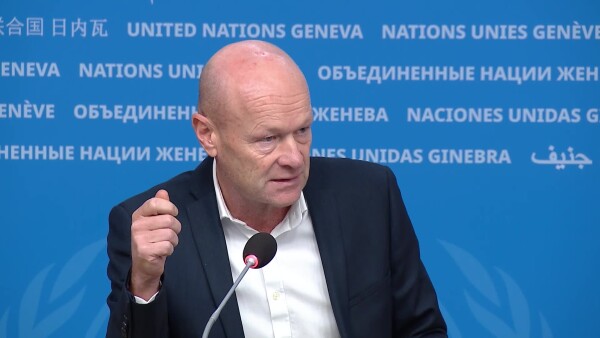
Ajith Sunghay, head of the UN Human Rights office in the occupied Palestinian territory, presented the report at a press conference at the headquarters of the UN Human Rights Office in Geneva.
“One year later, despite the ceasefire concluded in October 2025, the lasting consequences of the patterns we documented are apparent. The ceasefire diminished the immense scale of violence up to that point, and opened some modest humanitarian space,” he told reporters. “But killings and the destruction of infrastructure have continued on an almost daily basis, and the overall humanitarian situation remains dire. All while Hamas continues its own violations, including against the people of Gaza.”
“In the West Bank, the rate of forcible displacement of Palestinians is unseen in decades and Israeli settlement expansion is unprecedented. Israeli military and police forces and settlers are killing more and more Palestinians with impunity, often together,” Sunghay said.
The report points to war crimes and possible crimes against humanity by Israeli and Palestinian duty bearers.
“On and after 7 October 2023, Palestinian armed groups committed war crimes and possible crimes against humanity when they horrifically attacked civilians in Israel, killed at least 1,124, took and kept hostages, and fired thousands of unguided missiles into Israel for over a year. Released hostages have provided credible accounts of torture and ill-treatment, including sexual violence,” he said.
The Israeli military has killed 72,769 Palestinians since 7 October 2023 in Gaza, according to the health ministry in Gaza. These people were killed in their homes, in shelters for displaced people, in hospitals, in schools, in places of worship, on the streets, while queuing for aid, or while trying to fish in the sea.
The report states that Palestinians have no means to ensure their survival or to protect their loved ones, with hundreds killed since the announcement of a ceasefire.
During the reporting period, the Israeli blockade on Gaza resulted in starvation and famine that was foretold and later confirmed. Hundreds starved to death, including children. Any use of starvation as a method of war against civilians is a war crime, and it may amount to a crime against humanity and even genocide in certain conditions.
“Displaced Palestinians have scant prospects of return, raising concerns about ethnic cleansing and forcible transfer. In Gaza, the neighbourhoods they fled are gone as Israeli forces continue to unlawfully demolish buildings across Gaza— homes still laden with thousands of unretrieved Palestinian bodies,” said Sunghay.
In the occupied West Bank, Israeli forces and settlers have killed 1,096 Palestinians since 7 October 2023, one in five of them children. Many incidents raise concerns about unlawful killings and extrajudicial executions.
“Settler attacks are routinely carried out with the support, acquiescence, or participation of Israeli security forces. The Israeli government has intensified the militarisation of the settler movement, shielded them from accountability, and now actively benefits from settler violence as a catalyst for its stated annexation agenda,”Sunghay said.
Since this government took office, settlements increased by 80%, adding 102 settlements to the 127 that existed previously.
The 33,000 Palestinians displaced from Jenin, Tulkarem, and Nur Shams refugee camps in 2025 remain unable to return to their homes.
Israeli authorities are forcing Palestinians out of their homes around the Old City in East Jerusalem at alarming levels, turning their properties over to settlers, or making room for settlement projects including a park and a cable car project.
Settler violence has become a key driver of displacement, so far displacing 45 entire Palestinian communities since October 2023. The report documents more patterns that have alarmingly persisted.
“Torture and ill-treatment of Palestinian detainees in Israeli custody is all too routine, including sexual violence, even cases of rape. as well as denial of sufficient sustenance and medical care. And discriminatory practices have further reinforced Israel’s violation of the prohibition of apartheid and racial segregation,” Sunghay said.
“And why does it all seem so endless?” he asked. “Because not enough is being done to stop it. The ceasefire has not led to any forms of meaningful accountability for the violations committed in the preceding years. Nor has it led to any fundamental reckoning with the underlying driver – the protracted occupation. Impunity only fuels recurrence. Most of the horrors documented here, and those documented for decades before, have gone unpunished, with no prospect of justice for the victims.”
Sunghay called on third States to urgently take every measure at their disposal and in conformity with international law to end the Israeli occupation, ensure the dismantlement of existing settlements, protect civilians, achieve accountability for serious violations by all parties, and ensure Palestinians are able to exercise their human rights.
For more information and media requests, please contact:
In Geneva
Ravina Shamdasani - ravina.shamdasani@un.org
Shabia Mantoo - shabia.mantoo@un.org
Thameen Al-Kheetan - thameen.alkheetan@un.org
Facebook unitednationshumanrights
Instagram @unitednationshumanrights
STORY: UN report on occupied Palestinian territory: large-scale violations of international law including atrocity crimes
TRT: 04:23
SOURCE: OHCHR
RESTRICTIONS: NONE
LANGUAGE: English/NATS
ASPECT RATIO: 16:9
DATELINE: 18 May 2026, Geneva, Switzerland
SHOTLIST
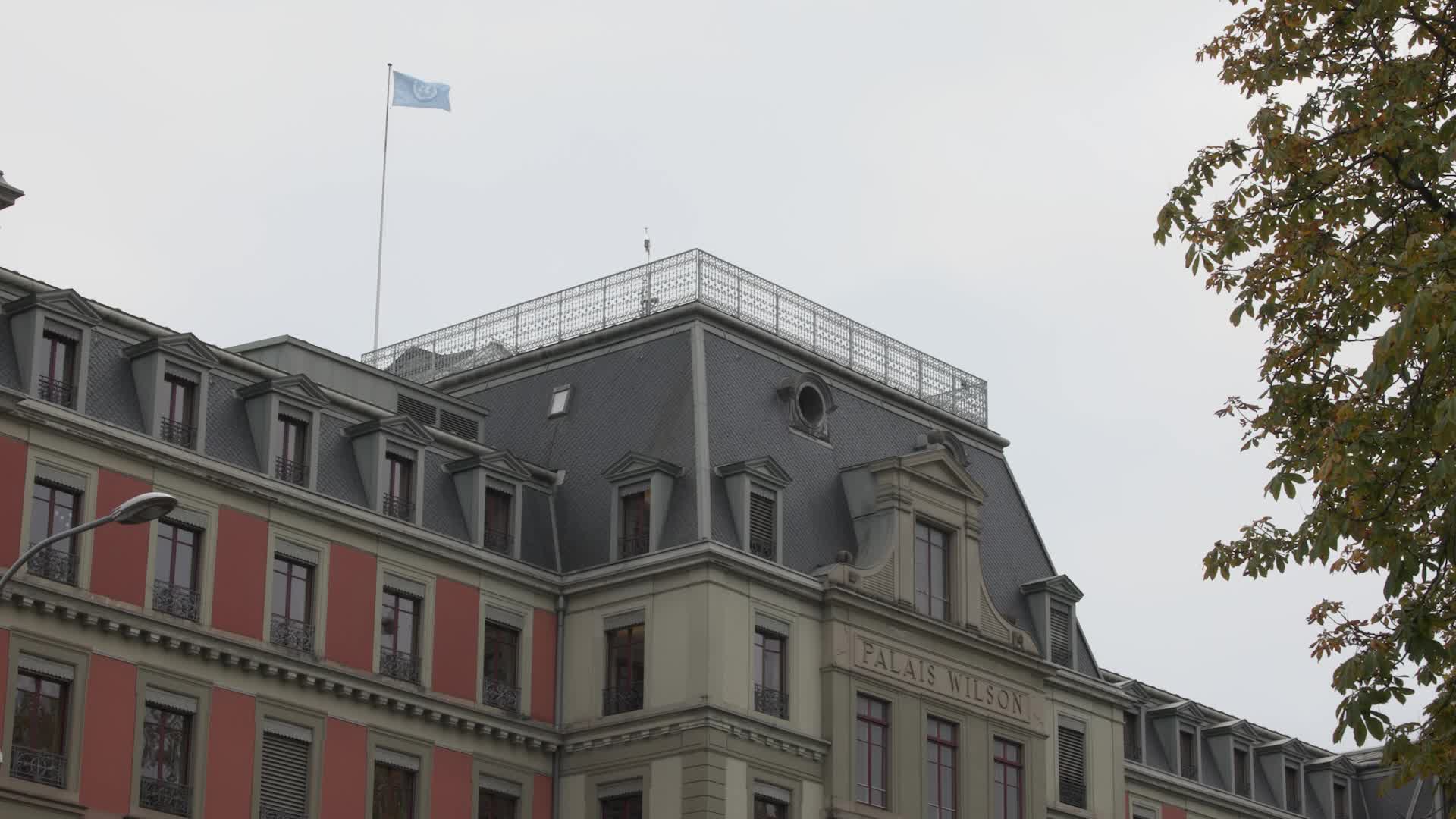
- Exterior shots: Palais Wilson - Headquarters of Human Rights in Geneva
- SOUNDBITE (English)— Ajith Sunghay, Head of the UN Human Rights Office in the occupied Palestinian territory: “One year later, despite the ceasefire concluded in October 2025, the lasting consequences of the patterns we documented are apparent. The ceasefire diminished the immense scale of violence up to that point and opened some modest humanitarian space.”
- Cutaway: Press conference room (Salon des Dames)
- SOUNDBITE (English)— Ajith Sunghay, Head of the UN Human Rights Office in the occupied Palestinian territory: “But killings and the destruction of infrastructure have continued on an almost daily basis, and the overall humanitarian situation remains dire. All while Hamas continues its own violations, including against the people of Gaza.”
- Cutaway: Press conference room (Salon des Dames)
- SOUNDBITE (English)—Ajith Sunghay, Head of the UN Human Rights Office in the occupied Palestinian territory: “In the West Bank, the rate of forcible displacement of Palestinians is unseen in decades and Israeli settlement expansion is unprecedented. Israeli military and police forces and settlers are killing more and more Palestinians with impunity, often together.”
- Cutaway: Press conference room (Salon des Dames)
- SOUNDBITE (English)— Ajith Sunghay, Head of the UN Human Rights Office in the occupied Palestinian territory: “On and after 7 October 2023, Palestinian armed groups committed war crimes and possible crimes against humanity when they horrifically attacked civilians in Israel, killed at least 1,124, took and kept hostages, and fired thousands of unguided missiles into Israel for over a year. Released hostages have provided credible accounts of torture and ill-treatment, including sexual violence.”
- Cutaway: Press conference room (Salon des Dames)
- SOUNDBITE (English)— Ajith Sunghay, Head of the UN Human Rights Office in the occupied Palestinian territory: “Displaced Palestinians have scant prospects of return, raising concerns about ethnic cleansing and forcible transfer. In Gaza, the neighbourhoods they fled are gone as Israeli forces continue to unlawfully demolish buildings across Gaza— homes still laden with thousands of unretrieved Palestinian bodies.”
- Cutaway: Press conference room (Salon des Dames)
- SOUNDBITE (English)— Ajith Sunghay, Head of the UN Human Rights Office in the occupied Palestinian territory: “Settler attacks are routinely carried out with the support, acquiescence, or participation of Israeli security forces. The Israeli Government has intensified the militarisation of the settler movement, shielded them from accountability, and now actively benefits from settler violence as a catalyst for its stated annexation agenda.”
- Cutaway: Press conference room (Salon des Dames)
- SOUNDBITE (English)—Ajith Sunghay, Head of the UN Human Rights Office in the Occupied Palestinian Territory: “Torture and ill-treatment of Palestinian detainees in Israeli custody is all too routine, including sexual violence, even cases of rape, as well as denial of sufficient sustenance and medical care. And discriminatory practices have further reinforced Israel’s violation of the prohibition of apartheid and racial segregation.”
- Cutaway: Press conference room (Salon des Dames)
- SOUNDBITE (English)—Ajith Sunghay, Head of the UN Human Rights Office in the Occupied Palestinian Territory: “And why does it all seem so endless? Because not enough is being done to stop it. The ceasefire has not led to any forms of meaningful accountability for the violations committed in the preceding years. Nor has it led to any fundamental reckoning with the underlying driver – the protracted occupation. Impunity only fuels recurrence. Most of the horrors documented here, and those documented for decades before, have gone unpunished, with no prospect of justice for the victims.”
Similar Stories
1
1
1
Edited News | OCHA , UNICEF , WFP
Aid agencies warned on Friday of the fast-developing humanitarian emergency inside Taiz City in Yemen, which has been encircled by de facto Houthi forces fighting government troops along the country’s west coast.

2
17
1
2
Edited News , Press Conferences , Images | OCHA , WMO
Two UN agencies teamed up on Wednesday to issue an appeal for immediate assistance to help communities already being impacted by the strongest El Niño on record.

3
16
2
2
Edited News , B-roll , Conferences , Images | UNITED NATIONS , UNOG
Sixth Consultative Meeting on Enhancing Coordination of Peace Initiatives and Efforts for Sudan

1
1
1
Edited News | UNICEF , WHO , UNHCR
Yemen war continues to force families from homes amid hunger and disease
More than 250,000 people have now fled renewed fighting in Yemen, the UN said on Tuesday, citing particular concern for those sheltering in the southwestern city of Taiz and the wider governorate, where access is “essentially blocked”.

1
1
1
Edited News | UNICEF
A little over one year since a ceasefire agreement was announced between Hamas fighters and Israel, more than 340 children have been reported killed and hundreds more injured, the UN Children’s Fund, UNICEF, said on Friday.

1
1
1
Edited News | UNICEF , IFRC
Six weeks after Nepal’s deadly flooding disaster, communities are still struggling to rebuild their lives, but they will need sustained help as global warming increases the risk of another Himalayan catastrophe, the UN Children’s Fund (UNICEF) said on Friday.

1
1
1
Edited News | WHO
In suspected Russia plague death, testing and monitoring underway – WHO
The death of a lab worker in Russia’s Siberia region has sparked concerns about plague being the cause, the UN World Health Organization (WHO) said on Tuesday, adding that it was following the situation closely.

1
1
Edited News | OHCHR , UNOG
UN Human Rights Chief Volker Türk on Friday provided and oral update to the 63rd session of the Human rights Council on Ukraine.

1
1
1
Edited News | OHCHR , UNOG
UN Human Rights Chief Volker Türk on Friday provided and oral update to the 63rd session of the Human rights Council on the human rights situation in Haiti.

1
1
1
Edited News | WHO
Repeated delays in bringing lifesaving medicines, prosthetics and more from Israel into Gaza risk having devastating consequences on Palestinians who urgently need them in the wartorn enclave, the UN World Health Organization (WHO) said on Friday. “A truck full of non-priority supplies or the right supplies arriving too late, doesn't save lives. That's the question that actually matters," said Dr Reinhilde Van De Weerdt, WHO Representative in the OPT.

1
1
1
Edited News | WHO
DRC: Early access to care and oxygen decisive for Ebola patients’ survival – WHO
In the Democratic Republic of the Congo (DRC), health workers fighting the country’s largest-ever Ebola outbreak are struggling to overcome critical challenges to patient care, the UN World Health Organization (WHO) warned on Tuesday.

1
1
1
Edited News | OCHA , UN
Civilians in Iran are continuing to feel the consequences of months of conflict and military escalation, the UN’s top official in the country has said, as loss of life, damage to civilian infrastructure and mounting economic pressures leave many facing continued uncertainty.