

The United Nations Office at Geneva
Multimedia Newsroom
Edited News | OHCHR , UNOG
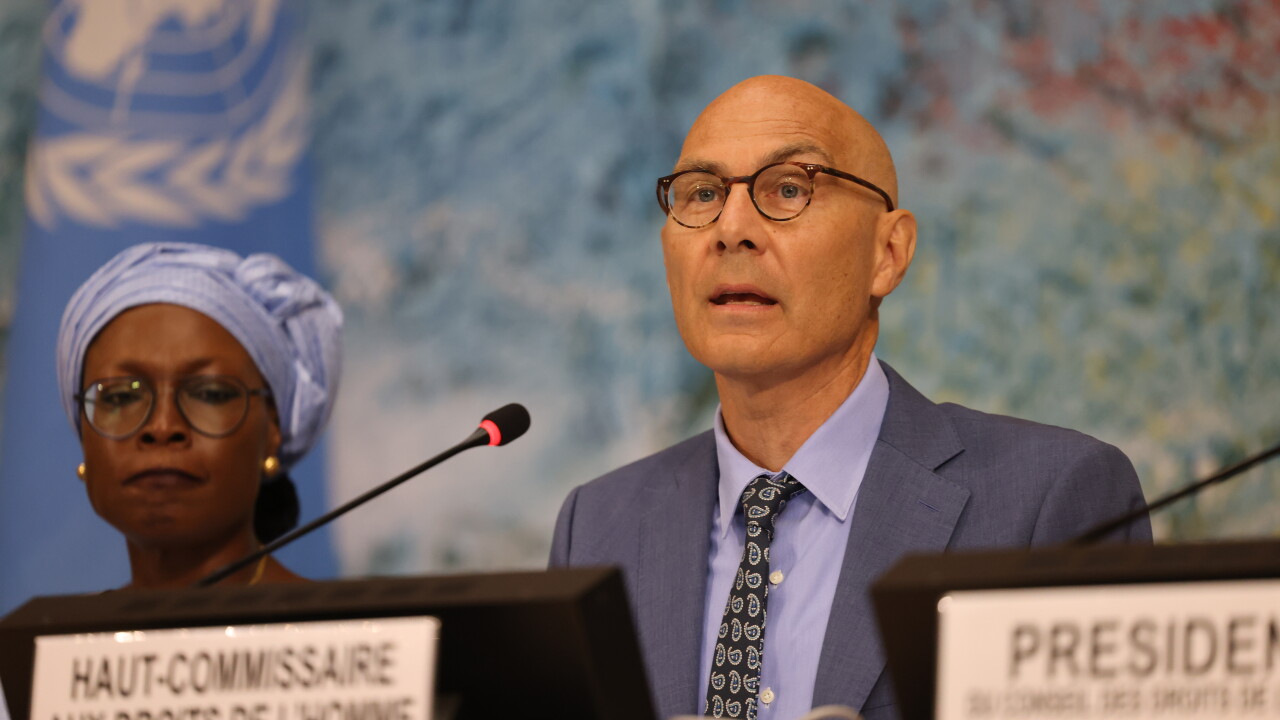
UN High Commissioner for Human Rights Volker Türk’s Global Update to the 63rd session of the Human Rights Council
“We live in an age of extremes,” he told delegates. “Raging wars, painful polarization, climate chaos, and head-spinning technological change make people feel disoriented and even powerless. Strong forces are working to create and sustain that feeling. Tech moguls, populists, and vested interests, amplified by social media echo chambers, tell us these trends are inevitable. In fact, the opposite is true.
“History is full of brave people who took action to resist oppression and demand their rights,” he added.“People who called out injustice and inequality. People who refused to accept their fate, coming together to channel the universal values that underpin our humanity. This truth is a force to be reckoned with, underpinning all we are doing.”
Türk expressed concern that the past years have been marked by a growing number of armed conflicts and diminishing respect for international human rights and humanitarian law, and the United Nations Charter itself.
“There are now more than 60 wars involving at least one State – the highest number since the end of the Second World War. The surge in conflict between States takes us into particularly dangerous territory,” the High Commissioner said.
“I am alarmed by the resumption of attacks between the United States and Iran, affecting the entire Gulf region. Recent reports of civilian deaths and injuries, including at a wedding in Hormozgan province, are particularly concerning. The geopolitical and economic impacts of this entirely avoidable crisis are again reverberating around the world, and I appeal for an immediate return to negotiations.
“Russia’s full-scale war in Ukraine, now in its fifth year, is on a menacing trajectory, with soaring civilian casualties and intensified attacks on energy infrastructure. While the overwhelming majority of civilians killed are Ukrainians, there are also reports of growing numbers of deaths and injuries in Russia.
“War reflects the failure of our humanity. The pursuit of peace embodies humanity at its best,” he said. “The vast majority of people everywhere want peace – and they need our support.”
The tragedy of conflict has touched almost all our lives, Türk told the Council. The human cost echoes down the generations, and every war has a devastating impact on our health and our environment.
“But today, we face other threats to our rights that are unfamiliar; even unprecedented. The relationship between digital tools like AI, and our human nature, our human agency, will be a priority for the years ahead. The need for AI governance is widely acknowledged – but where is the action? Delay only benefits the massive tech companies, their owners and enablers,” the High Commissioner said.
“A handful of men has almost unlimited power over AI, which we are repeatedly told has unimaginable computing capacity. They talk about freedom, but on closer inspection, this turns out to be little more than the freedom to exploit our data.
“I am calling here, today, for an all-out effort to put cast iron guarantees in place around the safety and security of AI, before it is too late. I will be writing to AI companies in the coming days, to urge them to take the steps that are within their control, to reduce risks, now. At a minimum, we need countries hosting AI and those involved in its supply chains to come together around agreed red lines. We need independent verification, and much stronger collaboration on security within the industry.”
He continued, that today’s investments and innovations seem to be driven largely by profit – regardless of the costs. Such business models are squeezing our planet – and its people – past breaking point.
“The immense concentration of wealth and power in one small corner of humanity is creating tensions that undermine both stability and sustainability,” the High Commissioner said.
“Yet rather than urgently addressing these imbalances, some leaders are exploiting them. Imposing crippling tariffs on countries already under severe stress from the climate crisis, debt burdens, and inequitable tax rules, weakens their political autonomy and their ability to fight poverty.”
“When we celebrate economic growth, let’s be honest about where this growth goes. The International Labour Organization estimates that over the past two decades, it has benefited owners and investors more than workers,” he added.
The High Commissioner told the Council that a tide of systemic discrimination was now sweeping around the world.
“Across regions, femicide is an alarming trend. Legislation and prosecution are crucial, but we also need to address root causes: discrimination, inequality, and gender stereotypes.
Studies show higher rates of femicide and other violence against women are linked to broader social tensions and an increased likelihood of violent conflict,” he said.
Hard-won gains for people of African descent are deliberately being undermined in some countries, including cuts to anti-discrimination programmes and attempts to distort history, the High Commissioner added.
“Racism is one of society’s deepest ills. Politicians, traditional and social media amplify isolated incidents to portray migrants, refugees, Muslims, marginalised racial and ethnic groups, and minorities as a collective threat. In some countries, such depictions have led to attacks against entire communities,” Türk said.
STORY: UN High Commissioner for Human Rights Volker Türk’s Global Update to the 63rd session of the Human Rights Council
TRT: 06:57
SOURCE: OHCHR / UNOG
RESTRICTIONS: NONE
LANGUAGE: English/ NATS
ASPECT RATIO: 16:9
DATELINE: 7 September 2026 – Geneva, Switzerland
SHOTLIST
- Exterior shot: Palais des Nations
- Wide shot: Hall A
- SOUNDBITE (English) — Volker Türk, UN High Commissioner for Human Rights: “We live in an age of extremes. Raging wars, painful polarization, climate chaos, and head-spinning technological change make people feel disoriented and even powerless. Strong forces are working to create and sustain that feeling. Tech moguls, populists, and vested interests, amplified by social media echo chambers, tell us these trends are inevitable. In fact, the opposite is true. History is full of brave people who took action to resist oppression and demand their rights. People who called out injustice and inequality. People who refused to accept their fate, coming together to channel the universal values that underpin our humanity. This truth is a force to be reckoned with, underpinning all we are doing,”
- Cutaways: Hall A
- SOUNDBITE (English) — Volker Türk, UN High Commissioner for Human Rights: “There are now more than 60 wars involving at least one State – the highest number since the end of the Second World War. The surge in conflict between States takes us into particularly dangerous territory.”
- Cutaways: Hall A
- SOUNDBITE (English) — Volker Türk, UN High Commissioner for Human Rights: “I am alarmed by the resumption of attacks between the United States and Iran, affecting the entire Gulf region. Recent reports of civilian deaths and injuries, including at a wedding in Hormozgan province, are particularly concerning. The geopolitical and economic impacts of this entirely avoidable crisis are again reverberating around the world, and I appeal for an immediate return to negotiations.”
- Cutaways: Hall A
- SOUNDBITE (English) — Volker Türk, UN High Commissioner for Human Rights: “Russia’s full-scale war in Ukraine, now in its fifth year, is on a menacing trajectory, with soaring civilian casualties and intensified attacks on energy infrastructure. While the overwhelming majority of civilians killed are Ukrainians, there are also reports of growing numbers of deaths and injuries in Russia.”
- Cutaways: Hall A
- SOUNDBITE (English) — Volker Türk, UN High Commissioner for Human Rights: “War reflects the failure of our humanity. The pursuit of peace embodies humanity at its best. The vast majority of people everywhere want peace – and they need our support.”
- Cutaways: Hall A
- SOUNDBITE (English) — Volker Türk, UN High Commissioner for Human Rights: “But today, we face other threats to our rights that are unfamiliar; even unprecedented. The relationship between digital tools like AI, and our human nature, our human agency, will be a priority for the years ahead. The need for AI governance is widely acknowledged – but where is the action? Delay only benefits the massive tech companies, their owners and enablers.”
- Cutaways: Hall A
- SOUNDBITE (English) — Volker Türk, UN High Commissioner for Human Rights: “A handful of men has almost unlimited power over AI, which we are repeatedly told has unimaginable computing capacity. They talk about freedom, but on closer inspection, this turns out to be little more than the freedom to exploit our data.”
- Cutaways: Hall A
- SOUNDBITE (English) — Volker Türk, UN High Commissioner for Human Rights: “I am calling here, today, for an all-out effort to put cast iron guarantees in place around the safety and security of AI, before it is too late. I will be writing to AI companies in the coming days, to urge them to take the steps that are within their control, to reduce risks, now. At a minimum, we need countries hosting AI and those involved in its supply chains to come together around agreed red lines. We need independent verification, and much stronger collaboration on security within the industry.”
- Cutaways: Hall A
- SOUNDBITE (English) — Volker Türk, UN High Commissioner for Human Rights: ““The immense concentration of wealth and power in one small corner of humanity is creating tensions that undermine both stability and sustainability. Yet rather than urgently addressing these imbalances, some leaders are exploiting them. Imposing crippling tariffs on countries already under severe stress from the climate crisis, debt burdens, and inequitable tax rules, weakens their political autonomy and their ability to fight poverty.”
- Cutaways: Hall A
- SOUNDBITE (English) — Volker Türk, UN High Commissioner for Human Rights: “When we celebrate economic growth, let’s be honest about where this growth goes. The International Labour Organization estimates that over the past two decades, it has benefited owners and investors more than workers.”
- Cutaways: Hall A
- SOUNDBITE (English) — Volker Türk, UN High Commissioner for Human Rights: “Across regions, femicide is an alarming trend. Legislation and prosecution are crucial, but we also need to address root causes: discrimination, inequality, and gender stereotypes. Studies show higher rates of femicide and other violence against women are linked to broader social tensions and an increased likelihood of violent conflict.”
- Cutaways: Hall A
- SOUNDBITE (English) — Volker Türk, UN High Commissioner for Human Rights: “Racism is one of society’s deepest ills. Politicians, traditional and social media amplify isolated incidents to portray migrants, refugees, Muslims, marginalised racial and ethnic groups, and minorities as a collective threat. In some countries, such depictions have led to attacks against entire communities.”
Similar Stories

2
17
1
2
Edited News , Press Conferences | OCHA , WMO
Two UN agencies teamed up on Wednesday to issue an appeal for immediate assistance to help communities already being impacted by the strongest El Niño on record.

3
16
2
2
B-roll , Conferences , Edited News | UNITED NATIONS , UNOG
Sixth Consultative Meeting on Enhancing Coordination of Peace Initiatives and Efforts for Sudan

1
1
1
Edited News | UNICEF , WHO , UNHCR
Yemen war continues to force families from homes amid hunger and disease
More than 250,000 people have now fled renewed fighting in Yemen, the UN said on Tuesday, citing particular concern for those sheltering in the southwestern city of Taiz and the wider governorate, where access is “essentially blocked”.

1
1
1
Edited News | UNICEF
A little over one year since a ceasefire agreement was announced between Hamas fighters and Israel, more than 340 children have been reported killed and hundreds more injured, the UN Children’s Fund, UNICEF, said on Friday.

1
1
1
Edited News | UNICEF , IFRC
Six weeks after Nepal’s deadly flooding disaster, communities are still struggling to rebuild their lives, but they will need sustained help as global warming increases the risk of another Himalayan catastrophe, the UN Children’s Fund (UNICEF) said on Friday.

1
1
1
Edited News | WHO
In suspected Russia plague death, testing and monitoring underway – WHO
The death of a lab worker in Russia’s Siberia region has sparked concerns about plague being the cause, the UN World Health Organization (WHO) said on Tuesday, adding that it was following the situation closely.

1
1
Edited News | OHCHR , UNOG
UN Human Rights Chief Volker Türk on Friday provided and oral update to the 63rd session of the Human rights Council on Ukraine.

1
1
1
Edited News | OHCHR , UNOG
UN Human Rights Chief Volker Türk on Friday provided and oral update to the 63rd session of the Human rights Council on the human rights situation in Haiti.

1
1
1
Edited News | WHO
Repeated delays in bringing lifesaving medicines, prosthetics and more from Israel into Gaza risk having devastating consequences on Palestinians who urgently need them in the wartorn enclave, the UN World Health Organization (WHO) said on Friday. “A truck full of non-priority supplies or the right supplies arriving too late, doesn't save lives. That's the question that actually matters," said Dr Reinhilde Van De Weerdt, WHO Representative in the OPT.

1
1
1
Edited News | WHO
DRC: Early access to care and oxygen decisive for Ebola patients’ survival – WHO
In the Democratic Republic of the Congo (DRC), health workers fighting the country’s largest-ever Ebola outbreak are struggling to overcome critical challenges to patient care, the UN World Health Organization (WHO) warned on Tuesday.

1
1
1
Edited News | OCHA , UN
Civilians in Iran are continuing to feel the consequences of months of conflict and military escalation, the UN’s top official in the country has said, as loss of life, damage to civilian infrastructure and mounting economic pressures leave many facing continued uncertainty.
1
1
1
Edited News | WHO , UNICEF
Aid agencies in Yemen highlighted the growing hunger emergency sparked by renewed fighting between Houthi opposition forces and Government troops, after mobile health clinics reported that hundreds of children displaced by the violence are suffering from the most deadly form of malnutrition.