

The United Nations Office at Geneva
Multimedia Newsroom
UN chief, Red Cross renew call for rules on autonomous weapons
Amid unconfirmed reports that fully autonomous and AI-guided drones are now being used on the battlefield, UN chief António Guterres and the President of the Red Cross on Tuesday renewed their urgent call for stricter controls, before it is too late.
The timing of the appeal reflects growing concerns that increasingly sophisticated weapons are being made and deployed at ever greater speed and scale, boosted by increasingly powerful AI technology.
“We are now dangerously close to crossing a moral red line: the autonomous targeting of humans by machines,” said UN Secretary-General Guterres said, in a joint appeal with Mirjana Spoljaric Egger, head of the International Committee of the Red Cross (ICRC).
Targeting civilians and civilian infrastructure in conflict is already strictly prohibited under international humanitarian law, but understanding who non-combatants are in a conflict zone is often extremely difficult. The concern is that life-and-death decisions will be taken by machines unable to tell the difference.
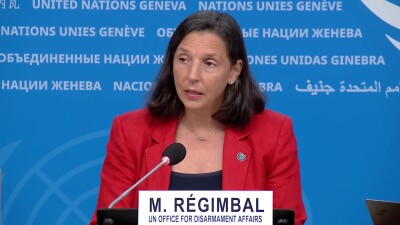
Echoing those concerns in Geneva, head of disarmament affairs at UN Geneva, Mélanie Régimbal, stressed that the UN chief’s long-held position that systems that select or engage targets and take human lives without human control and judgement “are politically unacceptable, morally repugnant and should be prohibited under international law”.
Also in Geneva, ICRC’s Laurent Gisel described how conflict is “is not a story of precision, distinction and restraints. It is a story of civilians killed, families displaced, hospitals, schools and homes destroyed at ever greater speed and scale.
In such a setting, “things can change very rapidly”, continued Mr. Gisel, Head of Arms and Conductor Hostility Unit at the ICRC. “A combatant can surrender or be wounded and therefore be protected from attack; civilians can enter the area of operations of the autonomous weapons systems; the weapons may encounter a situation that would not have been anticipated.”
In the appeal, Mr. Guterres and Ms. Egger noted that autonomous weapons were “not part of a distant future”, as the race towards greater autonomy is already underway. Scientists and engineers developing such systems had also raised concerns about their risks, they noted.
The UN and Red Cross are now urging governments to move beyond discussions and begin negotiations on a legally binding instrument establishing clear prohibitions and restrictions.
“States must show political courage and move beyond incremental discussions towards decisive action,” they said, warning that failure to act could leave future generations with a world where accountability for lethal decisions becomes increasingly difficult to establish.
The appeal comes ahead of the seventh Review Conference of the Convention on Certain Conventional Weapons (CCW), due to take place in November in Geneva. The leaders of the UN and Red Cross described the meeting as the “clearest path available” for States to agree to move towards negotiations on a legally binding instrument.
Important groundwork for an agreement has already been laid through discussions at the UN General Assembly and the CCW’s Group of Governmental Experts, they said, including progress towards defining the human judgement and control needed to ensure compliance with international humanitarian law.
The UN and ICRC first issued their joint appeal in 2023, calling on States to negotiate a legally binding instrument by 2026. Their initial statement stressed that human control must be retained over life-and-death decisions and that machines capable of taking lives without human involvement should be prohibited under international law.
Tuesday’s appeal renews that deadline-driven push, stressing that the painstaking work of recent years must now lead to action.
“We urge States to seize this moment,” the leaders said. “Innovation must serve humanity – not endanger it.”
ends
Story: Lethal autonomous weapons controls
SOURCE: UNTV CH
RESTRICTIONS: NONE
LANGUAGE: ENGLISH / NATS
ASPECT RATIO: 16:9
Duration: 3’42”
DATELINE: 25 August 2026 - GENEVA, SWITZERLAND
Geneva Press briefing
Speakers:
- Alessandra Vellucci, Director, UN Information Service, Geneva
- Mélanie Régimbal, Chief of Service, UN Office for Disarmament Affairs, Geneva Branch
- Laurent Gisel, Head of Arms and Conduct of Hostilities Unit, International Committee of the Red Cross (ICRC)
SHOTLIST
- Exterior medium shot: UN flag alley.
- Wide shot of the press conference room podium speakers.
- SOUNDBITE (English) Alessandra Vellucci, Director, UN Information Service, Geneva: “Three years ago, we called on States to establish specific prohibitions and restrictions on autonomous weapon systems. Today, we renew this call with even greater urgency. The fundamental concerns remain unchanged, but the risks have intensified. We are now dangerously close to crossing a moral red line: the autonomous targeting of humans by machines.”
- Wide, podium.
- SOUNDBITE (English) Mélanie Régimbal, Chief of Service, UN Office for Disarmament Affairs, Geneva Branch: “Autonomous capabilities are becoming cheaper, more accessible, and easier to integrate into existing weapon systems. Autonomous weapon systems that can select and engage targets without human judgement and control raise profound concerns.”
- Wide, Press Room.
- SOUNDBITE (English) Mélanie Régimbal, Chief of Service, UN Office for Disarmament Affairs, Geneva Branch: “The Secretary-General has long warned of the dangers posed by these systems, emphasising that machines that can select or engage targets and take human lives without human control and judgement are politically unacceptable, morally repugnant and should be prohibited under international law.”
- Medium-wide, podium, Press Room.
- SOUNDBITE (English) Mélanie Régimbal, Chief of Service, UN Office for Disarmament Affairs, Geneva Branch: “He has urged the international community not to wait for an atrocity to take place before we take action, stressing that some decisions must forever remain within the human being; none more than the decision of taking or not a human life.”
- Medium-wide, podium speakers, Press Room.
- SOUNDBITE (English) Mélanie Régimbal, Chief of Service, UN Office for Disarmament Affairs, Geneva Branch: “Their effects are difficult to anticipate and limit, posing challenges to compliance and international humanitarian law, increasing the risk of civilian harm, and raising fundamental ethical concerns about delegating life and death decisions to machines.”
- Wide, Press Room, journalists, participants, control booth.
- SOUNDBITE (English) Laurent Gisel, Head of Arms and Conduct of Hostilities Unit, International Committee of the Red Cross (ICRC): “These are weapons that, once activated, select and engage targets without further human interventions. Weapons of this kind already exist. But we are particularly concerned by the direction in which these technologies are moving; weapons controlled by increasingly complex artificial intelligence, whose functioning may become harder for human operators to understand and anticipate.”
- Wide, podium, Press Room.
- SOUNDBITE (English) Laurent Gisel, Head of Arms and Conduct of Hostilities Unit, International Committee of the Red Cross (ICRC): “The upcoming 7th Review Conference of the Convention on Certain Conventional Weapons in November offers the clearest path available for States to decide to move to negotiating legally binding instruments. We urge States to seize these moments.”
- Wide, podium, Press Room.
- SOUNDBITE (English) Mélanie Régimbal, Chief of Service, UN Office for Disarmament Affairs, Geneva Branch: “It is therefore imperative for States to seize the current window of opportunity while such weapons systems have not yet proliferated beyond control and to ensure that disarmament and arms control remain a norm-generating body and that they establish clear boundaries before harmful practices become entrenched and difficult to reverse.”
- Medium, journalist pointing phone camera at proceedings.
- Medium, journalist.
- Medium, journalists.
Similar Stories

1
1
1
Edited News | UNICEF , IFRC
Six weeks after Nepal’s deadly flooding disaster, communities are still struggling to rebuild their lives, but they will need sustained help as global warming increases the risk of another Himalayan catastrophe, the UN Children’s Fund (UNICEF) said on Friday.

1
1
1
Edited News | WHO
In suspected Russia plague death, testing and monitoring underway – WHO
The death of a lab worker in Russia’s Siberia region has sparked concerns about plague being the cause, the UN World Health Organization (WHO) said on Tuesday, adding that it was following the situation closely.

1
1
Edited News | OHCHR , UNOG
UN Human Rights Chief Volker Türk on Friday provided and oral update to the 63rd session of the Human rights Council on Ukraine.

1
1
1
Edited News | OHCHR , UNOG
UN Human Rights Chief Volker Türk on Friday provided and oral update to the 63rd session of the Human rights Council on the human rights situation in Haiti.

1
1
1
Edited News | WHO
Repeated delays in bringing lifesaving medicines, prosthetics and more from Israel into Gaza risk having devastating consequences on Palestinians who urgently need them in the wartorn enclave, the UN World Health Organization (WHO) said on Friday. “A truck full of non-priority supplies or the right supplies arriving too late, doesn't save lives. That's the question that actually matters," said Dr Reinhilde Van De Weerdt, WHO Representative in the OPT.

1
1
1
Edited News | WHO
DRC: Early access to care and oxygen decisive for Ebola patients’ survival – WHO
In the Democratic Republic of the Congo (DRC), health workers fighting the country’s largest-ever Ebola outbreak are struggling to overcome critical challenges to patient care, the UN World Health Organization (WHO) warned on Tuesday.

1
1
1
Edited News | OCHA , UN
Civilians in Iran are continuing to feel the consequences of months of conflict and military escalation, the UN’s top official in the country has said, as loss of life, damage to civilian infrastructure and mounting economic pressures leave many facing continued uncertainty.
1
1
1
Edited News | WHO , UNICEF
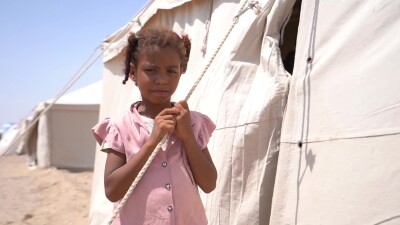
Aid agencies in Yemen highlighted the growing hunger emergency sparked by renewed fighting between Houthi opposition forces and Government troops, after mobile health clinics reported that hundreds of children displaced by the violence are suffering from the most deadly form of malnutrition.
1
1
1
Edited News | UNHCR
Displacement on the rise in Yemen as fighting continues - UNHCR
As hostilities worsen in Yemen, more people have been fleeing their homes, further intensifying the humanitarian crisis within the region, the UN Refugee Agency (UNHCR) warned on Tuesday.
1
1
1
Edited News | IOM , OHCHR , UNFPA , UNOG , UNHCR , WHO
Yemen’s humanitarian crisis growing by the hour amid spike in displacement
Yemenis displaced by renewed fighting have described fleeing for their lives amid shelling and gunfire, aid agencies reported on Friday, while highlighting the dramatic increase in humanitarian needs in the country and in Djibouti, where thousands have sought shelter.
1
1
1
Edited News | OHCHR , UNOG
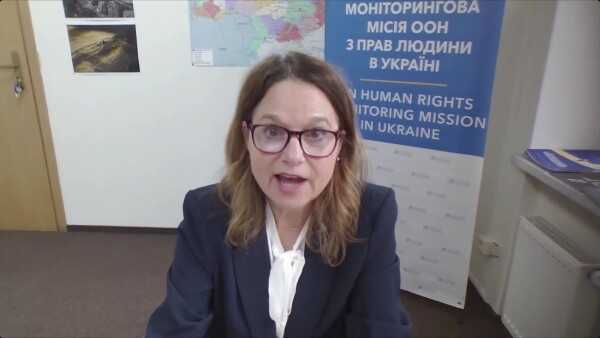
The UN Human Rights Office issued on Friday a report documenting a shocking pattern of sexual violence amid Russia’s full-scale armed attack on Ukraine.
2
1
2
Edited News , Press Conferences | WMO
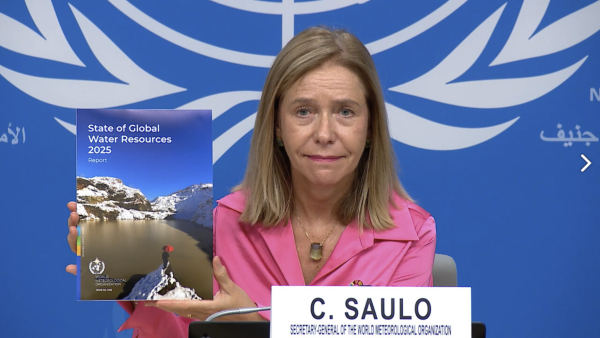
As world’s water reserves change, countries must prepare for a new reality: WMO
New data showing that rivers were at their lowest level for decades last year provides further evidence that the climate crisis is real and countries must act immediately to protect themselves from the increasing threat to communities and livelihoods, the UN World Meteorological Organization (WMO) said on Thursday.
The key findings from WMO’s State of Global Water Resources 2025 report covering the hydrological cycle and extreme events in the five-year period to last year:
- 2025 was one of driest years for river discharge in 35 years
- Past seven years have seen abnorfmal river flows
- Water storage on Earth’s land surface has decreased in past decade
- Widespread glacier loss across all regions for fourth consecutive year
- Asia and Africa are regions most affected by water-related disasters
- Water data availability has improved, but gaps remain in hard-hit areas
Highlighting the long-term decline in the Earth’s freshwater storage and glacier melt, WMO Secretary-General Celeste Saulo explained that the planet’s water reserves used to act as a planetary “savings account” that absorbed the occasional dry season, avoiding a water crisis. “One of the central stories of the 2025 report is what is happening to that savings account? And the simple answer is that we are depleting it,” she told journalists in Geneva.
Groundwater reserves are equally stretched and have been in decline since 2014, WMO’s report states, with nearly two-thirds of monitored wells worldwide showing levels lower than the historical norm and indicating a shift “further toward deficit…not recovery”.
“At the same time, we are seeing more water-related disasters,” Ms. Saulo said, while also stressing that the currently strengthening El Niño “will increase the risk of drought in some areas, and flooding in others”.
Glaciers disappearing
In 2025, for the fourth consecutive year, every major glaciated region on Earth lost ice mass, leading to short-term hazards including floods and long-term water insecurity, according to WMO.
Responding to a question about whether the changing global water cycle might have contributed to the deadly Nepal-China flooding disaster, Ms. Saulo explained that melting ice and rock was just one factor in the chain of events that ultimately sent a massive and deadly wall of water and debris downstream on 26 August, killing at least 1,367 people.
“You asked if it could happen again? Absolutely; the problem in this region is that there’s 63,700 glaciers at the last count,” she told a Press Conference in Geneva. “Even if you’re looking with remote sensing with satellites at these glaciers, you might see some faults, you might see some slight shifting, that does not mean necessarily catastrophic collapse. So, in order to plan for this, it’s very, very difficult. But the international community is looking very hard at ways in which we can bring people together to solve some of these monitoring issues.”
Data indicates that glaciers shrank between 2023 and 2025 with cumulative losses of 1,400 gigatonnes of water – or about one third of annual fresh water needs.
Every major glacier region on Earth lost ice for the fourth consecutive year.
“All 19 glacier regions around the globe lost ice; in Central Asia, Iceland, the Russian Arctic and western Canada and the United States, it was among the three worst years on record,” said Wayne Jenkinson, WMO’s Director of Hydrology and Cryosphere.
Some regions with smaller glaciers such as Central Europe, the Caucasus, the western Canada and the United States may already have reached “peak water”, Mr. Jenkinson warned.
“After this point, the glacier gives less meltwater each year simply because there is less ice left to melt. That matters for every community downstream that relies on water during hot, dry summers,” he explained.
Narelle van der Wel, WMO’s Head of Cryosphere Monitoring, Predictions and Services, stressed that while some further glacier loss is unavoidable, the eventual scale of the decline is not predetermined.
“Some glacier loss is inevitable, but total loss of glaciers is not yet inevitable,” she said, pointing to emissions reductions as central to limiting future losses.
Preparing for moving baselines
The report does not attribute every observed change to climate change alone. WMO says pressure on water resources and natural variability also contribute.
Mr. Jenkinson said governments need to prepare for “moving baselines” as historical patterns become less reliable.
“The situation 30 years ago is not where we are today,” he said. Countries, he added, need to prepare “for those changes that have really already arrived”.
ends