

The United Nations Office at Geneva
Multimedia Newsroom
Somalia at ‘real risk of famine’ as Middle East war fallout continues
At least six million people in Somalia are going days without enough food, UN aid teams warned on Friday, highlighting that nearly two million of this number are young children “at high risk of illness or death”.
“The humanitarian context in Somalia is worsening faster than we originally projected and expected,” said George Conway, the UN’s top aid official in Somalia, a situation made worse by the unresolved conflict in the Middle East and the ongoing global supply chain crisis that has resulted.
“Children are paying the highest price. Nearly two million young children are acutely malnourished, meaning they're dangerously undernourished and physically weakened, placing them at high risk of illness or death,” Mr. Conway stressed.
“Almost half a million are so severely malnourished that they require urgent treatment to survive”, the veteran humanitarian added.
The UN Children’s Fund (UNICEF), meanwhile, highlighted numerous places where healthcare to treat disease linked to acute hunger is no longer available or stretched thin by supply chain delays, “due to all the disruptions that are happening in the Middle East”, said spokesperson Ricardo Pires.
Nearly one in three people in Somalia is critically food insecure, according to the latest UN-backed expert assessment from the Integrated Food Security Phase Classification (IPC) platform. It defines famine as a situation in which at least one in five households have an extreme lack of food and face starvation and destitution, resulting in extremely critical levels of acute malnutrition and death.
Assistance is needed most urgently in South West state, where the UN has confirmed “a real and credible risk of famine in Barakaba district”, Mr. Conway continued.
While Somalia’s people have endured drought since 2024, the current Gu rainy season from April to June has brought some relief in localized areas. But there are increasing concerns that not enough rain will fall, heightening the need for humanitarian assistance which is already proving prohibitively expensive.
“Given the drought situation and the drying up of water points, a lot of communities are reliant on water trucking,” Mr. Conway said. “And the cost of water trucking obviously increases with the crisis with the cost of fuel. So, in some locations, we've seen water prices for water trucking triple over the course of the past month.”
Ready-to-use therapeutic food (RUTF) is the go-to treatment for children suffering from severe hunger, but its continued supply is also in question, the longer the Middle East crisis continues to impact fuel prices and particularly air freight.
“We have a factory in Nairobi that produces a lot of the RUTF that we provide for Africa and other countries, but Somalia is a specific case whereby moving these supplies by road is not as feasible,” UNICEF’s Mr. Pires explained. “We depend on air freight and obviously with the fuel rising, the fuel prices rising so significantly, that cost will become very complicated for us to manage looking forward…It's a matter of life or death for them.”
ends
Somalia famine risk – OCHA, UNICEF
TRT: 3 min 42s
SOURCE: UNTV CH
RESTRICTIONS: NONE
LANGUAGE: ENGLISH / NATS
ASPECT RATIO: 16:9
DATELINE: 15 MAY 2025 GENEVA, SWITZERLAND & MARCH 2026 IN SOMALIA AS INDICATED – PLEASE CREDIT UNICEF
Speakers:
- George Conway, UN Resident and Humanitarian Coordinator, and Deputy Special Representative to the UN Secretary General, Somalia (from Nairobi)
- Ricardo Pires, spokesperson, UNICEF
SHOTLIST
- Exterior wide, UN Geneva flag alley.
- Wide, UN Geneva Press room, podium speakers.
- SOUNDBITE (English) – George Conway, UN Resident and Humanitarian Coordinator, and Deputy Special Representative to the UN Secretary General, Somalia: “The humanitarian context in Somalia is worsening faster than we originally projected and expected. And right now, around six million people in Somalia - nearly one in three - are facing serious hunger, meaning that they're skipping meals or going days without enough food.”
- Medium, journalists, participants.
- SOUNDBITE (English) – George Conway, UN Resident and Humanitarian Coordinator, and Deputy Special Representative to the UN Secretary General, Somalia: “Children are paying the highest price. Nearly two million young children are acutely malnourished, meaning they're dangerously undernourished and physically weakened, placing them at high risk of illness or death. Of these, almost half a million are so severely malnourished that they require urgent treatment to survive.”
- Medium, journalist.
- SOUNDBITE (English) – George Conway, UN Resident and Humanitarian Coordinator, and Deputy Special Representative to the UN Secretary General, Somalia: “We have confirmed a real and credible risk of famine in Barakaba district in South West state of Somalia. Conditions are already severe in the district with high levels of hunger and child malnutrition.”
- Medium, laptop showing external speaker.
- SOUNDBITE (English) – George Conway, UN Resident and Humanitarian Coordinator, and Deputy Special Representative to the UN Secretary General, Somalia: “Given the drought situation and the drying up of water points, a lot of communities are reliant on water trucking. And the cost of water trucking obviously increases…with the cost of fuel. So, in some locations, we've seen water prices for water trucking triple over the course of the past month.”
- Wide, podium speakers.
- SOUNDBITE (English) – Ricardo Pires, UNICEF: “We depend on air freight. And obviously with the fuel rising - fuel prices rising so significantly - that cost will become very complicated for us to manage looking forward. So, we're really looking at a potential catastrophic scenario here and that's why this warning is so important.”
- Wide, podium speakers, journalists.
- SOUNDBITE (English) – Ricardo Pires, UNICEF: “We are extremely concerned in pockets of the country where, again, the health they require is no longer available or the health systems are strained. And again, our supplies might not be moving fast enough, due to all the disruptions that are happening in the Middle East.”
- Medium-wide, Press room, journalists, screens showing remote speaker.
- SOUNDBITE (English) – Ricardo Pires, UNICEF: “We depend a lot, obviously, on ready-to-use therapeutic feeding to treat malnourished children and with this projection that was just mentioned, this is critical, it's a matter of life or death for them. And the cost of air freight has increased significantly since the Middle East crisis to a point that it is of grave concern for us looking at the mid and long term.”
- Medium, sick child on bed, Dollow Hospital in Dollow. Please credit UNICEF.
- Medium, tiny baby on drip, Dollow Hospital in Dollow gadishu. Please credit UNICEF.
- Wide, mothers and babies on beds, Dollow Hospital in Dollow. Please credit UNICEF.
- Wide, mothers and babies on beds, Dollow Hospital in Dollow. Please credit UNICEF.
- Medium, baby being screened for malnutrition, Ladan IDP camp. Please credit UNICEF.
- Wide, mothers and babies at Ladan IDP camp. Please credit UNICEF.
- Wide, mothers and babies at Ladan IDP camp. Please credit UNICEF.
- Wide, a child rolls a water barrel at Ladan IDP camp. Please credit UNICEF.
- Wide, a child walks towards the camera at Ladan IDP camp. Please credit UNICEF.
- Wide, a child walks across the frame at Ladan IDP camp. Please credit UNICEF.
- Medium-wide, children outside a makeshift shelter at Ladan IDP camp. Please credit UNICEF.
- Medium-wide, women collect water at Ladan IDP camp. Please credit UNICEF.
- Medium-wide, women and children collect water at Ladan IDP camp. Please credit UNICEF.
- Medium, infant eating ready-to-use therapeutic food given by mother at Ladan IDP camp. Please credit UNICEF.
- Medium-wide, infant eating ready-to-use therapeutic food given by mother in shelter at Ladan IDP camp. Please credit UNICEF.
- Medium, woman carrying water barrel with headstrap at Ladan IDP camp. Please credit UNICEF.
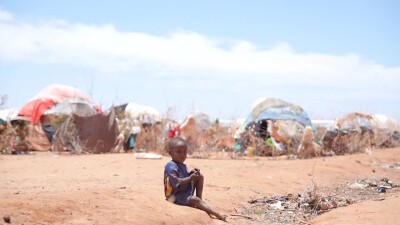
- Wide, infant sitting alone in front of a trench at Ladan IDP camp. Please credit UNICEF.
Similar Stories

1
1
1
Edited News | OCHA , UNICEF , WFP
Aid agencies warned on Friday of the fast-developing humanitarian emergency inside Taiz City in Yemen, which has been encircled by de facto Houthi forces fighting government troops along the country’s west coast.

2
17
1
2
Edited News , Press Conferences , Images | OCHA , WMO
Two UN agencies teamed up on Wednesday to issue an appeal for immediate assistance to help communities already being impacted by the strongest El Niño on record.

3
16
2
2
Edited News , B-roll , Conferences , Images | UNITED NATIONS , UNOG
Sixth Consultative Meeting on Enhancing Coordination of Peace Initiatives and Efforts for Sudan

1
1
1
Edited News | UNICEF , WHO , UNHCR
Yemen war continues to force families from homes amid hunger and disease
More than 250,000 people have now fled renewed fighting in Yemen, the UN said on Tuesday, citing particular concern for those sheltering in the southwestern city of Taiz and the wider governorate, where access is “essentially blocked”.

1
1
1
Edited News | UNICEF
A little over one year since a ceasefire agreement was announced between Hamas fighters and Israel, more than 340 children have been reported killed and hundreds more injured, the UN Children’s Fund, UNICEF, said on Friday.

1
1
1
Edited News | UNICEF , IFRC
Six weeks after Nepal’s deadly flooding disaster, communities are still struggling to rebuild their lives, but they will need sustained help as global warming increases the risk of another Himalayan catastrophe, the UN Children’s Fund (UNICEF) said on Friday.

1
1
1
Edited News | WHO
In suspected Russia plague death, testing and monitoring underway – WHO
The death of a lab worker in Russia’s Siberia region has sparked concerns about plague being the cause, the UN World Health Organization (WHO) said on Tuesday, adding that it was following the situation closely.

1
1
Edited News | OHCHR , UNOG
UN Human Rights Chief Volker Türk on Friday provided and oral update to the 63rd session of the Human rights Council on Ukraine.

1
1
1
Edited News | OHCHR , UNOG
UN Human Rights Chief Volker Türk on Friday provided and oral update to the 63rd session of the Human rights Council on the human rights situation in Haiti.

1
1
1
Edited News | WHO
Repeated delays in bringing lifesaving medicines, prosthetics and more from Israel into Gaza risk having devastating consequences on Palestinians who urgently need them in the wartorn enclave, the UN World Health Organization (WHO) said on Friday. “A truck full of non-priority supplies or the right supplies arriving too late, doesn't save lives. That's the question that actually matters," said Dr Reinhilde Van De Weerdt, WHO Representative in the OPT.

1
1
1
Edited News | WHO
DRC: Early access to care and oxygen decisive for Ebola patients’ survival – WHO
In the Democratic Republic of the Congo (DRC), health workers fighting the country’s largest-ever Ebola outbreak are struggling to overcome critical challenges to patient care, the UN World Health Organization (WHO) warned on Tuesday.

1
1
1
Edited News | OCHA , UN
Civilians in Iran are continuing to feel the consequences of months of conflict and military escalation, the UN’s top official in the country has said, as loss of life, damage to civilian infrastructure and mounting economic pressures leave many facing continued uncertainty.