

The United Nations Office at Geneva
Multimedia Newsroom
DRC: In the fight against Ebola, bikers transporting dead bodies hold key to community engagement - WHO
From the frontlines of the deadliest-ever Ebola Bundibugyo outbreak in the Democratic Republic of the Congo (DRC), the UN’s World Health Organization (WHO) shared details on Tuesday of a massive push for community engagement, a day after yet another ambulance attack.
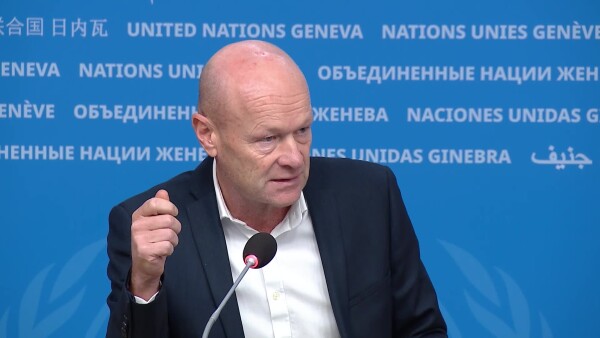
Speaking from the outbreak’s epicentre Bunia, Dr Thierno Baldé, WHO Incident Manager for the Bundibugyo virus disease in the DRC, told reporters in Geneva that on Monday one of the ambulances of the response operation was attacked and that this was not an isolated incident.
“Almost on a daily basis we face some kind of reaction from the communities,” he said. “These are difficult situations. People are having their relatives who are sick, who are dying.”
According to local authorities, as of Monday the disease had killed 2,325 people, surpassing the 2,299 deaths recorded in the DRC’s 2018-2020 outbreak, previously the most lethal. The fatality rate has risen to 46 per cent, according to Government data.
Dr Baldé said that the milestone of 5,000 confirmed cases has been crossed and that cases have been identified in a sixth province, Bas-Uélé, which was newly affected.
“The situation is quite difficult, but people are working here days and nights trying to control this outbreak,” Dr Baldé insisted.
“We are really recentering all of the operational approach, all of our activities, you know, around the engagement of the communities,” the WHO official said.
Describing the multi-pronged scale-up underway, he said the one of the main communities targeted in the response is the association of motorbike riders who are transporting patients and dead bodies, and are being provided with hand-washing stations and disinfectant.
“We wanted to go beyond now, to have them as surveillance and response officers,” Dr Baldé said.
He explained that the bikers are one of the most affected categories in the population because of their transport duties, with some losing multiple members of their family to the virus.
At the same time they are a key link in the chain of disease surveillance and need to “be able to tell us wherever they transport a sick person,” contact the surveillance team and enable the suspected case to be tested.
This grassroots engagement is taking place “in a very dignified manner,” Dr Baldé said, “by convincing them, explaining to them… this is for the good of themselves, the good of their family”.
He also stressed that WHO has added “100 additional expert epidemiologists who will be deployed at the field level, at the health zone levels, supported by more than 500 community health workers who will go to the communities, do the contact tracing and identify the cases, convince the people to accept to be followed up”.
Some 400 beds have been added in facilities in various localities over the past two weeks.
Dr Baldé insisted that an extra push is needed to ensure safe and dignified burials “by engaging those local people who are doing that in the villages and equipping them with chlorine and gloves “to be able to handle these bodies in a very safe manner”.
The WHO official also highlighted “good examples where we are seeing some kind of progress”, citing the localities of Lita and Nizi, “where we were overwhelmed by the number of community deaths about six weeks ago, seven weeks ago”.
“Today, we are reporting only few cases, few deaths, and those deaths are being safely and dignifiedly, buried at the right time.”
“We have seen a kind of stabilization of the situation where we are capable of intervening as quick as possible,” he concluded.
The outbreak of Ebola Bundibugyo virus disease, for which there is currently no vaccine and no approved treatment, was declared by DRC authorities on 15 May. On Tuesday the International Health Regulations Emergency Committee is meeting for the second time on the epidemic, which has been declared a public health emergency of international concern, and is expected to advise on recommendations to countries.
-ends-
STORY Ebola DRC update - WHO
TRT: 3:36’’
SOURCE: UNTV CH
RESTRICTIONS: CREDIT WHO BROLL
LANGUAGE: ENGLISH/NATS
ASPECT RATIO: 16:9
DATELINE: 18 AUGUST 2026 GENEVA, SWITZERLAND and 22 JULY 2026 EBOLA TREATMENT CENTRE (ETC) AT THE EVANGELICAL MEDICAL CENTRE, BUNIA, ITURI PROVINCE, DEMOCRATIC REPUBLIC OF THE CONGO
1. Exterior wide shot: Palais des Nations, Flag Alley.
2. Wide reverse shot: Speaker at the podium of the press conference; speaker on screens; journalists in the Press room.
3. SOUNDBITE (English) – Dr Thierno Baldé, Incident Manager, Bundibugyo virus disease, Democratic Republic of the Congo, World Health Organization (WHO): “Yesterday one of our ambulances was attacked here, you know, one of the ambulances of the response operation was attacked here in Bunia. And we are really quite extremely, very regularly challenged by these situations, by these attacks on healthcare services.”
4. Wide shot: Speaker on screens; journalists in the Press room.
5. SOUNDBITE (English) – Dr Thierno Baldé, Incident Manager, Bundibugyo virus disease, Democratic Republic of the Congo, World Health Organization (WHO): “Almost on a daily basis, you know, we face some kind of reaction, you know, from the communities. And again, these are difficult situations. People are having their relatives who are sick, who are dying.”
6. Medium reverse shot: Speaker at the podium of the press conference; speaker on screens.
7. SOUNDBITE (English) – Dr Thierno Baldé, Incident Manager, Bundibugyo virus disease, Democratic Republic of the Congo, World Health Organization (WHO): “We are really recentering all of the operational approach, all of our activities, you know, around the engagement of the communities. And one of the main communities that we are targeting to have with us is like the Association of the Motorbikers, who are transporting those patients, who are transporting those dead bodies, to have them with us, include them into the surveillance, include them into the response.”
8. Medium shot: Speaker on screens; journalists in the Press room.
9. SOUNDBITE (English) – Dr Thierno Baldé, Incident Manager, Bundibugyo virus disease, Democratic Republic of the Congo, World Health Organization (WHO): “At least they can be able to tell us wherever they transport a sick person, how can they really relay and contact the surveillance team and then to be able that that person can be tested and sent. And obviously in a very dignified manner, you know, by convincing them, explaining to them, I mean, this is for the good of themselves, the good of their family.”
10. Medium shot: Speaker on screens; journalists in the Press room.
11. SOUNDBITE (English) – Dr Thierno Baldé, Incident Manager, Bundibugyo virus disease, Democratic Republic of the Congo, World Health Organization (WHO): “WHO has already added 100 additional expert epidemiologists who will be deployed at the field level, at the health zone levels, you know, supported by almost more than 500 community health workers who will go to the communities, do the contact tracing and identify the cases, convince the people to accept to be followed up.”
12. Medium reverse shot: Speaker at the podium of the press conference; speaker on screen.
13. SOUNDBITE (English) – Dr Thierno Baldé, Incident Manager, Bundibugyo virus disease, Democratic Republic of the Congo, World Health Organization (WHO): “We really need to push on the extra miles on the safe and dignified burials by notably engaging those local people who are doing that in the villages, who are known for that, capacitating them, giving them a bit of chlorine, giving them a bit of gloves, you know, to be able, obviously, to handle these bodies in a very safe manner, in a very dignified burial.”
14. Medium reverse shot: Speaker at the podium of the press conference; speaker on screens; journalists in the Press room.
15. SOUNDBITE (English) – Dr Thierno Baldé, Incident Manager, Bundibugyo virus disease, Democratic Republic of the Congo, World Health Organization (WHO): “There are some good examples where we are seeing some kind of progress on this thing. Again, like the case of Nizi, where we were overwhelmed by the number of community deaths about six weeks ago, seven weeks ago, today, we are only reporting only few cases, few deaths, and those deaths are being safely and dignifiedly, you know, buried at the right time.”
WHO BROLL – CREDIT WHO: 22 JULY 2026, EBOLA TREATMENT CENTRE (ETC) AT THE EVANGELICAL MEDICAL CENTRE, BUNIA, ITURI PROVINCE, DEMOCRATIC REPUBLIC OF THE CONGO
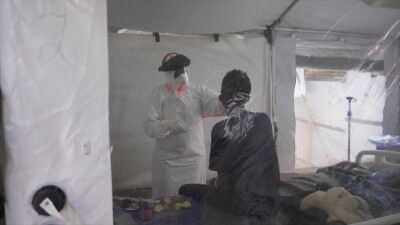
16. Various shots of a health worker donning PPE
17. Various shots of health workers in PPE examining a patient in an isolation room
18. MED of white cylinder
19. Various shots of a health worker helping to feed a patient.
Similar Stories
1
1
1
Edited News | OCHA , UNICEF , WFP
Aid agencies warned on Friday of the fast-developing humanitarian emergency inside Taiz City in Yemen, which has been encircled by de facto Houthi forces fighting government troops along the country’s west coast.

2
17
1
2
Edited News , Press Conferences , Images | OCHA , WMO
Two UN agencies teamed up on Wednesday to issue an appeal for immediate assistance to help communities already being impacted by the strongest El Niño on record.

3
16
2
2
Edited News , B-roll , Conferences , Images | UNITED NATIONS , UNOG
Sixth Consultative Meeting on Enhancing Coordination of Peace Initiatives and Efforts for Sudan

1
1
1
Edited News | UNICEF , WHO , UNHCR
Yemen war continues to force families from homes amid hunger and disease
More than 250,000 people have now fled renewed fighting in Yemen, the UN said on Tuesday, citing particular concern for those sheltering in the southwestern city of Taiz and the wider governorate, where access is “essentially blocked”.

1
1
1
Edited News | UNICEF
A little over one year since a ceasefire agreement was announced between Hamas fighters and Israel, more than 340 children have been reported killed and hundreds more injured, the UN Children’s Fund, UNICEF, said on Friday.

1
1
1
Edited News | UNICEF , IFRC
Six weeks after Nepal’s deadly flooding disaster, communities are still struggling to rebuild their lives, but they will need sustained help as global warming increases the risk of another Himalayan catastrophe, the UN Children’s Fund (UNICEF) said on Friday.

1
1
1
Edited News | WHO
In suspected Russia plague death, testing and monitoring underway – WHO
The death of a lab worker in Russia’s Siberia region has sparked concerns about plague being the cause, the UN World Health Organization (WHO) said on Tuesday, adding that it was following the situation closely.

1
1
Edited News | OHCHR , UNOG
UN Human Rights Chief Volker Türk on Friday provided and oral update to the 63rd session of the Human rights Council on Ukraine.

1
1
1
Edited News | OHCHR , UNOG
UN Human Rights Chief Volker Türk on Friday provided and oral update to the 63rd session of the Human rights Council on the human rights situation in Haiti.

1
1
1
Edited News | WHO
Repeated delays in bringing lifesaving medicines, prosthetics and more from Israel into Gaza risk having devastating consequences on Palestinians who urgently need them in the wartorn enclave, the UN World Health Organization (WHO) said on Friday. “A truck full of non-priority supplies or the right supplies arriving too late, doesn't save lives. That's the question that actually matters," said Dr Reinhilde Van De Weerdt, WHO Representative in the OPT.

1
1
1
Edited News | WHO
DRC: Early access to care and oxygen decisive for Ebola patients’ survival – WHO
In the Democratic Republic of the Congo (DRC), health workers fighting the country’s largest-ever Ebola outbreak are struggling to overcome critical challenges to patient care, the UN World Health Organization (WHO) warned on Tuesday.

1
1
1
Edited News | OCHA , UN
Civilians in Iran are continuing to feel the consequences of months of conflict and military escalation, the UN’s top official in the country has said, as loss of life, damage to civilian infrastructure and mounting economic pressures leave many facing continued uncertainty.