

The United Nations Office at Geneva
Multimedia Newsroom
La Somalie à un « risque réel de famine » alors que les répercussions de la guerre au Moyen-Orient se poursuivent
Au moins six millions de personnes en Somalie passent des jours sans suffisamment de nourriture, ont averti les équipes d'aide de l'ONU vendredi, soulignant que près de deux millions de ce nombre sont de jeunes enfants « à haut risque de maladie ou de décès ».
« Le contexte humanitaire en Somalie se détériore plus rapidement que nous ne l'avions initialement projeté et attendu », a déclaré George Conway, le principal responsable de l'aide de l'ONU en Somalie, une situation aggravée par le conflit non résolu au Moyen-Orient et la crise mondiale de la chaîne d'approvisionnement en cours qui en a résulté.
« Les enfants paient le prix le plus élevé. Près de deux millions de jeunes enfants souffrent de malnutrition aiguë, ce qui signifie qu'ils sont dangereusement sous-alimentés et physiquement affaiblis, les plaçant à haut risque de maladie ou de décès », a souligné M. Conway.
« Près d'un demi-million sont si gravement malnutris qu'ils nécessitent un traitement urgent pour survivre », a ajouté le vétéran humanitaire.
Le Fonds des Nations Unies pour l'enfance (UNICEF), quant à lui, a souligné de nombreux endroits où les soins de santé pour traiter les maladies liées à la faim aiguë ne sont plus disponibles ou sont tendus par les retards de la chaîne d'approvisionnement, « en raison de toutes les perturbations qui se produisent au Moyen-Orient », a déclaré le porte-parole Ricardo Pires.
Près d'une personne sur trois en Somalie est en situation d'insécurité alimentaire critique, selon la dernière évaluation d'experts soutenue par l'ONU de la plateforme de Classification intégrée des phases de sécurité alimentaire (IPC). Elle définit la famine comme une situation dans laquelle au moins un ménage sur cinq souffre d'un manque extrême de nourriture et fait face à la famine et à la misère, entraînant des niveaux extrêmement critiques de malnutrition aiguë et de décès.
L'assistance est la plus urgente dans l'État du Sud-Ouest, où l'ONU a confirmé « un risque réel et crédible de famine dans le district de Barakaba », a poursuivi M. Conway.
Alors que le peuple somalien endure la sécheresse depuis 2024, la saison des pluies Gu actuelle d'avril à juin a apporté un certain soulagement dans des zones localisées. Mais il y a des préoccupations croissantes que la pluie ne tombe pas suffisamment, augmentant le besoin d'une assistance humanitaire qui s'avère déjà excessivement coûteuse.
« Étant donné la situation de sécheresse et l'assèchement des points d'eau, de nombreuses communautés dépendent du transport de l'eau par camion », a déclaré M. Conway. « Et le coût du transport de l'eau par camion augmente évidemment avec la crise du coût du carburant. Ainsi, dans certains endroits, nous avons vu les prix de l'eau pour le transport par camion tripler au cours du mois dernier. »
Les aliments thérapeutiques prêts à l'emploi (RUTF) sont le traitement de référence pour les enfants souffrant de faim sévère, mais leur approvisionnement continu est également en question, plus la crise au Moyen-Orient continue d'impacter les prix du carburant et particulièrement le fret aérien.
« Nous avons une usine à Nairobi qui produit beaucoup de RUTF que nous fournissons pour l'Afrique et d'autres pays, mais la Somalie est un cas spécifique où le transport de ces fournitures par route n'est pas aussi faisable », a expliqué M. Pires de l'UNICEF. « Nous dépendons du fret aérien et évidemment avec la hausse du carburant, la hausse des prix du carburant de manière si significative, ce coût deviendra très compliqué pour nous à gérer à l'avenir... C'est une question de vie ou de mort pour eux. »
fin
Risque de famine en Somalie – OCHA, UNICEF
TRT : 3 min 42s
SOURCE : UNTV CH
RESTRICTIONS : AUCUNE
LANGUE : ANGLAIS / NATS
FORMAT : 16:9
DATELINE : 15 MAI 2025 GENÈVE, SUISSE & MARS 2026 EN SOMALIE COMME INDIQUÉ – VEUILLEZ CRÉDITER UNICEF
Orateurs :
- George Conway, Coordonnateur résident et humanitaire de l'ONU, et Représentant spécial adjoint du Secrétaire général de l'ONU, Somalie (depuis Nairobi)
- Ricardo Pires, orateur, UNICEF
LISTE DE PLANS
- Vue extérieure large, allée des drapeaux de l'ONU à Genève.
- Vue large, salle de presse de l'ONU à Genève, orateurs au podium.
- EXTRAIT SONORE (Anglais) – George Conway, Coordonnateur résident et humanitaire de l'ONU, et Représentant spécial adjoint du Secrétaire général de l'ONU, Somalie : “Le contexte humanitaire en Somalie se dégrade plus rapidement que nous ne l'avions initialement projeté et prévu. Et en ce moment, environ six millions de personnes en Somalie, soit près d'une sur trois, font face à une faim sérieuse, ce qui signifie qu'elles sautent des repas ou passent des jours sans nourriture suffisante.”
- Moyen, journalistes, participants.
- EXTRAIT SONORE (Anglais) – George Conway, Coordonnateur résident et humanitaire de l'ONU, et Représentant spécial adjoint du Secrétaire général de l'ONU, Somalie : “Les enfants paient le prix le plus élevé. Près de deux millions de jeunes enfants souffrent de malnutrition aiguë, ce qui signifie qu'ils sont dangereusement sous-alimentés et physiquement affaiblis, les exposant à un risque élevé de maladie ou de décès. Parmi eux, près d'un demi-million sont si gravement malnutris qu'ils nécessitent un traitement urgent pour survivre.”
- Moyen, journaliste.
- EXTRAIT SONORE (Anglais) – George Conway, Coordonnateur résident et humanitaire de l'ONU, et Représentant spécial adjoint du Secrétaire général de l'ONU, Somalie : “Nous avons confirmé un risque réel et crédible de famine dans le district de Barakaba dans l'État du Sud-Ouest de la Somalie. Les conditions sont déjà sévères dans le district avec des niveaux élevés de faim et de malnutrition infantile.”
- Vue large, salle de presse, journalistes, écrans, cabines de contrôle.
- EXTRAIT SONORE (Anglais) – George Conway, Coordonnateur résident et humanitaire de l'ONU, et Représentant spécial adjoint du Secrétaire général de l'ONU, Somalie : “Étant donné la situation de sécheresse et l'assèchement des points d'eau, de nombreuses communautés dépendent du transport d'eau par camion. Et le coût du transport d'eau par camion augmente évidemment... avec le coût du carburant. Donc, dans certains endroits, nous avons vu les prix de l'eau pour le transport d'eau par camion tripler au cours du mois dernier.”
- Moyen-large, cabine de contrôle, orateurs au podium et logo de l'ONU reflété dans le verre.
- EXTRAIT SONORE (Anglais) – Ricardo Pires, UNICEF : “Nous dépendons du fret aérien. Et évidemment, avec la hausse du carburant - les prix du carburant augmentant de manière si significative - ce coût deviendra très compliqué pour nous à gérer à l'avenir. Donc, nous envisageons vraiment un scénario potentiellement catastrophique ici. Et c'est pourquoi cet avertissement est si important.”
- Vue large, orateurs au podium.
- EXTRAIT SONORE (Anglais) – Ricardo Pires, UNICEF : “Nous sommes extrêmement préoccupés par les poches du pays où, encore une fois, la santé dont ils ont besoin n'est plus disponible ou les systèmes de santé sont sous pression. Et encore une fois, nos fournitures pourraient ne pas se déplacer assez rapidement, en raison de toutes les perturbations qui se produisent au Moyen-Orient.”
- Vue large, salle de presse, journalistes, écrans montrant un orateur à distance.
- EXTRAIT SONORE (Anglais) – Ricardo Pires, UNICEF : “Nous dépendons beaucoup, évidemment, de l'alimentation thérapeutique prête à l'emploi pour traiter les enfants malnutris et avec cette projection qui vient d'être mentionnée, c'est crucial, c'est une question de vie ou de mort pour eux. Et le coût du fret aérien a considérablement augmenté depuis la crise au Moyen-Orient à un point que cela est très préoccupant pour nous à moyen et long terme.”
Similar Stories

1
1
1
Edited News | WHO , UNICEF
Aid agencies in Yemen highlighted the growing hunger emergency sparked by renewed fighting between Houthi opposition forces and Government troops, after mobile health clinics reported that hundreds of children displaced by the violence are suffering from the most deadly form of malnutrition.
1
1
1
Edited News | UNHCR
Displacement on the rise in Yemen as fighting continues - UNHCR
As hostilities worsen in Yemen, more people have been fleeing their homes, further intensifying the humanitarian crisis within the region, the UN Refugee Agency (UNHCR) warned on Tuesday.
1
1
1
Edited News | IOM , OHCHR , UNFPA , UNOG , UNHCR , WHO
Yemen’s humanitarian crisis growing by the hour amid spike in displacement
Yemenis displaced by renewed fighting have described fleeing for their lives amid shelling and gunfire, aid agencies reported on Friday, while highlighting the dramatic increase in humanitarian needs in the country and in Djibouti, where thousands have sought shelter.
1
1
1
Edited News | OHCHR , UNOG
The UN Human Rights Office issued on Friday a report documenting a shocking pattern of sexual violence amid Russia’s full-scale armed attack on Ukraine.
2
1
2
Edited News , Press Conferences | WMO
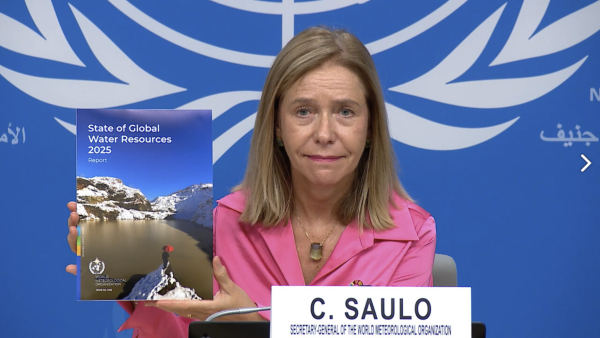
As world’s water reserves change, countries must prepare for a new reality: WMO
New data showing that rivers were at their lowest level for decades last year provides further evidence that the climate crisis is real and countries must act immediately to protect themselves from the increasing threat to communities and livelihoods, the UN World Meteorological Organization (WMO) said on Thursday.
The key findings from WMO’s State of Global Water Resources 2025 report covering the hydrological cycle and extreme events in the five-year period to last year:
- 2025 was one of driest years for river discharge in 35 years
- Past seven years have seen abnorfmal river flows
- Water storage on Earth’s land surface has decreased in past decade
- Widespread glacier loss across all regions for fourth consecutive year
- Asia and Africa are regions most affected by water-related disasters
- Water data availability has improved, but gaps remain in hard-hit areas
Highlighting the long-term decline in the Earth’s freshwater storage and glacier melt, WMO Secretary-General Celeste Saulo explained that the planet’s water reserves used to act as a planetary “savings account” that absorbed the occasional dry season, avoiding a water crisis. “One of the central stories of the 2025 report is what is happening to that savings account? And the simple answer is that we are depleting it,” she told journalists in Geneva.
Groundwater reserves are equally stretched and have been in decline since 2014, WMO’s report states, with nearly two-thirds of monitored wells worldwide showing levels lower than the historical norm and indicating a shift “further toward deficit…not recovery”.
“At the same time, we are seeing more water-related disasters,” Ms. Saulo said, while also stressing that the currently strengthening El Niño “will increase the risk of drought in some areas, and flooding in others”.
Glaciers disappearing
In 2025, for the fourth consecutive year, every major glaciated region on Earth lost ice mass, leading to short-term hazards including floods and long-term water insecurity, according to WMO.
Responding to a question about whether the changing global water cycle might have contributed to the deadly Nepal-China flooding disaster, Ms. Saulo explained that melting ice and rock was just one factor in the chain of events that ultimately sent a massive and deadly wall of water and debris downstream on 26 August, killing at least 1,367 people.
“You asked if it could happen again? Absolutely; the problem in this region is that there’s 63,700 glaciers at the last count,” she told a Press Conference in Geneva. “Even if you’re looking with remote sensing with satellites at these glaciers, you might see some faults, you might see some slight shifting, that does not mean necessarily catastrophic collapse. So, in order to plan for this, it’s very, very difficult. But the international community is looking very hard at ways in which we can bring people together to solve some of these monitoring issues.”
Data indicates that glaciers shrank between 2023 and 2025 with cumulative losses of 1,400 gigatonnes of water – or about one third of annual fresh water needs.
Every major glacier region on Earth lost ice for the fourth consecutive year.
“All 19 glacier regions around the globe lost ice; in Central Asia, Iceland, the Russian Arctic and western Canada and the United States, it was among the three worst years on record,” said Wayne Jenkinson, WMO’s Director of Hydrology and Cryosphere.
Some regions with smaller glaciers such as Central Europe, the Caucasus, the western Canada and the United States may already have reached “peak water”, Mr. Jenkinson warned.
“After this point, the glacier gives less meltwater each year simply because there is less ice left to melt. That matters for every community downstream that relies on water during hot, dry summers,” he explained.
Narelle van der Wel, WMO’s Head of Cryosphere Monitoring, Predictions and Services, stressed that while some further glacier loss is unavoidable, the eventual scale of the decline is not predetermined.
“Some glacier loss is inevitable, but total loss of glaciers is not yet inevitable,” she said, pointing to emissions reductions as central to limiting future losses.
Preparing for moving baselines
The report does not attribute every observed change to climate change alone. WMO says pressure on water resources and natural variability also contribute.
Mr. Jenkinson said governments need to prepare for “moving baselines” as historical patterns become less reliable.
“The situation 30 years ago is not where we are today,” he said. Countries, he added, need to prepare “for those changes that have really already arrived”.
ends
1
1
1
Edited News | OCHA , WHO
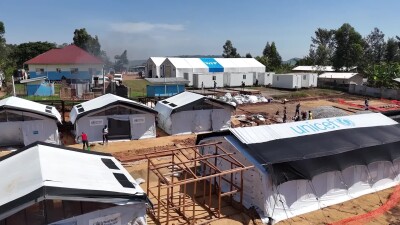
The deadly Ebola virus outbreak in DR Congo continues to spread across the vast country despite some success in containing it, aid officials said on Tuesday, in a renewed call for international support to help responders on the ground.
2
1
2
Press Conferences , Edited News | WFP
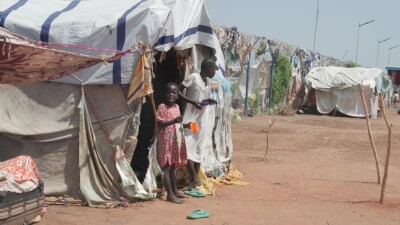
‘Super El Niño’ and converging crises worsen hunger in South Sudan and across the region - WFP
South Sudan’s hunger crisis is becoming increasingly catastrophic as violence, extreme weather and dwindling aid leave millions without enough food, the UN World Food Programme (WFP) warned on Tuesday.
1
1
1
Edited News | UN WOMEN
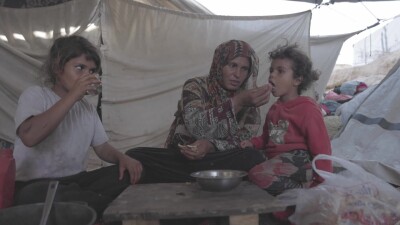
In war-torn Gaza, a growing number of women-headed households face “impossible decisions” every day, amid ongoing Israeli airstrikes and still-scarce resources, UN humanitarians said on Tuesday.
1
1
1
Edited News | OHCHR , UNOG
UN Human Rights Chief Volker Türk made the following remarks to the Enhanced Interactive Dialogue on the Independent Investigative Mechanism for Myanmar at the 63rd Human Rights Council.
1
Edited News | OHCHR , UNOG
UN Human Rights Chief Volker Türk today delivered an update on the global human rights situation to the 63rdsession of the Human Rights Council in Geneva.

1
1
1
Edited News | WHO
Repeated attacks on humanitarian warehouses put vital medical aid at risk in Ukraine - WHO
A new airstrike overnight damaged one of the main warehouses used by the UN health agency to store humanitarian medical supplies in the Kyiv region, the World Health Organization (WHO) said on Friday. This is the third attack to affect a WHO-used storage in the last three months.
2
2
2
Press Conferences , Edited News | WMO
Powerful El Niño heightens extreme-weather risks through 2027, as countries brace for impact - WMO
Fuelled by extraordinarily warm waters across the tropical Pacific Ocean, the El Niño climate pattern is expected to intensify in the coming months. Forecasters are almost certain that it will persist through February next year, with unusually warm conditions expected across the globe.