

The United Nations Office at Geneva
Multimedia Newsroom
In Madagascar, pockets of famine and children at risk of dying, warns WFP
“Pockets of famine” have been declared in Southern Madagascar, the UN World Food Programme (WFP) said on Tuesday, after warning that the country’s most vulnerable people are the victims of what is likely the world’s first climate change-induced famine.
“We have some pockets of IPC 5 or famine-like conditions, this is basically the only, maybe the first climate change famine on earth,” said Arduino Mangoni, WFP Deputy Country Director in Madagascar, citing IPC food insecurity assessments, which are used to gauge the level of emergency aid required.
“The most intense drought in 40 years has hit this specific region in 2021,” Mr. Mangoni continued. “The elderly people who we assist in the south, they keep telling us that this is the most severe phenomenon – the ‘Kéré’, they call it - since 1981.”
In total, some 1.3 million Malagasi have been classified IPC 3, 4 and 5, according to the last available data from April. Updated IPC projections will be released at the end of the year.
“The people in IPC 3 and above – around 1.3 million as we speak today - it’s higher than people in IPC 3 and above in 2016 during the El Niño driven crisis,” the WFP official continued, noting that there was in fact little difference between categories three to five.
“If we look at the projections for the months ahead, the situation is very alarming; so let’s start with the food security part; IPC 3, 4 and 5 trends since last year have gone up, so if we only look at IPC 4, around 200,000 people (were) in IPC 4 last trimester, last quarter of last year; we have around half a million now, with a projection of people in IPC 5 as well (of) around 30,000 between now and the end of the year, when the new IPC results will be available.”
In contrast to the world’s other IPC 5 famines - in Yemen, South Sudan and Ethiopia/Tigray – which are conflict-driven, the Madagascar crisis is likely a result of devastating climate factors, the WFP official noted.
“We have some acute phenomena, like the intensity of drought …back-to-back droughts in the last five years, a new phenomenon of sandstorms probably caused by soil erosion, deforestation for the last 20 to 30 years and then of course the consequences, the impact of COVID.”
Because of the pandemic’s impact on tourism and supply chains, villagers who had sought work in towns during lean times no longer had this option, Mr. Mangoni said.
People have also exhausted their usual coping techniques - such as selling their kitchen utensils – a last resort. “We have high prices, inflation is staggering, especially for food prices, including water,” he added. “And then we also have insecurity, there is a new, again a new phenomenon of “dahalo” - bandits ravaging the area.”
According to WFP, around 500,000 under-fives are believed to be malnourished; 110,000 of them are expected to be severely malnourished between now and April 2022.
“These are the children who are at risk of dying if not supported,” Mr. Mangoni said, adding that gauging the impact of famine in very young infants is complicated as their deaths are often not recorded in those under six months.
To help those in most need, WFP has already scaled up ration and nutrition programmes; it also plans to reach more than one million people in IPC3 to 5 from in December – the peak of the lean season - “until the next good harvest”, which it is hoped will come in April 2022.
To provide this emergency aid for the next six months, the agency has appealed for $69 million.
- ends-
STORY: WFP – Madagascar Hunger Crisis
TRT: 3’02’’
SOURCE: UNTV CH
LANGUAGE: ENGLISH
ASPECT RATIO: 16:9
DATELINE: 02 Nov 2021, GENEVA, Switzerland
SHOTLIST
- Exterior wide shot, United Nations flags flying.
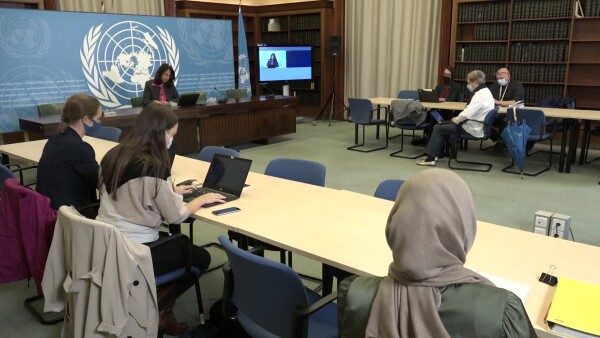
- Medium-wide shot, inside the press conference room (B-128), showing speakers and participants.
- SOUNDBITE (English): Arduino Mangoni, Deputy Country Director of Madagascar, World Food Programme (WFP): “The most intense drought in 40 years has hit this specific region in 2021. The elderly people who we assist in the south, they keep telling us that this is the most severe phenomenon – the “Kéré” - they call it (the drought) since 1981.”
- Medium shot, participants listening to the press briefing and moderator Alessandra Vellucci speaking, TV showing the external participants.
- SOUNDBITE (English): Arduino Mangoni, Deputy Country Director of Madagascar, World Food Programme (WFP): “If we look at the projections for the months ahead, the situation is very alarming; so let’s start with the food security part; IPC 3, 4 and 5 trends since last year have gone up, so if we only look at IPC4, around 200,000 people in IPC 4 last trimester, last quarter of last year, we have around half a million now, with a projection of people in IPC 5 as well around 30,000 between now and the end of the year when the new IPC results will be available.”
- Medium shot, journalists seated and masked taking notes, camera showing the technician from behind.
- SOUNDBITE (English): Arduino Mangoni, Deputy Country Director of Madagascar, World Food Programme (WFP): “We have pockets of famine, and in general the people in IPC 3 and above – around 1.3 million as we speak today- it’s higher than people in IPC 3 and above in 2016 during the El Niño driven crisis.”
- Medium shot, journalists seated and masked, large-screen TV showing the speakers to rear.
- SOUNDBITE (English): Arduino Mangoni, Deputy Country Director of Madagascar, World Food Programme (WFP): “We have some acute phenomena, like the intensity of drought as I mentioned, back-to-back droughts in the last five years, a new phenomenon of sandstorms probably caused by soil erosion, deforestation for the last 20 to 30 years and then of course the consequences, the impact of COVID.”
- Medium shot, Participants attending the meeting in the press briefing room (B-128).
- SOUNDBITE (English): Arduino Mangoni, Deputy Country Director of Madagascar, World Food Programme (WFP): “We have high prices, inflation is staggering, especially for food prices, including water. And then we also have insecurity, there is a new, again a new phenomenon of “dahalo” - bandits ravaging the area.”
- Close shot, participants seated and masked listening to the briefing.
- SOUNDBITE (English): Arduino Mangoni, Deputy Country Director of Madagascar, World Food Programme (WFP): “We have some pockets of IPC 5 or famine-like conditions, this is basically the only, maybe the first climate change famine on earth.”
- Close-up: a technician supervising the briefing on Zoom, other participants in the background.
- Medium shot showing participants to the meeting and the press briefing broadcast on Zoom.
- Close shot of the journalists present in the room taking notes.
Similar Stories

1
1
1
Edited News | OCHA , UNICEF , WFP
Aid agencies warned on Friday of the fast-developing humanitarian emergency inside Taiz City in Yemen, which has been encircled by de facto Houthi forces fighting government troops along the country’s west coast.

2
17
1
2
Edited News , Press Conferences , Images | OCHA , WMO
Two UN agencies teamed up on Wednesday to issue an appeal for immediate assistance to help communities already being impacted by the strongest El Niño on record.

3
16
2
2
Edited News , B-roll , Conferences , Images | UNITED NATIONS , UNOG
Sixth Consultative Meeting on Enhancing Coordination of Peace Initiatives and Efforts for Sudan

1
1
1
Edited News | UNICEF , WHO , UNHCR
Yemen war continues to force families from homes amid hunger and disease
More than 250,000 people have now fled renewed fighting in Yemen, the UN said on Tuesday, citing particular concern for those sheltering in the southwestern city of Taiz and the wider governorate, where access is “essentially blocked”.

1
1
1
Edited News | UNICEF
A little over one year since a ceasefire agreement was announced between Hamas fighters and Israel, more than 340 children have been reported killed and hundreds more injured, the UN Children’s Fund, UNICEF, said on Friday.

1
1
1
Edited News | UNICEF , IFRC
Six weeks after Nepal’s deadly flooding disaster, communities are still struggling to rebuild their lives, but they will need sustained help as global warming increases the risk of another Himalayan catastrophe, the UN Children’s Fund (UNICEF) said on Friday.

1
1
1
Edited News | WHO
In suspected Russia plague death, testing and monitoring underway – WHO
The death of a lab worker in Russia’s Siberia region has sparked concerns about plague being the cause, the UN World Health Organization (WHO) said on Tuesday, adding that it was following the situation closely.

1
1
Edited News | OHCHR , UNOG
UN Human Rights Chief Volker Türk on Friday provided and oral update to the 63rd session of the Human rights Council on Ukraine.

1
1
1
Edited News | OHCHR , UNOG
UN Human Rights Chief Volker Türk on Friday provided and oral update to the 63rd session of the Human rights Council on the human rights situation in Haiti.

1
1
1
Edited News | WHO
Repeated delays in bringing lifesaving medicines, prosthetics and more from Israel into Gaza risk having devastating consequences on Palestinians who urgently need them in the wartorn enclave, the UN World Health Organization (WHO) said on Friday. “A truck full of non-priority supplies or the right supplies arriving too late, doesn't save lives. That's the question that actually matters," said Dr Reinhilde Van De Weerdt, WHO Representative in the OPT.

1
1
1
Edited News | WHO
DRC: Early access to care and oxygen decisive for Ebola patients’ survival – WHO
In the Democratic Republic of the Congo (DRC), health workers fighting the country’s largest-ever Ebola outbreak are struggling to overcome critical challenges to patient care, the UN World Health Organization (WHO) warned on Tuesday.

1
1
1
Edited News | OCHA , UN
Civilians in Iran are continuing to feel the consequences of months of conflict and military escalation, the UN’s top official in the country has said, as loss of life, damage to civilian infrastructure and mounting economic pressures leave many facing continued uncertainty.