

The United Nations Office at Geneva
Multimedia Newsroom
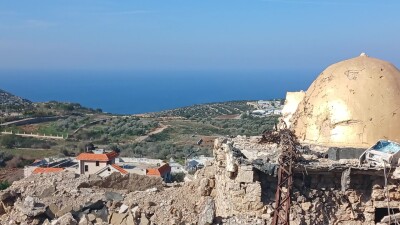
Since the Middle East war started on 28 February, several sites of major cultural significance have come under attack in Israel, Iran and Lebanon. Ensuring their protection is the task of the UN agency for education, science and culture, UNESCO.
At the request of the Lebanese Government, UNESCO placed 39 World Heritage sites under so-called “enhanced protection”.
But what is “enhanced protection” and what can the UN agency do to help in times of war? To help answer these questions, UN news talked to Krista Pikkat, Director of Culture and Emergencies Entity at UNESCO.
Living heritage of the communities under threat:
UNESCO has repeatedly warned about the impact of the hostilities on the region’s very rich and diverse cultural heritage. Since the outbreak of the war, UNESCO has received reports of damage to more than 20 different cultural sites which include the World Heritage Sites and other sites of national importance.
“We verify the reports that we receive from different sources, either through satellite images, by analyzing the before and after images, or through on-site inspections,” explained Ms. Pikkat.
UNESCO has now confirmed damage to five cultural properties in the region, including a synagogue, the Golestan palace, the Sa'dabad palace and the old Senat palace – all in Iran - along with Tyre in Lebanon where UNESCO has confirmed damage. “It's the living heritage of the communities that is under threat,” Ms. Pikkat stressed.
Lebanon and the “enhanced protection”:
Lebanon has 39 sites on UNESCO’s “enhanced protection” list, the most of any country.
“Enhanced protection is the highest level of international legal protection that exists” under the Second Protocol to the 1954 Hague Convention, Ms. Pikkat explained. “It’s granted to sites that are of greatest importance to humanity and it provides them with the highest level of immunity from military attacks.”
Any State or party not complying with the Convention could be guilty of a war crime.
In Lebanon, UNESCO works closely with Lebanese authorities, especially the Directorate General of Antiquities, providing technical advice and support for emergency cultural heritage protection. This includes training, emergency inventories, safeguarding measures, rehabilitating storage sites, evacuation guidelines for movable heritage, and marking protected sites with the Blue Shield emblem to ensure their protection.
Culturally significant:
Particularly during conflict, UNESCO urges restraint and protection for educational, cultural, media and scientific institutions, as they form the foundation of future societies.
The UN agency insists that in times of war, culture and heritage define people’s identity, providing comfort and support to communities.
When these key building blocks of society are targeted, their destruction deepens trauma, fuels resentment, and hinders recovery and dialogue, UNESCO says.
“We shouldn't only consider culture as something that is fragile and needs protection,” Ms. Pikkat insists. “Culture is also a source of resilience. It's also an economic asset for recovery and peacebuilding.”
ends
STORY: World Heritage protection during the war in the Middle East
TRT: 03:35’’
SOURCE: UNTV CH
RESTRICTIONS: For B-roll please credit © UNESCO/Maïssa Acheuk-Youcef.
LANGUAGE: ENGLISH/NATS
ASPECT RATIO: 16:9
DATELINE: 17 APRIL 2026 GENEVA, SWITZERLAND
1. Exterior wide shot: Palais des Nations, Flag Alley.
2. SOUNDBITE (English) – Krista Pikkat Director, Culture and Emergencies Entity, Culture Sector in the United Nations Educational, Scientific and Cultural Organization (UNESCO): “UNESCO has confirmed damage to five cultural properties in the region. Two of them are World Heritage Sites, and three are of national importance. You mentioned, for instance, the Golestan palace in Tehran, which is a World Heritage property, but there are other palaces, like Sa'dabad or the old Senat palace in Tehran that have been verified by UNESCO as damaged. As well as a synagogue in Tehran, but also the World Heritage Property Tyre in Lebanon that we have been able to verify.”
3. Various photos of UNESCO world heritage sites in Tyre in Lebanon adding a sign with UNESCO's "blue shield". March 2025. Please credit © UNESCO/Maïssa Acheuk-Youcef.
4. SOUNDBITE (English) – Krista Pikkat Director, Culture and Emergencies Entity, Culture Sector in the United Nations Educational, Scientific and Cultural Organization (UNESCO): “We verify the reports that we receive from different sources, either through satellite images, by analyzing the before and after images, or through on-site inspections.”
5. Various photos of UNESCO in different heritage sites in Lebanon (Tyre, Chamaa Citadel and Baalbeck) with signs of the UNESCO's "blue shield". March 2025. Please credit © UNESCO/Maïssa Acheuk-Youcef.
6. SOUNDBITE (English) – Krista Pikkat Director, Culture and Emergencies Entity, Culture Sector in the United Nations Educational, Scientific and Cultural Organization (UNESCO): “When culture is deliberately targeted, we see also that it deepens the trauma and it fuels resentment. It also makes the after-war or after-conflict resilience and dialogue more difficult. And also, of course, we shouldn't only consider culture as something that is fragile and needs protection. Culture is also a source of resilience. It's also an economic asset for recovery and peacebuilding.”
7. Various photos of UNESCO world heritage sites in Lebanon (Tyre, Chamaa Citadel and Baalbeck) with signs of UNESCO's "blue shield". March 2025. Please credit © UNESCO/Maïssa Acheuk-Youcef.
8. SOUNDBITE (English) – Krista Pikkat Director, Culture and Emergencies Entity, Culture Sector in the United Nations Educational, Scientific and Cultural Organization (UNESCO): “Already in 2024, Lebanon requested, the inscription of 34 of their sites under enhanced protection. And now in, on the 1st of April, we had another request pertaining to 39 additional Lebanese sites, that were put on a provisional basis on the International List of Cultural Property under Enhanced Protection.”
9. Various photos of UNESCO world heritage sites in Lebanon (Chamaa Citadel and Baalbeck) with signs of UNESCO's "blue shield". March 2025. Please credit © UNESCO/Maïssa Acheuk-Youcef.
10. SOUNDBITE (English) – Krista Pikkat Director, Culture and Emergencies Entity, Culture Sector in the United Nations Educational, Scientific and Cultural Organization (UNESCO): “Enhanced protection is the highest level of international legal protection that exists. As I said, under the Second Protocol, or the Hague Convention, it's granted to sites that are of greatest importance to humanity, and it provides them with the highest level of immunity from military attacks.”
11. Various photos of UNESCO world heritage sites in Tyre, Lebanon with signs of UNESCO's "blue shield". March 2025. Please credit © UNESCO/Maïssa Acheuk-Youcef.
12. SOUNDBITE (English) – Krista Pikkat Director, Culture and Emergencies Entity, Culture Sector in the United Nations Educational, Scientific and Cultural Organization (UNESCO): “It's also, of course, a call on the international society to protect these sites from military targets. And if this happens, this constitutes a serious violation and may amount to a war crime”.
13. Various photos of UNESCO world heritage sites in Lebanon (Qalaat Al Chakif or Beaufort Castle and Tyre). March 2025. Please credit © UNESCO/Maïssa Acheuk-Youcef.
Similar Stories

2
17
1
2
Edited News , Press Conferences | OCHA , WMO
Two UN agencies teamed up on Wednesday to issue an appeal for immediate assistance to help communities already being impacted by the strongest El Niño on record.

3
16
2
2
B-roll , Conferences , Edited News | UNITED NATIONS , UNOG
Sixth Consultative Meeting on Enhancing Coordination of Peace Initiatives and Efforts for Sudan

1
1
1
Edited News | UNICEF , WHO , UNHCR
Yemen war continues to force families from homes amid hunger and disease
More than 250,000 people have now fled renewed fighting in Yemen, the UN said on Tuesday, citing particular concern for those sheltering in the southwestern city of Taiz and the wider governorate, where access is “essentially blocked”.

1
1
1
Edited News | UNICEF
A little over one year since a ceasefire agreement was announced between Hamas fighters and Israel, more than 340 children have been reported killed and hundreds more injured, the UN Children’s Fund, UNICEF, said on Friday.

1
1
1
Edited News | UNICEF , IFRC
Six weeks after Nepal’s deadly flooding disaster, communities are still struggling to rebuild their lives, but they will need sustained help as global warming increases the risk of another Himalayan catastrophe, the UN Children’s Fund (UNICEF) said on Friday.

1
1
1
Edited News | WHO
In suspected Russia plague death, testing and monitoring underway – WHO
The death of a lab worker in Russia’s Siberia region has sparked concerns about plague being the cause, the UN World Health Organization (WHO) said on Tuesday, adding that it was following the situation closely.

1
1
Edited News | OHCHR , UNOG
UN Human Rights Chief Volker Türk on Friday provided and oral update to the 63rd session of the Human rights Council on Ukraine.

1
1
1
Edited News | OHCHR , UNOG
UN Human Rights Chief Volker Türk on Friday provided and oral update to the 63rd session of the Human rights Council on the human rights situation in Haiti.

1
1
1
Edited News | WHO
Repeated delays in bringing lifesaving medicines, prosthetics and more from Israel into Gaza risk having devastating consequences on Palestinians who urgently need them in the wartorn enclave, the UN World Health Organization (WHO) said on Friday. “A truck full of non-priority supplies or the right supplies arriving too late, doesn't save lives. That's the question that actually matters," said Dr Reinhilde Van De Weerdt, WHO Representative in the OPT.

1
1
1
Edited News | WHO
DRC: Early access to care and oxygen decisive for Ebola patients’ survival – WHO
In the Democratic Republic of the Congo (DRC), health workers fighting the country’s largest-ever Ebola outbreak are struggling to overcome critical challenges to patient care, the UN World Health Organization (WHO) warned on Tuesday.

1
1
1
Edited News | OCHA , UN
Civilians in Iran are continuing to feel the consequences of months of conflict and military escalation, the UN’s top official in the country has said, as loss of life, damage to civilian infrastructure and mounting economic pressures leave many facing continued uncertainty.
1
1
1
Edited News | WHO , UNICEF
Aid agencies in Yemen highlighted the growing hunger emergency sparked by renewed fighting between Houthi opposition forces and Government troops, after mobile health clinics reported that hundreds of children displaced by the violence are suffering from the most deadly form of malnutrition.