

The United Nations Office at Geneva
Multimedia Newsroom
Edited News | OHCHR , HRC
UN High Commissioner for Human Rights Volker Türk briefing to the Special Session on Iran at the Human Rights Council
“The killing on the streets of Iran may have subsided, but the brutality continues,” he said. “The violent repression of the Iranian people does not solve any of the country’s problems. On the contrary: it creates conditions for further human rights violations, instability and bloodshed.”
Thousands of people, including children, were killed in the course of a security crackdown that intensified on 8 January, with the use of live ammunition by the security forces against demonstrators. More specific facts are difficult to verify because of the communications shutdown that was also initiated on 8 January, and because we do not have access to Iran.
Peaceful protesters were reportedly killed in the streets and in residential areas, including universities and medical facilities. Video evidence appears to show hundreds of bodies in morgues, with fatal injuries to the head and chest. Hundreds of security personnel were reportedly also killed.
“We have indications that the security forces made mass arrests in several cities, even pursuing injured people into hospitals, and detaining lawyers, human rights defenders, activists, and ordinary civilians,” the High Commissioner said.
“The Tehran Prosecutor’s Office has reportedly opened criminal cases against athletes, actors, people involved in the movie industry, and the owners of cafes, on charges of supporting the protests.”
And in a chilling development, the Chief of the Judiciary said earlier this week that their work had just started, and that there would be no leniency for those detained, the High Commissioner told the Council.
Worryingly, he said, Iran remains among the top executioner states in the world. In 2025, at least 1,500 people were reportedly executed – a 50 percent increase on the previous year.
“I am deeply concerned by contradictory statements from the Iranian authorities about whether those detained in connection with the protests may be executed,” Türk said, noting that while the Foreign Minister said executions were not under consideration, senior judicial officials continued to threaten protestors with charges that carry a mandatory death sentence.
“The broadcast by state media of nearly 100 forced confessions by those detained, and a lack of transparency around proceedings, raise grave concerns over the rights to due process and a fair trial,” Türk said. “Reports indicate that detainees are unable to communicate with their families or legal representatives due to the communications and internet shutdown.”
“This shutdown, the longest recorded in Iran, has severely restricted access to information and communication. Iranians have been unable to speak to each other or to people outside the country, and unable to find out what is happening around them.”
The Iranian authorities have sought to delegitimize the protesters by labelling them ‘terrorists’, ‘enemies of the state’ and ‘foreign agents’, Türk said. They accused rioters of infiltrating peaceful protests to attack security officers and public property.
None of this would justify the resort to excessive, unnecessary and disproportionate use of force, or reduce the Government’s obligations to ensure due process and transparent investigations, the High Commissioner said.
These protests are the latest in a long line of heartfelt calls by the Iranian people for change, he told the Council.
And the crackdown is the latest in a long line of violent repression by the Iranian authorities – most recently in 2022, following the death in custody of Jina Mahsa Amini. This Council mandated the Fact-Finding Mission on Iran after that convulsion of violence, he said.
The recent protests were sparked by soaring prices, against the backdrop of a serious economic crisis, compounded by government policies and the impact of foreign sanctions.
They then evolved into sustained demands for political, social and economic reforms.
The authorities initially responded with a call for dialogue, and announced the doubling of a state subsidy to mitigate rising prices.
Tragically, Türk said, this quickly gave way to the old pattern of killings and arrests; a pattern of subjugation and overwhelming force that can never address people’s grievances and frustrations.
“The only way out of this frightening escalation is through dialogue based on the human rights of all Iranians. The aspirations and ideas in particular of women, girls, young people and ethnic and religious minorities must be allowed to shape Iran’s future,” Türk said.
He said his Office remains available to support any change in direction that fully respects Iran’s human rights obligations.
Türk shared seven messages for the top leadership in Iran, saying they were intended as an appeal to find a solution to the current crisis, and as a way forward for the people of Iran. He called on the authorities to:
- reconsider, to pull back, and to end their brutal repression, including summary trials and disproportionate sentences.
- release immediately of all those arbitrarily detained by the Iranian authorities,
- enact a complete moratorium on the death penalty.
- to end the internet and communications shutdown, and to stop using this as a systematic practice.
- bring accountability. Longstanding impunity for past human rights violations is fueling grievance and tension in Iran, and therefore urged independent investigations into all human rights violations, consistent with international standards.
- initiate reforms that include steps to rebuild trust and repair the social contract.
- engage with the international human rights ecosystem, by cooperating meaningfully with my Office, with the Independent International Fact-Finding Mission and the Special Rapporteur. This includes allowing full access to the country.
Beyond Iran, Türk urged the international community to take immediate steps to address the impact of sanctions on the human rights of the Iranian people.
“Aggressive rhetoric and threats are deeply counter-productive. Accountability for human rights violations cannot be achieved by military force coming from inside or outside Iran,” Türk said. “It is imperative to reduce tensions across the region.”
Human rights are an essential tool to navigate through difficult issues and troubled times, not a weapon to be instrumentalized against anyone, he said.
The High Commissioner said his most fervent wish is for this crisis to become a turning point for change that puts the rights, aspirations and needs of the Iranian people first.
ENDS
For more information and media requests, please contact:
In Geneva
Ravina Shamdasani: +41 22 917 9169 / ravina.shamdasani@un.org
Jeremy Laurence: +41 22 917 9383 / jeremy.laurence@un.org
Marta Hurtado: +41 22 917 9466 / marta.hurtadogomez@un.org
Thameen Al-Kheetan: +41 22 917 4232 / thameen.alkheetan@un.org
Facebook unitednationshumanrights
Instagram @unitednationshumanrights
STORY: UN High Commissioner for Human Rights Volker Türk briefing to the Special Session on Iran at the Human Rights Council
TRT: 03:02
SOURCE: OHCHR/ UNOG
RESTRICTIONS: NONE
LANGUAGE: English/NATS
ASPECT RATIO: 16:9
DATELINE: 23 January 2026 – GENEVA, SWITZERLAND
SHOTLIST
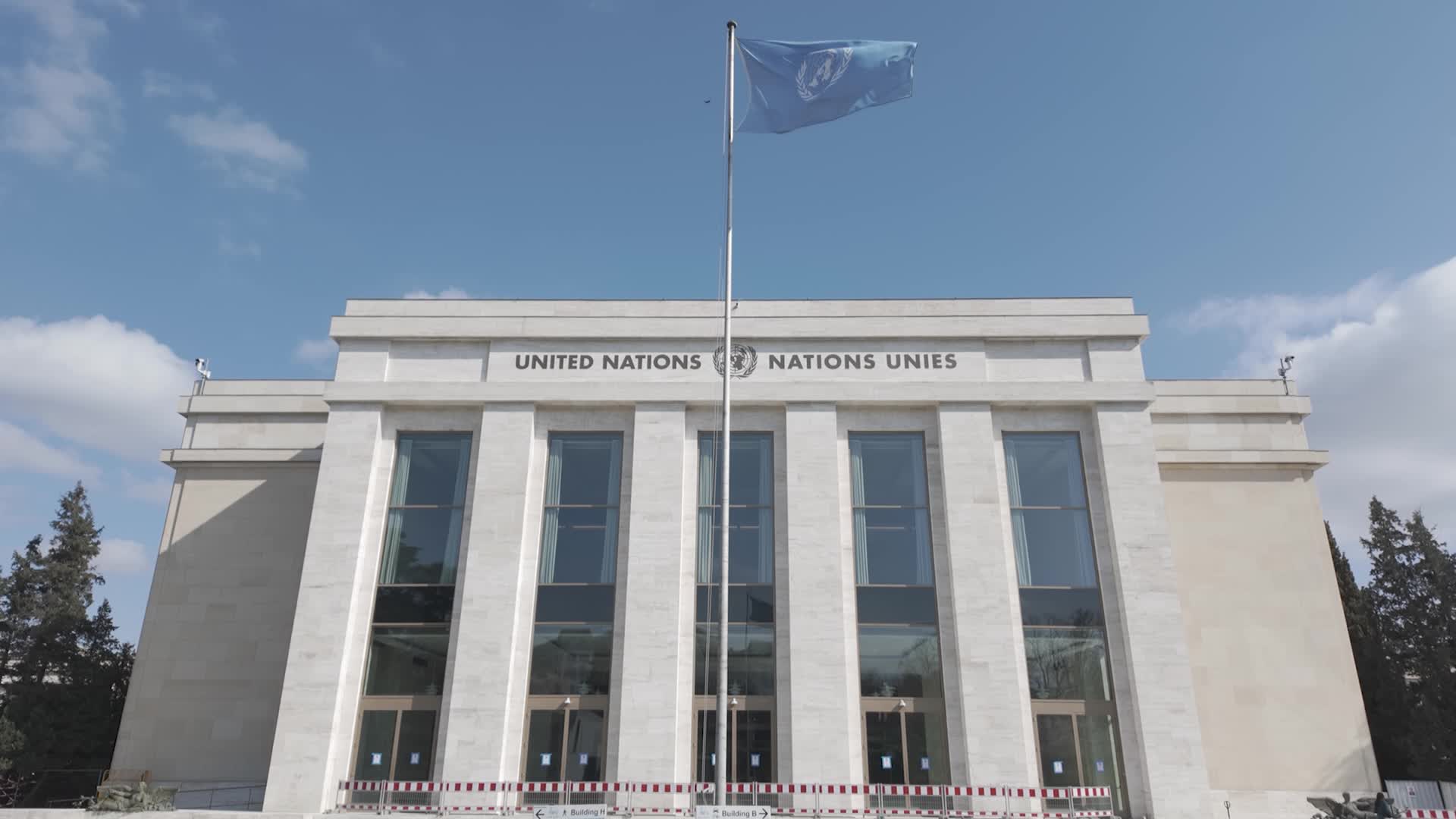
- Exterior shot : Palais des Nations
- Wide shots: Assembly Hall
- SOUNDBITE (English)—Volker Türk, United Nations High Commissioner for Human Rights: “The killing on the streets of Iran may have subsided, but the brutality continues. The violent repression of the Iranian people does not solve any of the country’s problems. On the contrary: it creates conditions for further human rights violations, instability and bloodshed.”
- Cutaways: Assembly Hall
- SOUNDBITE (English)—Volker Türk, United Nations High Commissioner for Human Rights: “We have indications that the security forces made mass arrests in several cities, even pursuing injured people into hospitals, and detaining lawyers, human rights defenders, activists, and ordinary civilians. The Tehran Prosecutor’s Office has reportedly opened criminal cases against athletes, actors, people involved in the movie industry, and the owners of cafes, on charges of supporting the protests.”
- Cutaways: Assembly Hall
- SOUNDBITE (English)—Volker Türk, United Nations High Commissioner for Human Rights: “I am deeply concerned by contradictory statements from the Iranian authorities about whether those detained in connection with the protests may be executed.”
- Cutaways: Assembly Hall
- SOUNDBITE (English)—Volker Türk, United Nations High Commissioner for Human Rights: “The broadcast by state media of nearly 100 forced confessions by those detained, and a lack of transparency around proceedings, raise grave concerns over the rights to due process and a fair trial.”
- Cutaways: Assembly Hall
- SOUNDBITE (English)—Volker Türk, United Nations High Commissioner for Human Rights:“Reports indicate that detainees are unable to communicate with their families or legal representatives due to the communications and internet shutdown. This shutdown, the longest recorded in Iran, has severely restricted access to information and communication. Iranians have been unable to speak to each other or to people outside the country, and unable to find out what is happening around them.”
- Cutaways: Assembly Hall
- SOUNDBITE (English)—Volker Türk, United Nations High Commissioner for Human Rights: “The only way out of this frightening escalation is through dialogue based on the human rights of all Iranians. The aspirations and ideas in particular of women, girls, young people and ethnic and religious minorities must be allowed to shape Iran’s future.”
- Cutaways: Assembly Hall
- SOUNDBITE (English)—Volker Türk, United Nations High Commissioner for Human Rights:“Aggressive rhetoric and threats are deeply counter-productive. Accountability for human rights violations cannot be achieved by military force coming from inside or outside Iran. It is imperative to reduce tensions across the region.”
Similar Stories

1
1
1
Edited News | UNICEF
A little over one year since a ceasefire agreement was announced between Hamas fighters and Israel, more than 340 children have been reported killed and hundreds more injured, the UN Children’s Fund, UNICEF, said on Friday.

1
1
1
Edited News | UNICEF , IFRC
Six weeks after Nepal’s deadly flooding disaster, communities are still struggling to rebuild their lives, but they will need sustained help as global warming increases the risk of another Himalayan catastrophe, the UN Children’s Fund (UNICEF) said on Friday.

1
1
1
Edited News | WHO
In suspected Russia plague death, testing and monitoring underway – WHO
The death of a lab worker in Russia’s Siberia region has sparked concerns about plague being the cause, the UN World Health Organization (WHO) said on Tuesday, adding that it was following the situation closely.

1
1
Edited News | OHCHR , UNOG
UN Human Rights Chief Volker Türk on Friday provided and oral update to the 63rd session of the Human rights Council on Ukraine.

1
1
1
Edited News | OHCHR , UNOG
UN Human Rights Chief Volker Türk on Friday provided and oral update to the 63rd session of the Human rights Council on the human rights situation in Haiti.

1
1
1
Edited News | WHO
Repeated delays in bringing lifesaving medicines, prosthetics and more from Israel into Gaza risk having devastating consequences on Palestinians who urgently need them in the wartorn enclave, the UN World Health Organization (WHO) said on Friday. “A truck full of non-priority supplies or the right supplies arriving too late, doesn't save lives. That's the question that actually matters," said Dr Reinhilde Van De Weerdt, WHO Representative in the OPT.

1
1
1
Edited News | WHO
DRC: Early access to care and oxygen decisive for Ebola patients’ survival – WHO
In the Democratic Republic of the Congo (DRC), health workers fighting the country’s largest-ever Ebola outbreak are struggling to overcome critical challenges to patient care, the UN World Health Organization (WHO) warned on Tuesday.

1
1
1
Edited News | OCHA , UN
Civilians in Iran are continuing to feel the consequences of months of conflict and military escalation, the UN’s top official in the country has said, as loss of life, damage to civilian infrastructure and mounting economic pressures leave many facing continued uncertainty.
1
1
1
Edited News | WHO , UNICEF
Aid agencies in Yemen highlighted the growing hunger emergency sparked by renewed fighting between Houthi opposition forces and Government troops, after mobile health clinics reported that hundreds of children displaced by the violence are suffering from the most deadly form of malnutrition.
1
1
1
Edited News | UNHCR
Displacement on the rise in Yemen as fighting continues - UNHCR
As hostilities worsen in Yemen, more people have been fleeing their homes, further intensifying the humanitarian crisis within the region, the UN Refugee Agency (UNHCR) warned on Tuesday.
1
1
1
Edited News | IOM , OHCHR , UNFPA , UNOG , UNHCR , WHO
Yemen’s humanitarian crisis growing by the hour amid spike in displacement
Yemenis displaced by renewed fighting have described fleeing for their lives amid shelling and gunfire, aid agencies reported on Friday, while highlighting the dramatic increase in humanitarian needs in the country and in Djibouti, where thousands have sought shelter.
1
1
1
Edited News | OHCHR , UNOG
The UN Human Rights Office issued on Friday a report documenting a shocking pattern of sexual violence amid Russia’s full-scale armed attack on Ukraine.