

The United Nations Office at Geneva
Multimedia Newsroom
Sudan: UN raises alarm over mass atrocities in El Fasher as survivors report executions, killings and rapes
More details continue to emerge about atrocities committed during and after the fall of El Fasher to the Rapid Support Forces (RSF) in Sudan on 23 October. Since the powerful paramilitary group made a major incursion into the city last week, the UN Human Rights Office has received “horrendous accounts of summary executions, mass killings, rapes, attacks against humanitarian workers, looting, abductions and forced displacement,” said Seif Magango, spokesperson for the Office of the United Nations High Commissioner for Human Rights (OHCHR).
Speaking from Nairobi to journalists in Geneva Mr. Magango said the office has received “testimonies from those who fled El Fasher terrified, and who survived the threatening journey to Tawila, approximately 70 kilometres away”. That journey takes a three to four days on foot.
More than 36,000 people have fled since Saturday, mostly on foot, to Tawila - a town west of El Fasher that is already sheltering more than 652,000 displaced people, according to the International Organization for Migration (IOM).
Despite telecommunications being cut and the chaotic situation on the ground making it difficult to obtain direct information from inside the city, OHCHR estimates that “the death toll of civilians and those placed off the comb during the RSF’s attack on the city, as well as in the days after the takeover, could amount to hundreds”.
The RSF, a paramilitary group, has been locked in a brutal conflict with the Sudanese Armed Forces (SAF) since April 2023. The group seized control of El Fasher, the capital of North Darfur state, after forcing Sudan’s army to withdraw from its last stronghold in the western Darfur region.
Distressing reports indicate the killing of sick and wounded individuals inside the Saudi Maternity Hospital and in buildings in the Dara Jawila and Al-Matar neighborhoods, which were being used as temporary medical centers.
“These extremely grave allegations raise urgent questions as to the circumstances of these killings in what should be places of safety for anyone in need of medical help,” Mr. Magango said. He emphasized that an investigation into the atrocities must be carried out in an independent, transparent and prompt manner to ensure justice.
The Human Rights Office has also received alarming reports of sexual violence from humanitarian partners on the ground. “At least 25 women were gang raped when RSF’s forces entered a shelter for displaced people near El Fasher University. Witnesses confirm RSF’s personnel selected women and girls and raped them at gunpoint,” Mr. Magango said.
The pattern of violence has also targeted humanitarian workers and local volunteers supporting vulnerable communities in El Fasher. At least two local humanitarian responders were killed inside the paramilitary-controlled city on 27 and 29 October. The Human rights Office has recorded at least four incidents in which humanitarian personnel and local volunteers were assaulted and confirmed that three doctors are being held by the RSF.
The World Health Organization (WHO) has corroborated reports of attacks on health facilities and personnel, deploring the abduction of six health workers - four doctors, a nurse and a pharmacist. The Saudi Maternity hospital has been attacked five times in October alone.
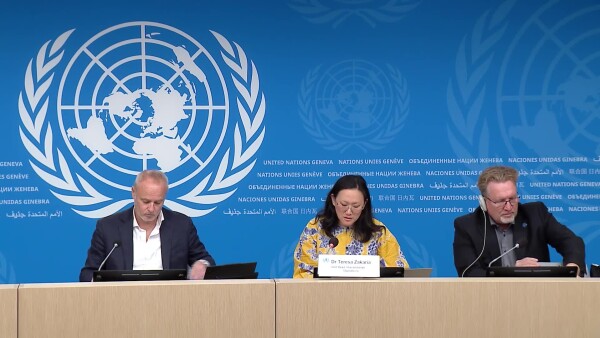
Following the capture of El Fasher, there is no longer any humanitarian health presence in the city and access remains blocked. The UN heath agency is “unable to assist those who have been impacted, the injuries that have occurred from the multiple attacks against civilians,” explained Dr. Teresa Zakaria, head of WHO’s Humanitarian Operations Unit.
WHO confirmed that 189 attacks have been verified in Sudan this year, resulting in 1,670 deaths and 419 injuries. “Eighty-six per cent of all these attack-related deaths have occurred this year alone and this indicates that attacks are getting deadlier,” Dr. Zakaria said.
Fewer than half of health facilities across Sudan are providing their full range of services, according to WHO. Twelve percent are only partially functional, while 40 percent are completely nonfunctional. In the Kordofan and Darfur states, the situation is significantly worse.
“The Sudan Humanitarian Response Plan to date is only 27.4 per cent funded - a very, very big gap,” Dr Zakaria added. “For the health sector itself, funding stands at 37 per cent, so, we are struggling very much with resources. That’s why we are calling on the international community not to abandon the people of Sudan, because the main actors are our Sudanese organizations, who continue to be present and deliver assistance”.
That call was echoed by Seif Magango who reiterated UN High Commissioner for Human Rights Volker Türk’s appeal for “states with influence over the parties in the conflict to act urgently to end the violence, halt the flow of arms fueling violations, and ensure meaningful protection of civilians.”
Sudan, a gold- and oil-rich nation- has become the site of the world's largest humanitarian and displacement crisis on record, with about 14 million people displaced out of a population of 51 million. Famine is widespread, and outbreaks of cholera and other deadly diseases are increasing.
With the capture of El Fasher, the RSF’s territorial control now extends across Darfur and parts of Sudan’s south, while the Sudanese Armed Forces (SAF) control the capital, Khartoum, and much of the country’s north and center.
Ends
Story: “Sudan update - OHCHR, WHO” – Friday 31 October 2025
Speakers:
- Seif Magango, spokesperson for the Office of the United Nations High Commissioner for Human Rights (OHCHR) (speaking from Nairobi)
- Dr Teresa Zakaria, World Health Organization (WHO), Unit Head, Humanitarian Operations
TRT: 03’18”
SOURCE: UNTV CH
RESTRICTIONS: NONE
LANGUAGE: ENGLISH / NATS
ASPECT RATIO: 16:9
DATELINE: 31 October 2025 - GENEVA, SWITZERLAND
Geneva Press briefing
SHOTLIST
- Exterior medium shot: UN flag alley.
- Wide lateral shot of the podium with speakers at the press conference room.
- SOUNDBITE (English) Seif Magango, spokesperson for the Office of the United Nations High Commissioner for Human Rights (OHCHR): “We have received horrendous accounts of summary executions, mass killings, rapes, attacks against humanitarian workers, looting, abductions and forced displacement. Our office has received testimonies from those who fled El Fasher terrified and who survived the threatening journey to Tawila, approximately 70 kilometres away.”
- Wide lateral shot of the press conference room.
- SOUNDBITE (English) Seif Magango, spokesperson for the Office of the United Nations High Commissioner for Human Rights (OHCHR): “Our office has received distressing reports of the killing of sick and wounded individuals inside Al-Saudi Maternity Hospital and various premises located in the Dara Jawila and Al-Matar neighborhoods, which were temporarily serving as medical centers. These extremely grave allegations raise urgent questions as to the circumstances of these killings in what should be places of safety for anyone in need of medical help.”
- Medium shot: podium from the back and journalists at the press conference room.
- SOUNDBITE (English) Seif Magango, spokesperson for the Office of the United Nations High Commissioner for Human Rights (OHCHR): “Humanitarian partners reported that at least 25 women were gang raped when RSF forces entered a shelter for displaced people near El Fasher University. Witnesses confirm RSF personnel selected women and girls and raped them at gunpoint.
- Cutaway: Podium with speakers at the press room.
- SOUNDBITE (English) Dr. Teresa Zakaria, World Health Organization (WHO), Unit Head for Humanitarian Operations: “Following the capture of El Fasher, there is no longer any humanitarian health presence in the city and access has remained blocked. So, we're unable to also assist those who have been impacted, the injuries that have occurred from the multiple attacks against civilians. So that same day, six health workers were abducted, four doctors, a nurse and a pharmacist, and the maternity hospital has been attacked five times this month alone.”
- Medium shot of the podium and speaker Dr Zakaria on screen.
- SOUNDBITE (English) Dr. Teresa Zakaria, World Health Organization (WHO), Unit Head for Humanitarian Operations: “189 attacks have been verified in Sudan this year, which led to 1,670 deaths and 419 injuries. 86 per cent of all these attacks’ related deaths have occurred this year alone and this indicates that attacks are getting deadlier.”
- Medium shot of the podium and speaker Dr Zakaria on screen.
- SOUNDBITE (English) Dr. Teresa Zakaria, World Health Organization (WHO), Unit Head for Humanitarian Operations: “The Sudan Humanitarian Response Plan to date is only 27.4 per cent funded, so, a very, very big gap. For the health sector itself, it is at 37 per cent funded. So, we are struggling very much with resources and hence, why also that call for not abandoning the people of Sudan because indeed, I mean the main actors are our Sudanese organizations who continue to be present and deliver assistance.”
- Medium shot of the podium and speaker Seif Magango on screen.
- SOUNDBITE (English) Seif Magango, spokesperson for the Office of the United Nations High Commissioner for Human Rights (OHCHR): “The UN High Commissioner for Human Rights, Volker Türk, repeats his call on States with influence over the parties in the conflict to act urgently to put an end to the violence, halt the flow of arms that are fueling the violations that we continue to witness and to ensure meaningful protection of civilians.”
- Various shots of the press conference room.
Similar Stories

2
17
1
2
Edited News , Press Conferences | OCHA , WMO
Two UN agencies teamed up on Wednesday to issue an appeal for immediate assistance to help communities already being impacted by the strongest El Niño on record.
3
16
2
2
B-roll , Conferences , Edited News | UNITED NATIONS , UNOG
Sixth Consultative Meeting on Enhancing Coordination of Peace Initiatives and Efforts for Sudan

1
1
1
Edited News | UNICEF , WHO , UNHCR
Yemen war continues to force families from homes amid hunger and disease
More than 250,000 people have now fled renewed fighting in Yemen, the UN said on Tuesday, citing particular concern for those sheltering in the southwestern city of Taiz and the wider governorate, where access is “essentially blocked”.

1
1
1
Edited News | UNICEF
A little over one year since a ceasefire agreement was announced between Hamas fighters and Israel, more than 340 children have been reported killed and hundreds more injured, the UN Children’s Fund, UNICEF, said on Friday.

1
1
1
Edited News | UNICEF , IFRC
Six weeks after Nepal’s deadly flooding disaster, communities are still struggling to rebuild their lives, but they will need sustained help as global warming increases the risk of another Himalayan catastrophe, the UN Children’s Fund (UNICEF) said on Friday.

1
1
1
Edited News | WHO
In suspected Russia plague death, testing and monitoring underway – WHO
The death of a lab worker in Russia’s Siberia region has sparked concerns about plague being the cause, the UN World Health Organization (WHO) said on Tuesday, adding that it was following the situation closely.

1
1
Edited News | OHCHR , UNOG
UN Human Rights Chief Volker Türk on Friday provided and oral update to the 63rd session of the Human rights Council on Ukraine.

1
1
1
Edited News | OHCHR , UNOG
UN Human Rights Chief Volker Türk on Friday provided and oral update to the 63rd session of the Human rights Council on the human rights situation in Haiti.

1
1
1
Edited News | WHO
Repeated delays in bringing lifesaving medicines, prosthetics and more from Israel into Gaza risk having devastating consequences on Palestinians who urgently need them in the wartorn enclave, the UN World Health Organization (WHO) said on Friday. “A truck full of non-priority supplies or the right supplies arriving too late, doesn't save lives. That's the question that actually matters," said Dr Reinhilde Van De Weerdt, WHO Representative in the OPT.

1
1
1
Edited News | WHO
DRC: Early access to care and oxygen decisive for Ebola patients’ survival – WHO
In the Democratic Republic of the Congo (DRC), health workers fighting the country’s largest-ever Ebola outbreak are struggling to overcome critical challenges to patient care, the UN World Health Organization (WHO) warned on Tuesday.

1
1
1
Edited News | OCHA , UN
Civilians in Iran are continuing to feel the consequences of months of conflict and military escalation, the UN’s top official in the country has said, as loss of life, damage to civilian infrastructure and mounting economic pressures leave many facing continued uncertainty.
1
1
1
Edited News | WHO , UNICEF
Aid agencies in Yemen highlighted the growing hunger emergency sparked by renewed fighting between Houthi opposition forces and Government troops, after mobile health clinics reported that hundreds of children displaced by the violence are suffering from the most deadly form of malnutrition.