

The United Nations Office at Geneva
Multimedia Newsroom
World’s ‘warmongers’ must stop, UN chief tells Human Rights Council
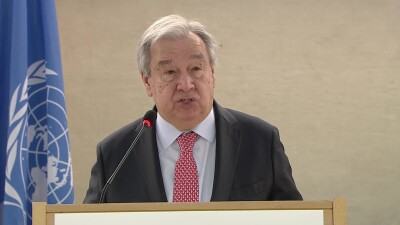
With no end to numerous protracted conflicts - not least in Ukraine, three years to the day since the full-scale Russian invasion - UN chief António Guterres on Monday scorned the world’s “warmongers” for trampling on people’s most fundamental rights.
On the opening day of the Human Rights Council in Geneva, Secretary-General rounded on “warmongers who thumb their nose at international law, international humanitarian law and the UN Charter”.
To date, Ukraine has seen more than 12,600 civilians killed, many more injured and entire communities reduced to rubble, Mr. Guterres told the UN’s top human rights forum. “We must spare no effort to bring an end to this conflict and achieve a just and lasting peace in line with the UN Charter, international law and General Assembly resolutions, he insisted.
“One by one, human rights are being suffocated,” Mr. Guterres continued, singling out the “autocrats crushing opposition because they fear what a truly empowered people would do”, amid “wars and violence that strip populations of their right to food, water and education”.
Turning to the “precarious” ceasefire in Gaza, the UN chief insisted that a resumption of hostilities must be avoided at all costs for the sake of the enclave’s people who have endured 15 months of constant Israeli bombardment. Mr. Guterres also expressed deep concern about rising violence in the occupied West Bank by Israeli settlers - “and other violations, as well as calls for annexation”.
“It’s time for a permanent ceasefire, the dignified release of all remaining hostages, irreversible progress towards a two-State solution, an end to the occupation, and the establishment of an independent Palestinian State, with Gaza as an integral part.”
Silence the guns
In a wide-ranging speech to the world’s top human rights forum, the UN Secretary-General also called for diplomacy and dialogue to help resolve horrific, ongoing rights violations from the Sahel to Myanmar, Haiti and eastern Democratic Republic of the Congo.
“We see a deadly whirlwind of violence and horrifying human rights abuses, amplified by the recent M23 offensive, supported by the Rwandan Defense
Forces - as more cities fall, the risk of a regional war rises,” Mr. Guterres said. “It’s time to silence the guns; it’s time for diplomacy and dialogue.”
And amid growing intolerance towards society’s most vulnerable people - from indigenous peoples, to migrants, refugees, the LGBTQI+ community and persons with disabilities – the UN Secretary-General also criticized the voices of “division and anger” for whom human rights threaten their quest for “power, profit and control.”
Echoing the UN chief’s concerns that human rights are “being pummelled hard” today, putting at risk 80 years of multilateral cooperation embodied by Organizations, UN human rights chief Volker Türk warned that the international system “is going through a tectonic shift, and the human rights edifice we have built up so painstakingly over decades has never been under so much strain”.
Beyond Ukraine, where Russian attacks have created “wanton destruction”, Mr. Türk told the Council’s Member States that the suffering borne by Gazans and Israelis since the Hamas-led attacks that sparked the war in October 2023 had been “unbearable”.
The UN rights chief also repeated his call for an independent probe into grave violations of international law “committed by Israel in the course of its attacks across Gaza, and by Hamas and other Palestinian armed groups”.
Mr. Türk also condemned as “completely unacceptable” any suggestion that people can be forced from their land – amid proposals floated by the United States that Gazans should be resettled outside the devastated Strip.
His comments came on the opening day of the Human Rights Council in Geneva which meets in three scheduled sessions throughout the year. March is traditionally the “high-level” session where top national representatives rub shoulders at the Palace of Nations in Geneva.
‘Strongmen and oligarchs’ on rise
In a call to action amid rising social tensions linked to widening inequality, disinformation and hate speech spreading online, the High Commissioner for Human Rights highlighted that these problems were happening while the world’s richest one per cent control more wealth than the majority of humanity added together.
“The global consensus on human rights is crumbling under the weight of authoritarians, strongmen and oligarchs,” Mr. Türk insisted. “By some estimates, autocrats now control around one-third of the world’s economy – more than double the proportion 30 years ago,” he continued.
Earlier, the UN Secretary-General issued a similar warning about toxic social media engagement that is already undermining people’s human rights. “Verbal violence online can easily spill into physical violence in real life,” he told the Council, as he cautioned against “rollbacks” on online fact-checking and content moderation, which will likely promote “more hate, more threats, and more violence”.
And he added: “Make no mistake. These rollbacks will lead to less free speech, not more, as people become increasingly fearful to engage on these platforms.”
Nigh-on six weeks of debates are slated to discuss emergencies in around 40 countries – from Belarus to DR Congo, DPRK/North Korea, Haiti, Sudan, Ukraine and more – along with thematic issues and some 80 reports from top independent rights experts and the UN human rights office, OHCHR – on disability rights, genocide, children in armed conflict and torture, among others – until the 58th session ends on Friday 4 April.
The Human Rights Council is the world’s principal body for discussions and action on human rights. It was founded in 2006 and has 47 Member States, although all 193 countries belonging the UN can take part as observers.
STORY: António Guterres at HRC58 Opening
TRT: 03:43”
SOURCE: UNTV CH
RESTRICTIONS: NONE
LANGUAGE: ENGLISH, FRENCH / NATS
ASPECT RATIO: 16:9
DATELINE: 24 February 2025 GENEVA, SWITZERLAND
SHOTLIST
1. Exterior wide shot: Palais des Nations, Flag Alley.
2. Medium shot of the entrance, UN Secretary General entering the building.
3. Wide shot of the Human Rights Council Conference Room.
4. SOUNDBITE (English) - António Guterres, UN Secretary-General : “We begin this session under the weight of a grim milestone - the third anniversary of Russia’s invasion of Ukraine in violation of the UN Charter.”
5. Medium shot of the Secretary General speaking in the conference room.
6. SOUNDBITE (English) - António Guterres, UN Secretary-General : “We must spare no effort to bring an end to this conflict and to achieve a just and lasting peace in line with the UN Charter, international law and General Assembly resolutions.”
7. Medium shot of the Secretary-General speaking and of the audience listening.
8. SOUNDBITE (English) - António Guterres, UN Secretary-General : “We are witnessing a precarious ceasefire. We must avoid at all costs a resumption of hostilities. The people in Gaza have already suffered too much. It’s time for a permanent ceasefire, the dignified release of all remaining hostage, irreversible progress towards a two-state solution, and end to the occupation and the establishment of an independent Palestinian state with Gaza as an integral part.”
9. Medium shot of the Secretary-General speaking and the audience listening.
10. SOUNDBITE (English) - António Guterres, UN Secretary-General : “In the Democratic Republic of the Congo, we see a deadly whirlwind of violence and horrifying human rights abuses amplified by the recent M23 offensive, supported by the Rwandan defence forces. As more cities fall, the risk of a regional war rises. It’s time to silence the guns, it’s time for diplomacy and dialogue.”
11. Close shot: The secretary general speaking in the conference room.
12. SOUNDBITE (English) - António Guterres, UN Secretary-General : “One by one, human rights are being suffocated. By autocrats crushing opposition because they fear what the truly empowered people would do. By a patriarchy that keeps girls out of school and women at arm’s length from basic rights. By wars and violence that strip populations of their right to food, water and education. By warmongers who thumb their nose at international law, international humanitarian law and the UN Charter.”
13. Medium shot of the Secretary General speaking in the conference room.
14. SOUNDBITE (French) - António Guterres, UN Secretary-General : « Les reculs récents en matière de vérification des faits et de modération de contenu sur les réseaux sociaux rouvrent grand la porte à plus de haine, plus de menaces et plus de violence.”
15. Medium shot of the Secretary-General speaking in the Room XX at UN Geneva.
16. SOUNDBITE (French) - António Guterres, UN Secretary-General : « Dans le même temps, la grande promesse de l’intelligence artificielle s’accompagne d’un risque insondable qui met en péril l’autonomie, l’identité et le contrôle humains – jusqu’aux droits humains. Face à ces menaces, le Pacte numérique mondial rassemble le monde entier pour veiller à ce que les droits humains ne soient pas sacrifiés sur l’autel de la technologie.”
17. Close shot of Ignazio Cassis and others listening.
18. Wide shot moving through the conference room.
Similar Stories

1
1
1
Edited News | UNICEF , IFRC
Six weeks after Nepal’s deadly flooding disaster, communities are still struggling to rebuild their lives, but they will need sustained help as global warming increases the risk of another Himalayan catastrophe, the UN Children’s Fund (UNICEF) said on Friday.

1
1
1
Edited News | WHO
In suspected Russia plague death, testing and monitoring underway – WHO
The death of a lab worker in Russia’s Siberia region has sparked concerns about plague being the cause, the UN World Health Organization (WHO) said on Tuesday, adding that it was following the situation closely.

1
1
Edited News | OHCHR , UNOG
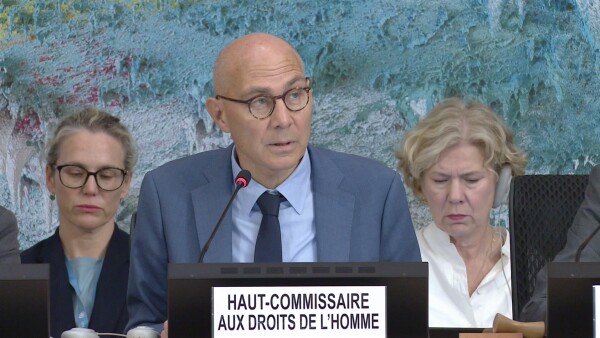
UN Human Rights Chief Volker Türk on Friday provided and oral update to the 63rd session of the Human rights Council on Ukraine.
2
1
2
Statements , Conferences | HRC , OHCHR
Interactive dialogue with the High Commissioner for Human Rights, Volker Türk on the oral update on Ukraine.

1
1
1
Edited News | OHCHR , UNOG
UN Human Rights Chief Volker Türk on Friday provided and oral update to the 63rd session of the Human rights Council on the human rights situation in Haiti.

1
1
1
Edited News | WHO
Repeated delays in bringing lifesaving medicines, prosthetics and more from Israel into Gaza risk having devastating consequences on Palestinians who urgently need them in the wartorn enclave, the UN World Health Organization (WHO) said on Friday. “A truck full of non-priority supplies or the right supplies arriving too late, doesn't save lives. That's the question that actually matters," said Dr Reinhilde Van De Weerdt, WHO Representative in the OPT.

1
1
1
Edited News | WHO
DRC: Early access to care and oxygen decisive for Ebola patients’ survival – WHO
In the Democratic Republic of the Congo (DRC), health workers fighting the country’s largest-ever Ebola outbreak are struggling to overcome critical challenges to patient care, the UN World Health Organization (WHO) warned on Tuesday.

1
1
1
Edited News | OCHA , UN
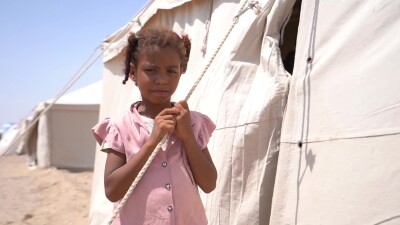
Civilians in Iran are continuing to feel the consequences of months of conflict and military escalation, the UN’s top official in the country has said, as loss of life, damage to civilian infrastructure and mounting economic pressures leave many facing continued uncertainty.
1
1
1
Edited News | WHO , UNICEF
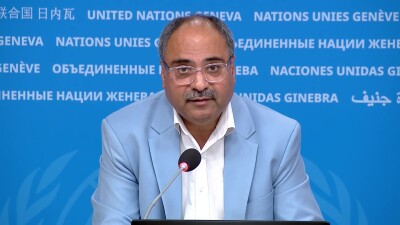
Aid agencies in Yemen highlighted the growing hunger emergency sparked by renewed fighting between Houthi opposition forces and Government troops, after mobile health clinics reported that hundreds of children displaced by the violence are suffering from the most deadly form of malnutrition.
1
1
1
Edited News | UNHCR
Displacement on the rise in Yemen as fighting continues - UNHCR
As hostilities worsen in Yemen, more people have been fleeing their homes, further intensifying the humanitarian crisis within the region, the UN Refugee Agency (UNHCR) warned on Tuesday.
1
1
1
Statements , Conferences | HRC , OHCHR
Interactive dialogue on the oral update of the Independent International Commission of Inquiry on Ukraine at the 63rd regular session of the Human Rights Council
1
1
1
Conferences , Statements | HRC , OHCHR
Interactive dialogue on the report of the Independent International Fact-Finding Mission on the Islamic Republic of Iran