

The United Nations Office at Geneva
Multimedia Newsroom
Peacekeeping chief pays tribute to fallen ‘blue helmets’ in Lebanon
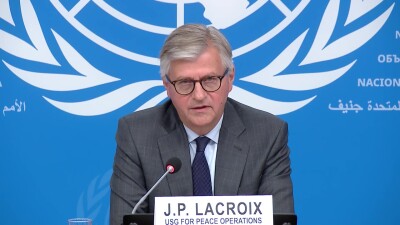
The continued support of UN Member States to Lebanon will be “indispensable” to boost the country’s national armed forces and provide humanitarian assistance with more than one million people still uprooted by the Middle East war, the UN's peacekeeping chief said on Wednesday.
“Israel will have to do what it takes to create the space and the political and practical and security conditions for that to happen,” said Jean-Pierre Lacroix, Under-Secretary-General for Peace Operations, speaking in Geneva.
In an update on the situation in Lebanon where a fragile ceasefire with Israel beginning 16 April is holding, the UN top diplomat noted that some 80,000 civilians have remained south of the Litani River despite widespread airstrikes and evacuation orders issued by the Israeli military.
Many civilians have already headed back to the south, despite the dangers and difficulties of crossing bombed bridges. “It's going to be challenging to them, they will need support. UNIFIL has recently stepped up its activity in support of humanitarian assistance,” the peacekeeping chief said.
He noted that the continued presence of the Israel Defense Forces in Lebanese territory “is a violation of resolution 1701” - the Security Council text adopted in 2006 calling for Israeli forces to exit southern Lebanon and a total end to hostilities by Hezbollah fighters and Israel.
Mr. Lacroix also paid tribute to the five UNIFIL peacekeepers killed in the south in recent days, three from Indonesia and two from France.
The death of French caporal-chef Anicet Girardin, 31, was announced on Wednesday. It follows an attack on a UNIFIL convoy which came under fire on 18 April while clearing a road in southern Lebanon to re-establish access to isolated UNIFIL positions. An initial UN assessment found that the peacekeepers came under fire from non-state armed groups, presumably Hezbollah.
“I reiterate my condolences to France and Indonesia and to the families of the deceased peacekeepers,” he said, insisting that “our peacekeepers are really making a true difference and they're doing this against the backdrop of an increasingly dangerous environment”.
The situation for the UN’s peacekeepers in southern Lebanon remains uncertain, but it has improved since the force’s headquarters at Naqoura was hit in late March by “a non-state actor”, amid intense Israeli exchanges of fire with Hezbollah fighters.
“The headquarters, of UNIFIL Naqoura is now in an area where there is a presence of the Israel Defense Forces. That doesn't mean that UNIFIL is not able to move and operate, even within limits and constraints,” Mr. Lacroix said. “Those limits have somewhat loosened up since the beginning of this what I call the relative ceasefire, not full, but still better than during these active hostilities over the past couple of weeks.”
ends
STORY: Critical minerals crunch - UNECE
TRT: 2’59”
SOURCE: UNTV CH
RESTRICTIONS: NONE
LANGUAGE: ENGLISH, NATS
ASPECT RATIO: 16:9
DATELINE: 23 APRIL 2026, GENEVA, SWITZERLAND
SHOTLIST
Speaker:
- Jean-Pierre Lacroix, Under-Secretary-General for Peace Operations
- Exterior wide shot, United Nations flag flying.
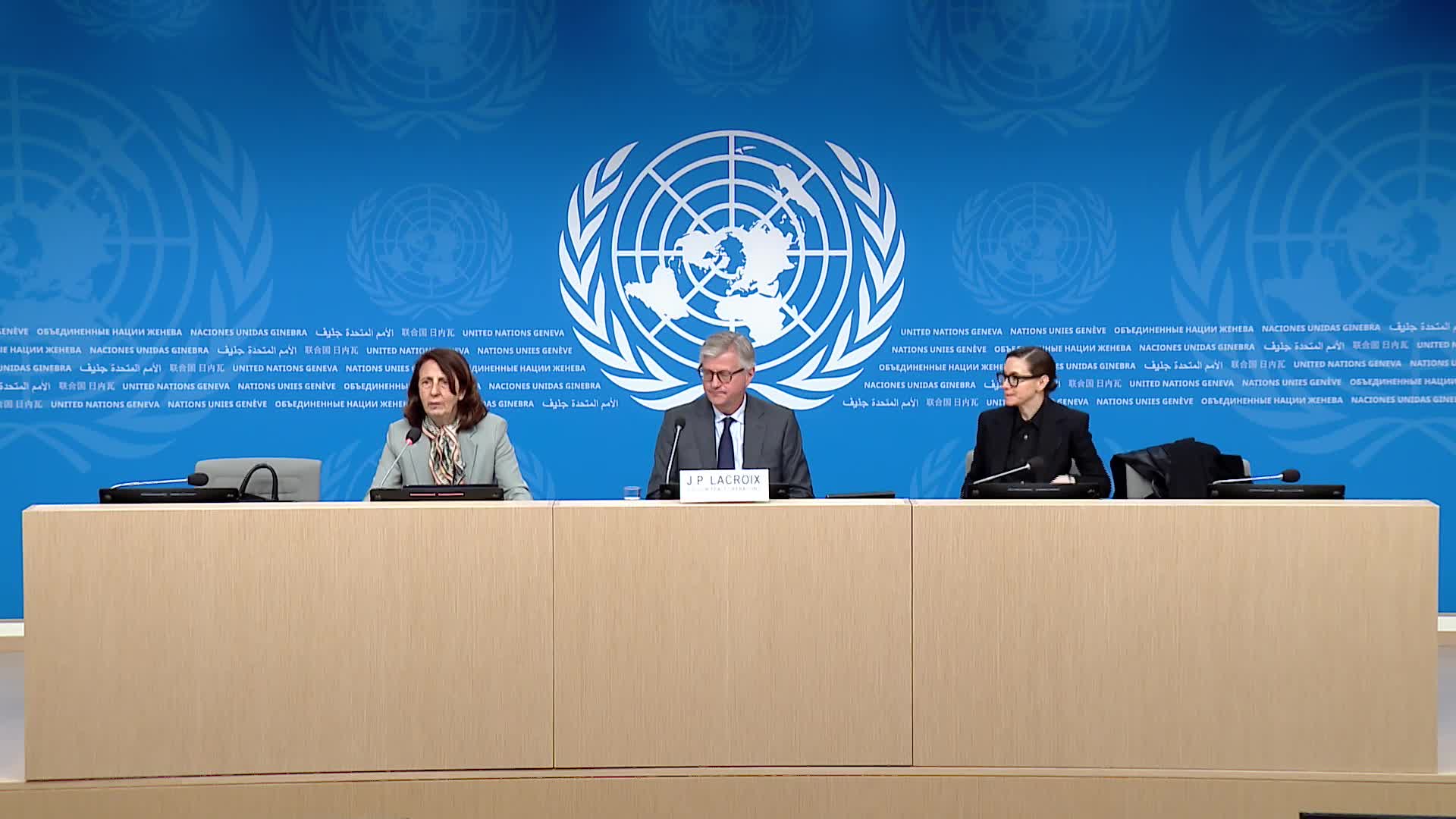
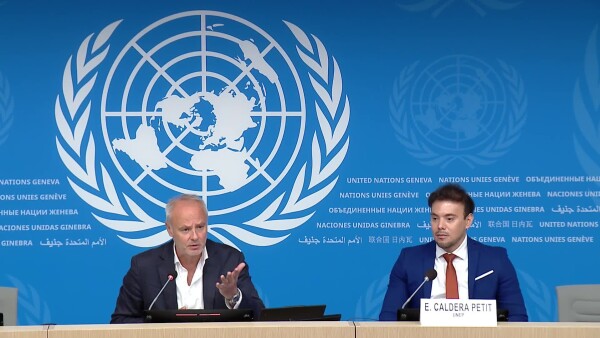
- Wide shot of podium speakers at press briefing.
- SOUNDBITE: (ENGLISH): Jean-Pierre Lacroix, Under-Secretary-General for Peace Operations: “Unfortunately, yesterday, we learned with sadness the passing away of caporal-chef Anicet Girardin from France, a second French peacekeeper who died as a result of the incident on the 18th of April. And I think that is - those tragic incidents - and we have also many injured peacekeepers as a result of the various incidents that took place in UNIFIL.”
- Medium-wide, podium speakers, TV screen showing speaker.
- SOUNDBITE: (ENGLISH): Jean-Pierre Lacroix, Under-Secretary-General for Peace Operations: “And of course we wish all of them a speedy recovery. And of course, I reiterate my condolences to France and Indonesia and to the families of the deceased peacekeepers. That is again an illustration of the dangerous environment in which peacekeepers are operating, but I think it's important to highlight what they do and what the difference they make.”
- Wide, podium speakers, journalists.
- SOUNDBITE: (ENGLISH): Jean-Pierre Lacroix, Under-Secretary-General for Peace Operations: “Our peacekeepers are really making a true difference and they're doing this against the backdrop of increasingly dangerous environment. You've seen that in UNIFIL alone and over the last couple of weeks we lost five peacekeepers, three peacekeepers from Indonesia, two from France.”
- Wide, journalists, participants.
- SOUNDBITE: (ENGLISH): Jean-Pierre Lacroix, Under-Secretary-General for Peace Operations: “It's true that the headquarters, of UNIFIL Naqoura is now in an area where there is a presence of the Israel Defense Forces. That doesn't mean that UNIFIL is not able to, move and operate, even within limits and constraints. Those limits have somewhat loosened up since the beginning of this what I call the relative ceasefire, not full, but still better than during these active hostilities over the past couple of weeks.”
- Medium, journalist.
- SOUNDBITE: (ENGLISH): Jean-Pierre Lacroix, Under-Secretary-General for Peace Operations: “We currently have, around 80,000 civilians that have remained south of the river. Some civilians - actually more than some - are willing to return. It's going to be challenging to them. They will need support. UNIFIL has recently stepped up its activity in support of humanitarian assistance.”
- Wide, Press room, podium speakers.
- SOUNDBITE: (ENGLISH): Jean-Pierre Lacroix, Under-Secretary-General for Peace Operations: “Obviously, again, the presence of the Israel Defense Forces in Lebanese territory is a violation of resolution 1701 and of course we hope that that presence, will eventually, be, terminated.”
- Medium, journalist.
Similar Stories

1
1
1
Edited News | UNICEF , IFRC
Six weeks after Nepal’s deadly flooding disaster, communities are still struggling to rebuild their lives, but they will need sustained help as global warming increases the risk of another Himalayan catastrophe, the UN Children’s Fund (UNICEF) said on Friday.

1
1
1
Statements , Press Conferences | OHCHR

1
1
1
Press Conferences | UNHCR , UNICEF , IFRC , OHCHR , UN WOMEN , IOM , OCHA , WHO
UNHCR – ExCom Meeting, UNICEF – Nepal Recovery, IFRC – Flash Floods, WHO – Mental Health, IOM – South Sudan Floods, OCHA – DRC Humanitarian aid, UNHCR – Sahel Displacement, UNICEF – Yemen Update, IOM – Gaza Shelter, UN Women – Gaza Women, OHCHR – Arrests and detentions of Syrians by Israeli force

2
1
2
Press Conferences | UNCTAD
Presentation of the Trade and Developement Report 2026
Embargoed until 9 October 2026 at 11 a.m. (Geneva Time)
UNCTAD: UNCTAD’s flagship report finds that governments increasingly use industrial, trade, financial and technology policies to pursue economic and national security objectives. Market access and the ability to move into higher-value activities now depend more heavily on technology, finance and geopolitics.
1
1
1
Press Conferences | UPU
Release of the State of the Postal Sector Report 2026

1
1
1
Edited News | WHO
In suspected Russia plague death, testing and monitoring underway – WHO
The death of a lab worker in Russia’s Siberia region has sparked concerns about plague being the cause, the UN World Health Organization (WHO) said on Tuesday, adding that it was following the situation closely.
1
1
1
Press Conferences | IOM , ITU , UNECE , UNICEF , WHO , WMO
UNICEF: Ebola, DRC - children orphans or separating them from parents and caregivers; IOM: Humanitarian needs in Djibouti amid arrivals from Yemen and increased migrant movements; WHO: Darfur, scale of health needs far exceeds available resources; WMO co-sponsored Global Heat Forum, Bangkok, monthly Global Seasonal Climate Update; UNECE: UN Forum of Mayors; ITU Plenipotentiary Conference 2026; WHO: child and adolescent obesity guidelines and new global roadmap to tackle pregnancy hypertension, a leading cause of maternal mortality

1
1
Edited News | OHCHR , UNOG
UN Human Rights Chief Volker Türk on Friday provided and oral update to the 63rd session of the Human rights Council on Ukraine.

1
1
1
Edited News | OHCHR , UNOG
UN Human Rights Chief Volker Türk on Friday provided and oral update to the 63rd session of the Human rights Council on the human rights situation in Haiti.

1
1
1
Edited News | WHO
Repeated delays in bringing lifesaving medicines, prosthetics and more from Israel into Gaza risk having devastating consequences on Palestinians who urgently need them in the wartorn enclave, the UN World Health Organization (WHO) said on Friday. “A truck full of non-priority supplies or the right supplies arriving too late, doesn't save lives. That's the question that actually matters," said Dr Reinhilde Van De Weerdt, WHO Representative in the OPT.
1
1
1
Press Conferences | OCHA , UN WOMEN , UNHCR , WFP , WHO , WTO , UNEP
OCHA – $160M CERF allocation to 12 underfunded crises; UNHCR – 5.8M refugee children remain out of school amid funding cuts; UN Women – Middle East escalation and food security among women/girls; WHO – Gaza supplies and overall situation; WFP – Yemen food insecurity and impact on global hunger ; UNEP - First International Conference of the Global Framework on Chemicals in Geneva | 16-20 November 2026

1
1
1
Edited News | WHO
DRC: Early access to care and oxygen decisive for Ebola patients’ survival – WHO
In the Democratic Republic of the Congo (DRC), health workers fighting the country’s largest-ever Ebola outbreak are struggling to overcome critical challenges to patient care, the UN World Health Organization (WHO) warned on Tuesday.