

The United Nations Office at Geneva
Multimedia Newsroom
Deadly hantavirus on board cruise ship may be transmitted among humans - WHO
Hantavirus victims on a ship in the Atlantic Ocean may have been infected prior to joining the cruise and human-to-human transmission on board cannot be ruled out – although it is rare - the World Health Organization (WHO) said on Tuesday.
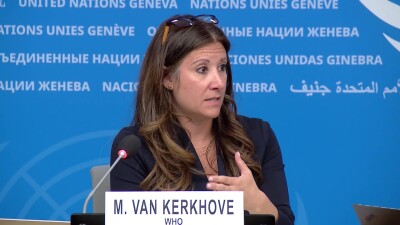
The deadly disease outbreak has triggered an international public health response. Seven individuals of the 147 passengers and crew have been reported ill and three have died in what remains a fluid situation, WHO’s chief of Epidemic and Pandemic Preparedness and Prevention Dr Maria Van Kerkhove told reporters in Geneva.
“One patient is in intensive care in South Africa, although we understand that this patient is improving,” she said, while two patients still on board the ship, which is currently off the coast of Cabo Verde, are being prepared for medical evacuation to the Netherlands for treatment.
Dr Van Kerkhove stressed that the situation is being closely monitored. As a precaution, passengers have been asked to remain in their cabins while disinfection and other public health measures are carried out. Medical teams from Cabo Verde are providing support on board the ship.
“The plan is, and our highest priority is, to medically evacuate these two individuals” to make sure that they receive the required care, she insisted.
There are no other symptomatic patients on board. A third suspected case who reported a mild fever at one point “is currently doing well”, the WHO official said.
The ship is set to continue on to the Canary Islands. Ahead of arrival, Dr Van Kerkhove said that WHO is working with the Spanish authorities who “have said that they will welcome the ship to do a full epidemiologic investigation, full disinfection of the ship, and of course to assess the risk of the passengers… on board”.
Hantaviruses are carried by rodents and can cause severe disease in humans. Thousands of infections are estimated to occur each year. People usually get infected through contact with infected rodents or their urine, their droppings, or their saliva.
Discussing the suspected origins of the outbreak, Dr Van Kerkhove said that the initial patients, a husband and wife, boarded the boat in Argentina.
“With the timing of the incubation period of hantavirus, which can be anywhere from one to six weeks, our assumption is that they were infected off the ship,” she said. “This was an expedition boat… many of the people on board were doing bird watching” and “seeing a lot of different wildlife.”
The cruise stopped at several islands off the coast of Africa, Dr Van Kerkhove continued, some of which “have a lot of rodents”.
“There could be some source of infection on the islands as well for some of the other suspect cases,” she said. “However, we do believe that there may be some human-to-human transmission that's happening among the really close contacts” such as the husband and wife and others who have shared cabins.
Transmission of infection between people is uncommon, but limited spread has been reported among close contacts in previous outbreaks of the Andes virus, which is part of the hantavirus group.
There are no specific treatments for hantavirus other than supportive care.
“Typically, people will develop respiratory symptoms, so respiratory support is really important,” Dr Van Kerkhove said, stressing that some people require mechanical ventilation. Intensive care may be required, especially if the condition of patients deteriorates.
Directing her message at the people on the boat, where more than 20 nationalities are represented, the WHO official said: “We just want you to know we are working with the ship's operators” and with the travellers’ countries of origin.
“We hear you. We know that you are scared,” she said. “We're trying to make sure that the ship has as much information as they can…that you're cared for and of course, that you get home safely.”
-Ends-
STORY Hantavirus latest – WHO
TRT: 3:30’’
SOURCE: UNTV CH
RESTRICTIONS: NONE
LANGUAGE: ENGLISH/NATS
ASPECT RATIO: 16:9
DATELINE: 5 MAY 2026
1. Exterior wide shot: Palais des Nations, Flag Alley.
2. Wide shot: Speakers at the podium of the press conference.
3. SOUNDBITE (English) – Dr Maria Van Kerkhove, Director (a.i) Epidemic and Pandemic Preparedness and Prevention, World Health Organization (WHO): “As of today, seven individuals of the 147 passengers and crew have been reported ill. Sadly, three have died. One patient is in intensive care in South Africa, although we understand that this patient is improving, while two patients are still on board the ship and are being prepared for medical evacuation to the Netherlands for treatments.”
4. Medium reverse shot: Speakers at the podium of the press conference; speaker on screen.
5. SOUNDBITE (English) – Dr Maria Van Kerkhove, Director (a.i) Epidemic and Pandemic Preparedness and Prevention, World Health Organization (WHO): “The situation is being closely monitored, and as a precaution, passengers have been asked to remain in their cabins while disinfection and other public health measures are carried out. Medical teams from Cabo Verde are providing support on board the ship.”
6. Medium- reverse shot: Speaker on screens; journalists in the Press room.
7. SOUNDBITE (English) – Dr Maria Van Kerkhove, Director (a.i) Epidemic and Pandemic Preparedness and Prevention, World Health Organization (WHO): “Right now, the ship is off the coast of Cabo Verde. The plan is, and our highest priority is to medically evacuate these two individuals to make sure that they have the care that they receive. So the plan, that is currently in the works, it's underway. The plan now is for the ship to continue on to the Canary Islands.”
8. Wide shot: Journalists in the Press room; speaker on screens.
9. SOUNDBITE (English) – Dr Maria Van Kerkhove, Director (a.i) Epidemic and Pandemic Preparedness and Prevention, World Health Organization (WHO): “We're working with Spanish authorities who will welcome the ship, have said that they will welcome the ship, to do a full investigation, a full epidemiologic investigation, full disinfection of the ship, and of course to assess the risk of the passengers that are actually on board. As I said, there are no other symptomatic patients who are on board.”
10. Medium shot: Journalist in the Press room.
11. SOUNDBITE (English) – Dr Maria Van Kerkhove, Director (a.i) Epidemic and Pandemic Preparedness and Prevention, World Health Organization (WHO): “The cruise did stop at many different islands up the coast of Africa. And again, seeing a lot of different wildlife. On those islands, there are birds. Some islands have a lot of rodents, others don't. So there could be some source of infection on the islands as well for some of the other suspect cases. However, we do believe that there may be some human to human transmission that's happening among the really close contacts, the husband and wife, people who have shared cabins, et cetera.”
12. Wide reverse shot: Speakers at the podium of the press conference; speaker on screens; journalists in the Press room.
13. SOUNDBITE (English) – Dr Maria Van Kerkhove, Director (a.i) Epidemic and Pandemic Preparedness and Prevention, World Health Organization (WHO): “Right now, there aren't any specific treatments for hantavirus, but care is supportive. Typically, people will develop respiratory symptoms, so respiratory support is really important, particularly oxygen. Some require mechanical ventilation.”
14. Wide shot: Journalists in the Press room.
15. SOUNDBITE (English) – Dr Maria Van Kerkhove, Director (a.i) Epidemic and Pandemic Preparedness and Prevention, World Health Organization (WHO): “We have heard from quite a few people, you know, on the boat. We just want you to know we are working with the ship's operators. We are working with the countries where you are from. We hear you. We know that you are scared.”
16. Various shots of journalists in the Press room.
Similar Stories

1
1
1
Edited News | UNICEF
A little over one year since a ceasefire agreement was announced between Hamas fighters and Israel, more than 340 children have been reported killed and hundreds more injured, the UN Children’s Fund, UNICEF, said on Friday.

1
1
1
Edited News | UNICEF , IFRC
Six weeks after Nepal’s deadly flooding disaster, communities are still struggling to rebuild their lives, but they will need sustained help as global warming increases the risk of another Himalayan catastrophe, the UN Children’s Fund (UNICEF) said on Friday.

1
1
1
Edited News | WHO
In suspected Russia plague death, testing and monitoring underway – WHO
The death of a lab worker in Russia’s Siberia region has sparked concerns about plague being the cause, the UN World Health Organization (WHO) said on Tuesday, adding that it was following the situation closely.

1
1
Edited News | OHCHR , UNOG
UN Human Rights Chief Volker Türk on Friday provided and oral update to the 63rd session of the Human rights Council on Ukraine.

1
1
1
Edited News | OHCHR , UNOG
UN Human Rights Chief Volker Türk on Friday provided and oral update to the 63rd session of the Human rights Council on the human rights situation in Haiti.

1
1
1
Edited News | WHO
Repeated delays in bringing lifesaving medicines, prosthetics and more from Israel into Gaza risk having devastating consequences on Palestinians who urgently need them in the wartorn enclave, the UN World Health Organization (WHO) said on Friday. “A truck full of non-priority supplies or the right supplies arriving too late, doesn't save lives. That's the question that actually matters," said Dr Reinhilde Van De Weerdt, WHO Representative in the OPT.

1
1
1
Edited News | WHO
DRC: Early access to care and oxygen decisive for Ebola patients’ survival – WHO
In the Democratic Republic of the Congo (DRC), health workers fighting the country’s largest-ever Ebola outbreak are struggling to overcome critical challenges to patient care, the UN World Health Organization (WHO) warned on Tuesday.

1
1
1
Edited News | OCHA , UN
Civilians in Iran are continuing to feel the consequences of months of conflict and military escalation, the UN’s top official in the country has said, as loss of life, damage to civilian infrastructure and mounting economic pressures leave many facing continued uncertainty.

1
1
1
Edited News | WHO , UNICEF
Aid agencies in Yemen highlighted the growing hunger emergency sparked by renewed fighting between Houthi opposition forces and Government troops, after mobile health clinics reported that hundreds of children displaced by the violence are suffering from the most deadly form of malnutrition.
1
1
1
Edited News | UNHCR
Displacement on the rise in Yemen as fighting continues - UNHCR
As hostilities worsen in Yemen, more people have been fleeing their homes, further intensifying the humanitarian crisis within the region, the UN Refugee Agency (UNHCR) warned on Tuesday.
1
1
1
Edited News | IOM , OHCHR , UNFPA , UNOG , UNHCR , WHO
Yemen’s humanitarian crisis growing by the hour amid spike in displacement
Yemenis displaced by renewed fighting have described fleeing for their lives amid shelling and gunfire, aid agencies reported on Friday, while highlighting the dramatic increase in humanitarian needs in the country and in Djibouti, where thousands have sought shelter.
1
1
1
Edited News | OHCHR , UNOG
The UN Human Rights Office issued on Friday a report documenting a shocking pattern of sexual violence amid Russia’s full-scale armed attack on Ukraine.