

The United Nations Office at Geneva
Multimedia Newsroom
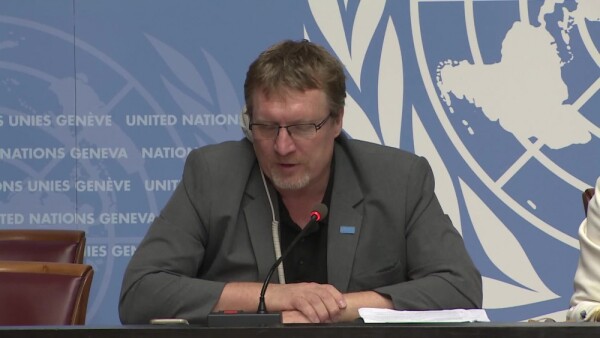
The WHO has upped the global risk assessment that the novel coronavirus poses from moderate to high risk but have not yet declared the outbreak an international public health emergency.
Christian Lindmeier from the World Health Organization (WHO) told journalists in Geneva that although their previous report assessed the risk of the coronavirus as ‘moderate’ at the global level, their latest report has increased this risk to ‘high’, confirming that the virus risk assessment at both the global and regional level “is High, and for China it is Very High”.
The latest number of confirmed cases WHO has received is 4,428 from within China with 106 deaths, and 45 confirmed cases outside of China, in 13 countries.
Understanding the time when infected patients may transmit the virus to others is critical for control efforts, to strengthen response efforts, Lindmeier told journalists. He confirmed that “scientists and medical staff on the ground have learned that the incubation period can be anything between one and 14 days,” admitting that despite symptoms varying during this period, showing no symptoms at all to showing mild, moderate or severe symptoms , “people can transmit the virus within this time.” Detailed epidemiological information from more people infected is needed to determine the infectious period of 2019- nCoV, in particular whether transmission can occur from asymptomatic individuals or during the incubation period, WHO reports confirmed.
Regarding human-to-human transmission, WHO admitted to transfer occurring mainly among close contacts and health care workers whereas a brief window for limited transmission may also occur through shared surfaces, as Lindmeier confirmed. “It stays on the surfaces yes, but if you touch a door handle, for example, or if I would cough into my hand and pass you my phone, immediately it could transfer”.
WHO’s spokesperson said that the time range for this sort of transmission was not confirmed, but it seemed to be “fairly short” if you passed the location of infection “half an hour later, there should not be a problem anymore.”
“It definitely is an emergency,” Lindmeier noted but emphasized that “it is an emergency in China” as most cases still trace back to Wuhan, the city where the virus was said to have been first transmitted. He told journalists that although the virus does not yet warrant an international emergency crisis to be declared as “it has not widely spread outside of China”.
Christian Lindmeier stressed the need “to be prepared” with a coordinated international response and addressing crucial unknowns. A combination of public health measures, such as rapid identification, diagnosis and management of the cases, identification and follow up of the contacts, infection prevention and control in healthcare settings, implementation of health measures for travellers, awareness raising in the population, and risk communication, have been put forth by the WHO to prevent further spread of the virus.
Christian Lindmeier reiterated that “self-protection is still the best possible way we can go about this.” He noted that this virus mimics symptoms similar to the flu, and that “as it behaves flu-like, you can also protect yourself as you would against someone who has the flu.”
WHO Director-General Dr Tedros Adhanom Ghebreyesus and colleagues are in Beijing to meet with government and health experts supporting the response. The mission’s aim is to understand the latest developments and strengthen the partnership with China, in particular for the response.
- Wide shot: exterior, flag alley, Palais des Nations, United Nations Geneva.
- Wide shot, press briefing room
- SOUNDBITE (EN) Christian Lindmeier/WHO: “The global risk assessment is High, the regional level is High, and for China it’s Very High.”
- Wide shot: journalists
- SOUNDBITE (EN) Christian Lindmeier/WHO: “The latest we have received is 4,428 confirmed, and 106 deaths. Outside of China, we now have 45 cases in 13 countries.”
- Wide shot, journalists
- SOUNDBITE (EN) Christian Lindmeier/WHO: “What we have learned so far, what the scientists and medical staff also on the ground learned, that the incubation period you are referring to can be anything between one and 14 days, that’s what the experience so far shows, and yes, that means people can transmit the virus within this time.”
- Medium shot: podium
- SOUNDBITE (EN) Christian Lindmeier/WHO: “It stays on the surfaces yes, but if you touch a door handle, for example, or if I would cough into my hand and pass you my phone, immediately it could transfer but this stays for, and I don’t have a time range, but fairly short, and then there’s no risk anymore. So if you pass by half an hour later, there should not be a problem any more.”
- Medium shot: podium
- SOUNDBITE (EN) Christian Lindmeier/WHO: “It definitely is an emergency, it’s an emergency in China. But I would beg to differ on what you just put out as the definition of ‘widely spreading’, so far, it’s going back with travellers to foreign countries whether it’s the home country of somebody or a traveller as such. It’s not widely spreading outside of China but again, we have to be prepared in case it would.”
- Medium shot: journalists
- SOUNDBITE (EN) Christian Lindmeier/WHO: “Self-protection is still the best possible way we can go about this. This virus behaves flu-like, and as it behaves flu-like, you can also protect yourself as you would against someone who has the flu.”
- Wide shot: podium
- Medium shot: journalists
- Close-up: journalist typing
- Wide shot: podium
- Wide shot: press room
Similar Stories

1
1
1
Edited News | UNICEF , WHO , UNHCR
Yemen war continues to force families from homes amid hunger and disease
More than 250,000 people have now fled renewed fighting in Yemen, the UN said on Tuesday, citing particular concern for those sheltering in the southwestern city of Taiz and the wider governorate, where access is “essentially blocked”.

1
1
1
Edited News | UNICEF
A little over one year since a ceasefire agreement was announced between Hamas fighters and Israel, more than 340 children have been reported killed and hundreds more injured, the UN Children’s Fund, UNICEF, said on Friday.

1
1
1
Edited News | UNICEF , IFRC
Six weeks after Nepal’s deadly flooding disaster, communities are still struggling to rebuild their lives, but they will need sustained help as global warming increases the risk of another Himalayan catastrophe, the UN Children’s Fund (UNICEF) said on Friday.

1
1
1
Edited News | WHO
In suspected Russia plague death, testing and monitoring underway – WHO
The death of a lab worker in Russia’s Siberia region has sparked concerns about plague being the cause, the UN World Health Organization (WHO) said on Tuesday, adding that it was following the situation closely.

1
1
Edited News | OHCHR , UNOG
UN Human Rights Chief Volker Türk on Friday provided and oral update to the 63rd session of the Human rights Council on Ukraine.

1
1
1
Edited News | OHCHR , UNOG
UN Human Rights Chief Volker Türk on Friday provided and oral update to the 63rd session of the Human rights Council on the human rights situation in Haiti.

1
1
1
Edited News | WHO
Repeated delays in bringing lifesaving medicines, prosthetics and more from Israel into Gaza risk having devastating consequences on Palestinians who urgently need them in the wartorn enclave, the UN World Health Organization (WHO) said on Friday. “A truck full of non-priority supplies or the right supplies arriving too late, doesn't save lives. That's the question that actually matters," said Dr Reinhilde Van De Weerdt, WHO Representative in the OPT.

1
1
1
Edited News | WHO
DRC: Early access to care and oxygen decisive for Ebola patients’ survival – WHO
In the Democratic Republic of the Congo (DRC), health workers fighting the country’s largest-ever Ebola outbreak are struggling to overcome critical challenges to patient care, the UN World Health Organization (WHO) warned on Tuesday.

1
1
1
Edited News | OCHA , UN
Civilians in Iran are continuing to feel the consequences of months of conflict and military escalation, the UN’s top official in the country has said, as loss of life, damage to civilian infrastructure and mounting economic pressures leave many facing continued uncertainty.
1
1
1
Edited News | WHO , UNICEF
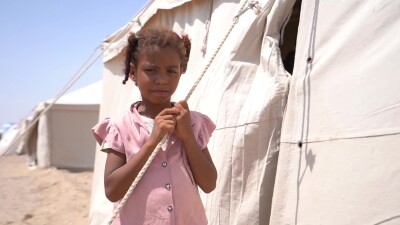
Aid agencies in Yemen highlighted the growing hunger emergency sparked by renewed fighting between Houthi opposition forces and Government troops, after mobile health clinics reported that hundreds of children displaced by the violence are suffering from the most deadly form of malnutrition.
1
1
1
Edited News | UNHCR
Displacement on the rise in Yemen as fighting continues - UNHCR
As hostilities worsen in Yemen, more people have been fleeing their homes, further intensifying the humanitarian crisis within the region, the UN Refugee Agency (UNHCR) warned on Tuesday.
1
1
1
Edited News | IOM , OHCHR , UNFPA , UNOG , UNHCR , WHO
Yemen’s humanitarian crisis growing by the hour amid spike in displacement
Yemenis displaced by renewed fighting have described fleeing for their lives amid shelling and gunfire, aid agencies reported on Friday, while highlighting the dramatic increase in humanitarian needs in the country and in Djibouti, where thousands have sought shelter.