

The United Nations Office at Geneva
Multimedia Newsroom
Edited News | UNHCR , UNOG , UNITED NATIONS
UNOG Bi-weekly Press Briefing: Violence In Eastern DRC - UNHCR
Rights abuses intensifying in eastern DR Congo with millions in need: UNHCR
An alarming number of human rights abuses have been carried out this year by armed groups in eastern Democratic Republic against civilians, the UN Refugee Agency (UNHCR) said on Friday.
In the two most affected provinces of North Kivu and Ituri, UNHCR and its partners recorded more than 1,200 civilian deaths and 1,100 rapes and a total of 25,000 human rights abuses this year.
Speaking in Geneva, UNHCR spokesperson, Boris Cheshirkov, said the violence “continues to cost lives and drive people from their homes”.
In total, more than a million people have been internally displaced in the east of the country in 2021, putting “enormous pressure” on those forced to flee and on host families, who have taken in 94 per cent of DRC’s forcibly displaced population.
“Host families have shown huge generosity towards their compatriots but are exhausted and in need of support if they are to continue as first responders,” Mr. Cheshirkov said. Those displaced are often forced to return to their place of origin owing to harsh living conditions and a lack of food, further exposing them to abuse and violence.
The UNHCR spokesperson said 65 per cent of the serious human rights abuses recorded by UNHCR and partners have been inflicted on returnees.
Attacks attributed to the Allied Democratic Forces (ADF) have increased in brutality since late 2020, and the frequency of killings of civilians has not abated, despite the state of siege declared in early May 2021 to counter the activities of such armed groups.
In one raid, UNHCR reported that armed men identified as members of the ADF raided a village in Irumu Territory, killed 15 civilians, set fire to 10 houses and kidnapped two women, on 3 September.
This was followed on 6 September by an attack by an armed group who reportedly raped 10 displaced women in Djugu Territory, Ituri province.
UNHCR and partners took the women to the nearest hospital where they received psychosocial and medical support.
According to Mr. Cheshirkov, North Kivu and Ituri Provinces are now led by State military authorities. This has led the national army to ramp up its operations and replace civil courts with military tribunals.
Some of these armed groups have surrendered after seeing their territory shrink, others have countered military operations with reprisals against villages and individuals who they believe are supporting the government, he said.
Despite government efforts to reduce the abuses of non-State armed groups, “our teams continue to hear horrific accounts of sexual violence, extortion, and looting”, the UNHCR spokesperson said.
Reiterating the agency’s call for urgent measures to protect civilians, Mr. Cheshirkov warned that funding “for this humanitarian crisis remains critically low”. With less than four months from the end of the year, UNHCR has received just 51 per cent of the $205 million required in 2021 for their operation in DRC, leaving the UN Agency “only able to respond to a small fraction of the population in urgent need”.
ends
STORY : Violence in Eastern DRC
TRT : 3’18’’
SOURCE : UNTV CH RESTRICTIONS : NONE LANGUAGE : ENGLISH ASPECT RATIO: 16:9
DATELINE: 10 Sept 2021, GENEVA, SWITZERLAND
SHOTLIST
1. Exterior wide shot, Untied Nations flag flying
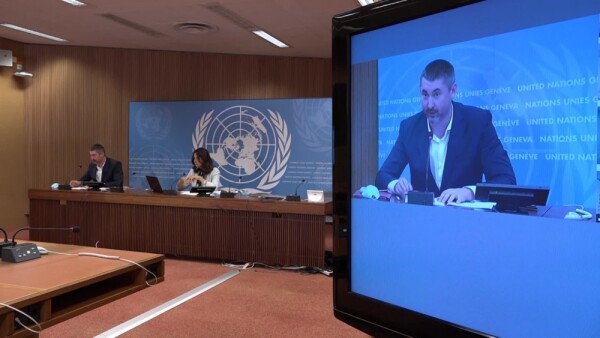
2. Wide shot, briefing room
3. SOUNDBITE (English): Boris Cheshirkov, spokesperson, UN High Commissioner for Refugees (UNHCR): “UNHCR, the U.N. refugee agency, is alarmed by violence committed against civilians by armed groups in eastern Democratic Republic of the Congo that continues to cost lives and drive people from their homes. UNHCR and its partners have recorded more than 1200 civilian deaths and 1100 reported rapes this year in North Kivu and into the provinces, as well as at least 25,000 human rights abuses this year alone”.
4. Close of a cameraman
5. SOUNDBITE (English): Boris Cheshirkov, spokesperson, UN High Commissioner for Refugees (UNHCR): “It is estimated that more than one million Congolese have been internally displaced in 2021 in the country's east. Repeated displacement has put enormous pressure on those forced to flee and host families that have taken in 94 per cent of DRC forcibly displaced. Host families have shown huge generosity towards their compatriots but are exhausted and in need of support if they are to continue as first responders”.
6. Close of the audience in the briefing room
7. SOUNDBITE (English): Boris Cheshirkov, spokesperson, UN High Commissioner for Refugees (UNHCR): “Harsh living conditions and a lack of food often trigger a premature return by displaced people to their place of origin, further exposing them to abuse and violence. In fact, returnees account for 65 per cent of the serious human rights abuses that we and our partners have recorded”.
8. Medium shot, panelists in the briefing room
9. SOUNDBITE (English): Boris Cheshirkov, spokesperson, UN High Commissioner for Refugees (UNHCR): “Following a state of siege in North Kivu and Ituri provinces, we now see that they're being led by military governments, which the national army has ramped up operations there, and military tribunals have replaced civil courts. Some armed groups seeing their territory shrink have surrendered, but others are countering military operations with reprisals against villages and individuals with whom they perceive as supporting the government”.
10. Medium shot, panelists liaising with the Zoom meeting
11. SOUNDBITE (English): Boris Cheshirkov, spokesperson, UN High Commissioner for Refugees (UNHCR): “One of the groups which has displayed extremely brutal tactics is, is the ADF (the Allied Democratic Forces). In fact, some of the attacks that we've witnessed in Ituri and North Kivu in the last few months, including during the state of siege, have been reported to us by survivors as carried out by ADF”.
12. Close of a panelist taking notes
13. SOUNDBITE (English): Boris Cheshirkov, spokesperson, UN High Commissioner for Refugees (UNHCR): “Despite government efforts to reduce the abuses of armed groups, our teams continue to hear horrific accounts of sexual violence, extreme violence, extortion and looting. Funding for this humanitarian crisis remains critically low. At the same time, with the result that UNHCR is only able to respond to a small fraction of the population needs.”
14. Medium shot, Speakers at the briefing and in the Zoom meeting
15. Close of a panelist taking notes
16. Medium shot of a cameraman
Similar Stories

1
1
1
Edited News | UNICEF
A little over one year since a ceasefire agreement was announced between Hamas fighters and Israel, more than 340 children have been reported killed and hundreds more injured, the UN Children’s Fund, UNICEF, said on Friday.

1
1
1
Edited News | UNICEF , IFRC
Six weeks after Nepal’s deadly flooding disaster, communities are still struggling to rebuild their lives, but they will need sustained help as global warming increases the risk of another Himalayan catastrophe, the UN Children’s Fund (UNICEF) said on Friday.

1
1
1
Edited News | WHO
In suspected Russia plague death, testing and monitoring underway – WHO
The death of a lab worker in Russia’s Siberia region has sparked concerns about plague being the cause, the UN World Health Organization (WHO) said on Tuesday, adding that it was following the situation closely.

1
1
Edited News | OHCHR , UNOG
UN Human Rights Chief Volker Türk on Friday provided and oral update to the 63rd session of the Human rights Council on Ukraine.

1
1
1
Edited News | OHCHR , UNOG
UN Human Rights Chief Volker Türk on Friday provided and oral update to the 63rd session of the Human rights Council on the human rights situation in Haiti.

1
1
1
Edited News | WHO
Repeated delays in bringing lifesaving medicines, prosthetics and more from Israel into Gaza risk having devastating consequences on Palestinians who urgently need them in the wartorn enclave, the UN World Health Organization (WHO) said on Friday. “A truck full of non-priority supplies or the right supplies arriving too late, doesn't save lives. That's the question that actually matters," said Dr Reinhilde Van De Weerdt, WHO Representative in the OPT.

1
1
1
Edited News | WHO
DRC: Early access to care and oxygen decisive for Ebola patients’ survival – WHO
In the Democratic Republic of the Congo (DRC), health workers fighting the country’s largest-ever Ebola outbreak are struggling to overcome critical challenges to patient care, the UN World Health Organization (WHO) warned on Tuesday.

1
1
1
Edited News | OCHA , UN
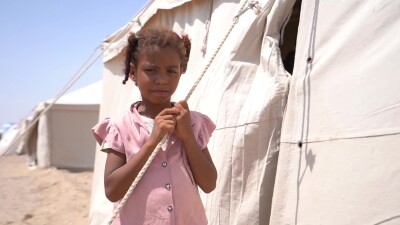
Civilians in Iran are continuing to feel the consequences of months of conflict and military escalation, the UN’s top official in the country has said, as loss of life, damage to civilian infrastructure and mounting economic pressures leave many facing continued uncertainty.
1
1
1
Edited News | WHO , UNICEF
Aid agencies in Yemen highlighted the growing hunger emergency sparked by renewed fighting between Houthi opposition forces and Government troops, after mobile health clinics reported that hundreds of children displaced by the violence are suffering from the most deadly form of malnutrition.
1
1
1
Edited News | UNHCR
Displacement on the rise in Yemen as fighting continues - UNHCR
As hostilities worsen in Yemen, more people have been fleeing their homes, further intensifying the humanitarian crisis within the region, the UN Refugee Agency (UNHCR) warned on Tuesday.
1
1
1
Edited News | IOM , OHCHR , UNFPA , UNOG , UNHCR , WHO
Yemen’s humanitarian crisis growing by the hour amid spike in displacement
Yemenis displaced by renewed fighting have described fleeing for their lives amid shelling and gunfire, aid agencies reported on Friday, while highlighting the dramatic increase in humanitarian needs in the country and in Djibouti, where thousands have sought shelter.
1
1
1
Edited News | OHCHR , UNOG
The UN Human Rights Office issued on Friday a report documenting a shocking pattern of sexual violence amid Russia’s full-scale armed attack on Ukraine.