

The United Nations Office at Geneva
Multimedia Newsroom
Edited News | OHCHR
UN Human Rights chief Volker Türk Remarks to Enhanced Interactive Dialogue on Afghanistan
These edicts are being codified into an ever wider de facto legal framework.
“A new decree, signed by the Taliban leader last month, defines several crimes and punishments that contravene Afghanistan’s international legal obligations,” he said.
“The decree, which is expected to come into effect soon, extends the number of offences that carry the death penalty. It provides for the use of corporal punishment for numerous offences, including in the home, legitimizing violence against women and children. And it criminalizes criticism of the de facto leadership and their policies, in violation of freedom of expression and assembly.”
The High Commissioner urged the de facto authorities to rescind the decree and to bring all legal measures into line with their international obligations.
Afghanistan’s women and girls face extreme gender-based discrimination and oppression that amounts to persecution. The system of segregation is reminiscent of apartheid, based on gender rather than race.
“The de facto authorities have, in effect, criminalized the presence of women and girls in public life. They are banned from secondary education and above, and from most employment. Discrimination affects their healthcare, their access to civic space, and their freedom of movement and expression,” Türk said.
“In recent months, the de facto authorities have used the Law on the Propagation of Virtue and Prevention of Vice to crack down on men’s beards; compel strict wearing of women’s hijab; implement the requirement for women to be accompanied by a male guardian; prohibit music and images of living beings; and enforce mandatory prayers,” he said.
Since 7 September 2025, the de facto authorities have prevented Afghan women, including UN staff, contractors and visitors, from entering the United Nations’ own premises across the country. These restrictions are unprecedented, and shocking.
Public executions continued in Afghanistan, in violation of international law.
The Afghan media operate under censorship and financial strain. They are forbidden from broadcasting music and drama, or publishing any content the de facto authorities deem contrary to Afghan culture and their own interpretation of sharia law. Women journalists face almost impossible obstacles to carrying out their important work.
Millions of Afghans live in utter poverty, deprived of their right to adequate food, clean water, and access to education, healthcare and employment.
“Significant numbers of refugees continue to return to Afghanistan, most of them forced back by neighbouring countries, particularly Pakistan and the Islamic Republic of Iran. The vast majority arrive with few belongings, little access to healthcare and education, and no job prospects,” the High Commissioner said.
He said he was disturbed by reports that several more countries are taking steps to return Afghan refugees involuntarily.
The international community needs to find ways to encourage the de facto authorities to meet Afghanistan’s international human rights obligations. Accountability is essential, and there has been some progress, with the issuance in July 2025 of arrest warrants by the International Criminal Court. The High Commissioner urged other States to investigate and, where appropriate, prosecute violations of international law committed by their forces during decades of conflict in Afghanistan.
“I fully support efforts to codify gender apartheid, among other crimes, in the proposed Treaty for the Prevention and Punishment of Crimes Against Humanity. Defining gender apartheid is essential to ending it,” he said.
ENDS
For more information and media requests, please contact
In Geneva:
Ravina Shamdasani: +41 22 917 9169 / ravina.shamdasani@un.org
Jeremy Laurence: +41 22 917 9383 / jeremy.laurence@un.org
Tag and share - X: @UNHumanRights and Facebook: unitednationshumanrights
STORY: UN High Commissioner for Human Rights Volker Türk addresses Human Rights Council on Afghanistan
TRT: 02:55
SOURCE: OHCHR
RESTRICTIONS: NONE
LANGUAGE: English/NATS
ASPECT RATIO: 16:9
DATELINE: 26 February 2026 GENEVA, SWITZERLAND
SHOTLIST
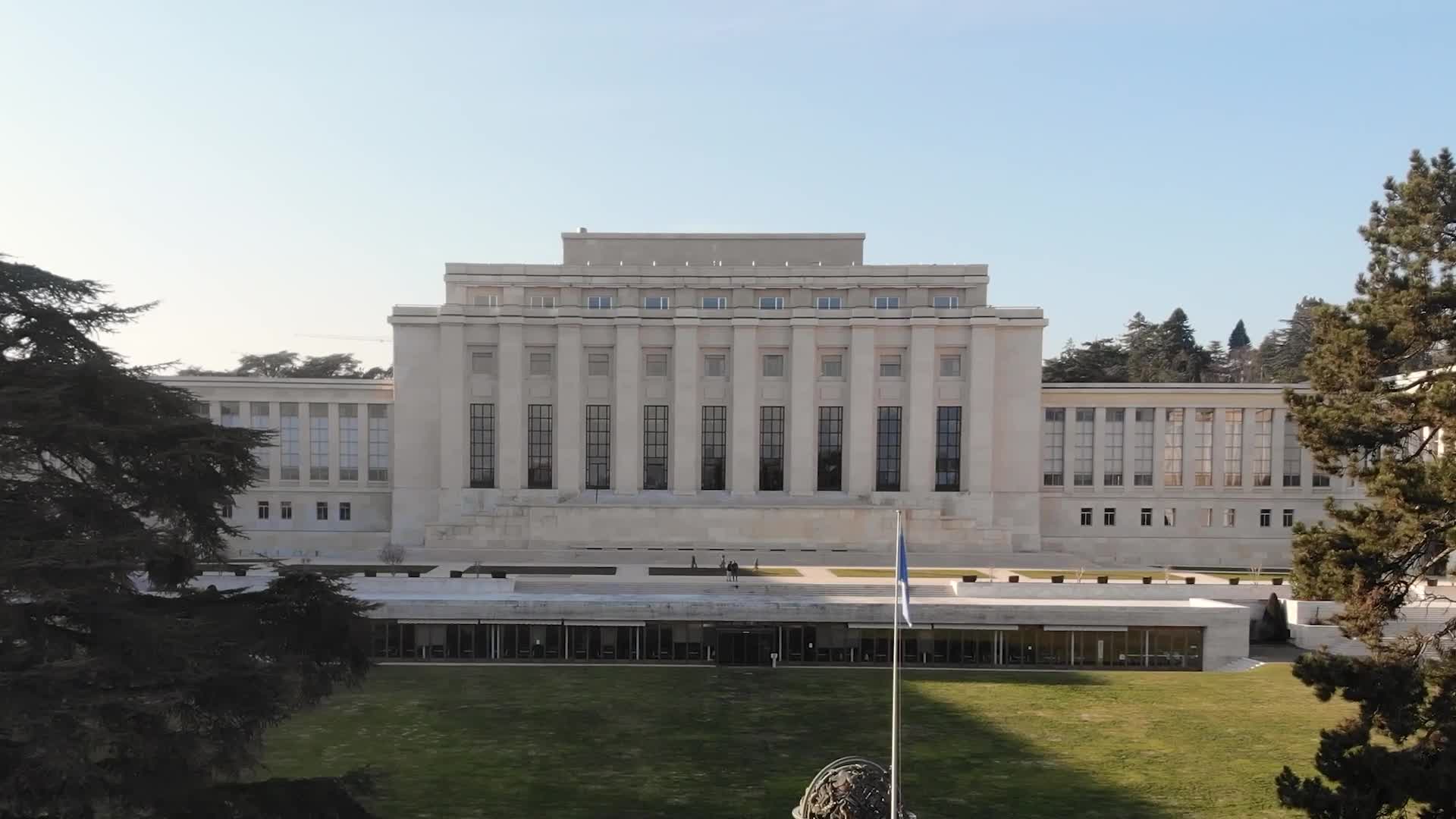
- Various exterior shots: Palais des Nations
- Interior shots: Assembly Hall
- SOUNDBITE (English) — Volker Türk, UN High Commissioner for Human Rights: “Afghanistan is a graveyard for human rights. The cascade of edicts and laws announced by the de facto authorities since coming to power in 2021 is having a crushing impact on the Afghan people, particularly women and girls.”
- Cutaways: Assembly hall
- SOUNDBITE (English) — Volker Türk, UN High Commissioner for Human Rights: “A new decree, signed by the Taliban leader last month, defines several crimes and punishments that contravene Afghanistan’s international legal obligations.”
- Cutaways: Assembly hall
- SOUNDBITE (English) — Volker Türk, UN High Commissioner for Human Rights: “The decree, which is expected to come into effect soon, extends the number of offences that carry the death penalty. It provides for the use of corporal punishment for numerous offences, including in the home, legitimizing violence against women and children. And it criminalizes criticism of the de facto leadership and their policies, in violation of freedom of expression and assembly.”
- Cutaways: Assembly hall
- SOUNDBITE (English) — Volker Türk, UN High Commissioner for Human Rights: “The de facto authorities have, in effect, criminalized the presence of women and girls in public life. They are banned from secondary education and above, and from most employment. Discrimination affects their healthcare, their access to civic space, and their freedom of movement and expression.”
- Cutaways: Assembly hall
- SOUNDBITE (English) — Volker Türk, UN High Commissioner for Human Rights: “In recent months, the de facto authorities have used the Law on the Propagation of Virtue and Prevention of Vice to crack down on men’s beards; compel strict wearing of women’s hijab; implement the requirement for women to be accompanied by a male guardian; prohibit music and images of living beings; and enforce mandatory prayers.”
- Cutaways: Assembly hall
- SOUNDBITE (English) — Volker Türk, UN High Commissioner for Human Rights: “Significant numbers of refugees continue to return to Afghanistan, most of them forced back by neighbouring countries, particularly Pakistan and the Islamic Republic of Iran. The vast majority arrive with few belongings, little access to healthcare and education, and no job prospects.”
- Cutaways: Assembly hall
- SOUNDBITE (English) — Volker Türk, UN High Commissioner for Human Rights: “I fully support efforts to codify gender apartheid, among other crimes, in the proposed Treaty for the Prevention and Punishment of Crimes Against Humanity. Defining gender apartheid is essential to ending it.”
Similar Stories

1
1
1
Edited News | OCHA , UNICEF , WFP
Aid agencies warned on Friday of the fast-developing humanitarian emergency inside Taiz City in Yemen, which has been encircled by de facto Houthi forces fighting government troops along the country’s west coast.

2
17
1
2
Edited News , Press Conferences , Images | OCHA , WMO
Two UN agencies teamed up on Wednesday to issue an appeal for immediate assistance to help communities already being impacted by the strongest El Niño on record.

3
16
2
2
Edited News , B-roll , Conferences , Images | UNITED NATIONS , UNOG
Sixth Consultative Meeting on Enhancing Coordination of Peace Initiatives and Efforts for Sudan

1
1
1
Edited News | UNICEF , WHO , UNHCR
Yemen war continues to force families from homes amid hunger and disease
More than 250,000 people have now fled renewed fighting in Yemen, the UN said on Tuesday, citing particular concern for those sheltering in the southwestern city of Taiz and the wider governorate, where access is “essentially blocked”.

1
1
1
Edited News | UNICEF
A little over one year since a ceasefire agreement was announced between Hamas fighters and Israel, more than 340 children have been reported killed and hundreds more injured, the UN Children’s Fund, UNICEF, said on Friday.

1
1
1
Edited News | UNICEF , IFRC
Six weeks after Nepal’s deadly flooding disaster, communities are still struggling to rebuild their lives, but they will need sustained help as global warming increases the risk of another Himalayan catastrophe, the UN Children’s Fund (UNICEF) said on Friday.

1
1
1
Edited News | WHO
In suspected Russia plague death, testing and monitoring underway – WHO
The death of a lab worker in Russia’s Siberia region has sparked concerns about plague being the cause, the UN World Health Organization (WHO) said on Tuesday, adding that it was following the situation closely.

1
1
Edited News | OHCHR , UNOG
UN Human Rights Chief Volker Türk on Friday provided and oral update to the 63rd session of the Human rights Council on Ukraine.

1
1
1
Edited News | OHCHR , UNOG
UN Human Rights Chief Volker Türk on Friday provided and oral update to the 63rd session of the Human rights Council on the human rights situation in Haiti.

1
1
1
Edited News | WHO
Repeated delays in bringing lifesaving medicines, prosthetics and more from Israel into Gaza risk having devastating consequences on Palestinians who urgently need them in the wartorn enclave, the UN World Health Organization (WHO) said on Friday. “A truck full of non-priority supplies or the right supplies arriving too late, doesn't save lives. That's the question that actually matters," said Dr Reinhilde Van De Weerdt, WHO Representative in the OPT.

1
1
1
Edited News | WHO
DRC: Early access to care and oxygen decisive for Ebola patients’ survival – WHO
In the Democratic Republic of the Congo (DRC), health workers fighting the country’s largest-ever Ebola outbreak are struggling to overcome critical challenges to patient care, the UN World Health Organization (WHO) warned on Tuesday.

1
1
1
Edited News | OCHA , UN
Civilians in Iran are continuing to feel the consequences of months of conflict and military escalation, the UN’s top official in the country has said, as loss of life, damage to civilian infrastructure and mounting economic pressures leave many facing continued uncertainty.