

The United Nations Office at Geneva
Multimedia Newsroom
The UN Human Rights Office released a new report on Myanmar, describing death, destruction and desperation which reflect atrocities committed in 2017.
“This morning our Office published a report on Myanmar, detailing the worsening human rights crisis, particularly in Rakhine State. The report provides a stark reminder of the atrocities committed by the military in 2017, pointing to increased killings, torture and the razing of villages,” UN Human Rights Spokesperson Jeremy Laurence said.
“Since the escalation of hostilities in Rakhine hundreds of thousands more people have been displaced. The United Nations estimates some 150,000 Rohingya have fled to Bangladesh since November 2023, joining nearly one million already taking refuge there,” he said.
“The military and the Arakan Army have acted with near complete impunity enabling the recurrence of violations in an endless cycle of suffering for the civilian population. Videos and pictures show death, destruction and desperation, distressingly similar to images that we already saw during the 2017 atrocities committed by the military against the Rohingya,” Laurence said.
“In light of the ongoing violations of international law and the prevailing impunity, the High Commissioner reiterates his previous calls for a full referral of the Myanmar situation to the International Criminal Court by the Security Council,” the spokesperson said.
The report, which covers the 14 months up until 31 May 2025, also examines in detail four incidents involving grave violations, including the targeting of civilian homes, villages, schools and camps for displaced people throughout Myanmar. In one of the incidents, on 12 May 2025, an airstrike hit a school killing 24 civilians, including 16 girls, six boys, and two female teachers. According to one witness all four classrooms were destroyed except the roof of the last room. Analysis of pictures and videos received by the UN Human Rights Office corroborated witness accounts.
Sources indicate that the military has regularly targeted public administration sites, including schools, with the effect of instilling fear in the public, the report says. There was already an established pattern of over 640 instances of military attacks against schools since 2021.
“Despite calls by the United Nations and the Association of Southeast Asian Nations for the de-escalation of violence, the attacks on civilians continue in violation of international human rights and humanitarian law,” he said.
The report says that even after declaring a unilateral ceasefire following the earthquake in March 2025, the military reportedly launched over 550 attacks, and killed over 480 people, on top of the nearly 4,000 deaths from the earthquake itself.
At the same time, food insecurity continues to rise, linked to the armed conflict, economic instability, and natural disasters. In 2025, an estimated 15.2 million people, nearly a third of the country’s population, were projected to face high levels of acute food insecurity, a sharp increase from 13.3 million in 2024.
“Humanitarian funding is urgently required to meet these needs, and we implore Member States to act to hold the parties to their obligations to allow help to reach those in need, and to support international efforts to hold those responsible for violations of international law to account,” Laurence said.
Also, at the briefing James Rodehaver, who heads the UN Human Rights Myanmar office based in Bangkok, described the ever-worsening situation on the ground.
“I would just say that since the time in which this report was written, the situation has continued to worsen. It's not just a question of airstrikes and the continuing use of heavier and heavier munitions in the conduct of airstrikes. But it's also now the growth of ground operations, throughout the country by the military, designed specifically to consolidate its control or to expand its control in strategic areas prior to elections that were announced to start in late December this year,” he said.
“I would say that the estimate has always been that following the exodus in 2017, there were around 200,000 Rohingya still left in communities throughout Rakhine State. But since the fighting renewed in November of 2023, those numbers have dwindled significantly. Probably as much as a third of those Rohingya still remaining in Rakhine state have now fled abroad,” Rodehaver said.
“I think you can see that the military is clearly gaining momentum. The tactics that they have used particularly since the earthquake of launching persistent airstrikes, artillery barrages and following it up with, troop deployments on the ground, to really press their advantage against armed groups that they know are hurting, either because of the earthquake (or) because of the restrictions on humanitarian assistance, and the of course, the dwindling humanitarian assistance and international assistance available more broadly,” he stated.
ENDS
For more information and media requests, please contact:
In Geneva:
Ravina Shamdasani: + 41 22 917 9169 / ravina.shamdasani@un.org
Jeremy Laurence: + 41 22 917 9383 / jeremy.laurence@un.org
Marta Hurtado: + 41 22 917 9466 / marta.hurtadogomez@un.org
Thameen Al-Kheetan: + 41 76 223 77 62 / thameen.alkheetan@un.org
In Nairobi:
Seif Magango: + 254 788 343 897 / seif.magango@un.org
Tag and share - Twitter: @UNHumanRights and Facebook: unitednationshumanrights
STORY: UN Human Rights Spokesperson Jeremy Laurence on Myanmar Death, destruction and desperation mirror 2017 atrocities – UN report
TRT: 05:02
SOURCE: OHCHR/ UNOG
RESTRICTIONS: NONE
LANGUAGE: English/NATS
ASPECT RATIO: 16:9
DATELINE: 02 September 2025 – GENEVA, SWITZERLAND
SHOTLIST
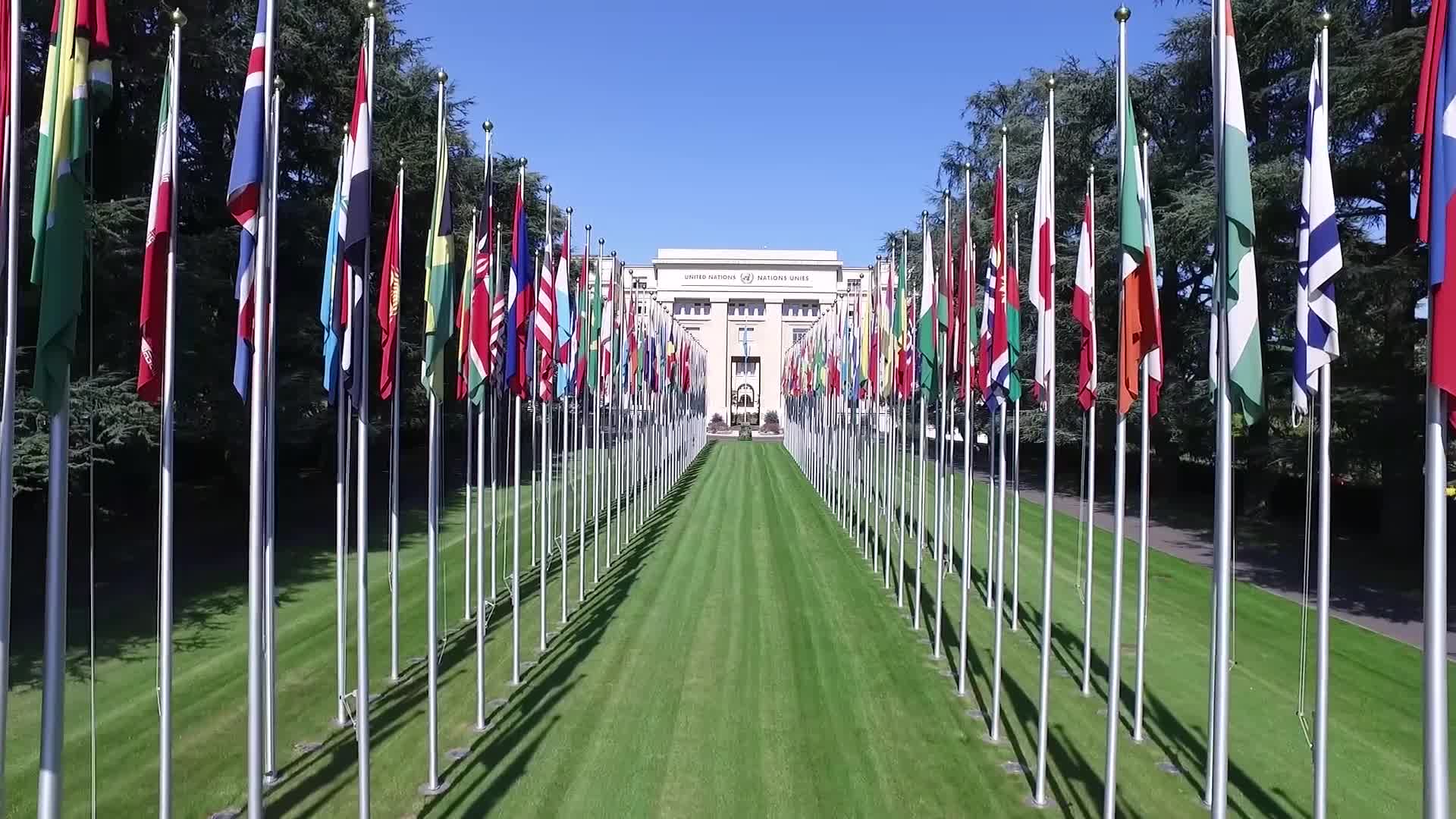
- Exterior shot: Palais des Nations
- Wide shots: Briefing room
- SOUNDBITE (English)—Jeremy Laurence, Spokesperson for the Office of the UN High Commissioner for Human Rights (OHCHR): “This morning our Office published a report on Myanmar, detailing the worsening human rights crisis, particularly in Rakhine State. The report provides a stark reminder of the atrocities committed by the military in 2017, pointing to increased killings, torture and the razing of villages.”
- Cutaways: Briefing room
- SOUNDBITE (English)—Jeremy Laurence, Spokesperson for the Office of the UN High Commissioner for Human Rights (OHCHR): “Since the escalation of hostilities in Rakhine, hundreds of thousands more people have been displaced. The United Nations estimates some 150,000 Rohingya have fled to Bangladesh since November 2023, joining nearly one million already taking refuge there.”
- Cutaways: Briefing room
- SOUNDBITE (English)—Jeremy Laurence, Spokesperson for the Office of the UN High Commissioner for Human Rights (OHCHR): “The military and the Arakan Army have acted with near complete impunity enabling the recurrence of violations in an endless cycle of suffering for the civilian population. Videos and pictures show death, destruction and desperation, distressingly similar to images that we already saw during the 2017 atrocities committed by the military against the Rohingya.”
- Cutaways: Briefing room
- SOUNDBITE (English)—Jeremy Laurence, Spokesperson for the Office of the UN High Commissioner for Human Rights (OHCHR): “In light of the ongoing violations of international law and the prevailing impunity, the High Commissioner reiterates his previous calls for a full referral of the Myanmar situation to the International Criminal Court by the Security Council.”
- Cutaways: Briefing room
- SOUNDBITE (English)—Jeremy Laurence, Spokesperson for the Office of the UN High Commissioner for Human Rights (OHCHR): “Despite calls by the United Nations and the Association of Southeast Asian Nations for the de-escalation of violence, the attacks on civilians continue in violation of international human rights and humanitarian law.”
- Cutaways: Briefing room
- SOUNDBITE (English)—Jeremy Laurence, Spokesperson for the Office of the UN High Commissioner for Human Rights (OHCHR): “Humanitarian funding is urgently required to meet these needs, and we implore Member States to act to hold the parties to their obligations to allow help to reach those in need, and to support international efforts to hold those responsible for violations of international law to account.”
- Cutaways: Briefing room
- SOUNDBITE (English)—James Rodehaver, Head of the UN Human Rights Myanmar Office: “I would just say that since the time in which this report was written, the situation has continued to worsen. It's not just a question of airstrikes and the continuing use of heavier and heavier munitions in the conduct of airstrikes. But it's also now the growth of ground operations, throughout the country, by the military, designed specifically to consolidate its control or to expand its control in strategic areas prior to elections that were announced to start in late December this year.”
- Cutaways: Briefing room
- SOUNDBITE (English)—James Rodehaver, Head of the UN Human Rights Myanmar Office: “I would say that the estimate has always been that following the exodus in 2017, there were around 200,000 Rohingya still left in communities throughout Rakhine State. But since the fighting renewed in November of 2023, those numbers have dwindled significantly. Probably as much as a third of those Rohingya still remaining in Rakhine State have now fled abroad.”
- Cutaways: Briefing room
SOUNDBITE (English)—James Rodehaver Head of the UN Human Rights Myanmar Office: “I think you can see that the military is clearly gaining momentum. The, you know, tactics that they have used particularly since the earthquake of launching persistent airstrikes, artillery barrages and following it up with troop deployments on the ground to really press their advantage against armed groups that they know are hurting, either because of the earthquake (or) because of the restrictions on humanitarian assistance, and of course, the dwindling humanitarian assistance and international assistance available more broadly.”
Similar Stories

2
17
1
2
Edited News , Press Conferences | OCHA , WMO
Two UN agencies teamed up on Wednesday to issue an appeal for immediate assistance to help communities already being impacted by the strongest El Niño on record.

3
16
2
2
B-roll , Conferences , Edited News | UNITED NATIONS , UNOG
Sixth Consultative Meeting on Enhancing Coordination of Peace Initiatives and Efforts for Sudan

1
1
1
Edited News | UNICEF , WHO , UNHCR
Yemen war continues to force families from homes amid hunger and disease
More than 250,000 people have now fled renewed fighting in Yemen, the UN said on Tuesday, citing particular concern for those sheltering in the southwestern city of Taiz and the wider governorate, where access is “essentially blocked”.

1
1
1
Edited News | UNICEF
A little over one year since a ceasefire agreement was announced between Hamas fighters and Israel, more than 340 children have been reported killed and hundreds more injured, the UN Children’s Fund, UNICEF, said on Friday.

1
1
1
Edited News | UNICEF , IFRC
Six weeks after Nepal’s deadly flooding disaster, communities are still struggling to rebuild their lives, but they will need sustained help as global warming increases the risk of another Himalayan catastrophe, the UN Children’s Fund (UNICEF) said on Friday.

1
1
1
Edited News | WHO
In suspected Russia plague death, testing and monitoring underway – WHO
The death of a lab worker in Russia’s Siberia region has sparked concerns about plague being the cause, the UN World Health Organization (WHO) said on Tuesday, adding that it was following the situation closely.

1
1
Edited News | OHCHR , UNOG
UN Human Rights Chief Volker Türk on Friday provided and oral update to the 63rd session of the Human rights Council on Ukraine.

1
1
1
Edited News | OHCHR , UNOG
UN Human Rights Chief Volker Türk on Friday provided and oral update to the 63rd session of the Human rights Council on the human rights situation in Haiti.

1
1
1
Edited News | WHO
Repeated delays in bringing lifesaving medicines, prosthetics and more from Israel into Gaza risk having devastating consequences on Palestinians who urgently need them in the wartorn enclave, the UN World Health Organization (WHO) said on Friday. “A truck full of non-priority supplies or the right supplies arriving too late, doesn't save lives. That's the question that actually matters," said Dr Reinhilde Van De Weerdt, WHO Representative in the OPT.

1
1
1
Edited News | WHO
DRC: Early access to care and oxygen decisive for Ebola patients’ survival – WHO
In the Democratic Republic of the Congo (DRC), health workers fighting the country’s largest-ever Ebola outbreak are struggling to overcome critical challenges to patient care, the UN World Health Organization (WHO) warned on Tuesday.

1
1
1
Edited News | OCHA , UN
Civilians in Iran are continuing to feel the consequences of months of conflict and military escalation, the UN’s top official in the country has said, as loss of life, damage to civilian infrastructure and mounting economic pressures leave many facing continued uncertainty.
1
1
1
Edited News | WHO , UNICEF
Aid agencies in Yemen highlighted the growing hunger emergency sparked by renewed fighting between Houthi opposition forces and Government troops, after mobile health clinics reported that hundreds of children displaced by the violence are suffering from the most deadly form of malnutrition.