

The United Nations Office at Geneva
Multimedia Newsroom
Nearly half of all pregnancies are unintended, says UN Population Fund
Nearly a quarter of all women are effectively forced to have sex and nearly half of all pregnancies are unintended globally, new data from the UN Population Fund (UNFPA) indicated on Wednesday.
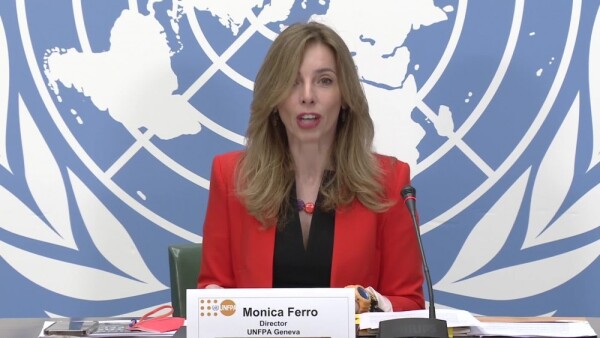
“Today, in countries where data is available, nearly a quarter of all women are unable to say no to sex. Nearly a quarter of women are unable to make decisions about their own health care. Nearly 10 per cent are unable to make decisions about contraception,” said UNFPA Geneva Director, Monica Ferro.
She added that “of all pregnancies in the world, nearly half – half - are unintended. For the women and girls affected, the most life-altering reproductive choice – whether or not to become pregnant – is no choice at all”.
For the UNFPA, the problem is closely linked to a lack of development, gender inequality and stigma, among many other factors.
“It is a development issue,” Ms. Ferro insisted. “While every country continues to experience unacceptably high rates of unintended pregnancy, we see strong correlations between rates of unintended pregnancy and lack of development.”
The UNFPA’s State of the World Population 2022 report also highlights how the crisis in Ukraine prompted by Russia’s invasion on 24 February and other conflicts are expected to drive an increase in unintended pregnancy.
“We are that foreseeing that 265,000 women are pregnant in Ukraine and in next three months 80,000 will give birth” - many without access to critical maternal health care - said Ms. Ferro, her comments coming after the targeting of a maternity hospital in the stricken coastal city of Mariupol earlier this month.
As part of the UN’s response, UNFPA has shipped essential medicines and life-saving sexual and reproductive health services and supplies to the country.
“If there is no health facility for them to give birth, to have a skilled birth - skilled attendant’s birth - or if they don’t have access to healthcare, this is going to increase as we known maternal mortality and morbidity,” Ms. Ferro warned.
Given the “staggering number” of unintended pregnancies every year – 121 million, or 331,000 per day – UNFPA has urged governments everywhere to do more to tackle gender inequality and stalled development – two of the key drivers of the problem.
Among UNFPA’s other stand-out findings, an estimated 257 million women who want to avoid pregnancy are not using safe, modern methods of contraception.
“We must make pregnancy an aspiration not an inevitability, and we do that by empowering women and girls to make affirmative choices about sexual activity and motherhood,” said Ms. Ferro. “For this to happen, we must reduce gender inequality and empower women and girls.”
This includes rethinking what we know about contraception – including who should use it - the UNFPA Geneva Director said, amid a growing tendency for more women to question the health impacts linked to birth control medication.
“One of the questions that we are often asked is are men interested in having a role in reducing unintended pregnancies or in controlling fertility. And it’s quite interesting, because in most of the places where we have data, it shows that men are quite interested. They don’t see motherhood or family planning as a burden only to be carried by women.”
ends
STORY: Unintended Pregnancy Crisis - UNFPA
TRT: 2 mins 31s
SOURCE: UNTV CH
RESTRICTIONS: NONE
LANGUAGE: ENGLISH
ASPECT RATIO: 16:9
DATELINE: 30 March 2022 GENEVA, SWITZERLAND
SHOTLIST
- Exterior wide shot, flag alley, UN Geneva.
- Wide shot, UN Geneva Press room.
- SOUNDBITE (ENGLISH): Monica Ferro, Director, UNFPA Geneva Office: “We are that foreseeing that 265,000 women are pregnant in Ukraine and in next three months 80,000 will give birth. So if there is no health facility for them to give birth, to have a skilled birth - skilled attendant’s birth - or if they don’t have access to healthcare, this is going to increase as we known maternal mortality and morbidity.”
- Medium shot, podium speakers, seated, large TV screen showing Ms. Ferro with UN logo to rear.
- SOUNDBITE (ENGLISH): Monica Ferro, Director, UNFPA Geneva Office: “Today, in countries where data is available, nearly a quarter of all women are unable to say no to sex. Nearly a quarter of women are unable to make decisions about their own health care. Nearly 10 per cent are unable to make decisions about contraception.”
- Medium shot, podium speakers, seated, large TV screen showing Ms. Ferro with UN logo to rear.
- SOUNDBITE (ENGLISH): Monica Ferro, Director, UNFPA Geneva Office: “Of all pregnancies in the world, nearly half – half - are unintended. For the women and girls affected, the most life-altering reproductive choice – whether or not to become pregnant – is no choice at all.”
- Medium shot, large TV screen showing Ms. Ferro in foreground with conference participant to rear.
- SOUNDBITE (ENGLISH): Monica Ferro, Director, UNFPA Geneva Office: “It is a development issue. While every country continues to experience unacceptably high rates of unintended pregnancy, we see strong correlations between rates of unintended pregnancy and lack of development.”
- Medium shot, participant wearing mask, writing on laptop.
- SOUNDBITE (ENGLISH): Monica Ferro, Director, UNFPA Geneva Office: “We must make pregnancy an aspiration not an inevitability, and we do that by empowering women and girls to make affirmative choices about sexual activity and motherhood. For this to happen, we must reduce gender inequality and empower women and girls.”
- Medium shot, participants, masked, following conference.
- SOUNDBITE (ENGLISH): Monica Ferro, Director, UNFPA Geneva Office: “One of the questions that we are often asked is are men interested in having a role in reducing unintended pregnancies or in controlling fertility. And it’s quite interesting, because in most of the places where we have data, it shows that men are quite interested. They don’t see motherhood or family planning as a burden only to be carried by women.”
- Medium shot, participants, masked, following conference, large screen TV showing podium speaker to rear.
- Medium shot, podium speakers with microphones and UN backdrop panel.
- Close-up, participant’s hand takes a pen and holds it over press release.
Similar Stories

1
1
1
Edited News | OCHA , UNICEF , WFP
Aid agencies warned on Friday of the fast-developing humanitarian emergency inside Taiz City in Yemen, which has been encircled by de facto Houthi forces fighting government troops along the country’s west coast.

2
17
1
2
Edited News , Press Conferences , Images | OCHA , WMO
Two UN agencies teamed up on Wednesday to issue an appeal for immediate assistance to help communities already being impacted by the strongest El Niño on record.

3
16
2
2
Edited News , B-roll , Conferences , Images | UNITED NATIONS , UNOG
Sixth Consultative Meeting on Enhancing Coordination of Peace Initiatives and Efforts for Sudan

1
1
1
Edited News | UNICEF , WHO , UNHCR
Yemen war continues to force families from homes amid hunger and disease
More than 250,000 people have now fled renewed fighting in Yemen, the UN said on Tuesday, citing particular concern for those sheltering in the southwestern city of Taiz and the wider governorate, where access is “essentially blocked”.

1
1
1
Edited News | UNICEF
A little over one year since a ceasefire agreement was announced between Hamas fighters and Israel, more than 340 children have been reported killed and hundreds more injured, the UN Children’s Fund, UNICEF, said on Friday.

1
1
1
Edited News | UNICEF , IFRC
Six weeks after Nepal’s deadly flooding disaster, communities are still struggling to rebuild their lives, but they will need sustained help as global warming increases the risk of another Himalayan catastrophe, the UN Children’s Fund (UNICEF) said on Friday.

1
1
1
Edited News | WHO
In suspected Russia plague death, testing and monitoring underway – WHO
The death of a lab worker in Russia’s Siberia region has sparked concerns about plague being the cause, the UN World Health Organization (WHO) said on Tuesday, adding that it was following the situation closely.

1
1
Edited News | OHCHR , UNOG
UN Human Rights Chief Volker Türk on Friday provided and oral update to the 63rd session of the Human rights Council on Ukraine.

1
1
1
Edited News | OHCHR , UNOG
UN Human Rights Chief Volker Türk on Friday provided and oral update to the 63rd session of the Human rights Council on the human rights situation in Haiti.

1
1
1
Edited News | WHO
Repeated delays in bringing lifesaving medicines, prosthetics and more from Israel into Gaza risk having devastating consequences on Palestinians who urgently need them in the wartorn enclave, the UN World Health Organization (WHO) said on Friday. “A truck full of non-priority supplies or the right supplies arriving too late, doesn't save lives. That's the question that actually matters," said Dr Reinhilde Van De Weerdt, WHO Representative in the OPT.

1
1
1
Edited News | WHO
DRC: Early access to care and oxygen decisive for Ebola patients’ survival – WHO
In the Democratic Republic of the Congo (DRC), health workers fighting the country’s largest-ever Ebola outbreak are struggling to overcome critical challenges to patient care, the UN World Health Organization (WHO) warned on Tuesday.

1
1
1
Edited News | OCHA , UN
Civilians in Iran are continuing to feel the consequences of months of conflict and military escalation, the UN’s top official in the country has said, as loss of life, damage to civilian infrastructure and mounting economic pressures leave many facing continued uncertainty.