

The United Nations Office at Geneva
Multimedia Newsroom
Edited News , Press Conferences | OSES
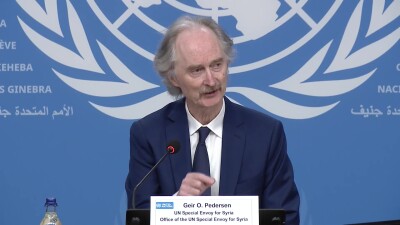
Press Conference: Geir O. Pedersen, Special Envoy for Syria
Barely 48 hours since opposition forces including Hayat Tahrir al-Sham (HTS) swept into Damascus and forced out President Bashar al-Assad, the top UN negotiator tasked with helping the Syrian people to create a peaceful and democratic future insisted that nothing could be take for granted.
“Syria is now at a crossroads with great opportunities for us, but also with grave risks. And we need really to look at both,” said Geir Pedersen, UN Special Envoy for Syria. “We know that, of course, HTS now the dominant group in control of Damascus, but it's important also to remember that they are not the only armed group in Damascus.”
Amid images of jubilant scenes on the streets of Damascus following the end of the Assad regime, Mr. Pedersen cautioned that the transfer of power had been accompanied by reports of robberies and the “invasion of public buildings or private homes. But this seems to have stopped and that is a good thing,” he told journalists in Geneva.
Beyond Damascus, the situation remains less certain, a legacy of Syria’s 13-year civil war that has drawn in regional and international actors, stymying UN-led efforts towards peace.
“The conflict in the northeast is not over; there has been clashes between the Syrian National Army, the opposition groups and the [Syrian Democratic Forces]. We are calling obviously for calm also in this area,” the UN Special Envoy said.
Turning to numerous reports of Israeli troop movements into the Occupied Golan Heights and bombardments of targets inside Syria, Mr. Pedersen insisted: “This needs to stop.”
He added: “I am not in contact with the Israelis, but of course, the United Nations in New York, they are. And, you know, the peacekeepers in the Golan Heights, are in daily contact with the Israelis. And of course, the message from New York is just it's the same that what we are seeing is a violation of the disengagement agreement in 1974.”
The veteran negotiator, a Norwegian national, also provided insight about how the transition of power is playing out inside Syria, via a key diplomatic exchange during his closed-door briefing to the Security Council at UN headquarters in New York late Monday evening.
“When I briefed the Security Council yesterday, I received a message from the Syrian ambassador to the United Nations in New York. And he was then addressing me on behalf of the authorities in Damascus. So that is still functioning.”
Much is still unclear about HTS and its motivations, Mr. Pedersen stressed, noting that [Abu Mohammad al] “Jolani himself mentioned this in an interview with the CNN that they are discussing the possibility of dismantling HTS. So, again, let me emphasize that we are still in what we called a very fluid period and things have not settled. There is a real opportunity for change, but this opportunity needs to be grasped by the Syrians themselves and supported by the UN and the international community.”
A key potential sticking point to conducting international dialogue with HTS - which led the opposition forces’ advance into Damascus via Aleppo, Hama and Homs - is that it is still regarded as a terrorist group by the Security Council. The forum’s core resolution on Syria – number 2254 – adopted unanimously in December 2015 - explicitly calls on Member States “to prevent and suppress terrorist acts committed specifically by” HTS’s predecessor, the Al-Nusra Front.
This terror listing may be about to change, Mr. Pedersen suggested. “You have to look at the facts and to see what has happened during the last nine years. It is nine years since that resolution was adopted and the reality is so far is that the HTS and also the other armed groups have been sending good messages to the Syrian people; they have been sending messages of unity, of inclusiveness and frankly speaking, also we are also seeing in Aleppo and in Hama, we have also seen, you know, reassuring things on the ground.”
As many Syrians exiled by the war now prepare to return home, the UN Special Envoy stressed the collective wish of the foreign ministers he met in Doha at the weekend – from Turkey, Russia, Iran and many Arab States – for Damascus’s new rulers to act on their initial promising declarations in favour of a peaceful transition of power. And for the international community to ensure that this can happen.
He added: “When I was leaving Doha, there was a Syrian family that came towards me, they were, living in Sweden and they said, ‘Mr. Pedersen, you know, we are so hopeful, we know there are many challenges. We left Hama 10 years ago, we really want to go back. We hope it will be possible.’ And I think that is really something that many, many Syrians are hoping for to this day.”
Syria crisis – UN Special Envoy
TRT: 04 min 28s
SOURCE: UNTV CH
RESTRICTIONS: NONE
LANGUAGE: ENGLISH (Left) / NATS
ASPECT RATIO: 16:9
DATELINE: 10 DECEMBER 2024 GENEVA, SWITZERLAND
Speakers:
- Geir Pedersen, UN Special Envoy for Syria
SHOTLIST
-
- Exterior médium-wide: UN Geneva flag alley.
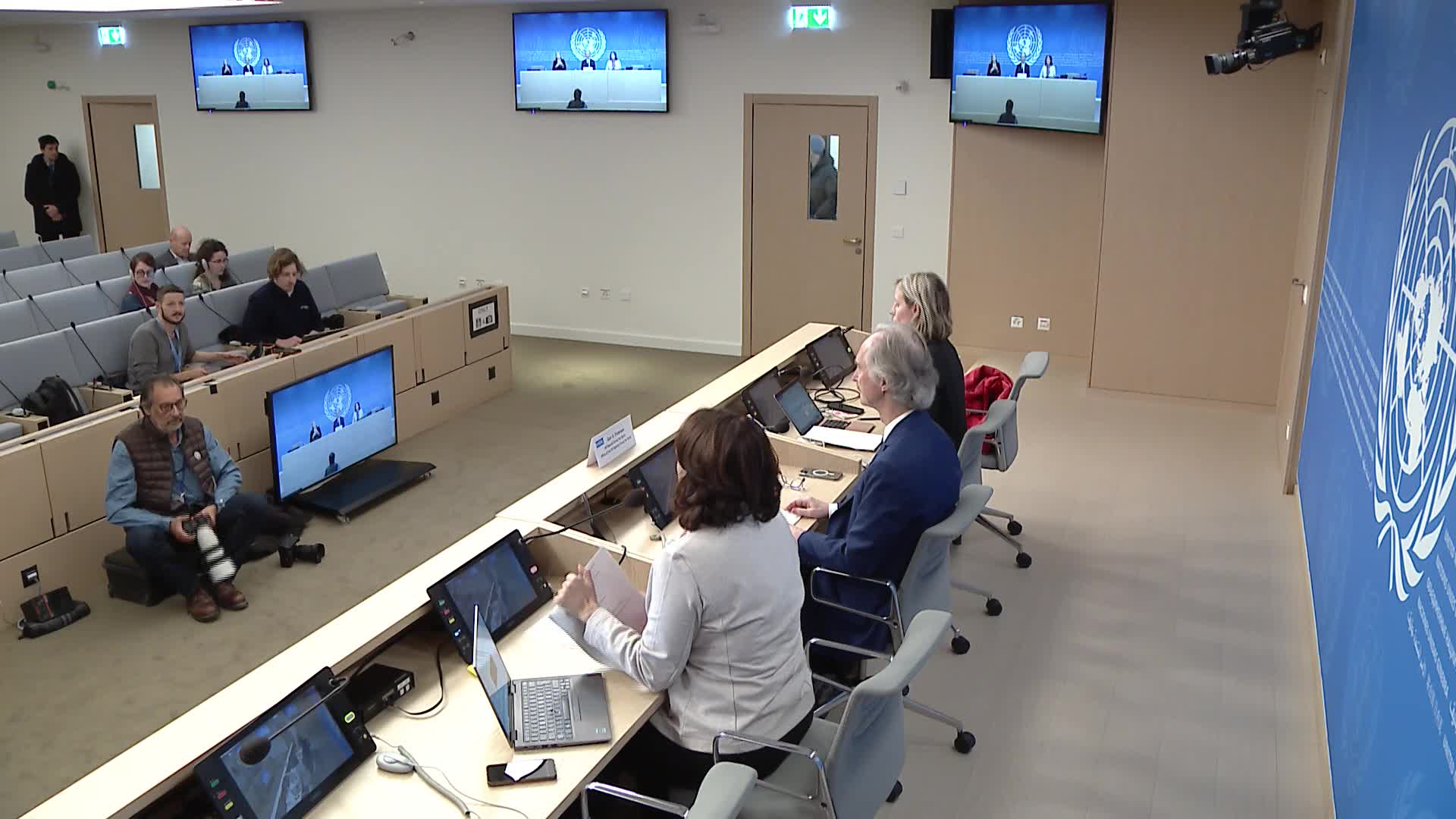
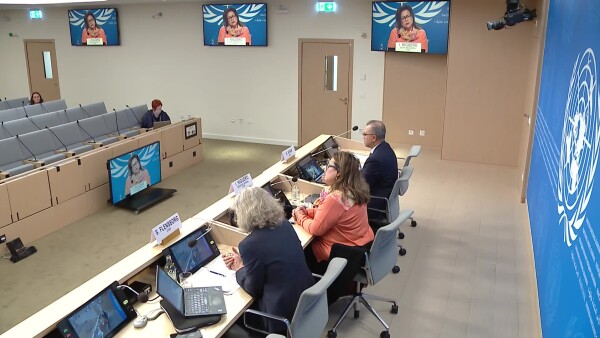
- Medium wide, UN Geneva Press room, podium speakers, journalists, photographers.
- SOUNDBITE (English) Geir Pedersen, UN Special Envoy for Syria: “Syria is now at a crossroad with great opportunities for us, but also with grave risks. And we need really to look at both. We know that, of course, HTS now the dominant group in control of Damascus, but it's important also to remember that they are not the only armed group in Damascus.”
- Medium, UN Geneva Press room, podium speakers, journalists, photographers.
- SOUNDBITE (English) Geir Pedersen, UN Special Envoy for Syria: “The conflict in the northeast is not over; there has been clashes between the Syrian National Army, the opposition groups and the SDF. We are calling obviously for calm also in this area. And then a very troubling development, we are continuing to see Israeli movements and bombardments into Syrian territory. This needs to stop.”
- Medium-wide, journalists, TV screens showing Mr. Pedersen.
- SOUNDBITE (English) Geir Pedersen, UN Special Envoy for Syria: “When I briefed the Security Council yesterday, I received a message from the Syrian ambassador to the United Nations in New York. And he was then addressing me on behalf of the authorities in Damascus. So that is still functioning.”
- Wide, Press room, journalists and TV cameras, photographer.
- SOUNDBITE (English) Geir Pedersen, UN Special Envoy for Syria: “Jolani himself mentioned this in an interview with the CNN that they are discussing the possibility of dismantling HTS. So, again, let me emphasize that we are still in what we called a very fluid period and things have not settled. There is a real opportunity for change, but this opportunity needs to be grasped by the Syrians themselves and supported by the UN and the international community.”
- Medium-wide, journalists, TV screens showing the Special Envoy.
- SOUNDBITE (English) Geir Pedersen, UN Special Envoy for Syria: “You have to look at the facts and to see what has happened during the last nine years. It is nine years since that resolution was adopted and the reality is so far is that the HTS and also the other armed groups have been sending good messages to the Syrian people; they have been sending messages of unity, of inclusiveness and frankly speaking, also we are also seeing in Aleppo and in Hama, we have also seen, you know, reassuring things on the ground.”
- Medium, interpreter’s booth, UN logo and Special Envoy reflected in window.
- SOUNDBITE (English) Geir Pedersen, UN Special Envoy for Syria: “I am not in contact with the Israelis, but of course, the United Nations in New York, they are. And, you know, the peacekeepers in the Golan Heights, are in daily contact with the Israelis. And of course, the message from New York is just it's the same that what we are seeing is a violation of the disengagement agreement in 1974.”
- Medium, photographer lining up shot.
- SOUNDBITE (English) Geir Pedersen, UN Special Envoy for Syria: “When I was leaving Doha, there was a Syrian family that came towards me, they were, living in Sweden and they said, ‘Mr. Pedersen, you know, we are so hopeful, we know there are many challenges. We left Hama 10 years ago, we really want to go back. We hope it will be possible.' And I think that is really something that many, many Syrians are hoping for to this day.”
- Wide, TV journalist, control booths, automatic cameras.
- Medium, journalist filming with mobile phone.
- Medium, journalists.
Similar Stories

1
1
1
Edited News | OCHA , UNICEF , WFP
Aid agencies warned on Friday of the fast-developing humanitarian emergency inside Taiz City in Yemen, which has been encircled by de facto Houthi forces fighting government troops along the country’s west coast.
1
1
1
Press Conferences | UN WOMEN , WFP , WHO
UN WOMEN: Sudan Women and girls one year after the fall of El Fasher; increasing drone attacks across the country; WFP: DRC - Ebola spreads to eighth DRC province as WFP delivers food, builds treatment centres and keeps supplies moving; WHO - Update on Ebola (Bundibugyo Virus Disease)
1
12
1
1
Press Conferences , Images | UNOG
Closing Press Conference following the Sixth Consultative Meeting on Enhancing Coordination of Peace Initiatives and Efforts in Sudan

2
17
1
2
Edited News , Press Conferences , Images | OCHA , WMO
Two UN agencies teamed up on Wednesday to issue an appeal for immediate assistance to help communities already being impacted by the strongest El Niño on record.

3
16
2
2
Edited News , B-roll , Conferences , Images | UNITED NATIONS , UNOG
Sixth Consultative Meeting on Enhancing Coordination of Peace Initiatives and Efforts for Sudan
1
1
1
Press Conferences | CITES
Wildlife trade and conservation policy discussions at the 81st meeting of the CITES Standing Committee (SC81)

1
1
1
Edited News | UNICEF , WHO , UNHCR
Yemen war continues to force families from homes amid hunger and disease
More than 250,000 people have now fled renewed fighting in Yemen, the UN said on Tuesday, citing particular concern for those sheltering in the southwestern city of Taiz and the wider governorate, where access is “essentially blocked”.
1
1
1
Press Conferences | UNHCR , UNCTAD , WMO , OCHA , UNICEF , WHO
UNHCR Hungary’s 1956 Refugee Crisis: 70 Years On, UNCTAD World Investment Forum 2026, Doha, WMO Greenhouse Gas Bulletin and Climate Update for COP31, OCHA Afghanistan: Malnutrition, Girls’ Education and Recovery, UNICEF Yemen: Child Malnutrition and Unsafe Water in Taiz, WHO Inequalities in Noncommunicable Diseases and Risk Factors

1
1
1
Press Conferences | UNHCR
End of UNHCR's 77th Annual Executive Committee (ExCom) meeting week

1
1
1
Edited News | UNICEF
A little over one year since a ceasefire agreement was announced between Hamas fighters and Israel, more than 340 children have been reported killed and hundreds more injured, the UN Children’s Fund, UNICEF, said on Friday.

1
1
1
Press Conferences | UNICEF , IOM , UNHCR
UN Special Assistant to the Personal Envoy Office (SUDAN): Peace Initiatives and Efforts in Sudan; UNICEF: Dire situation of children in Gaza; IOM: Damaged Homes and Energy Attacks Risk Displacing Ukrainians for this winter; UNHCR: update on EXCOM week

1
1
1
Press Conferences | IOM , UNDRR
UN stresses importance of household preparedness for disaster risk reduction.