

The United Nations Office at Geneva
Multimedia Newsroom
Catastrophic floods and surging inflation drive up number of Sudanese people in need
Sudan is experiencing a double humanitarian disaster caused by torrential floods and a simultaneously surging inflation which increased the number of people in need and the local cost of responding to those needs, the UN humanitarian agency said today (2 October) at the United Nations in Geneva.
Speaking to journalists, Jens Laerke, Spokesperson for the UN Office for the Coordination of Humanitarian Affairs (OCHA), said that “more than 860,000 people have had their houses destroyed or damaged in the floods and more than 120 people have died, according to local authorities”. He added that “schools, health, water and sanitation facilities have also been damaged or destroyed especially in North Darfur, Khartoum, West Darfur and Sennar”.
In early September, the country declared a three-month state of emergency over the floods, which began in mid-July and mark the worst flooding in the country in 30 years, with authorities recording the highest water levels on the Blue Nile since records began over 100 years ago.
The UN and its humanitarian partners have reached so far more than 400,000 people in need. However, rising prices are hampering the humanitarian assistance.
“A surging inflation, reaching nearly 170 percent in August, and the associated spike in local prices and shortages of basic commodities, is hampering the response in major ways”, OCHA’s Jens Laerke said. “The prices of supplies, which are procured locally, are rising every week”.
According to WASH (Water, Sanitation and Hygiene) partners, prices of some locally procured supplies have increased three-or four-fold, and in some cases, the services had to be stopped.
“A related challenge is that, in some cases, by the time the procurement process is finalized, the suppliers have increased prices so that the original budgets are no longer valid”, Laerke said. “Agencies have to restart the process from scratch, while there is no guarantee that by the time that that process is done, the prices will not have risen once again and they can start all over”.
According to OCHA, some humanitarian partners are now able to reach only one of every four people previously assisted, as increased prices and delays in procurement drained their budgets.
Sudan’s recent flooding and landslides have not only affected its people and their homes, but also damaged large tracts of farmland just before harvest. For the local communities, the average price of the food basket increased by nearly 200 per cent compared to last year, the World Food Programme said.
“Most families in Sudan already spent around 65 per cent of their income on food, so these price hikes lead to increased hunger and less education, health and other services that families de-prioritize as they try to cope with the economic hardship”, Jens Laerke said.
- Exterior wide shot, Palais des Nations flag alley, nations’ flags flying, a cloudy day.
- Wide shot, podium with speakers in a near-empty Room XIV in line with COVID-19 distancing measures, side shot, Palais des Nations.
- SOUNDBITE (English) — Jens Laerke, Spokesperson for the UN Office for the Coordination of Humanitarian Affairs (OCHA): “More than 860,000 people have had their houses destroyed or damaged in the floods and more than 120 people have died, according to local authorities. Schools, health, water and sanitation facilities have also been damaged or destroyed especially in North Darfur, Khartoum, West Darfur and Sennar”.
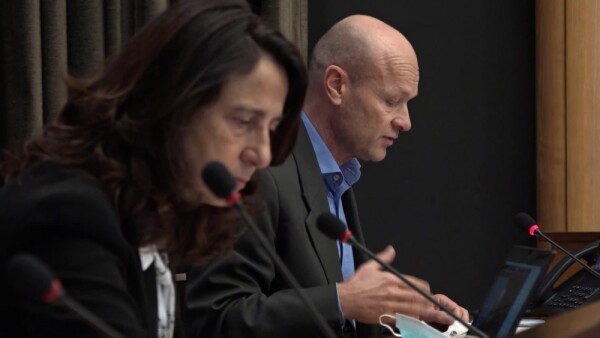
- Medium shot, journalist sitting with mask and laptop, Room XIV, Palais des Nations.
- SOUNDBITE (English) — Jens Laerke, Spokesperson for the UN Office for the Coordination of Humanitarian Affairs (OCHA): “A surging inflation, reaching nearly 170 percent in August, and the associated spike in local prices and shortages of basic commodities, is hampering the response in major ways. The prices of supplies, which are procured locally, are rising every week”.
- Medium shot, cameraman, Room XIV, Palais des Nations.
- SOUNDBITE (English) — Jens Laerke, Spokesperson for the UN Office for the Coordination of Humanitarian Affairs (OCHA): “A related challenge is that, in some cases, by the time the procurement process is finalized, the suppliers have increased prices so that the original budgets are no longer valid. Agencies have to restart the process from scratch, while there is no guarantee that by the time that that process is done, the prices will not have risen once again and they can start all over”.
- Medium shot, UN staff sitting and listening using conference listening device, Room XIV, Palais des Nations.
- SOUNDBITE (English) — Jens Laerke, Spokesperson for the UN Office for the Coordination of Humanitarian Affairs (OCHA): “Most families in Sudan already spent around 65 per cent of their income on food, so these price hikes lead to increased hunger and less education, health and other services that families de-prioritize as they try to cope with the economic hardship”.
- Medium shot, UN staff sitting and listening using conference listening device, Room XIV, Palais des Nations.
- Medium shot, spokespersons sitting at the podium
- Wide shot, Room XIV, Palais des Nations.
Similar Stories
1
1
1
Edited News , B-roll , Conferences | UNITED NATIONS , UNOG
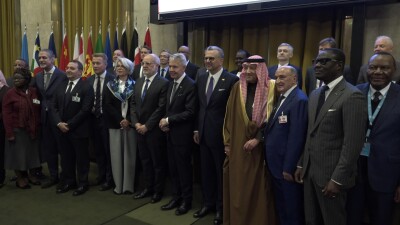
Arrivals, roundtable and family photo-op at the 6th Consultative Meeting on Enhancing Coordination of Peace Initiatives and Efforts in Sudan
2
16
2
2
B-roll , Conferences , Edited News | UNITED NATIONS , UNOG
Sixth Consultative Meeting on Enhancing Coordination of Peace Initiatives and Efforts for Sudan

1
1
1
Edited News | UNICEF , WHO , UNHCR
Yemen war continues to force families from homes amid hunger and disease
More than 250,000 people have now fled renewed fighting in Yemen, the UN said on Tuesday, citing particular concern for those sheltering in the southwestern city of Taiz and the wider governorate, where access is “essentially blocked”.

1
1
1
Edited News | UNICEF
A little over one year since a ceasefire agreement was announced between Hamas fighters and Israel, more than 340 children have been reported killed and hundreds more injured, the UN Children’s Fund, UNICEF, said on Friday.

1
1
1
Edited News | UNICEF , IFRC
Six weeks after Nepal’s deadly flooding disaster, communities are still struggling to rebuild their lives, but they will need sustained help as global warming increases the risk of another Himalayan catastrophe, the UN Children’s Fund (UNICEF) said on Friday.

1
1
1
Edited News | WHO
In suspected Russia plague death, testing and monitoring underway – WHO
The death of a lab worker in Russia’s Siberia region has sparked concerns about plague being the cause, the UN World Health Organization (WHO) said on Tuesday, adding that it was following the situation closely.

1
1
Edited News | OHCHR , UNOG
UN Human Rights Chief Volker Türk on Friday provided and oral update to the 63rd session of the Human rights Council on Ukraine.

1
1
1
Edited News | OHCHR , UNOG
UN Human Rights Chief Volker Türk on Friday provided and oral update to the 63rd session of the Human rights Council on the human rights situation in Haiti.

1
1
1
Edited News | WHO
Repeated delays in bringing lifesaving medicines, prosthetics and more from Israel into Gaza risk having devastating consequences on Palestinians who urgently need them in the wartorn enclave, the UN World Health Organization (WHO) said on Friday. “A truck full of non-priority supplies or the right supplies arriving too late, doesn't save lives. That's the question that actually matters," said Dr Reinhilde Van De Weerdt, WHO Representative in the OPT.

1
1
1
Edited News | WHO
DRC: Early access to care and oxygen decisive for Ebola patients’ survival – WHO
In the Democratic Republic of the Congo (DRC), health workers fighting the country’s largest-ever Ebola outbreak are struggling to overcome critical challenges to patient care, the UN World Health Organization (WHO) warned on Tuesday.

1
1
1
Edited News | OCHA , UN
Civilians in Iran are continuing to feel the consequences of months of conflict and military escalation, the UN’s top official in the country has said, as loss of life, damage to civilian infrastructure and mounting economic pressures leave many facing continued uncertainty.
1
1
1
Edited News | WHO , UNICEF
Aid agencies in Yemen highlighted the growing hunger emergency sparked by renewed fighting between Houthi opposition forces and Government troops, after mobile health clinics reported that hundreds of children displaced by the violence are suffering from the most deadly form of malnutrition.