

The United Nations Office at Geneva
Multimedia Newsroom
Sudan war: Aid teams plead for access to thousands trapped in El Fasher
Just how many people are still trapped in the Sudanese city of El Fasher?
That’s the burning question for relatives of the many thousands of people believed to still be there, since paramilitary fighters overran the regional capital of North Darfur last month, after a 500-day siege.
That ordeal reduced people to eating peanut shells and animal feed, UN human rights chief Volker Türk said on Friday, before condemning the reported mass killings of civilians, executions based on ethnicity and other atrocities, which are likely continuing.
At the Human Rights Council in Geneva, Mr. Türk told Member States that bloodstains on the ground in El Fasher can be seen from space.
Warnings were clear
“We warned that the fall of the city to the Rapid Support Forces would result in a bloodbath,” he said, before calling for immediate international action to stop the violence at a special meeting convened by concerned Member States. “All those involved in this conflict should know: we are watching you, and justice must prevail,” the High Commissioner insisted.
According to the UN refugee agency, UNHCR, nearly 100,000 people have fled El Fasher and villages close by in the last two weeks alone.
“They are stranded somewhere,” said the agency’s Head of Sub Office in Port Sudan, Jacqueline Wilma Parlevliet. Families arriving in Tawila, about 50 kilometres from El Fasher have recounted “unimaginable horrors” before and after fleeing the city, she said.
Briefing journalists in Geneva via video, Ms. Parlevliet highlighted widespread reports of rape and sexual violence by escapees and scenes of desperation.
“Parents are searching for missing children, many traumatized due to conflict and the dangerous journey to reach safety. Unable to pay ransoms, families have lost young male relatives to arrests or forced recruitment into armed groups,” the UNHCR official explained.
Trapped in a cycle of horror
Those hoping to find safety away from El Fasher face ever more dangerous journeys skirting around military checkpoints, some travelling for up to 15 days with limited food and water before reaching shelter in locations including Ad Dabbah in Northern state.
The small town on the bank of the river Nile now houses at least 37,000 people from El Fasher and thousands more are thought to be on their way.
Reports also indicate that armed groups are forcibly returning many people to El Fasher where conditions are dire, UNHCR said, citing local sources.
“Thousands of people, particularly the elderly, those with disabilities and the wounded, remain trapped, either prevented from leaving the city or lacking the means or strength to flee,” Ms. Parlevliet told journalists.
A crisis of staggering proportions
Sudan is the world’s largest displacement crisis with more than 12 million people uprooted inside and outside the country.
For many of those attempting to return home elsewhere in the vast east African nation, the threat of unexploded weapons remains huge, according to the UN Mine Action Service, UNMAS.
It noted that in South Kordofan, West Kordofan, and Blue Nile States alone, 13 million square kilometres of land are contaminated.
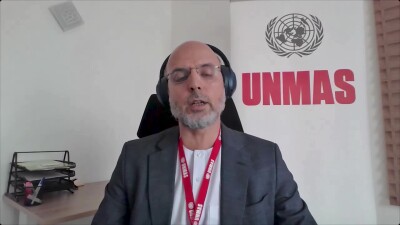
“There are many other countries that are affected by explosive remnants of war and landmines...Sudan is very different. Why? Because, war is mainly happening in urban areas,” said Sediq Rashid, Chief of UNMAS Sudan, speaking from Port Sudan.
He explained that just within the capital, Khartoum, risks ranged from unexploded and abandoned ammunitions, anti-vehicle mines and anti-personnel mines.
Displaced families are particularly at risk, often settling in unfamiliar locations “without any awareness of past conflicts or contamination”, Mr. Rashid continued.
Meanwhile, civilian casualties from mines and other unexploded ordnance continue to rise – “and we know that the cases that are being reported represent only a fraction of the true scale of the harm”, he said.
Sudan humanitarian update – UNHCR, UNMAS, WHO
TRT: 3 min 10s
SOURCE: UNTV CH
RESTRICTIONS: NONE
LANGUAGE: ENGLISH / NATS
ASPECT RATIO: 16:9
DATELINE: 14 NOVEMBER 2025 GENEVA, SWITZERLAND
Speakers:
- Jacqueline Wilma Parlevliet, Head of Sub Office in Port Sudan, UNHCR (from Port Sudan)
- Sediq Rashid, Chief Mine Action Programme, UNMAS (from Port Sudan)
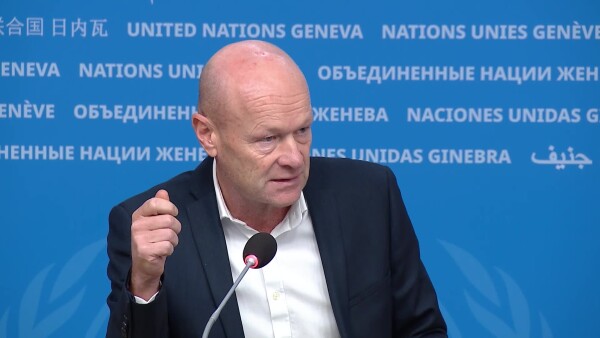
- Christian Lindmeier, spokesperson, WHO
SHOTLIST
- Exterior wide: UN Geneva flag alley.
- Wide, UN Geneva Press room, podium speakers, journalists and external speaker in Sudan.
- SOUNDBITE (English) – Jacqueline Wilma Parlevliet, Head of Sub Office in Port Sudan, UNHCR: “The people that are stranded, we think given, you know, the data people that have left El Fasher, which are approximately 90,000 people. But then in terms of arrivals to other locations, we don't see that number reflected. So, they are stranded somewhere.
- Medium-wide, journalists.
- SOUNDBITE (English) – Jacqueline Wilma Parlevliet, Head of Sub Office in Port Sudan, UNHCR: “And one of the locations where people were stranded, where there is now limited humanitarian access is a place called Korma. And so we know that about 10,000 people are stranded there, waiting for transport or for other support to move to Tawila.”
- Wide, podium speakers.
- SOUNDBITE (English) – Jacqueline Wilma Parlevliet, Head of Sub Office in Port Sudan, UNHCR: ““There are a significant number of people remaining in El Fasher and a significant number of people that are on the move, stranded somewhere, not able to move further because of the danger or because they risk being sent back El Fasher, or because there are very vulnerable people amongst the group, such as persons with disability.”
- Wide, Press room, TV journalist, technical staff.
- SOUNDBITE (English) – Sediq Rashid, Chief Mine Action Programme, UNMAS (from Port Sudan): “Sudan faces an extremely complex contamination landscape, unexploded and abandoned ammunitions, anti-vehicle mines and more recently confirmed anti-personnel mines within Khartoum itself.”
- Wide, Press room, TV screens showing external speaker.
- SOUNDBITE (English) – Sediq Rashid, Chief Mine Action Programme, UNMAS (from Port Sudan): ““There are many other countries that are affected by explosive remnants of war and landmines. But this time, Sudan is very, very different. Why? Because, war is mainly happening in urban areas.”
- Medium-wide, podium speakers, journalists, TV screen showing external speaker.
- SOUNDBITE (English) – Christian Lindmeier, spokesperson, WHO: “People are dying from a lack of access to basic, essential healthcare medication, as per our latest emergency report in that direction, only 48 per cent - so less than half of the health facilities across all of Sudan's 18 states - are fully functioning and 12 per cent of the facilities are partially functioning, 40 are non-functioning.”
- Medium-wide, Press room.
- SOUNDBITE (English) – Christian Lindmeier, spokesperson, WHO: “Sudan is one of the world's largest food crises, with over 21 million people facing high levels of acute food insecurity as of September this year. And the famine, as you know, was confirmed in El Fasher and Kadugli towns and 20 areas across Greater Darfur and Greater Kordofan area are at risk of famine.”
- Wide, TV screens showing external speaker, Press room.
- SOUNDBITE (English) – Christian Lindmeier, spokesperson, WHO: “Cholera, we have already reports about over 120,000 cases and about 3,500 associated deaths. That's reported from 151 localities in all Sudan's 18 states by 1 November, just very recent.”
- Medium-wide, Press room.
Similar Stories
1
1
1
Edited News | OCHA , UNICEF , WFP
Aid agencies warned on Friday of the fast-developing humanitarian emergency inside Taiz City in Yemen, which has been encircled by de facto Houthi forces fighting government troops along the country’s west coast.

2
17
1
2
Edited News , Press Conferences , Images | OCHA , WMO
Two UN agencies teamed up on Wednesday to issue an appeal for immediate assistance to help communities already being impacted by the strongest El Niño on record.

3
16
2
2
Edited News , B-roll , Conferences , Images | UNITED NATIONS , UNOG
Sixth Consultative Meeting on Enhancing Coordination of Peace Initiatives and Efforts for Sudan

1
1
1
Edited News | UNICEF , WHO , UNHCR
Yemen war continues to force families from homes amid hunger and disease
More than 250,000 people have now fled renewed fighting in Yemen, the UN said on Tuesday, citing particular concern for those sheltering in the southwestern city of Taiz and the wider governorate, where access is “essentially blocked”.

1
1
1
Edited News | UNICEF
A little over one year since a ceasefire agreement was announced between Hamas fighters and Israel, more than 340 children have been reported killed and hundreds more injured, the UN Children’s Fund, UNICEF, said on Friday.

1
1
1
Edited News | UNICEF , IFRC
Six weeks after Nepal’s deadly flooding disaster, communities are still struggling to rebuild their lives, but they will need sustained help as global warming increases the risk of another Himalayan catastrophe, the UN Children’s Fund (UNICEF) said on Friday.

1
1
1
Edited News | WHO
In suspected Russia plague death, testing and monitoring underway – WHO
The death of a lab worker in Russia’s Siberia region has sparked concerns about plague being the cause, the UN World Health Organization (WHO) said on Tuesday, adding that it was following the situation closely.

1
1
Edited News | OHCHR , UNOG
UN Human Rights Chief Volker Türk on Friday provided and oral update to the 63rd session of the Human rights Council on Ukraine.

1
1
1
Edited News | OHCHR , UNOG
UN Human Rights Chief Volker Türk on Friday provided and oral update to the 63rd session of the Human rights Council on the human rights situation in Haiti.

1
1
1
Edited News | WHO
Repeated delays in bringing lifesaving medicines, prosthetics and more from Israel into Gaza risk having devastating consequences on Palestinians who urgently need them in the wartorn enclave, the UN World Health Organization (WHO) said on Friday. “A truck full of non-priority supplies or the right supplies arriving too late, doesn't save lives. That's the question that actually matters," said Dr Reinhilde Van De Weerdt, WHO Representative in the OPT.

1
1
1
Edited News | WHO
DRC: Early access to care and oxygen decisive for Ebola patients’ survival – WHO
In the Democratic Republic of the Congo (DRC), health workers fighting the country’s largest-ever Ebola outbreak are struggling to overcome critical challenges to patient care, the UN World Health Organization (WHO) warned on Tuesday.

1
1
1
Edited News | OCHA , UN
Civilians in Iran are continuing to feel the consequences of months of conflict and military escalation, the UN’s top official in the country has said, as loss of life, damage to civilian infrastructure and mounting economic pressures leave many facing continued uncertainty.