

The United Nations Office at Geneva
Multimedia Newsroom
Press Conferences , Edited News | UNECE
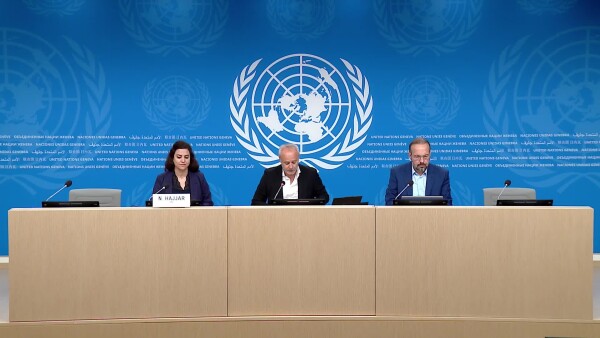
UNECE Press Conference - Critical Minerals: myths and realities
Middle East war: After oil and gas crunch, concerns grow over vital raw minerals
The shipping crisis in the Strait of Hormuz caused by war in the Middle East has exposed a new threat: a looming shortage of strategic minerals that drive economies all over the world - and a race by countries to obtain them.
Until war erupted on 28 February with the Israeli-US bombing of Iran and counterstrikes across Gulf States, a wide range of key minerals and related products was available, according to the UN Economic Commission for Europe (UNECE).
But as the conflict goes on, the pressure has increased to obtain these same raw materials, to ensure the continuing production of everything from semiconductors to solar panels.
The result has been higher prices on commodities markets and a potential pivot to new production sites where there’s less geopolitical uncertainty.
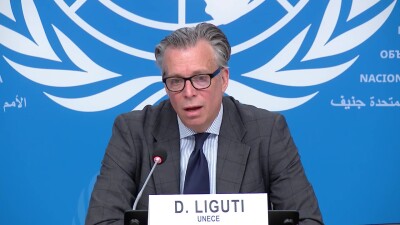
“The impact of the Gulf War, it is not only in the energy market, it's been impacting some sub-products coming from oil” such as sulphur, helium and naphtha - said Dario Liguti, Director of UNECE’s Sustainable Energy Division. All are byproducts of oil refining and used in a wide range of manufacturing applications, from fertilizers to insecticides, plastics and matches, along with cooling and semiconductor production. Naptha is another byproduct of oil refining and a key building block of the chemicals industry.
“The first reaction besides of course the increase in prices will be industries lowering their use and therefore lowering their production…whether it's solar panels, whether it's magnets, whether it's batteries, et cetera, going forward,” Mr. Liguti maintained.
Before the war, a full 30 per cent of the world's production of sulphur - which is used in metals processing - transited through the Strait of Hormuz. But that was when some 140 ships per day transited the crucial trade waterway. Today, shipping is at a virtual standstill, following attacks on vessels and an ongoing stand-off between Iran and the US over use of the strait.
If the conflict situation continues, shortages in key minerals “will become evident”, the UNECE official continued, forcing industry “to lower their production” of critical minerals used in renewable energy equipment and digital technology. “Therefore over time, that will have an increasing impact on prices first…and then secondly on the availability of that equipment.”
Today, industries that relied on supplies from the Strait of Hormuz “are using their existing stocks and they're using the reserves and they're ramping up production elsewhere”, Mr. Liguti said.
He highlighted a “drive from many Member States around the world to secure those minerals” which will result in countries increasingly building “strategic stocks…to avoid a similar disruption in future.
“So far, the situation is being felt in some regional markets, particularly in South Asia and Southeast Asia, where there is a lot of refining and processing going on of these initial commodities. But over time, the geographical scope will become larger.”
In addition to the massive human cost of the war, the UNECE official noted how the oil and natural gas crisis also threatens to undermine the global shift to green energy sources.
“You can see how a crisis which is fundamentally focused on the on the old traditional fossil fuels sector, how that that impacts as well the new energy, the new renewable energy, and the transition that we have been undertaking and we actually need to accelerate, as you know, as we are falling behind in the Paris 2030 targets”.
ends
STORY: Critical minerals crunch - UNECE
TRT: 2’59”
SOURCE: UNTV CH
RESTRICTIONS: NONE
LANGUAGE: ENGLISH, NATS
ASPECT RATIO: 16:9
DATELINE: 23 APRIL 2026, GENEVA, SWITZERLAND
SHOTLIST
Speaker:
- Dario Liguti, Director, Sustainable Energy Division, UNECE
- Exterior wide shot, United Nations flag flying.
- Wide shot of panel at press briefing.
- SOUNDBITE: (ENGLISH): Dario Liguti, Director, Sustainable Energy Division, UNECE: “The impact of the Gulf War, it is not only is in the energy market, it's been impacting as well some sub-products coming from oil, and you mentioned sulphur correctly, but helium as well, and then naphtha, which are byproducts of the oil refining and are used in different processes.”
- Medium-wide, podium speakers, TV screen showing speaker.
- SOUNDBITE: (ENGLISH): Dario Liguti, Director, Sustainable Energy Division, UNECE: “If the situation – if the conflict situation - continues, the shortages will become evident and will force industries to lower their production of certain technologies, you know, and particularly critical minerals for renewable energy equipment, for example, digital technologies, for that purpose as well. And therefore over time, that will have an increasing impact on prices first of this equipment and then secondly on the availability of that equipment if the conflict continues.”
- Wide, podium speakers, journalists.
- SOUNDBITE: (ENGLISH): Dario Liguti, Director, Sustainable Energy Division, UNECE: “The first reaction besides of course the increase in prices will be industries lowering their use and therefore lowering their production of whether it's solar panels, whether it's magnets, whether it's batteries, et cetera, going forward.”
- Wide, Press room, participants.
- SOUNDBITE: (ENGLISH): Dario Liguti, Director, Sustainable Energy Division, UNECE: “What I can tell you is there is a drive from many Member States around the world to secure those minerals, and we will see increasingly Member States building strategic stocks of those minerals to avoid going into the future or facing into the future this sort of situation.”
- Wide shot of panel, photographer.
- SOUNDBITE: (ENGLISH): Dario Liguti, Director, Sustainable Energy Division, UNECE: “So far, the situation is being felt in some regional markets, particularly in South Asia and Southeast Asia, where there is a lot of refining and processing going on of these initial commodities. But over time, the geographical scope will become larger.”
- Wide, Press room, screens showing speaker.
- SOUNDBITE: (ENGLISH): Dario Liguti, Director, Sustainable Energy Division, UNECE: “So you can see how a crisis which is fundamentally focused on the old traditional fossil fuels sector, how that that impacts as well the new energy, the new renewable energy, and the transition that we have been undertaking and we actually need to accelerate, as you know, as we are falling behind in the Paris 2030 targets”.
- Medium, photographer
- Medium, journalist.
- Medium, journalist.
Similar Stories
1
1
1
Press Conferences | WMO , UNHCR , WHO , ILO
WMO: Greenhouse Gas Bulletin; UNHCR: As attacks intensify UNHCR urges support for war ravaged Ukrainians; WHO: Clinical trials in DRC: vaccines and beyond; ILO: New global and regional estimates on domestic work, informality and working conditions

1
1
1
Edited News | OCHA , UNICEF , WFP
Aid agencies warned on Friday of the fast-developing humanitarian emergency inside Taiz City in Yemen, which has been encircled by de facto Houthi forces fighting government troops along the country’s west coast.
1
1
1
Press Conferences | UN WOMEN , WFP , WHO
UN WOMEN: Sudan Women and girls one year after the fall of El Fasher; increasing drone attacks across the country; WFP: DRC - Ebola spreads to eighth DRC province as WFP delivers food, builds treatment centres and keeps supplies moving; WHO - Update on Ebola (Bundibugyo Virus Disease)
1
12
1
1
Press Conferences , Images | UNOG
Closing Press Conference following the Sixth Consultative Meeting on Enhancing Coordination of Peace Initiatives and Efforts in Sudan

2
17
1
2
Edited News , Press Conferences , Images | OCHA , WMO
Two UN agencies teamed up on Wednesday to issue an appeal for immediate assistance to help communities already being impacted by the strongest El Niño on record.

3
16
2
2
Edited News , B-roll , Conferences , Images | UNITED NATIONS , UNOG
Sixth Consultative Meeting on Enhancing Coordination of Peace Initiatives and Efforts for Sudan
1
1
1
Press Conferences | CITES
Wildlife trade and conservation policy discussions at the 81st meeting of the CITES Standing Committee (SC81)

1
1
1
Edited News | UNICEF , WHO , UNHCR
Yemen war continues to force families from homes amid hunger and disease
More than 250,000 people have now fled renewed fighting in Yemen, the UN said on Tuesday, citing particular concern for those sheltering in the southwestern city of Taiz and the wider governorate, where access is “essentially blocked”.
1
1
1
Press Conferences | UNHCR , UNCTAD , WMO , OCHA , UNICEF , WHO
UNHCR Hungary’s 1956 Refugee Crisis: 70 Years On, UNCTAD World Investment Forum 2026, Doha, WMO Greenhouse Gas Bulletin and Climate Update for COP31, OCHA Afghanistan: Malnutrition, Girls’ Education and Recovery, UNICEF Yemen: Child Malnutrition and Unsafe Water in Taiz, WHO Inequalities in Noncommunicable Diseases and Risk Factors
1
1
1
Press Conferences | UNHCR
End of UNHCR's 77th Annual Executive Committee (ExCom) meeting week

1
1
1
Edited News | UNICEF
A little over one year since a ceasefire agreement was announced between Hamas fighters and Israel, more than 340 children have been reported killed and hundreds more injured, the UN Children’s Fund, UNICEF, said on Friday.
1
1
1
Press Conferences | UNICEF , IOM , UNHCR
UN Special Assistant to the Personal Envoy Office (SUDAN): Peace Initiatives and Efforts in Sudan; UNICEF: Dire situation of children in Gaza; IOM: Damaged Homes and Energy Attacks Risk Displacing Ukrainians for this winter; UNHCR: update on EXCOM week