

The United Nations Office at Geneva
Multimedia Newsroom
Lebanon: Tyre hospital strikes leave patients without critical care – WHO
The UN health agency in Lebanon is verifying reports of strikes on a hospital in the southern city of Tyre on Monday, amid a concerning rise in attacks on healthcare in the country.
According to initial information from the Lebanese authorities, at least 86 people, including healthcare workers, have been injured in the strikes on Jabal Amel Hospital.
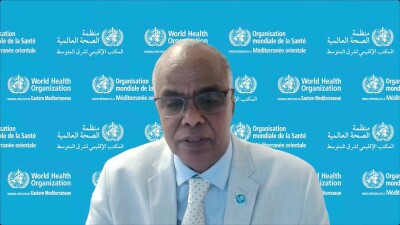
The attacks “caused significant damage…to the emergency department and intensive care unit”, said World Health Organization (WHO) representative in Lebanon, Dr Abdinasir Abubakar.
Speaking from Beirut on Tuesday, Dr Abubakar explained that Jabal Amel is one of the few hospitals currently operating in the South.
In just three months, WHO has verified almost 190 attacks on healthcare, which have killed 128 healthcare workers and injured 332 others. The past week alone has seen 11 attacks.
“These attacks kill and maim, they also deprive people of the health services they need,” the WHO representative said.
Healthcare in Tyre district has suffered the worst impacts of hostilities between Hezbollah fighters and Israel in the last few days; two out of three hospitals, Jabal Amel and Hiram - which was attacked last Sunday - are damaged, while the third hospital is “overwhelmed as it’s dealing with the influx of increased numbers of injured patients”, Dr Abubakar said.
Access to essential services is “critically constrained,” he insisted, especially in southern Lebanon, where patients face up to 48-hour delays to reach the nearest referral facilities.
“Six hospitals have not yet resumed maternity delivery services and are currently providing only emergency room care,” Dr Abubakar stressed. “For pregnant women and newborns, delays in care can mean the difference between life and death.”
The WHO representative also flagged the challenging health situation in shelters, hosting some 130,000 people who have fled the fighting. Displacement is on the rise following the most recent Israeli evacuation orders. The escalating violence and warnings of Israeli strikes on Beirut’s southern suburbs, home to hundreds of thousands of civilians, prompted a Security Council meeting on Monday.
The UN health agency has been monitoring infectious diseases within shelters and host communities, reporting “an increased trend of acute watery diarrhoea”.
“We are in the summer season and now the risk of cholera may be increasing,” Dr Abubakar warned.
With humanitarian needs outpacing the response, the WHO representative insisted on the need to sustain funding for essential health services.
“We also need the attacks on healthcare to stop, and we need active protection for health care,” he said, reiterating calls for a sustained ceasefire and durable peace.
Since the start of the current escalation in fighting between Israel and Hezbollah fighters on 2 March, more than almost 3,400 people have been killed in Lebanon and nearly 10,400 people have been injured, most of them civilians.
“These have been among the deadliest months for Lebanon since the start of the conflict in October 2023,” Dr Abubakar insisted.
A US-brokered ceasefire between Lebanon and Israel took effect on 17 April but has never been fully observed by either side. It was nominally extended twice, most recently on 16 May for a 45-day period.
-ends-
STORY Lebanon hospital attacks - WHO
TRT: 2:19’’
SOURCE: UNTV CH
RESTRICTIONS: NONE
LANGUAGE: ENGLISH/NATS
ASPECT RATIO: 16:9
DATELINE: 2 JUNE 2026 GENEVA, SWITZERLAND
1. Exterior wide shot: Palais des Nations, Flag Alley.
2. Wide reverse shot: Speakers at the podium of the press conference; speaker on screens; journalists in the Press room.
3. SOUNDBITE (English) – Dr Abdinasir Abubakar, Representative in Lebanon, World Health Organization (WHO): “In just these three months, WHO has verified almost 190 attacks on healthcare. These attacks have killed 128 healthcare workers and injured 332 others.”
4. Wide shot: Journalists in the Press room; speaker on screens.
5. SOUNDBITE (English) – Dr Abdinasir Abubakar, Representative in Lebanon, World Health Organization (WHO): “We're also in the process of verifying attacks that took place yesterday on the Jabal Amel Hospital, which is one of the few hospitals that's currently operating in the south, especially in Tyre. According to the initial information from the Ministry of Health, at least 86 people, including healthcare workers, have been injured, and the strikes affected three buildings adjacent to the hospital and caused significant damage to the part of the hospital, including the emergency department and intensive care unit within the hospital.”
6. Medium-wide shot: Journalists in the Press room; speaker on screens.
7. SOUNDBITE (English) – Dr Abdinasir Abubakar, Representative in Lebanon, World Health Organization (WHO): “Patients are facing delays for up to 48 hours to reach the nearest referral facilities. Six hospitals have not yet resumed maternity delivery services and are currently providing only emergency room care. For pregnant women and newborns, delays in care can mean the difference between life and death.”
8. Medium reverse shot: Speaker at the podium of the press conference; journalists in the Press room; speaker on screens.
9. SOUNDBITE (English) – Dr Abdinasir Abubakar, Representative in Lebanon, World Health Organization (WHO): “WHO has been monitoring also infectious disease at the shelters and host communities. While we have seen an increased trend of acute watery diarrhea, and remember that, you know, we are in the summer season and now the risk of potential cholera may be, you know, increasing, we are closely, you know, monitoring the situation.”
10. Medium reverse shot: Speakers at the podium of the press conference
11. SOUNDBITE (English) – Dr Abdinasir Abubakar, Representative in Lebanon, World Health Organization (WHO): “Since the recent escalation beginning on 2 March, actually, three months ago, more than almost 3,400 people have been killed and nearly 10,400 people were injured, most of them civilians. These have been among the deadliest months actually for Lebanon since the start of the conflict in October 2023.”
12. Various shots: Journalists in the Press room.
Similar Stories

1
1
1
Edited News | OCHA , UNICEF , WFP
Aid agencies warned on Friday of the fast-developing humanitarian emergency inside Taiz City in Yemen, which has been encircled by de facto Houthi forces fighting government troops along the country’s west coast.

2
17
1
2
Edited News , Press Conferences , Images | OCHA , WMO
Two UN agencies teamed up on Wednesday to issue an appeal for immediate assistance to help communities already being impacted by the strongest El Niño on record.

3
16
2
2
Edited News , B-roll , Conferences , Images | UNITED NATIONS , UNOG
Sixth Consultative Meeting on Enhancing Coordination of Peace Initiatives and Efforts for Sudan

1
1
1
Edited News | UNICEF , WHO , UNHCR
Yemen war continues to force families from homes amid hunger and disease
More than 250,000 people have now fled renewed fighting in Yemen, the UN said on Tuesday, citing particular concern for those sheltering in the southwestern city of Taiz and the wider governorate, where access is “essentially blocked”.

1
1
1
Edited News | UNICEF
A little over one year since a ceasefire agreement was announced between Hamas fighters and Israel, more than 340 children have been reported killed and hundreds more injured, the UN Children’s Fund, UNICEF, said on Friday.

1
1
1
Edited News | UNICEF , IFRC
Six weeks after Nepal’s deadly flooding disaster, communities are still struggling to rebuild their lives, but they will need sustained help as global warming increases the risk of another Himalayan catastrophe, the UN Children’s Fund (UNICEF) said on Friday.

1
1
1
Edited News | WHO
In suspected Russia plague death, testing and monitoring underway – WHO
The death of a lab worker in Russia’s Siberia region has sparked concerns about plague being the cause, the UN World Health Organization (WHO) said on Tuesday, adding that it was following the situation closely.

1
1
Edited News | OHCHR , UNOG
UN Human Rights Chief Volker Türk on Friday provided and oral update to the 63rd session of the Human rights Council on Ukraine.

1
1
1
Edited News | OHCHR , UNOG
UN Human Rights Chief Volker Türk on Friday provided and oral update to the 63rd session of the Human rights Council on the human rights situation in Haiti.

1
1
1
Edited News | WHO
Repeated delays in bringing lifesaving medicines, prosthetics and more from Israel into Gaza risk having devastating consequences on Palestinians who urgently need them in the wartorn enclave, the UN World Health Organization (WHO) said on Friday. “A truck full of non-priority supplies or the right supplies arriving too late, doesn't save lives. That's the question that actually matters," said Dr Reinhilde Van De Weerdt, WHO Representative in the OPT.

1
1
1
Edited News | WHO
DRC: Early access to care and oxygen decisive for Ebola patients’ survival – WHO
In the Democratic Republic of the Congo (DRC), health workers fighting the country’s largest-ever Ebola outbreak are struggling to overcome critical challenges to patient care, the UN World Health Organization (WHO) warned on Tuesday.

1
1
1
Edited News | OCHA , UN
Civilians in Iran are continuing to feel the consequences of months of conflict and military escalation, the UN’s top official in the country has said, as loss of life, damage to civilian infrastructure and mounting economic pressures leave many facing continued uncertainty.