

The United Nations Office at Geneva
Multimedia Newsroom
South Lebanon: Traumatic return for war-weary communities
The ceasefire deal between Beirut and Tel Aviv has led to a marked reduction in hostilities between Hezbollah and the Israeli military, but the situation remains unstable and uncertain for communities returning home only to find widespread devastation, UN peacekeepers said on Wednesday.
And while heavy fighting has diminished along the Blue Line that separates Lebanon from Israel, ceasefire violations continue to be reported.
In line with its Security Council mandate, the UN Interim Force in Lebanon (UNIFIL) continues to support efforts to achieve long-term security and stability for the region’s people.
“The level of violence has been reduced, but we continue to record a number of violations of Resolution 1701 on a daily basis,” said UNIFIL spokesperson Kandice Ardiel.
“Peacekeepers are working, including through our liaison and coordination mechanisms, to consolidate the stability gains we’ve seen and continue efforts towards security and stability for everyone living along the Blue Line.”
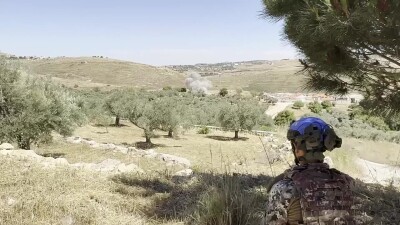
The reduction in fighting has enabled many displaced Lebanese families to return to their homes in the south, though significant challenges remain. In many villages and towns including Majdal Zoun, Kafra and Tyre, heavy shelling has scarred the land, while homes, schools and a health centre lie in ruins…
The Blue Line is the only line
On the issue of the Israeli military’s “Yellow Line” buffer zone which is located some five to 10 kilometres (3.1 to 6.2 miles) north of the Blue Line, Ms. Ardiel described it as a self-declared military boundary established by the Israel Defense Forces which is not recognized by the United Nations.
“For the United Nations and UNIFIL, the Blue Line is the only relevant line,” she said. “Any Israeli presence north of the Blue Line is considered a violation of Resolution 1701.”
According to UNIFIL, Israeli forces continue to operate in areas north of the Blue Line, where peacekeepers monitor military activity and continue to urge all parties to preserve recent stability gains.
Returning to destruction
All along the Blue Line, the situation is extremely challenging for families and especially in southern Lebanon. Ms. Ardiel noted a recent increase in the number of returnees following multiple waves of displacement in 2023, 2024 and this year. Many families, she said, are returning to a “very different scenario” than the one they left behind.
“They are coming back to destroyed villages,” Ms. Ardiel explained. “People are trying to rebuild their lives but are facing enormous challenges, including damaged infrastructure and limited access to water, electricity, hospitals and schools.”
Others remain unable to return to their villages located closer to the Blue Line because of ongoing insecurity.
Despite these difficulties, UNIFIL continues to support communities wherever possible, organizing blood donations to help Marjayoun Hospital treat trauma victims and or by donating children’s toys and other supplies to the Istanbouli Theatre in Tyre.
“We're here as peacekeepers. We're here to help build and consolidate stability,” Ms. Ardiel stressed. “We liaise and coordinate between the parties to ensure the safe passage of humanitarian actors and municipal authorities carrying out infrastructure repairs. We’re clearing roads, removing unexploded ordnance and helping create conditions for people to return safely to their communities."
Restrictions on freedom of movement
Asked whether UNIFIL peacekeepers are able to operate freely, Ardiel said patrols and monitoring activities continue, but obstacles sometimes remain.
These include debris and rubble blocking roads, as well as unexploded ordnance that must be cleared before peacekeepers can proceed.
“In some cases, we have also been blocked by Israeli forces, whether through checkpoints, tanks or other military vehicles,” she explained. “These incidents are usually short-lived.”
Ms. Ardiel emphasized that these restrictions have not prevented UNIFIL from carrying out its mandate.
“We remind everyone that peacekeepers have freedom of movement," she concluded. “We have a job to do, and we must be able to do it effectively and impartially.”
ends
STORY: Update on the situation in the South of Lebanon from UNIFIL
TRT: 04:06”
SOURCE: UNTV CH
RESTRICTIONS: FOR BROLL PLEASE CREDIT UNIFIL.
LANGUAGE: ENGLISH / NATS
ASPECT RATIO: 16:9
DATELINE: 08 JULY 2026 GENEVA, SWITZERLAND
- Exterior wide shot flag alley Geneva.
- Various shots of UNIFIL convoy traveling on the coastal road through Naqoura Village, 13 June 2026. Please credit UNIFIL.
- SOUNDBITE (English) – Kandice Ardiel Spokesperson UN Interim Force in Lebanon (UNIFIL): “We've seen in the last little while a reduction in the level of violence, which is good news. This shows the parties’ commitment to working together to work toward peace and stability. And this is good news for civilians on both sides of the Blue Line, including civilians in South Lebanon who've started returning to their homes in certain places within the South.”
- Various shots of UNIFIL convoy traveling on the coastal road through Naqoura Village, 13 June 2026. Please credit UNIFIL.
- SOUNDBITE (English) – Kandice Ardiel Spokesperson UN Interim Force in Lebanon (UNIFIL): “There still does remain a number of violations of Resolution 1701 that we're recording on a daily basis, but the level of violence has been reduced and peacekeepers are working, including through our liaison and coordination mechanisms, to consolidate the stability gains that we've seen and continue to work towards security and stability for everyone along the Blue Line.”
- Various shots of UNIFIL convoy traveling on the coastal road through Naqoura Village, 13 June 2026. Please credit UNIFIL.
- SOUNDBITE (English) – Kandice Ardiel Spokesperson UN Interim Force in Lebanon (UNIFIL): “For the United Nations, for UNIFIL, the only relevant line is the Blue Line. This is the line that we monitor and we record violations of. So, any Israeli presence north of the Blue Line is considered a violation of Resolution 1701. Nonetheless, the Israeli forces have established themselves in this area, and they continue to operate. We continue to record military activities happening in this zone, including airstrikes, artillery and different kinds of weapons fire.”
- Various shots of UNIFIL Italian EOD specialists safely disposed of an unexploded ordnance (UXO) in Rmeish Village, 05 June 2026. Please credit UNIFIL.
- SOUNDBITE (English) – Kandice Ardiel Spokesperson UN Interim Force in Lebanon (UNIFIL): “People are returning now to a very different scenario. Many of them are seeing their homes, their neighbourhoods very seriously damaged, in some cases destroyed. People are trying to rebuild where they can return, which is not throughout the entire area of operations. There are some villages closer to the Blue Line where people can't return.”
- Various shots of UNIFIL Italian EOD specialists safely disposed of an unexploded ordnance (UXO) in Rmeish Village, 05 June 2026. Please credit UNIFIL.
- SOUNDBITE (English) – Kandice Ardiel Spokesperson UN Interim Force in Lebanon (UNIFIL): “Where people are able to return, they often find themselves without infrastructure because water, electricity, hospitals, schools, all of these things have been damaged. And so, there's a lot of work that needs to be done before life can return to normal in these communities, and peacekeepers are trying to support in whatever way we can.”
- Various shots of UNIFIL Italian peacekeepers clearing roads in Rmeish Village, 15 June 2026. Please credit UNIFIL.
- SOUNDBITE (English) – Kandice Ardiel Spokesperson UN Interim Force in Lebanon (UNIFIL): “Peacekeepers are able to monitor and patrol throughout our area of operations. Nonetheless, there have been times where we've encountered blockages. These can be anything from debris and rubble in the roadways, unexploded ordnance blocking our path, that need to be dealt with and removed. But in some cases, we have been blocked by Israeli forces, whether it's through blocks or through the blockages using tanks and other vehicles. These are usually quite short-lived.”
- Various shots of UNIFIL Italian peacekeepers clearing roads in Rmeish Village, 15 June 2026. Please credit UNIFIL.
- SOUNDBITE (English) – Kandice Ardiel Spokesperson UN Interim Force in Lebanon (UNIFIL): “It hasn't affected our ability to perform our work. But nonetheless, we remind everyone that peacekeepers have freedom of movement. We have a job to do to be able to do that effectively and impartially. And to report to the Security Council, we need to have freedom of movement to perform our tasks.”
- Various shots of UNIFIL Italian peacekeepers clearing roads in Rmeish Village, 15 June 2026. Please credit UNIFIL.
Similar Stories

1
1
1
Edited News | OCHA , UNICEF , WFP
Aid agencies warned on Friday of the fast-developing humanitarian emergency inside Taiz City in Yemen, which has been encircled by de facto Houthi forces fighting government troops along the country’s west coast.

2
17
1
2
Edited News , Press Conferences , Images | OCHA , WMO
Two UN agencies teamed up on Wednesday to issue an appeal for immediate assistance to help communities already being impacted by the strongest El Niño on record.

3
16
2
2
Edited News , B-roll , Conferences , Images | UNITED NATIONS , UNOG
Sixth Consultative Meeting on Enhancing Coordination of Peace Initiatives and Efforts for Sudan

1
1
1
Edited News | UNICEF , WHO , UNHCR
Yemen war continues to force families from homes amid hunger and disease
More than 250,000 people have now fled renewed fighting in Yemen, the UN said on Tuesday, citing particular concern for those sheltering in the southwestern city of Taiz and the wider governorate, where access is “essentially blocked”.

1
1
1
Edited News | UNICEF
A little over one year since a ceasefire agreement was announced between Hamas fighters and Israel, more than 340 children have been reported killed and hundreds more injured, the UN Children’s Fund, UNICEF, said on Friday.

1
1
1
Edited News | UNICEF , IFRC
Six weeks after Nepal’s deadly flooding disaster, communities are still struggling to rebuild their lives, but they will need sustained help as global warming increases the risk of another Himalayan catastrophe, the UN Children’s Fund (UNICEF) said on Friday.

1
1
1
Edited News | WHO
In suspected Russia plague death, testing and monitoring underway – WHO
The death of a lab worker in Russia’s Siberia region has sparked concerns about plague being the cause, the UN World Health Organization (WHO) said on Tuesday, adding that it was following the situation closely.

1
1
Edited News | OHCHR , UNOG
UN Human Rights Chief Volker Türk on Friday provided and oral update to the 63rd session of the Human rights Council on Ukraine.

1
1
1
Edited News | OHCHR , UNOG
UN Human Rights Chief Volker Türk on Friday provided and oral update to the 63rd session of the Human rights Council on the human rights situation in Haiti.

1
1
1
Edited News | WHO
Repeated delays in bringing lifesaving medicines, prosthetics and more from Israel into Gaza risk having devastating consequences on Palestinians who urgently need them in the wartorn enclave, the UN World Health Organization (WHO) said on Friday. “A truck full of non-priority supplies or the right supplies arriving too late, doesn't save lives. That's the question that actually matters," said Dr Reinhilde Van De Weerdt, WHO Representative in the OPT.

1
1
1
Edited News | WHO
DRC: Early access to care and oxygen decisive for Ebola patients’ survival – WHO
In the Democratic Republic of the Congo (DRC), health workers fighting the country’s largest-ever Ebola outbreak are struggling to overcome critical challenges to patient care, the UN World Health Organization (WHO) warned on Tuesday.

1
1
1
Edited News | OCHA , UN
Civilians in Iran are continuing to feel the consequences of months of conflict and military escalation, the UN’s top official in the country has said, as loss of life, damage to civilian infrastructure and mounting economic pressures leave many facing continued uncertainty.