

The United Nations Office at Geneva
Multimedia Newsroom
Peacock party takes pride of place in grounds of UN Geneva
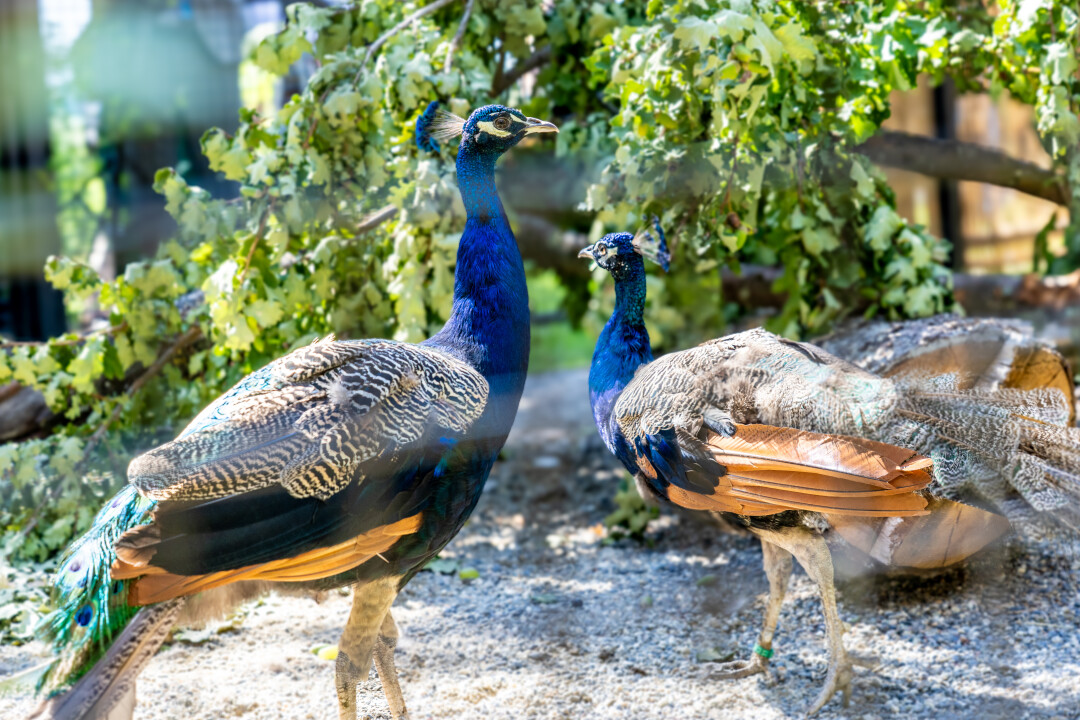
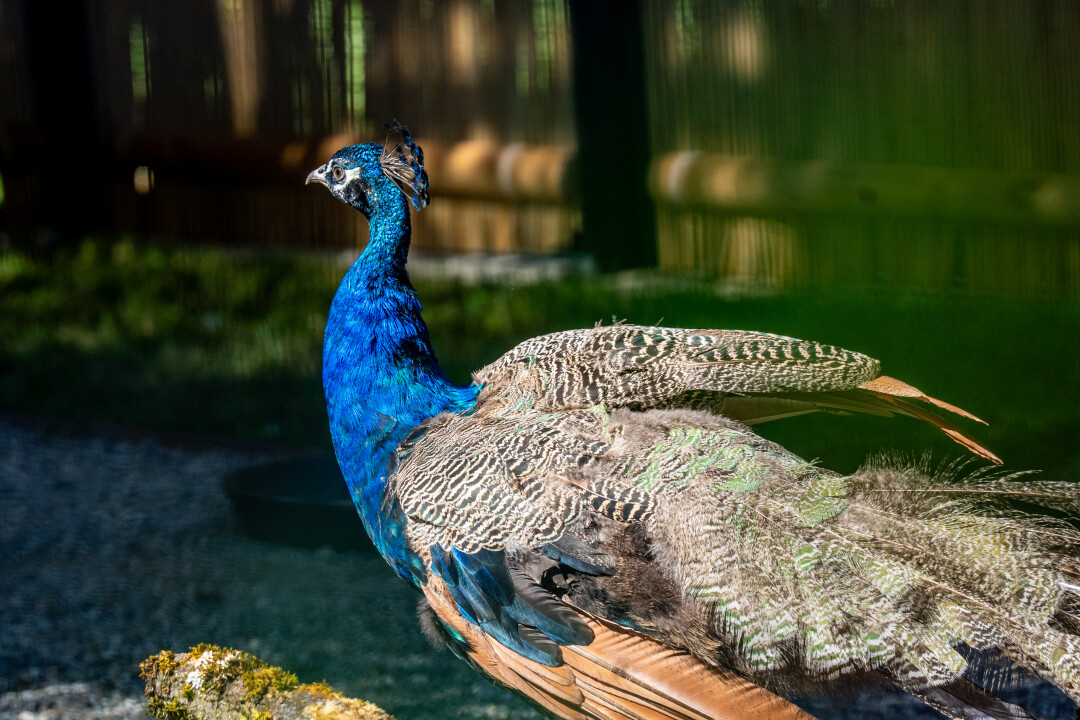
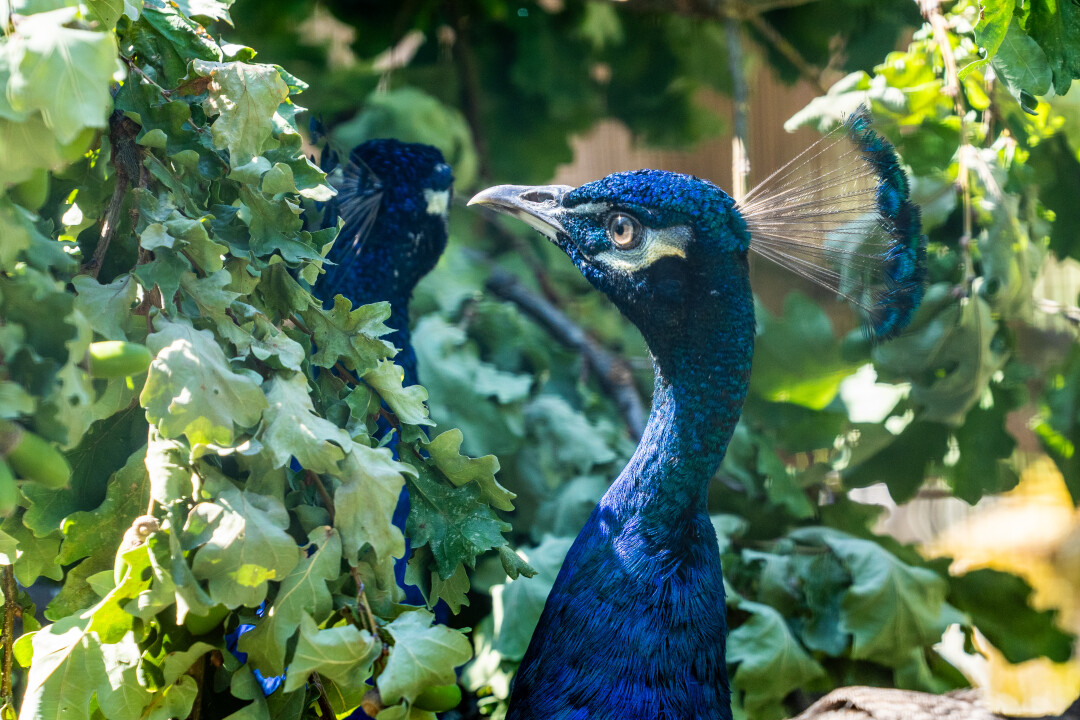
In a new twist on panda diplomacy, UN Geneva welcomed five young peacocks to the Palace of Nations on Friday, a gift of India that preserves a tradition of keeping the stately birds in the grounds that predates both the global body and its ill-fated predecessor, the League of Nations.
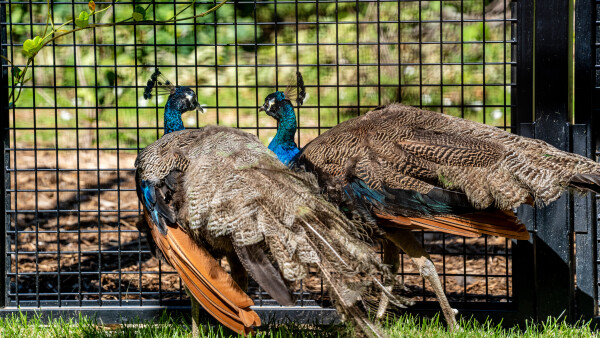
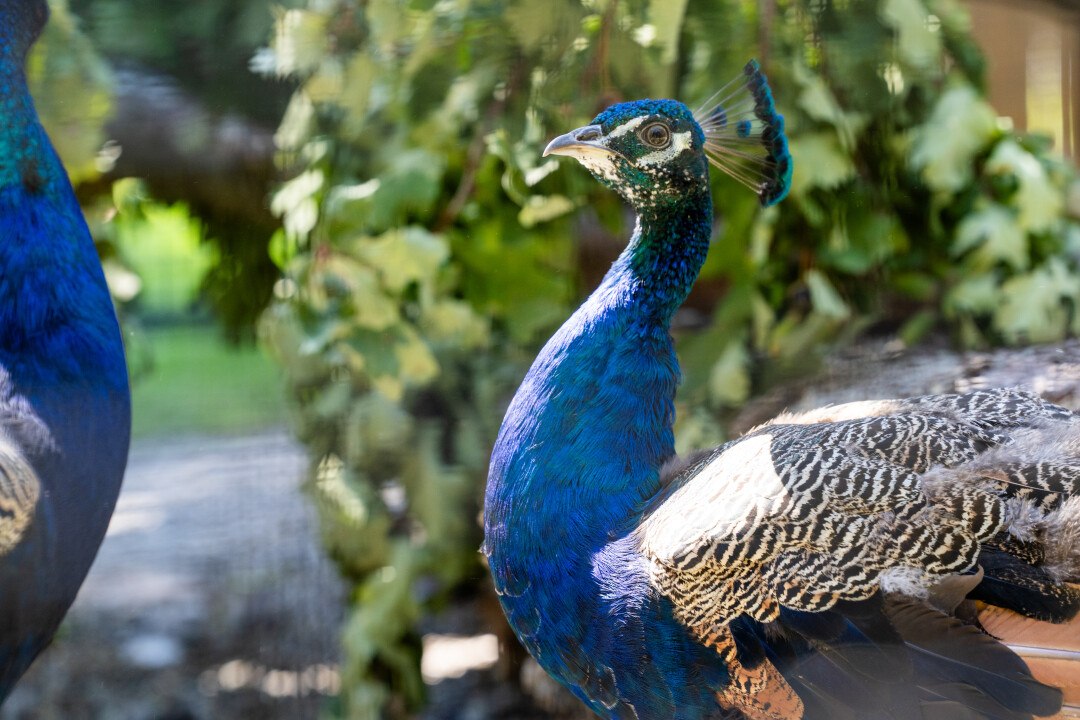
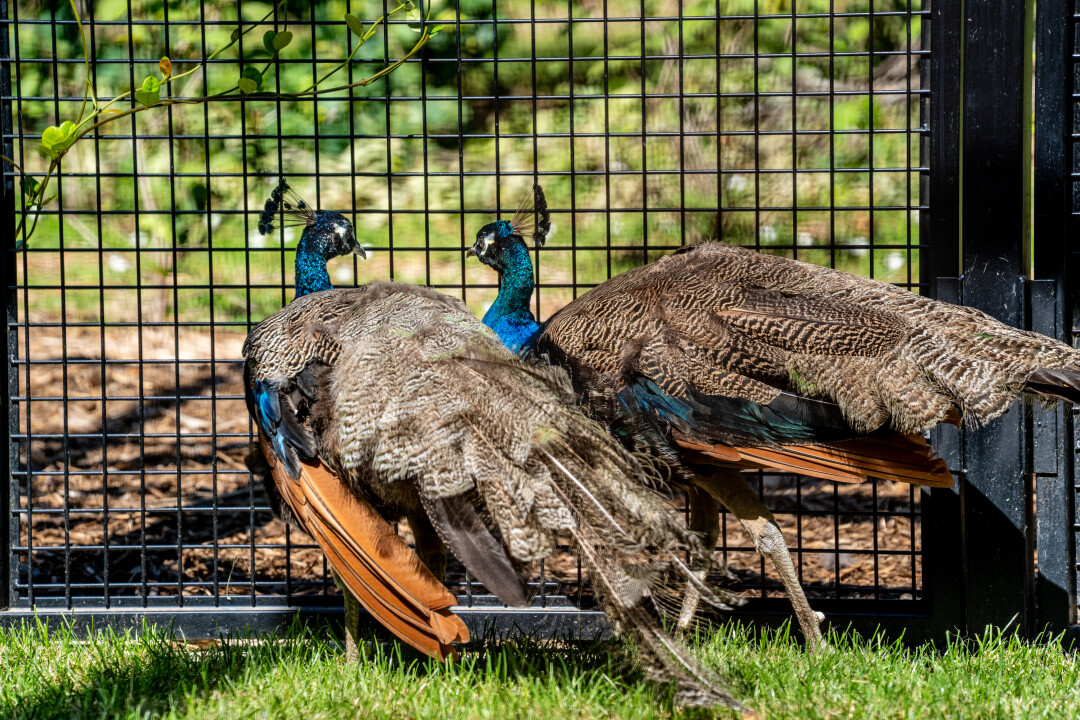
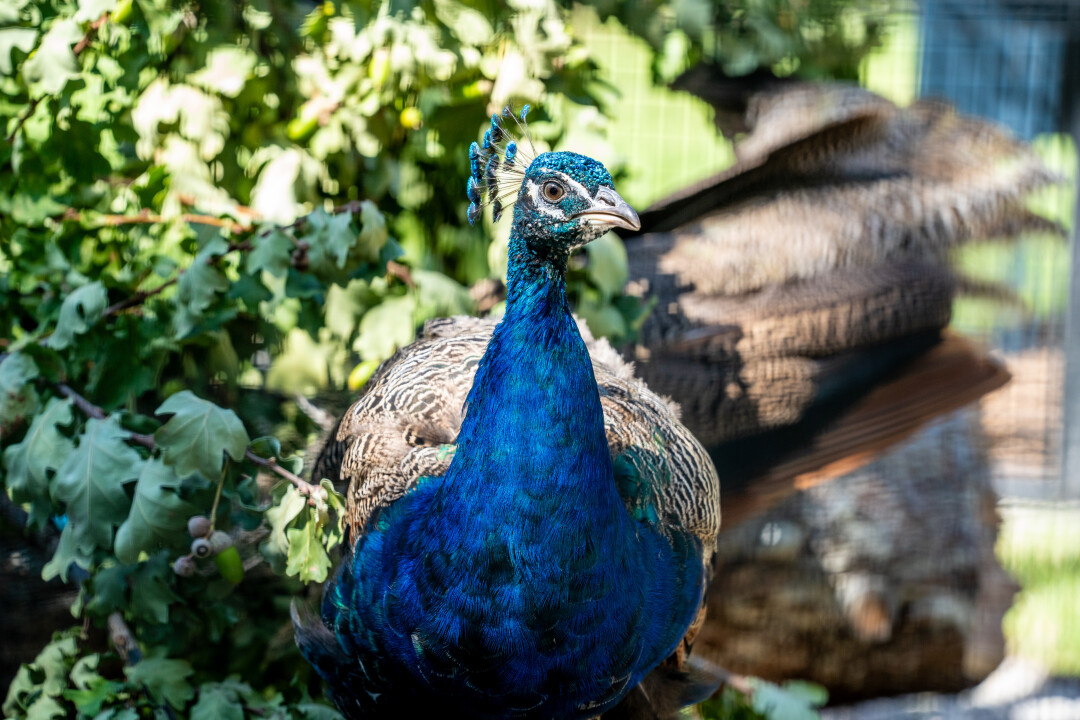
Clearly unruffled to be the centre of attention as onlookers peered at them during a ribbon-cutting ceremony in their honour, the new arrivals strutted and pecked around their new home – a roomy aviary in leafy Ariana Park – where the global body’s European headquarters is located.
In addition to the four classic blue peafowl now settling in, a rare, white-feathered male could be seen rubbing wings with his more colourful cousins. None has yet been named, but a competition will soon be launched to take suggestions, said UN Geneva Director-General Tatiana Valovaya.
“We are very happy to welcome five new peacocks, for, blue, one white in typical United Nations colours: blue and white. And we have created a temporary house for them. They will stay here for the next three months, and then they will be allowed to, it’s just for their adaptation. And then they will be allowed to move freely and enjoy the hospitality of the Ariana Park,” she said.
In a sign of the times, demand was high from the many visitors to take selfies with the snow-white peacock, which like his kaleidoscope-blue-tinted friends, is the national bird of India. Forty-five years ago, the country’s Prime Minister, Indira Gandhi, dispatched a breeding pair from Delhi Zoo to UN Geneva, using her own plane.
“This is really a privilege for the Indian mission here to be able to donate five peacocks, ‘Pavo cristatus’, to [UN Geneva],” said Arindam Bagchi, Ambassador and Permanent Representative of India to the UN. “There is a tradition of having peacocks here. We have donated in 1981 and are delighted to be able to continue this tradition.”
After a few months’ settling-in, the soon-to-be famous five will be released from their home and allowed to roam freely around the UN Geneva enclosure. There is every hope that they will like their new perch, said Dr Tobias Blaha, Director of Geneva Bioparc zoo, which will oversee their care, alongside UN staff.
Dr Blaha, who is also a qualified vet, drove the precious cargo to UN Geneva earlier this week in a specially modified ambulance, complete with resuscitation equipment and other medical devices, to be used in case the animals became stressed.
Perhaps wisely, sniffer dogs were not called upon to inspect the contents of five cardboard boxes clearly labelled “live animals”.
Call of the wild
“It’s really a dream habitat for them because they don't need to be kept in an aviary for a long time,” he explained. “And they have a lot of old trees, they have shade, they have different kinds of flowers and a lot of grass areas as well.”
Despite the apparent leafy paradise awaiting these stunning specimens of the natural world, local predators including foxes and martens have not been as welcoming as they might in years gone by.
In fact, before today’s showstopping troupe arrived, just one surviving peacock wandered the grounds alone, although it has rarely been seen or heard, despite the bird's piercing scream.
Keeping them all alive will be a challenge, Dr Blaha stressed, as young and inexperienced peacocks are “not used to living in a big, wide park, (so) they often stay on branches which are not high enough to be protected from foxes.
“So, we need to observe things…and the higher they sleep, the less the risk is, because foxes don't climb up trees.”
Assuming that the new arrivals are unflappable in the face of the park’s hunters, the hope is that they will continue to tolerate staff and visitors at UN Geneva in the coming months and years, and that they won’t fight among themselves.
In return, perhaps there will be an unspoken pledge not to mention our feathery friends’ tendency to loiter around entrances to buildings, window ledges and stairwells, where they unfailingly leave “presents” which can be walked into the UN’s grand surroundings.
The boys are back in town
Back at the aviary, there’s an exciting development, although it is hard to tell whether the peacocks’ ears have pricked up at the promise of some new company.
“Since they are all males growing up together – having hatched this year – they should establish their place within the group and therefore not run off in the spring, when hormones kick in and there are females on the premises,” said Laetitia Menin, Facilities Management Officer, UN Geneva.
The tradition of keeping peacocks in the grounds of the United Nations dates back to Swiss archaeologist and art collector, Gustave Revilliod, who bequeathed his estate where the UN is now located to the city in 1890.
In 1951, a local newspaper published a story headlined “Will Pierre the solitaire be replaced?”, in reference to the last surviving peacock at that time.
Fan base
The article also traced around two dozen peacocks to Revilliod’s farm in Varembé. His menagerie included deers and bears. It is not known if there are plans to reintroduce the latter.
In 1954, during the Cold War, it is also recorded that a peacock hopped up onto a Soviet delegation car, to the delight of bored photographers. The Press dubbed it “the Geneva dove”. It remains to be seen what role these latest living symbols of international cooperation will play in today's equally unsettled world.
STORY: Peacocks return to UN Geneva
TRT: 2 mins 33s
SOURCE: UNTV CH
RESTRICTIONS: NONE
LANGUAGE: ENGLISH / FRENCH / NATS
ASPECT RATIO: 16:9
DATELINE: 4 & 7 August 2026, GENEVA, SWITZERLAND
Speakers:
- Tatiana Valovaya, UNOG Director-General
- Arindam Bagchi, Ambassador and Permanent Representative of India to the UN in Geneva
- Dr Tobias Blaha, Director of Geneva Bioparc and vet
- Laetitia Menin, Facilities Management Officer, UN Geneva
SHOTLIST
- UN Geneva flag alley.
- Medium shot of the peacocks in the aviary.
- SOUNDBITE (English) Tatiana Valovaya, UNOG Director-General (English): “We are very happy to welcome five new peacocks, four blue, one white in typical United Nations colours: blue and white. And we have created a temporary house for them. They will stay here for the next three months, and then they will be allowed to - it's just for their adaptation - and then they will be allowed to move freely and enjoy the hospitality of the Ariana Park."
- Ambulance carrying live animals crossing UN Geneva security gate.
- Ambulance driving within Palace of Nations grounds.
- Man carrying a box marked “live animals” containing a peacock to the aviary.
- SOUNDBITE (English) Arindam Bagchi, Ambassador and Permanent Representative of India to the UN and other International Organizations in Geneva: “This is really a privilege for the Indian mission here to be able to donate five peacocks, ‘Pavo cristatus’, to the UNOG. There is a tradition of having peacocks here. We have donated in 1981 and are delighted to be able to continue this tradition.”
- The Director-General inside the new aviary feeding the five new arrivals.
- SOUNDBITE (English) Dr Tobias Blaha, Director of Geneva Bioparc and vet: “It's really a dream habitat for them because they don't need to be kept in an aviary for a long time. And they have a lot of old trees, they have shade, they have different kinds of flowers and a lot of grass areas as well.”
- Medium shot of UN staff opening up the boxes containing peacocks.
- Wide shot of handlers opening the ‘live animals’ boxes.
- SOUNDBITE (English) Dr Tobias Blaha, Director of Geneva Bioparc and vet: “If the peacocks are getting older or they're not used to living in a big wide park, they often stay on branches which are not high enough to be protected by foxes. So, we need to observe things, and during the first weeks that they sleep really higher, and the higher they sleep, the less the risk is, because foxes don't climb up trees.”
- Medium shot of aviary with rare white peacock.
- SOUNDBITE (French) Laetitia Menin, Facilities Management Officer, UN Geneva: « Le fait que ce soit que des mâles qui grandissent ensemble, parce que c'est des paons qui sont nés cette année, ils devraient trouver leur position dans le groupe et donc ne pas se sauver au printemps, au moment où il y a le réveil des hormones et quand on a des femelles sur le site. »
– Translation : « Since they are all males growing up together—having hatched this year—they should establish their place within the group and therefore not run off in the spring, when hormones kick in and there are females on the grounds.” - Wide shot of aviary.
- SOUNDBITE (English) Tatiana Valovaya, UNOG Director General: “Peacock tradition here started in mid-19th century when it was a private property, Ariana Park. The proprietor was really very interested to preserve biodiversity, but also to increase it, how that's how peacocks became part of the Ariana Park.”
- Wide shot of aviary.
Similar Stories

1
1
1
Edited News | UNICEF , IFRC
Six weeks after Nepal’s deadly flooding disaster, communities are still struggling to rebuild their lives, but they will need sustained help as global warming increases the risk of another Himalayan catastrophe, the UN Children’s Fund (UNICEF) said on Friday.

1
1
1
Edited News | WHO
In suspected Russia plague death, testing and monitoring underway – WHO
The death of a lab worker in Russia’s Siberia region has sparked concerns about plague being the cause, the UN World Health Organization (WHO) said on Tuesday, adding that it was following the situation closely.

1
1
Edited News | OHCHR , UNOG
UN Human Rights Chief Volker Türk on Friday provided and oral update to the 63rd session of the Human rights Council on Ukraine.

1
1
1
Edited News | OHCHR , UNOG
UN Human Rights Chief Volker Türk on Friday provided and oral update to the 63rd session of the Human rights Council on the human rights situation in Haiti.

1
1
1
Edited News | WHO
Repeated delays in bringing lifesaving medicines, prosthetics and more from Israel into Gaza risk having devastating consequences on Palestinians who urgently need them in the wartorn enclave, the UN World Health Organization (WHO) said on Friday. “A truck full of non-priority supplies or the right supplies arriving too late, doesn't save lives. That's the question that actually matters," said Dr Reinhilde Van De Weerdt, WHO Representative in the OPT.

1
1
1
Edited News | WHO
DRC: Early access to care and oxygen decisive for Ebola patients’ survival – WHO
In the Democratic Republic of the Congo (DRC), health workers fighting the country’s largest-ever Ebola outbreak are struggling to overcome critical challenges to patient care, the UN World Health Organization (WHO) warned on Tuesday.

1
1
1
Edited News | OCHA , UN
Civilians in Iran are continuing to feel the consequences of months of conflict and military escalation, the UN’s top official in the country has said, as loss of life, damage to civilian infrastructure and mounting economic pressures leave many facing continued uncertainty.
1
1
1
Edited News | WHO , UNICEF
Aid agencies in Yemen highlighted the growing hunger emergency sparked by renewed fighting between Houthi opposition forces and Government troops, after mobile health clinics reported that hundreds of children displaced by the violence are suffering from the most deadly form of malnutrition.
1
1
1
Edited News | UNHCR
Displacement on the rise in Yemen as fighting continues - UNHCR
As hostilities worsen in Yemen, more people have been fleeing their homes, further intensifying the humanitarian crisis within the region, the UN Refugee Agency (UNHCR) warned on Tuesday.

1
1
1
Edited News | IOM , OHCHR , UNFPA , UNOG , UNHCR , WHO
Yemen’s humanitarian crisis growing by the hour amid spike in displacement
Yemenis displaced by renewed fighting have described fleeing for their lives amid shelling and gunfire, aid agencies reported on Friday, while highlighting the dramatic increase in humanitarian needs in the country and in Djibouti, where thousands have sought shelter.
1
1
1
Edited News | OHCHR , UNOG
The UN Human Rights Office issued on Friday a report documenting a shocking pattern of sexual violence amid Russia’s full-scale armed attack on Ukraine.
2
1
2
Edited News , Press Conferences | WMO
As world’s water reserves change, countries must prepare for a new reality: WMO
New data showing that rivers were at their lowest level for decades last year provides further evidence that the climate crisis is real and countries must act immediately to protect themselves from the increasing threat to communities and livelihoods, the UN World Meteorological Organization (WMO) said on Thursday.
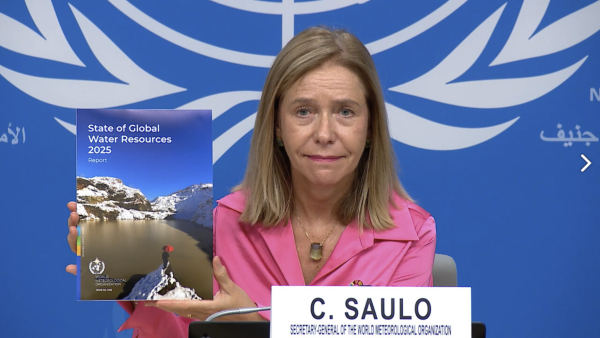
The key findings from WMO’s State of Global Water Resources 2025 report covering the hydrological cycle and extreme events in the five-year period to last year:
- 2025 was one of driest years for river discharge in 35 years
- Past seven years have seen abnorfmal river flows
- Water storage on Earth’s land surface has decreased in past decade
- Widespread glacier loss across all regions for fourth consecutive year
- Asia and Africa are regions most affected by water-related disasters
- Water data availability has improved, but gaps remain in hard-hit areas
Highlighting the long-term decline in the Earth’s freshwater storage and glacier melt, WMO Secretary-General Celeste Saulo explained that the planet’s water reserves used to act as a planetary “savings account” that absorbed the occasional dry season, avoiding a water crisis. “One of the central stories of the 2025 report is what is happening to that savings account? And the simple answer is that we are depleting it,” she told journalists in Geneva.
Groundwater reserves are equally stretched and have been in decline since 2014, WMO’s report states, with nearly two-thirds of monitored wells worldwide showing levels lower than the historical norm and indicating a shift “further toward deficit…not recovery”.
“At the same time, we are seeing more water-related disasters,” Ms. Saulo said, while also stressing that the currently strengthening El Niño “will increase the risk of drought in some areas, and flooding in others”.
Glaciers disappearing
In 2025, for the fourth consecutive year, every major glaciated region on Earth lost ice mass, leading to short-term hazards including floods and long-term water insecurity, according to WMO.
Responding to a question about whether the changing global water cycle might have contributed to the deadly Nepal-China flooding disaster, Ms. Saulo explained that melting ice and rock was just one factor in the chain of events that ultimately sent a massive and deadly wall of water and debris downstream on 26 August, killing at least 1,367 people.
“You asked if it could happen again? Absolutely; the problem in this region is that there’s 63,700 glaciers at the last count,” she told a Press Conference in Geneva. “Even if you’re looking with remote sensing with satellites at these glaciers, you might see some faults, you might see some slight shifting, that does not mean necessarily catastrophic collapse. So, in order to plan for this, it’s very, very difficult. But the international community is looking very hard at ways in which we can bring people together to solve some of these monitoring issues.”
Data indicates that glaciers shrank between 2023 and 2025 with cumulative losses of 1,400 gigatonnes of water – or about one third of annual fresh water needs.
Every major glacier region on Earth lost ice for the fourth consecutive year.
“All 19 glacier regions around the globe lost ice; in Central Asia, Iceland, the Russian Arctic and western Canada and the United States, it was among the three worst years on record,” said Wayne Jenkinson, WMO’s Director of Hydrology and Cryosphere.
Some regions with smaller glaciers such as Central Europe, the Caucasus, the western Canada and the United States may already have reached “peak water”, Mr. Jenkinson warned.
“After this point, the glacier gives less meltwater each year simply because there is less ice left to melt. That matters for every community downstream that relies on water during hot, dry summers,” he explained.
Narelle van der Wel, WMO’s Head of Cryosphere Monitoring, Predictions and Services, stressed that while some further glacier loss is unavoidable, the eventual scale of the decline is not predetermined.
“Some glacier loss is inevitable, but total loss of glaciers is not yet inevitable,” she said, pointing to emissions reductions as central to limiting future losses.
Preparing for moving baselines
The report does not attribute every observed change to climate change alone. WMO says pressure on water resources and natural variability also contribute.
Mr. Jenkinson said governments need to prepare for “moving baselines” as historical patterns become less reliable.
“The situation 30 years ago is not where we are today,” he said. Countries, he added, need to prepare “for those changes that have really already arrived”.
ends