

The United Nations Office at Geneva
Multimedia Newsroom
Ebola continues to spread in DRC, death toll passes 500 – WHO
The outbreak of the deadly Bundibugyo species of Ebola in the eastern Democratic Republic of the Congo (DRC) is expanding, while the push to accelerate testing and identify effective treatment options continues, the UN World Health Organization (WHO) said on Tuesday.
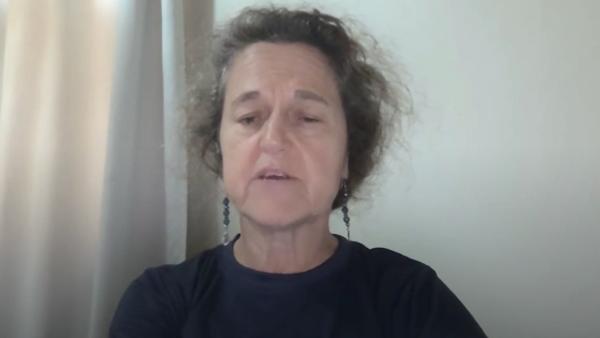
The outbreak’s “true scale has not yet been fully established… we would like to say it is stabilizing, but frankly, we cannot say it yet”, said Dr Anne Ancia, WHO representative to the DRC.
Speaking from Bunia, the capital of Ituri Province at the heart of the outbreak, Dr Ancia told reporters in Geneva that as of 4 July, the country’s government has recorded 1,561 confirmed cases, including 506 deaths and 254 people recovered. More than 10,000 contacts are being monitored.
In support of the government-led response WHO is strengthening its understanding of the history of every case of infection “so that we can really understand the chain of transmission” and isolate every contact case, Dr Ancia said.
Pointing to the challenges, the WHO representative said that treatment centres are “at saturation point”.
“I visited treatment centres in and around Bunia, Beni, Butembo, Katwa, and I met frontline workers responsible for patient care, contact tracing, investigating alerts, and sensitizing and mobilizing communities,” she said. “I witnessed firsthand the dedication of staff who continue to serve their communities despite enormous challenges,” she insisted.
“I really wish to salute the engagement of each and everyone involved in this response.”
The current outbreak was declared on 15 May and has been unfolding in areas marked by active conflict, displacement and overstretched health services.
“Today, we do not have enough ambulances,” Dr Ancia said, warning that all the needs in Ituri Province cannot be met.
Encouraging developments include the progress made on testing, as daily capacity has increased from 30 tests in Kinshasa to more than 2,000, “thanks to 10 decentralized laboratories established in the affected provinces”, the WHO representative explained, with the most recent lab opening in Bunia.
Another positive step is the start of a clinical trial on 2 July to identify effective treatment options, as there is no approved, proven cure for the Bundibugyo virus disease.
“The trial will evaluate two promising therapies, a monoclonal antibody, MBP134, and the antiviral remdesivir,” Dr Ancia said. “These drugs will be administered alone or in combination to assess their potential to improve survival among people with the Bundibugyo virus disease.”
More than 1,200 treatment doses are available and additional therapies can be incorporated into the trial as new evidence emerges.
The security situation in eastern DRC remains highly unstable amid violent clashes in North Kivu, South Kivu and Ituri provinces. In late June, James Swan, head of the UN Stabilization Mission in the DRC known as MONUSCO, told the Security Council that heavy fighting continued between the Alliance Fleuve Congo/23 March Movement (AFC/M23), supported by Rwandan forces, and the Congolese Army (FARDC) allied with the Wazalendo armed group. Rwanda has consistently denied such allegations.
Asked about a reported claim from the M23 group that Ebola had been eradicated in the areas under its control, Dr Ancia confirmed having received information indicating that there were no more cases in those zones and “all contact cases had been released”.
In the parts of North Kivu controlled by the de facto authorities, “we are working to strengthen community surveillance to make sure that there are no more cases,” she said, as a high number of alerts are coming through “every day” from labs in the field, and are being followed up.
“For now, indeed, we do not have reports of confirmed cases” in the area, she said.
-Ends-
STORY Ebola DRC update - WHO
TRT: 2:55’’
SOURCE: UNTV CH
RESTRICTIONS: NONE
LANGUAGE: ENGLISH/FRENCH/NATS
ASPECT RATIO: 16:9
DATELINE: 7 JULY 2026 GENEVA, SWITZERLAND
1. Exterior wide shot: Palais des Nations, Flag Alley.
2. Wide reverse shot: Speakers at the podium of the press conference; speaker on screens; journalists in the Press room.
3. SOUNDBITE (English) – Dr Anne Ancia, Representative to the Democratic Republic of the Congo, World Health Organization (WHO): “The outbreak unfortunately continues to expand and its true scale has not yet been fully established. As of 4 July, the Government of the Democratic Republic of the Congo has recorded 1,561 confirmed cases, including 506 deaths and 254 recoveries.”
4. Wide shot: Speaker on screens; journalists in the Press room.
5. SOUNDBITE (English) – Dr Anne Ancia, Representative to the Democratic Republic of the Congo, World Health Organization (WHO): “I visited treatment centres in and around Bunia, Beni, Butembo, Katwa, and I met frontline workers responsible for patient care, contact tracing, investigating alerts, and sensitizing and mobilizing communities. I witnessed firsthand the dedication of staff who continue to serve their communities despite enormous challenges.”
6. Medium reverse shot: Speakers at the podium of the press conference; speaker on screens.
7. SOUNDBITE (French) – Dr Anne Ancia, Representative to the Democratic Republic of the Congo, World Health Organization (WHO): “Aujourd'hui, nous n'avons pas suffisamment d'ambulances. Comme je vous l'ai dit, certains centres de traitement sont à saturation et en fait nous n'arrivons malheureusement pas pour le moment à répondre à toutes les demandes qui arrivent dans la province, dans la province de l'Ituri.”
8. Wide shot: Journalists in the Press room.
9. SOUNDBITE (English) – Dr Anne Ancia, Representative to the Democratic Republic of the Congo, World Health Organization (WHO): “Laboratory capacity has increased from 30 tests per day in Kinshasa to more than 2,000 tests daily, thanks to 10 decentralized laboratories established in the affected provinces. The latest of these laboratories just opened in Bunia to relieve pressure on the main laboratory and accelerate diagnostic and effective case management.”
10. Medium reverse shot: Speaker at the podium of the press conference.
11. SOUNDBITE (English) – Dr Anne Ancia, Representative to the Democratic Republic of the Congo, World Health Organization (WHO): “A clinical trial began on 2 July to identify effective treatment against Bundibugyo virus disease. The trial will evaluate two promising therapies, a monoclonal antibody, MBP134, and the antiviral remdesivir. These drugs will be administered alone or in combination to assess their potential to improve survival among people with the Bundibugyo virus disease.”
12. Medium reverse shot: Speakers at the podium of the press conference; speaker on screens; journalists in the Press room.
13. SOUNDBITE (French) – Dr Anne Ancia, Representative to the Democratic Republic of the Congo, World Health Organization (WHO): “Sous les zones effectivement qui sont sous le contrôle des autorités de facto comme on les appelle, effectivement les informations que nous avons décrivent qu'il n'y a plus, qu'il n'y a plus de cas et que tous les contacts ont été relâchés.”
14. Various shots: Journalists in the Press room.
Similar Stories
1
1
1
Edited News | OCHA , UNICEF , WFP
Aid agencies warned on Friday of the fast-developing humanitarian emergency inside Taiz City in Yemen, which has been encircled by de facto Houthi forces fighting government troops along the country’s west coast.

2
17
1
2
Edited News , Press Conferences , Images | OCHA , WMO
Two UN agencies teamed up on Wednesday to issue an appeal for immediate assistance to help communities already being impacted by the strongest El Niño on record.

3
16
2
2
Edited News , B-roll , Conferences , Images | UNITED NATIONS , UNOG
Sixth Consultative Meeting on Enhancing Coordination of Peace Initiatives and Efforts for Sudan

1
1
1
Edited News | UNICEF , WHO , UNHCR
Yemen war continues to force families from homes amid hunger and disease
More than 250,000 people have now fled renewed fighting in Yemen, the UN said on Tuesday, citing particular concern for those sheltering in the southwestern city of Taiz and the wider governorate, where access is “essentially blocked”.

1
1
1
Edited News | UNICEF
A little over one year since a ceasefire agreement was announced between Hamas fighters and Israel, more than 340 children have been reported killed and hundreds more injured, the UN Children’s Fund, UNICEF, said on Friday.

1
1
1
Edited News | UNICEF , IFRC
Six weeks after Nepal’s deadly flooding disaster, communities are still struggling to rebuild their lives, but they will need sustained help as global warming increases the risk of another Himalayan catastrophe, the UN Children’s Fund (UNICEF) said on Friday.

1
1
1
Edited News | WHO
In suspected Russia plague death, testing and monitoring underway – WHO
The death of a lab worker in Russia’s Siberia region has sparked concerns about plague being the cause, the UN World Health Organization (WHO) said on Tuesday, adding that it was following the situation closely.

1
1
Edited News | OHCHR , UNOG
UN Human Rights Chief Volker Türk on Friday provided and oral update to the 63rd session of the Human rights Council on Ukraine.

1
1
1
Edited News | OHCHR , UNOG
UN Human Rights Chief Volker Türk on Friday provided and oral update to the 63rd session of the Human rights Council on the human rights situation in Haiti.

1
1
1
Edited News | WHO
Repeated delays in bringing lifesaving medicines, prosthetics and more from Israel into Gaza risk having devastating consequences on Palestinians who urgently need them in the wartorn enclave, the UN World Health Organization (WHO) said on Friday. “A truck full of non-priority supplies or the right supplies arriving too late, doesn't save lives. That's the question that actually matters," said Dr Reinhilde Van De Weerdt, WHO Representative in the OPT.

1
1
1
Edited News | WHO
DRC: Early access to care and oxygen decisive for Ebola patients’ survival – WHO
In the Democratic Republic of the Congo (DRC), health workers fighting the country’s largest-ever Ebola outbreak are struggling to overcome critical challenges to patient care, the UN World Health Organization (WHO) warned on Tuesday.

1
1
1
Edited News | OCHA , UN
Civilians in Iran are continuing to feel the consequences of months of conflict and military escalation, the UN’s top official in the country has said, as loss of life, damage to civilian infrastructure and mounting economic pressures leave many facing continued uncertainty.