

The United Nations Office at Geneva
Multimedia Newsroom
Edited News | UNITED NATIONS , WFP
WFP-Chartered Ship Leaves Odesa with Grain to Afghanistan 29 September 2022
Black Sea exports ramp up, bringing confidence to global commerce and food to most vulnerable
Two months since the Black Sea Grain Initiative kicked into action to help release desperately needed grain and fertilizer from ports in Ukraine and Russia, confidence is returning among global distributors as exports ramp up, UN humanitarians said on Thursday.
Described as a “beacon of hope” by UN Secretary-General António Guterres at the signing ceremony for the plan on 27 July in Istanbul with representatives from Russia and Ukraine, the agreement has made it possible for almost 240 vessels to leave Ukrainian ports with some 5.4 million metric tons of grain and other foodstuffs, since 1 August 2022.
“What I am seeing with the Black Sea Grain Initiative is an increase in confidence, confidence in the shipping community, the commercial shipping community,” said Dennis Malone, Representative at the Joint Coordination Centre (JCC) in Odesa, for boats arriving and departing from the Ukrainian port.
“We are seeing the price of shipping insurance reduced, we are seeing the quality of ships that are being used to come in to export the grain are increasing. We are also seeing an increase in confidence in the local community, in the farming community. They are starting to see that their grain is being exported, that the silos are being emptied and that they can start planning for future harvests.”
UN-chartered
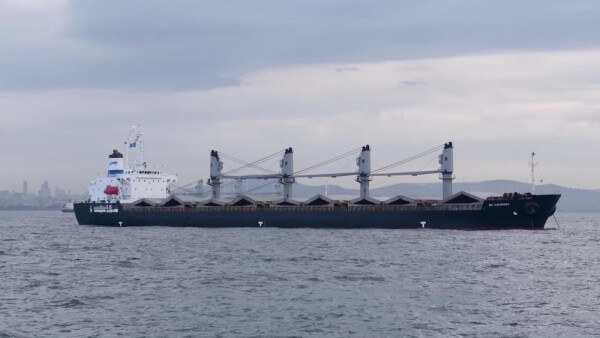
One ship leaving Odesa earlier this week, the BC Vanessa, is the fourth humanitarian vessel to be chartered by the UN World Food Programme (WFP) out of Ukraine.
Its precious cargo - 30,000 tonnes of wheat - is destined for Afghanistan, to alleviate the desperate humanitarian emergency there.
Previous UN-chartered shipments taking part in the initiative have delivered wheat to Ethiopia and Yemen. Commercial vessels have also reached destinations including Tunisia with more than 85,000 metric tons of wheat from Ukrainian ports since the agreement was signed, according to the JCC coordinating body.
One result of the deal has been a sharp drop in global food prices, which have allowed people to purchase grain more easily, once again.
Ukraine, one of the world’s largest grain exporters, normally supplies around 45 million tonnes of grain to the global market every year.
‘Matter of survival’
After Russia’s invasion of the country on 24 February, mountains of grains built up in silos, with ships unable to secure safe passage to and from Ukrainian ports. Today, although sea routes are open again, serious economic challenges remain for the country’s farmers.
“For the moment, the prices offered are too low,” said Vyachyslav Nevmerzhytskyi, Deputy Chairman of the Association of Farmers of the Odesa region. “Today, I would be selling at a loss because the cost to grow and produce the grain remains (higher). So, if I agree to sell at these prices now then I would be making a loss. Therefore, this is a matter of survival, the financial survival of farm businesses.”
Waiting game
Transporting the grain to the ports also remains incredibly slow. Truck drivers wait in kilometre-long lines to get reach Yuzhny port and some have been stationary for days.
“After the truck is loaded, it takes three to four hours for me to get here, ready for discharge,” one drive told UN News. “But I've been standing (here) for five days. There is no movement, there is no administration, there is no-one to explain how long will we stay here, what to do, to move, to go home.”
In line with the Black Sea Grain Initiative, Ukrainian vessels guide cargo ships seeking passage to and from Odesa, Chornomorsk and Yuzhny through a maritime humanitarian corridor in international waters. Their task is to steer well clear of stretches of water that have been mined.
Once the ships near Istanbul, they are inspected by teams from another Joint Coordination Centre based in the Turkish city – as was the case for the BC Vanessa on Wednesday – with representatives from Russia, Türkiye, Ukraine and the UN all involved.
Loaded with humanitarian supplies, the vessel left today Istanbul’s waters, setting an easterly course for the Turkish port of Samsun, where its wheat will be milled.
The flour will then be shipped onto another vessel to Karachi and then transported by road to Afghanistan for distribution.
- ends -
STORY: WFP chartered ship leaves Odesa with Grain to Afghanistan
TRT: 3 mins 31s
SOURCE: UNTV CH
RESTRICTIONS: NONE
LANGUAGE: ENGLISH/UKRAINIAN
ASPECT RATIO: 16:9
DATELINE: 29 September 2022 GENEVA, SWITZERLAND
21. September 2022
- Drone shot, Yuzhny port, Ukraine
- Medium shot, vessel BC Vanessa in Odesa port
- Medium shot, grain getting loaded in BC Vanessa
- Wide shot, BC Vanessa in Odesa port
- Medium shot, BC Vanessa in Odesa port
- Close up, anchor of BC Vanessa
- SOUNDBITE (English) – Dennis Malone, Representative Joint Coordination Center in Odesa: “What I am seeing with the Black Sea Grain Initiative is an increase in confidence, confidence in the shipping community, the commercial shipping community. We are seeing the price of shipping insurance reduced, we are seeing the quality of ships that are being used to come in to export the grain are increasing. We are also seeing an increase in confidence in the local community, in the farming community. They are starting to see that their grain is being exported, that the silos are being emptied and that they can start planning for future harvests”.
- Medium shot, crane loading grains into BC Vanessa
- Close up, crane loading grains into BC Vanessa
- Close up, crane loading grains into BC Vanessa
- Drone shot, winter seeds distribution on a field close to Yuzhny port
- Wide shot, farmer on his field with tractor
- SOUNDBITE (Ukrainian) – Vyachyslav Nevmerzhytskyi, Deputy Chairman of the Association of Farmers of the Odesa region: “Today, some of the largest ports in Ukraine are once again operational, they are working”.
- Pan over grain storage
- SOUNDBITE (Ukrainian) – Vyachyslav Nevmerzhytskyi, Deputy Chairman of the Association of Farmers of the Odesa region: “I am more concerned with the economic question. For the moment, the prices offered are too low. I would be selling at a loss because the cost to grow and produce the grain remains. So, if I agree to sell at these prices now then I would be making a loss. Therefore, this is a matter of survival, the financial survival of farm businesses”.
- Close up, grain mountain
- Wide shot, farmer in the filed with tractor
- Wide shot, truck drivers cleaning their trucks
- SOUNDBITE (Ukrainian), truck driver: “After the truck is loaded, it takes 3-4 hours for me to get here, ready for discharge. But I've been standing here now for 5 days, there is no movement, there is no administration, there is no one to explain how long we will stay here, what to do, to move, to go home... “
- Wide shot, truck driver passing by the line of trucks with port silos in the background
- Medium shot, departure of BC Vanessa in Odesa port
- Wide shot, BC Vanessa leaving the port
- Wide shot, BC Vanessa sailing on the sea
Istanbul, 28 September 2022
- Tugboat with JCC team arriving at BC Vanessa for inspection
- Medium shot, inspectors arriving on the BC Vanessa
- Medium shot, inspection of grain on the BC Vanessa
- Medium shot, inspection of grain on the BC Vanessa
- Medium shot, meeting of joint inspectors on the boat
- Close up, marking samples
- Wide shot, vessels waiting to get inspected
- Medium shot, BC Vanessa in Marmara Sea
Similar Stories

1
1
1
Edited News | OCHA , UNICEF , WFP
Aid agencies warned on Friday of the fast-developing humanitarian emergency inside Taiz City in Yemen, which has been encircled by de facto Houthi forces fighting government troops along the country’s west coast.

2
17
1
2
Edited News , Press Conferences , Images | OCHA , WMO
Two UN agencies teamed up on Wednesday to issue an appeal for immediate assistance to help communities already being impacted by the strongest El Niño on record.

3
16
2
2
Edited News , B-roll , Conferences , Images | UNITED NATIONS , UNOG
Sixth Consultative Meeting on Enhancing Coordination of Peace Initiatives and Efforts for Sudan

1
1
1
Edited News | UNICEF , WHO , UNHCR
Yemen war continues to force families from homes amid hunger and disease
More than 250,000 people have now fled renewed fighting in Yemen, the UN said on Tuesday, citing particular concern for those sheltering in the southwestern city of Taiz and the wider governorate, where access is “essentially blocked”.

1
1
1
Edited News | UNICEF
A little over one year since a ceasefire agreement was announced between Hamas fighters and Israel, more than 340 children have been reported killed and hundreds more injured, the UN Children’s Fund, UNICEF, said on Friday.

1
1
1
Edited News | UNICEF , IFRC
Six weeks after Nepal’s deadly flooding disaster, communities are still struggling to rebuild their lives, but they will need sustained help as global warming increases the risk of another Himalayan catastrophe, the UN Children’s Fund (UNICEF) said on Friday.

1
1
1
Edited News | WHO
In suspected Russia plague death, testing and monitoring underway – WHO
The death of a lab worker in Russia’s Siberia region has sparked concerns about plague being the cause, the UN World Health Organization (WHO) said on Tuesday, adding that it was following the situation closely.

1
1
Edited News | OHCHR , UNOG
UN Human Rights Chief Volker Türk on Friday provided and oral update to the 63rd session of the Human rights Council on Ukraine.

1
1
1
Edited News | OHCHR , UNOG
UN Human Rights Chief Volker Türk on Friday provided and oral update to the 63rd session of the Human rights Council on the human rights situation in Haiti.

1
1
1
Edited News | WHO
Repeated delays in bringing lifesaving medicines, prosthetics and more from Israel into Gaza risk having devastating consequences on Palestinians who urgently need them in the wartorn enclave, the UN World Health Organization (WHO) said on Friday. “A truck full of non-priority supplies or the right supplies arriving too late, doesn't save lives. That's the question that actually matters," said Dr Reinhilde Van De Weerdt, WHO Representative in the OPT.

1
1
1
Edited News | WHO
DRC: Early access to care and oxygen decisive for Ebola patients’ survival – WHO
In the Democratic Republic of the Congo (DRC), health workers fighting the country’s largest-ever Ebola outbreak are struggling to overcome critical challenges to patient care, the UN World Health Organization (WHO) warned on Tuesday.

1
1
1
Edited News | OCHA , UN
Civilians in Iran are continuing to feel the consequences of months of conflict and military escalation, the UN’s top official in the country has said, as loss of life, damage to civilian infrastructure and mounting economic pressures leave many facing continued uncertainty.