

The United Nations Office at Geneva
Multimedia Newsroom
Edited News
Resumption of hostilities in Gaza UNICEF, OCHA, OHCHR, WHO 01 December 2023
“After a week of respite, hell on earth has returned to Gaza,” says OCHA
With the resumption of military operations in the Gaza strip in the early hours of Friday, UN humanitarians on Friday called for an immediate halt of hostilities in the war-shattered Palestinian enclave and called on parties and States with influence to ensure a ceasefire.
“A lasting ceasefire must be implemented. The alternative is unthinkable for people who are, as a Palestinian said to me, already living in a nightmare,” said UN Children’s Fund (UNICEF) spokesperson James Elder.
He added that “inaction at its core is an approval of the killing of children. But here we are. The bombs started just a few seconds after the ceasefire.”
Citing data from the Gazan health authorities, the UN World Health Organization (WHO) said that more than 15,000 people had died as of 27 November. Of that number 41 per cent were children (6,150).
“Any conversation around Gaza, around the children of Gaza, has to begin with empathy and with compassion,” Mr. Elder told journalists at UN Geneva via video link from Khan Younis. “It's deeply, deeply unsettling to hear how some have been able to overlook the tragic deaths of thousands and thousands of boys and girls in Gaza and are now seemingly comfortable with the horrors, the attacks starting again. To accept the sacrifice of the children in Gaza is humanity giving up.”
Mr. Elder also reported that the conflict has created many child amputees in recent weeks.
“It's around 1,000 children (who) have had an upper or lower limb or both amputated these past weeks,” he said. “It's callous to think that we are now to know that we are now apparently returning to that.”
The UN health agency reported that 18 out of 36 hospitals are partially functional, and the total bed capacity in Gaza has fallen from 3,500 to only 1,562. Given the extreme needs, at least 5,000 beds are currently required.
“The Gaza health system has been crippled by the ongoing hostilities, and I want to stress that it cannot afford to lose any more hospitals or hospital beds,” said Dr. Richard Peeperkorn, WHO’s representative in the Occupied Palestinian Territories. “We are extremely concerned about the resumption of violence that might have damaged or destroyed health facilities, as it did in the north”.
Speaking about the conditions there, Rob Holden, WHO’s Senior Emergency Officer, reported that “it's like a horror movie when you walk in there, there are patients on the floor with the most traumatic injuries that you can imagine, essentially battlefield trauma…The patients are given the best possible care, but the number of staff available is relatively small. Many of the staff have fled, fled with their families or have been killed. The supplies are just not enough. There have been major problems of getting supplies to the north of Wadi Gaza.”
Echoing the call for peace, Jens Laerke, spokesperson for United Nations Office for the Coordination of Humanitarian Affairs (OCHA) said that “today, children, women and men in Gaza and Israel woke up to war again. Parties to this conflict must protect civilians and provide access to humanitarian actors to deliver across Gaza and according to needs as per international humanitarian law.”
He reminded that “humanitarian aid must continue unconditionally, hostages must be released unconditionally. The UN will continue to stay and deliver food, water, medical and other critical supplies to save lives.”
The week-long humanitarian pause in hostilities between Hamas militants and Israeli forces allowed the delivery of desperately needed fuel, food and water, which people have been drinking as soon as it is given to them, humanitarians report.
The pause also enabled the release of hostages taken during Hamas’s 7 October surprise attack on southern Israel and ensuing massacre of some 1,200 people, and the freeing of Palestinian prisoners held in Israel.
“With the resumption of war, of course, we fear that the continuation of this is now in doubt. So, we need a resumption of a pause and not a return to war,” said Mr. Laerke.
Ravina Shamdasani, spokesperson for the UN human rights office (OHCHR) emphasized that “under international humanitarian law, Israel has an obligation to respect the principles of distinction, proportionality and precaution and attack, and to ensure the protection of civilians. Warning them to leave a particular area or to move to another area does not absolve them of the responsibility to ensure the protection of civilians. They still need to comply by the principles of international humanitarian law.”
Ms. Shamdasani added that “even if there are reports or allegations that other armed actors that Palestinian armed groups are locating military objectives in certain facilities, it still does not absolve the other side of their responsibility to protect civilians.”
-ends-
STORY: Resumption of hostilities in Gaza UNICEF, OCHA, OHCHR, WHO 01 December 2023
TRT: 4:09”
SOURCE: UNTV CH
LANGUAGE: ENGLISH
ASPECT RATIO: 16:9
DATELINE: 01 December 2023 - GENEVA, SWITZERLAND
SHOTLIST
- Exterior medium shot: UN building with UN flag, UN Geneva.
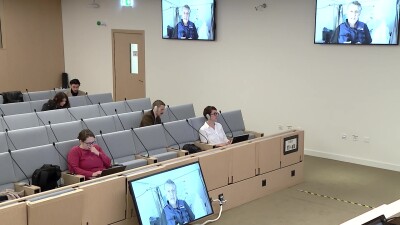
- Wide shot, press briefing room with spokesperson, journalists and screens, UN Geneva
- SOUNDBITE (ENGLISH) – James Elder, UNICEF spokesperson: “A lasting ceasefire must be implemented. The alternative is unthinkable for people who are, as a Palestinian said to me, already living in a nightmare. Inaction at its core is an approval of the killing of children. But here we are. The bombs started just a few seconds after the ceasefire.”
- Cutaway: Wide shot, press briefing room with journalists and screens, UN Geneva
- SOUNDBITE (ENGLISH) – James Elder, UNICEF spokesperson: “Any conversation around Gaza, around the children of Gaza, has to begin with empathy and with compassion. It's deeply, deeply unsettling to hear how some have been able to overlook the tragic deaths of thousands and thousands of boys and girls in Gaza and are now seemingly comfortable with the horrors, the attacks starting again. To accept the sacrifice of the children in Gaza is humanity giving up.”
- Cutaway: Wide shot, press briefing room with spokesperson, journalists and screens, UN Geneva
- SOUNDBITE (ENGLISH) - James Elder, UNICEF spokesperson: “It's around a thousand children have had an upper or lower limb or both amputated these past weeks around a thousand. Again, it's callous to think that we are now to know that we are now apparently returning to that. So, yes, children are being evacuated.”
- Cutaway: Wide shot, press briefing room with journalists and screens, UN Geneva
- SOUNDBITE (ENGLISH) - Dr Richard Peeperkorn, WHO Representative on the occupied Palestinian territory (oPt): “The Gaza health system has been crippled by the ongoing hostilities. And I want to stress that it cannot afford to lose any more hospitals or hospital beds. And we are extremely concerned about the resumption of violence that might have damaged or destroyed health facilities, etc., as it did in the north”.
- Cutaway: Wide shot, press briefing room with spokespersons, journalists and screens, UN Geneva
- SOUNDBITE (ENGLISH) - Mr Rob Holden, WHO Senior Emergency Officer: “To describe it, it's like a horror movie when you walk in there there are patients on the floor with the most traumatic injuries that you can imagine, essentially battlefield trauma. You know, the patients are given the best possible care, but the number of staff available is relatively small. Many of the staff have fled, fled with their families or have been killed. The supplies are just not enough. There have been major problems of getting supplies to the north of Wadi Gaza.”
- Cutaway: Close up, journalist listening, UN Geneva
- SOUNDBITE (ENGLISH) – Jens Laerke, spokesperson for United Nations Office for the Coordination of Humanitarian Affairs (OCHA): “Today, children, women and men in Gaza and Israel woke up to war again. Parties to this conflict must protect civilians and provide access to humanitarian actors to deliver across Gaza and according to needs as per international humanitarian law. Humanitarian aid must continue unconditionally, hostages must be released unconditionally. The U.N. will continue to stay and deliver food, water, medical and other critical supplies to save lives.”
- Cutaway: Wide shot, press briefing room with spokespersons, UN Geneva
- SOUNDBITE (ENGLISH) – Jens Laerke, spokesperson for United Nations Office for the Coordination of Humanitarian Affairs (OCHA): « With the resumption of war, of course, we fear that the continuation of this is now in doubt. So, we need a resumption of a pause and not a return to war.”
- Cutaway: Wide shot, press briefing room with journalists and screens, UN Geneva
- SOUNDBITE (ENGLISH) – Ravina Shamdasani, spokesperson for the Office of the United Nations High Commissioner for Human Rights (OHCHR): “Under international humanitarian law, Israel has an obligation to respect the principles of distinction, proportionality and precaution and attack, and to ensure the protection of civilians. Warning them to leave a particular area or to move to another area does not absolve them of the responsibility to ensure the protection of civilians. They still need to comply by the principles of international humanitarian law. And even if there are reports or allegations that other armed actors that Palestinian armed groups are locating military objectives in certain facilities, it still does not absolve the other side of their responsibility to protect civilians. »
- Cutaway: medium shot, press briefing room with journalists and camera man, UN Geneva
- Cutaway: close up, journalist listening, UN Geneva
- Cutaway: close up, journalist listening, UN Geneva
Similar Stories

1
1
1
Edited News | OCHA , UNICEF , WFP
Aid agencies warned on Friday of the fast-developing humanitarian emergency inside Taiz City in Yemen, which has been encircled by de facto Houthi forces fighting government troops along the country’s west coast.

2
17
1
2
Edited News , Press Conferences , Images | OCHA , WMO
Two UN agencies teamed up on Wednesday to issue an appeal for immediate assistance to help communities already being impacted by the strongest El Niño on record.

3
16
2
2
Edited News , B-roll , Conferences , Images | UNITED NATIONS , UNOG
Sixth Consultative Meeting on Enhancing Coordination of Peace Initiatives and Efforts for Sudan

1
1
1
Edited News | UNICEF , WHO , UNHCR
Yemen war continues to force families from homes amid hunger and disease
More than 250,000 people have now fled renewed fighting in Yemen, the UN said on Tuesday, citing particular concern for those sheltering in the southwestern city of Taiz and the wider governorate, where access is “essentially blocked”.

1
1
1
Edited News | UNICEF
A little over one year since a ceasefire agreement was announced between Hamas fighters and Israel, more than 340 children have been reported killed and hundreds more injured, the UN Children’s Fund, UNICEF, said on Friday.

1
1
1
Edited News | UNICEF , IFRC
Six weeks after Nepal’s deadly flooding disaster, communities are still struggling to rebuild their lives, but they will need sustained help as global warming increases the risk of another Himalayan catastrophe, the UN Children’s Fund (UNICEF) said on Friday.

1
1
1
Edited News | WHO
In suspected Russia plague death, testing and monitoring underway – WHO
The death of a lab worker in Russia’s Siberia region has sparked concerns about plague being the cause, the UN World Health Organization (WHO) said on Tuesday, adding that it was following the situation closely.

1
1
Edited News | OHCHR , UNOG
UN Human Rights Chief Volker Türk on Friday provided and oral update to the 63rd session of the Human rights Council on Ukraine.

1
1
1
Edited News | OHCHR , UNOG
UN Human Rights Chief Volker Türk on Friday provided and oral update to the 63rd session of the Human rights Council on the human rights situation in Haiti.

1
1
1
Edited News | WHO
Repeated delays in bringing lifesaving medicines, prosthetics and more from Israel into Gaza risk having devastating consequences on Palestinians who urgently need them in the wartorn enclave, the UN World Health Organization (WHO) said on Friday. “A truck full of non-priority supplies or the right supplies arriving too late, doesn't save lives. That's the question that actually matters," said Dr Reinhilde Van De Weerdt, WHO Representative in the OPT.

1
1
1
Edited News | WHO
DRC: Early access to care and oxygen decisive for Ebola patients’ survival – WHO
In the Democratic Republic of the Congo (DRC), health workers fighting the country’s largest-ever Ebola outbreak are struggling to overcome critical challenges to patient care, the UN World Health Organization (WHO) warned on Tuesday.

1
1
1
Edited News | OCHA , UN
Civilians in Iran are continuing to feel the consequences of months of conflict and military escalation, the UN’s top official in the country has said, as loss of life, damage to civilian infrastructure and mounting economic pressures leave many facing continued uncertainty.