

The United Nations Office at Geneva
Multimedia Newsroom
Crise au Liban : ‘Ce n’est que le début’ disent les communautés touchées par l’escalade meurtrière
L’escalade soudaine et massive entre Israël et le groupe armé Hezbollah au Liban a créé une peur généralisée que le pire soit encore à venir, ont déclaré vendredi les humanitaires de l’ONU.
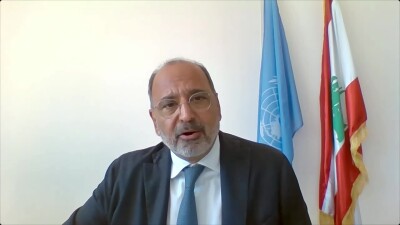
“Nous assistons à la période la plus meurtrière au Liban depuis une génération et beaucoup expriment leur crainte que ce ne soit que le début,” a déclaré Imran Riza, le principal responsable de l’aide de l’ONU au Liban. “L’ONU et ses partenaires coordonnent étroitement avec le gouvernement libanais pour soutenir les efforts de réponse. Cela inclut l’alignement de la distribution de l’aide, la réalisation d’évaluations conjointes et l’identification des besoins urgents des populations touchées.”
Parlant depuis Beyrouth, M. Riza, le Coordinateur humanitaire de l’ONU au Liban, a déclaré que depuis près d’un an, les habitants du pays – et en particulier ceux du sud – vivaient “dans la peur” que la guerre à Gaza puisse les atteindre.
Aujourd’hui, à travers le Liban, des milliers de personnes dans des communautés rurales auparavant non affectées par le ciblage israélien de l’infrastructure du Hezbollah ont fui les bombardements et la destruction généralisée qui ont fait au moins 700 morts, blessé des milliers de personnes et déplacé environ 120 000 personnes “en quelques heures seulement”, a-t-il dit, ajoutant : “Nous rencontrons des gens qui disent, ‘Quel est le chemin pour Tripoli? Comment y arriver?’”
Les commentaires du coordinateur de l’aide de l’ONU interviennent dans un contexte d’échanges de tirs de plus en plus intenses à travers la ligne de séparation surveillée par l’ONU entre le Liban et Israël depuis le 7 octobre, date à laquelle la guerre a éclaté dans la bande de Gaza. Le ciblage extraordinaire des pagers et talkies-walkies du Hezbollah la semaine dernière a fait des centaines de morts et a signalé le début d’un bombardement israélien intense au Liban et des frappes de représailles par le Hezbollah.
Traverser vers une sécurité relative
Des dizaines de milliers de personnes ont fui le Liban pour la sécurité relative de la Syrie à divers points de passage ouverts 24 heures sur 24, a confirmé l’agence des Nations Unies pour les réfugiés (HCR). “Là où les gens traversent en Syrie, jusqu’à présent ils sont en sécurité,” a déclaré Gonzalo Vargas Llosa, Représentant du HCR en Syrie, à la frontière Syrie-Liban. “Nous lançons bien sûr un appel non seulement pour que les bombardements en général cessent mais aussi bien sûr pour éviter de bombarder les personnes qui tentent de fuir.”
M. Vargas Llosa a décrit “un grand nombre de personnes” retournant en Syrie, une référence à certains des quelque 1,5 million de Syriens du Liban qui ont fui la guerre civile de leur pays depuis 2011. “L’estimation est que ce chiffre est maintenant bien au-dessus de 30 000 avec environ 75-80 pour cent de ces Syriens et les 20 pour cent restants environ des Libanais,” a déclaré le responsable du HCR.
“Nous avons vu pas mal de blessés arriver; des personnes blessées non seulement à cause du voyage très ardu pour arriver ici, mais aussi blessées directement à cause des bombardements au Liban. Nous avons vu une femme traverser avec deux enfants morts du Liban qui devaient être enterrés ici en Syrie.”
De retour au Liban, les humanitaires de l’ONU continuent de fournir une coordination de l’aide pour assister le gouvernement libanais. Près de 500 abris ont été ouverts pour environ 80 000 personnes déplacées, y compris 300 écoles qui ont été réaffectées, impactant l’éducation de plus de 100 000 élèves.
Mais des “lacunes critiques de financement” persistent dans de nombreux domaines, y compris la réparation des abris, la gestion des sites, les stocks alimentaires, le carburant et la coordination, a déclaré M. Riza, avant d’avertir que le système de santé du Liban a été “complètement submergé” par l’escalade sérieuse des hostilités.
“Nous avons fait beaucoup de travail de préparation et heureusement nous avons réussi à obtenir des kits de traumatologie et autres et avons essayé de les distribuer également à travers le pays parce que maintenant le déplacement se produit non seulement dans le sud,” a-t-il expliqué. “Pendant les 11 premiers mois, c’était principalement le sud - c’était principalement la vallée de la Bekaa... Mais maintenant c’est à travers tout le pays.”
Histoire : Mise à jour de la crise au Liban – OCHA, HCR
Orateurs :
- Imran Riza, Coordinateur Humanitaire au Liban
- Gonzalo Vargas Llosa, Représentant du HCR en Syrie
TRT : 03’29”
SOURCE : UNTV CH
LANGUE : ANGLAIS / SONS
FORMAT : 16:9
DATE : 27 septembre 2024 - GENÈVE, SUISSE
RESTRICTIONS : Aucune
LISTE DES PLANS
- Plan extérieur moyen : Allée des drapeaux de l'ONU.
- Plan large de la salle de presse de l'ONU à Genève.
- EXTRAIT SONORE (Anglais) Imran Riza, Coordinateur Humanitaire au Liban (depuis Beyrouth) : “Nous assistons à la période la plus meurtrière au Liban depuis une génération, et beaucoup expriment leur crainte que ce ne soit que le début. L'ONU et ses partenaires coordonnent étroitement avec le gouvernement libanais pour soutenir les efforts de réponse. Cela inclut l'alignement de la distribution de l'aide, la réalisation d'évaluations conjointes et l'identification des besoins urgents des populations affectées.”
- Plan moyen de la salle de presse et des participants.
- EXTRAIT SONORE (Anglais) Gonzalo Vargas Llosa, Représentant du HCR en Syrie (depuis la frontière Syrie-Liban) : “Au cours des dernières 72 heures, les quatre points frontaliers où se trouvent des employés du HCR... où les gens traversent en Syrie, jusqu'à présent ils sont sûrs et ils sont ouverts 24 heures sur 24. Et nous lançons bien sûr un appel non seulement pour que les bombardements en général cessent, mais aussi pour éviter de bombarder les personnes qui tentent de fuir.”
- Plan large, salle de presse.
- EXTRAIT SONORE (Anglais) Gonzalo Vargas Llosa, Représentant du HCR en Syrie (depuis la frontière Syrie-Liban) : “En termes de ce que nous avons observé à la frontière au cours de ces dernières 72 heures, je veux dire, un grand nombre de personnes retournent. L'estimation est que ce chiffre dépasse maintenant largement les 30 000 avec environ 75-80 % de Syriens et les autres 20 % environ de Libanais.”
- Plan moyen-large, salle de presse.
- EXTRAIT SONORE (Anglais) Gonzalo Vargas Llosa, Représentant du HCR en Syrie (depuis la frontière Syrie-Liban) : “Nous avons vu arriver pas mal de blessés; des personnes qui ont été blessées non seulement par le voyage très ardu pour arriver ici, mais aussi blessées à la suite directe des bombardements au Liban. Hier, par exemple, nous étions également ici et nous avons vu une femme traverser avec deux enfants morts du Liban qui devaient être enterrés ici en Syrie.”
- Plan moyen, salle de presse et podium, écran de télévision montrant un intervenant externe.
- EXTRAIT SONORE (Anglais) Imran Riza, Coordinateur Humanitaire au Liban (depuis Beyrouth) : “Le secteur de la santé est complètement débordé en ce moment ; nous avons fait beaucoup de travail de préparation et heureusement nous avons réussi à obtenir des kits de traumatologie et autres et avons essayé de les distribuer également dans tout le pays car maintenant les déplacements se produisent non seulement dans le sud ; pendant les 11 premiers mois, c'était principalement le sud, principalement la Bekaa, et dans des paramètres particuliers là-bas. Mais maintenant, c'est dans tout le pays.”
- Plan moyen-large, salle de presse et podium.
- EXTRAIT SONORE (Anglais) Imran Riza, Coordinateur Humanitaire au Liban (depuis Beyrouth) : “Ici à Beyrouth, vous avez des milliers de personnes qui sont arrivées et se demandent où aller ensuite. Beaucoup de gens, je veux dire anecdotiques, nous rencontrons des gens qui disent, ‘Quel est le chemin vers Tripoli ? Comment y arriver ?”
- Plan moyen, journalistes, participants, écrans de télévision montrant un intervenant externe.
- Plan moyen, salle de presse, participants.
- Plan moyen, modérateur au podium.
- Plan moyen, salle de presse, participants.
Similar Stories

1
1
1
Edited News | OCHA , UNICEF , WFP
Aid agencies warned on Friday of the fast-developing humanitarian emergency inside Taiz City in Yemen, which has been encircled by de facto Houthi forces fighting government troops along the country’s west coast.

2
17
1
2
Edited News , Press Conferences , Images | OCHA , WMO
Two UN agencies teamed up on Wednesday to issue an appeal for immediate assistance to help communities already being impacted by the strongest El Niño on record.

3
16
2
2
Edited News , B-roll , Conferences , Images | UNITED NATIONS , UNOG
Sixth Consultative Meeting on Enhancing Coordination of Peace Initiatives and Efforts for Sudan

1
1
1
Edited News | UNICEF , WHO , UNHCR
Yemen war continues to force families from homes amid hunger and disease
More than 250,000 people have now fled renewed fighting in Yemen, the UN said on Tuesday, citing particular concern for those sheltering in the southwestern city of Taiz and the wider governorate, where access is “essentially blocked”.

1
1
1
Edited News | UNICEF
A little over one year since a ceasefire agreement was announced between Hamas fighters and Israel, more than 340 children have been reported killed and hundreds more injured, the UN Children’s Fund, UNICEF, said on Friday.

1
1
1
Edited News | UNICEF , IFRC
Six weeks after Nepal’s deadly flooding disaster, communities are still struggling to rebuild their lives, but they will need sustained help as global warming increases the risk of another Himalayan catastrophe, the UN Children’s Fund (UNICEF) said on Friday.

1
1
1
Edited News | WHO
In suspected Russia plague death, testing and monitoring underway – WHO
The death of a lab worker in Russia’s Siberia region has sparked concerns about plague being the cause, the UN World Health Organization (WHO) said on Tuesday, adding that it was following the situation closely.

1
1
Edited News | OHCHR , UNOG
UN Human Rights Chief Volker Türk on Friday provided and oral update to the 63rd session of the Human rights Council on Ukraine.

1
1
1
Edited News | OHCHR , UNOG
UN Human Rights Chief Volker Türk on Friday provided and oral update to the 63rd session of the Human rights Council on the human rights situation in Haiti.

1
1
1
Edited News | WHO
Repeated delays in bringing lifesaving medicines, prosthetics and more from Israel into Gaza risk having devastating consequences on Palestinians who urgently need them in the wartorn enclave, the UN World Health Organization (WHO) said on Friday. “A truck full of non-priority supplies or the right supplies arriving too late, doesn't save lives. That's the question that actually matters," said Dr Reinhilde Van De Weerdt, WHO Representative in the OPT.

1
1
1
Edited News | WHO
DRC: Early access to care and oxygen decisive for Ebola patients’ survival – WHO
In the Democratic Republic of the Congo (DRC), health workers fighting the country’s largest-ever Ebola outbreak are struggling to overcome critical challenges to patient care, the UN World Health Organization (WHO) warned on Tuesday.

1
1
1
Edited News | OCHA , UN
Civilians in Iran are continuing to feel the consequences of months of conflict and military escalation, the UN’s top official in the country has said, as loss of life, damage to civilian infrastructure and mounting economic pressures leave many facing continued uncertainty.