

The United Nations Office at Geneva
Multimedia Newsroom
Edited News | OCHA
Crise humanitaire en Haïti et déploiement d'une force multinationale - OCHA
La crise humanitaire en Haïti s'aggrave alors que le pays attend une mission de soutien
Alors qu'Haïti fait face à une situation de « violence absolument brutale », le déploiement d'une mission de soutien à la sécurité multinationale est attendu avec espoir, a déclaré vendredi la principale responsable humanitaire de l'ONU dans le pays.
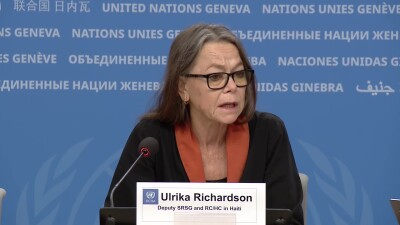
« Pour de nombreux Haïtiens, la vie quotidienne est une question de vie ou de mort », a déclaré Ulrika Richardson, la Coordinatrice résidente et humanitaire de l'ONU dans le pays. En parlant aux journalistes à Genève, elle a dressé un tableau sombre des conditions actuelles dans le petit État caribéen, qui n'a pas de président depuis que son dernier, Jovenel Moïse, a été assassiné en 2021.
« De nombreux Haïtiens prennent de grands risques en quittant simplement leur maison, en menant une vie normale, risquant d'être pris dans une ligne de feu, d'être kidnappés, lynchés ou violés », a déclaré Mme Richardson. Au cours des 11 premiers mois de 2023, le Bureau intégré des Nations Unies en Haïti (BINUH) a enregistré 8 000 meurtres, lynchages, enlèvements et viols, souvent des viols collectifs ciblant également de jeunes filles.
On estime que 300 gangs opèrent en Haïti, les plus grands groupes contrôlant jusqu'à 80 % de la capitale. La violence des gangs tentaculaires se propage au-delà de Port-au-Prince vers des zones auparavant paisibles dans les régions centrales et nord-ouest d'Haïti, en particulier dans le département de l'Artibonite, qui était autrefois le grenier d'Haïti. Le pays produisait autrefois toute sa nourriture et en exportait même une partie. Il lutte maintenant contre une insécurité alimentaire croissante au milieu d'une inflation galopante.
Deux Haïtiens sur cinq sont confrontés à une insécurité alimentaire aiguë
Dans ce pays de 12 millions d'habitants, « 5,2 millions ont besoin d'une aide humanitaire. 4,35 millions d'Haïtiens sont confrontés à une insécurité alimentaire aiguë, et c'est un chiffre stupéfiant », a souligné Mme Richardson. « Ce sont deux Haïtiens sur cinq qui sont confrontés à une insécurité alimentaire aiguë. »
Les meurtres, les pillages, les enlèvements et la violence sexuelle généralisée ont également alimenté les déplacements massifs. « Nous avons 200 000 [personnes déplacées] dans le pays, dont 143 000 dans la capitale seule, ce qui est, bien sûr, un très grand nombre », a souligné Mme Richardson.
Les besoins ont augmenté mais le financement de l'aide reste rare. Mme Richardson a déclaré que le plan de réponse humanitaire pour Haïti en 2023 n'est financé qu'à 33 % alors que l'année touche à sa fin.
Les espoirs se concentrent maintenant sur le déploiement d'une mission de soutien à la sécurité multinationale en Haïti conformément à la résolution 2699 adoptée par le Conseil de sécurité de l'ONU en octobre dernier. Le Kenya a accepté de diriger cette force armée multinationale et a promis 1 000 policiers. Son déploiement, potentiellement dès le premier trimestre de 2024, attend un feu vert de la haute cour kenyane.
« Nous devons vraiment aborder cela avec un plan global pour aider Haïti, accompagner Haïti vers le retour des institutions de l'État, le contrôle de l'État dans de nombreuses zones où l'État n'est pas présent. Rétablir les services de base, y compris l'eau et l'assainissement, la santé et l'éducation, mais aussi en regardant le système judiciaire et le système pénitentiaire », a déclaré Mme Richardson.
Les prisons en Haïti sont jusqu'à trois fois surpeuplées, la plupart des détenus étant en attente de jugement.
La mission de soutien pour renforcer la Police nationale haïtienne vise à rétablir la sécurité dans le pays afin de créer les conditions nécessaires à la tenue d'élections libres et équitables.
« Nous estimons qu'il faudra entre 12 et 18 mois pour organiser une élection. Évidemment, nous devons stabiliser la situation de violence », a conclu Mme Richardson.
Fin
LISTE DE PLANS
- Plan large extérieur : allée des drapeaux de l'ONU, ONU Genève.
- Plan de coupe : plan large, salle de presse, ONU Genève.
- EXTRAIT SONORE (ANGLAIS) Ulrika Richardson, Représentante spéciale adjointe du Secrétaire général pour le Bureau intégré des Nations Unies en Haïti (BINUH) et Coordinatrice résidente en Haïti: “Pour de nombreux Haïtiens, la vie quotidienne est non seulement une lutte frappante pour trouver de la nourriture à mettre sur la table pour leurs familles, mais c'est aussi une question de vie ou de mort. Beaucoup prennent de grands risques en quittant simplement leur maison, en menant une vie normale, risquant d'être pris dans une ligne de feu, risquant d'être kidnappés, risquant d'être lynchés, risquant d'être violés. Et très souvent, cela se produit. En fait, nous avons vu juste au cours de ces 11 premiers mois de 2023, nous avons vu 8000 meurtres, lynchages, enlèvements et viols, très souvent des viols collectifs, souvent ciblant, bien sûr, des femmes, mais aussi de jeunes filles.”
- Plan de coupe : plan large, salle de presse avec des journalistes, ONU Genève.
- EXTRAIT SONORE (ANGLAIS) Ulrika Richardson, Représentante spéciale adjointe du Secrétaire général pour le Bureau intégré des Nations Unies en Haïti (BINUH) et Coordinatrice résidente en Haïti: “Haïti, en fait, est en train de sombrer dans ce que nous pouvons appeler une crise très grave des droits de l'homme. Nous pouvons l'appeler une crise de protection. En général, pour faire simple, c'est une crise multidimensionnelle. En fait, elle a un impact sur, bien sûr, la situation humanitaire. Nous avons, en fait, 5,2 millions d'Haïtiens aujourd'hui qui ont besoin d'une assistance humanitaire. Nous avons 4,35 millions de personnes qui font face à une insécurité alimentaire aiguë, et c'est un chiffre stupéfiant. Cela représente deux Haïtiens sur cinq qui font face à une insécurité alimentaire aiguë.”
- Plan de coupe : gros plan d'un journaliste dans la salle de presse, ONU Genève.
- EXTRAIT SONORE (ANGLAIS) Ulrika Richardson, Représentante spéciale adjointe du Secrétaire général pour le Bureau intégré des Nations Unies en Haïti (BINUH) et Coordinatrice résidente en Haïti: “Cela a également créé une accélération rapide en termes de personnes déplacées. Nous en avons 200 000 dans le pays, 143 000 dans la capitale seule, ce qui est, bien sûr, un très grand nombre. En fait, lorsque nous regardons la capitale, c'est la plus touchée par la violence des gangs. Nous considérons qu'environ 80 pour cent de la capitale est contrôlée ou influencée par ces gangs. Nous considérons également qu'il y a environ 300 gangs dans le pays.”
- Plan de coupe : plan large, salle de presse avec des journalistes, ONU Genève.
- EXTRAIT SONORE (ANGLAIS) Ulrika Richardson, Représentante spéciale adjointe du Secrétaire général pour le Bureau intégré des Nations Unies en Haïti (BINUH) et Coordinatrice résidente en Haïti: “Nous avons également ce sentiment d'espoir et que les choses sont possibles. En fait, une grande frustration pour la famille des Nations Unies et aussi pour la communauté humanitaire en Haïti est que nous n'avons pas de financement suffisant. Nous en sommes maintenant à 33 pour cent en termes de financement pour notre plan de réponse humanitaire de cette année.”
- Plan de coupe : plan large, salle de presse avec des journalistes, ONU Genève.
- EXTRAIT SONORE (ANGLAIS) Ulrika Richardson, Représentante spéciale adjointe du Secrétaire général pour le Bureau intégré des Nations Unies en Haïti (BINUH) et Coordinatrice résidente en Haïti: “Nous devons vraiment aborder cela avec un plan global pour aider Haïti, pour accompagner Haïti vers le retour des institutions étatiques, du contrôle de l'État dans de nombreuses zones où l'État n'est pas présent. Rétablir les services de base, y compris l'eau et l'assainissement, la santé et l'éducation, bien sûr, mais aussi en regardant le système judiciaire et le système pénitentiaire.”
- Plan de coupe : plan moyen, salle de presse avec des journalistes, ONU Genève.
- EXTRAIT SONORE (FRANÇAIS) Ulrika Richardson, Représentante spéciale adjointe du Secrétaire général pour le Bureau intégré des Nations Unies en Haïti (BINUH) et Coordinatrice résidente en Haïti: “On estime que ça va prendre entre 12 et 18 mois pour organiser une élection. Et donc évidemment, Il faut stabiliser la situation de violence.” (Translation in English: We consider it will take between 12 and 18 months to organize an election. Obviously, we must stabilize the situation of violence.”)
- Plans variés de la salle de conférence de presse, ONU Genève.
Similar Stories

1
1
1
Edited News | OCHA , UNICEF , WFP
Aid agencies warned on Friday of the fast-developing humanitarian emergency inside Taiz City in Yemen, which has been encircled by de facto Houthi forces fighting government troops along the country’s west coast.

2
17
1
2
Edited News , Press Conferences , Images | OCHA , WMO
Two UN agencies teamed up on Wednesday to issue an appeal for immediate assistance to help communities already being impacted by the strongest El Niño on record.

3
16
2
2
Edited News , B-roll , Conferences , Images | UNITED NATIONS , UNOG
Sixth Consultative Meeting on Enhancing Coordination of Peace Initiatives and Efforts for Sudan

1
1
1
Edited News | UNICEF , WHO , UNHCR
Yemen war continues to force families from homes amid hunger and disease
More than 250,000 people have now fled renewed fighting in Yemen, the UN said on Tuesday, citing particular concern for those sheltering in the southwestern city of Taiz and the wider governorate, where access is “essentially blocked”.

1
1
1
Edited News | UNICEF
A little over one year since a ceasefire agreement was announced between Hamas fighters and Israel, more than 340 children have been reported killed and hundreds more injured, the UN Children’s Fund, UNICEF, said on Friday.

1
1
1
Edited News | UNICEF , IFRC
Six weeks after Nepal’s deadly flooding disaster, communities are still struggling to rebuild their lives, but they will need sustained help as global warming increases the risk of another Himalayan catastrophe, the UN Children’s Fund (UNICEF) said on Friday.

1
1
1
Edited News | WHO
In suspected Russia plague death, testing and monitoring underway – WHO
The death of a lab worker in Russia’s Siberia region has sparked concerns about plague being the cause, the UN World Health Organization (WHO) said on Tuesday, adding that it was following the situation closely.

1
1
Edited News | OHCHR , UNOG
UN Human Rights Chief Volker Türk on Friday provided and oral update to the 63rd session of the Human rights Council on Ukraine.

1
1
1
Edited News | OHCHR , UNOG
UN Human Rights Chief Volker Türk on Friday provided and oral update to the 63rd session of the Human rights Council on the human rights situation in Haiti.

1
1
1
Edited News | WHO
Repeated delays in bringing lifesaving medicines, prosthetics and more from Israel into Gaza risk having devastating consequences on Palestinians who urgently need them in the wartorn enclave, the UN World Health Organization (WHO) said on Friday. “A truck full of non-priority supplies or the right supplies arriving too late, doesn't save lives. That's the question that actually matters," said Dr Reinhilde Van De Weerdt, WHO Representative in the OPT.

1
1
1
Edited News | WHO
DRC: Early access to care and oxygen decisive for Ebola patients’ survival – WHO
In the Democratic Republic of the Congo (DRC), health workers fighting the country’s largest-ever Ebola outbreak are struggling to overcome critical challenges to patient care, the UN World Health Organization (WHO) warned on Tuesday.

1
1
1
Edited News | OCHA , UN
Civilians in Iran are continuing to feel the consequences of months of conflict and military escalation, the UN’s top official in the country has said, as loss of life, damage to civilian infrastructure and mounting economic pressures leave many facing continued uncertainty.