

The United Nations Office at Geneva
Multimedia Newsroom
Edited News | OCHA
Crisis humanitaria en Haití y despliegue de una fuerza multinacional - OCHA
La crisis humanitaria en Haití se agrava mientras el país espera una misión de apoyo
Mientras Haití enfrenta una situación de “violencia absolutamente brutal”, se espera con esperanza el despliegue de una misión multinacional de apoyo a la seguridad, dijo el viernes la principal funcionaria humanitaria de la ONU en el país.
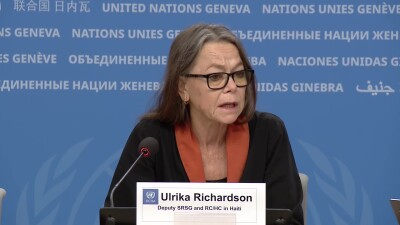
“Para muchos haitianos, la vida diaria es una cuestión de vida o muerte”, dijo Ulrika Richardson, la Coordinadora Residente y Humanitaria de la ONU en el país. Hablando con periodistas en Ginebra, ella pintó un cuadro sombrío de las condiciones actuales en el pequeño estado caribeño, que no ha tenido presidente desde que el último, Jovenel Moïse, fue asesinado en 2021.
“Muchos haitianos se arriesgan enormemente solo al salir de su casa, llevando una vida normal, arriesgándose a ser atrapados en una línea de fuego, ser secuestrados, linchados o violados”, dijo la Sra. Richardson. En los primeros 11 meses de 2023, la Oficina Integrada de las Naciones Unidas en Haití (BINUH) registró 8,000 asesinatos, linchamientos, secuestros y violaciones, a menudo violaciones colectivas que también afectan a niñas jóvenes.
Se estima que 300 pandillas operan en Haití, con los grupos más grandes controlando hasta el 80 por ciento de la capital. La violencia de las pandillas se está extendiendo más allá de Puerto Príncipe a áreas previamente pacíficas en las regiones central y noroeste de Haití, particularmente al Departamento de Artibonito, que solía ser el granero de Haití. El país solía producir todos sus alimentos e incluso exportar algunos. Ahora lucha con una creciente inseguridad alimentaria en medio de una inflación en aumento.
Dos de cada cinco haitianos enfrentan inseguridad alimentaria aguda
En el país de 12 millones de personas, “5.2 millones necesitan asistencia humanitaria. 4.35 millones de haitianos enfrentan inseguridad alimentaria aguda, y esa es una cifra asombrosa”, enfatizó la Sra. Richardson. “Son dos de cada cinco haitianos los que enfrentan inseguridad alimentaria aguda.”
Asesinatos, saqueos, secuestros y violencia sexual generalizada también han alimentado el desplazamiento masivo. “Tenemos 200,000 [personas desplazadas] en el país, 143,000 solo en la capital, lo cual es, por supuesto, un número muy grande”, destacó la Sra. Richardson.
Las necesidades han aumentado, pero la financiación para la ayuda sigue siendo escasa. La Sra. Richardson dijo que el plan de respuesta humanitaria para Haití en 2023 solo está financiado en un 33 por ciento a medida que el año llega a su fin.
Las esperanzas ahora están centradas en el despliegue de una misión multinacional de apoyo a la seguridad en Haití según la resolución 2699 adoptada por el Consejo de Seguridad de la ONU el pasado octubre. Kenia ha acordado liderar esta fuerza armada multinacional y ha prometido 1,000 policías. Su despliegue, potencialmente tan pronto como el primer trimestre de 2024, espera la luz verde del tribunal superior de Kenia.
“Realmente tenemos que abordar esto con un plan integral para ayudar a Haití, para acompañar a Haití en el retorno de las instituciones estatales, el control estatal en muchas de estas áreas donde el estado no está presente. Restablecer los servicios básicos, incluyendo agua y saneamiento, salud y educación, pero también mirando el sistema de justicia y el sistema correccional”, dijo la Sra. Richardson.
Las prisiones en Haití están hasta tres veces por encima de su capacidad, con la mayoría de los reclusos en espera de juicio.
La misión de apoyo para fortalecer la Policía Nacional de Haití tiene la intención de ayudar a restablecer la seguridad en el país para crear las condiciones para la realización de elecciones libres y justas.
“Consideramos que tomará entre 12 y 18 meses organizar una elección. Obviamente, debemos estabilizar la situación de violencia”, concluyó la Sra. Richardson.
Fin
LISTA DE TOMA
- Toma amplia exterior: callejón de banderas de la ONU, Ginebra.
- Toma de recurso: toma amplia, sala de prensa, ONU Ginebra.
- DECLARACIÓN (INGLÉS) Ulrika Richardson, Representante Especial Adjunta del Secretario General para la Oficina Integrada de las Naciones Unidas en Haití (BINUH) y Coordinadora Residente en Haití: “Para muchos haitianos, la vida diaria no solo es una lucha impactante por encontrar comida para poner en la mesa para sus familias, sino que también es una cuestión de vida o muerte. Muchos corren grandes riesgos simplemente al salir de su casa, llevando una vida normal, arriesgándose a ser atrapados en una línea de fuego, a ser secuestrados, a ser linchados, a ser violados. Y muy a menudo eso sucede. De hecho, hemos visto solo en estos primeros 11 meses de 2023, hemos visto 8000 asesinatos, linchamientos, secuestros y violaciones, muy a menudo violaciones colectivas, a menudo dirigidas, por supuesto, a mujeres, pero también a niñas jóvenes.”
- Toma de recurso: toma amplia, sala de prensa con periodistas, ONU Ginebra.
- DECLARACIÓN (INGLÉS) Ulrika Richardson, Representante Especial Adjunta del Secretario General para la Oficina Integrada de las Naciones Unidas en Haití (BINUH) y Coordinadora Residente en Haití: “Haití, de hecho, está cayendo en una crisis muy seria que podemos llamar una crisis de derechos humanos. Podemos llamarla una crisis de protección. En general, simplemente decir que es una crisis multidimensional. De hecho, tiene un impacto en, por supuesto, la situación humanitaria. Hoy tenemos, de hecho, 5.2 millones de haitianos que necesitan asistencia humanitaria. Tenemos 4.35 millones de personas que enfrentan inseguridad alimentaria aguda, y esa es una cifra asombrosa. Son dos de cada cinco haitianos que enfrentan inseguridad alimentaria aguda.”
- Toma de recurso: toma cercana de periodista en la sala de prensa, ONU Ginebra.
- DECLARACIÓN (INGLÉS) Ulrika Richardson, Representante Especial Adjunta del Secretario General para la Oficina Integrada de las Naciones Unidas en Haití (BINUH) y Coordinadora Residente en Haití: “Esto también ha creado una rápida aceleración en términos de personas desplazadas. Tenemos 200,000 en el país, 143,000 solo en la capital, lo cual es, por supuesto, un número muy grande. De hecho, cuando miramos la capital, es la más afectada por la violencia de las pandillas. Consideramos que alrededor del 80 por ciento de la capital está controlada o influenciada por estas pandillas. También consideramos que hay alrededor de 300 pandillas en el país.”
- Toma de recurso: toma amplia, sala de prensa con periodistas, ONU Ginebra.
- DECLARACIÓN (INGLÉS) Ulrika Richardson, Representante Especial Adjunta del Secretario General para la Oficina Integrada de las Naciones Unidas en Haití (BINUH) y Coordinadora Residente en Haití: “También tenemos esta sensación de esperanza y de que las cosas son posibles. De hecho, una gran frustración para la familia de la ONU y también para la comunidad humanitaria en Haití es que no tenemos suficiente financiamiento. Ahora estamos al 33 por ciento en términos de financiamiento para nuestro plan de respuesta humanitaria de este año.”
- Toma de recurso: toma amplia, sala de prensa con periodistas, ONU Ginebra.
- DECLARACIÓN (INGLÉS) Ulrika Richardson, Representante Especial Adjunta del Secretario General para la Oficina Integrada de las Naciones Unidas en Haití (BINUH) y Coordinadora Residente en Haití: “Realmente tenemos que abordar esto con un plan integral para ayudar a Haití, para acompañar a Haití en el retorno de las instituciones estatales, el control estatal en muchas de estas áreas donde el estado no está presente. Restablecer servicios básicos, incluyendo agua y saneamiento, salud y educación, por supuesto, pero también mirando el sistema de justicia y el sistema correccional.”
- Toma de recurso: toma media, sala de prensa con periodistas, ONU Ginebra.
- DECLARACIÓN (FRANCÉS) Ulrika Richardson, Representante Especial Adjunta del Secretario General para la Oficina Integrada de las Naciones Unidas en Haití (BINUH) y Coordinadora Residente en Haití: “On estime que ça va prendre entre 12 et 18 mois pour organiser une élection. Et donc évidemment, Il faut stabiliser la situation de violence.” (Traducción en inglés: Consideramos que tomará entre 12 y 18 meses organizar una elección. Obviamente, debemos estabilizar la situación de violencia.”)
- Varios planos de la sala de conferencias de prensa, ONU Ginebra.
Similar Stories
1
1
1
Edited News | OCHA , UNICEF , WFP
Aid agencies warned on Friday of the fast-developing humanitarian emergency inside Taiz City in Yemen, which has been encircled by de facto Houthi forces fighting government troops along the country’s west coast.

2
17
1
2
Edited News , Press Conferences , Images | OCHA , WMO
Two UN agencies teamed up on Wednesday to issue an appeal for immediate assistance to help communities already being impacted by the strongest El Niño on record.

3
16
2
2
Edited News , B-roll , Conferences , Images | UNITED NATIONS , UNOG
Sixth Consultative Meeting on Enhancing Coordination of Peace Initiatives and Efforts for Sudan

1
1
1
Edited News | UNICEF , WHO , UNHCR
Yemen war continues to force families from homes amid hunger and disease
More than 250,000 people have now fled renewed fighting in Yemen, the UN said on Tuesday, citing particular concern for those sheltering in the southwestern city of Taiz and the wider governorate, where access is “essentially blocked”.

1
1
1
Edited News | UNICEF
A little over one year since a ceasefire agreement was announced between Hamas fighters and Israel, more than 340 children have been reported killed and hundreds more injured, the UN Children’s Fund, UNICEF, said on Friday.

1
1
1
Edited News | UNICEF , IFRC
Six weeks after Nepal’s deadly flooding disaster, communities are still struggling to rebuild their lives, but they will need sustained help as global warming increases the risk of another Himalayan catastrophe, the UN Children’s Fund (UNICEF) said on Friday.

1
1
1
Edited News | WHO
In suspected Russia plague death, testing and monitoring underway – WHO
The death of a lab worker in Russia’s Siberia region has sparked concerns about plague being the cause, the UN World Health Organization (WHO) said on Tuesday, adding that it was following the situation closely.

1
1
Edited News | OHCHR , UNOG
UN Human Rights Chief Volker Türk on Friday provided and oral update to the 63rd session of the Human rights Council on Ukraine.

1
1
1
Edited News | OHCHR , UNOG
UN Human Rights Chief Volker Türk on Friday provided and oral update to the 63rd session of the Human rights Council on the human rights situation in Haiti.

1
1
1
Edited News | WHO
Repeated delays in bringing lifesaving medicines, prosthetics and more from Israel into Gaza risk having devastating consequences on Palestinians who urgently need them in the wartorn enclave, the UN World Health Organization (WHO) said on Friday. “A truck full of non-priority supplies or the right supplies arriving too late, doesn't save lives. That's the question that actually matters," said Dr Reinhilde Van De Weerdt, WHO Representative in the OPT.

1
1
1
Edited News | WHO
DRC: Early access to care and oxygen decisive for Ebola patients’ survival – WHO
In the Democratic Republic of the Congo (DRC), health workers fighting the country’s largest-ever Ebola outbreak are struggling to overcome critical challenges to patient care, the UN World Health Organization (WHO) warned on Tuesday.

1
1
1
Edited News | OCHA , UN
Civilians in Iran are continuing to feel the consequences of months of conflict and military escalation, the UN’s top official in the country has said, as loss of life, damage to civilian infrastructure and mounting economic pressures leave many facing continued uncertainty.