

The United Nations Office at Geneva
Multimedia Newsroom
Press Conferences , Edited News | UNCTAD
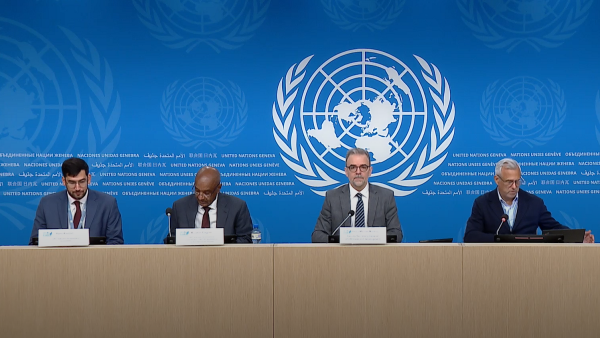
UNCTAD - Press Conference: Report 2025 on developments in the economy of the Occupied Palestinian Territory
A new report by UN Trade and Development (UNCTAD) finds that the prolonged military operation and long-standing restrictions have driven the economy of the Occupied Palestinian Territory into its most severe contraction on record, wiping out decades of development gains and deepening fiscal and social fragility.
The report “Developments in the economy of the Occupied Palestinian Territory” finds that two years of military operations and restrictions have triggered an unprecedented collapse across the Palestinian economy. This has unfolded against a backdrop of long-standing economic and institutional fragility, with severe social and environmental consequences.
Extensive damage to infrastructure, productive assets and public services has reversed decades of socioeconomic progress in the Occupied Palestinian Territory. The resulting economic crisis is among the ten worst globally since 1960; while the situation in Gaza stands apart; being the most severe economic crisis on record.
Meanwhile, plummeting revenues and the withholding of fiscal transfers by the Israeli Government have severely constrained the Palestinian Government’s ability to maintain essential public services and invest in recovery. This comes at a critical time when massive spending is needed to rebuild shattered infrastructure and address worsening environmental and socioeconomic crises.
The escalation has pushed the Occupied Palestinian economy from a prolonged state of decline into a phase of near-total collapse, with deep repercussions across all sectors – economic, social, humanitarian and the environment.
In Gaza, the entire population plunged into multidimensional poverty. The West Bank is undergoing its most severe economic downturn on record, driven by heightened insecurity, movement and access restrictions and the loss of productive opportunities in all sectors of the economy.
By the end of 2024, Palestinian GDP fell back to its 2010 level while GDP per capita returned to that of 2003, erasing 22 years of development progress in less than two years, according to UN Trade and Development (UNCTAD).
Website: https://unctad.org/publication/report-unctad-assistance-palestinian-people-2025
Production Date: 25 November 2025
Creator: UNCTAD / UNTV CH
Subject Topical: Trade and Development
Corporate Name: UNITED NATIONS CONFERENCE ON TRADE AND DEVELOPMENT – UNCTAD
STORY: UNCTAD / Report 2025 on developments in the economy of the Occupied Palestinian Territory
TRT: 04:26
SOURCE: UNCTAD / UNTV CH
RESTRICTIONS: NONE
LANGUAGE: ENGLISH / NATS
DATELINE: 25 NOVEMBER 2025, GENEVA, SWITZERLAND
WEBSITE: https://unctad.org/publication/report-unctad-assistance-palestinian-people-2025
Shotlist
1. Wide shot, Palais des Nations
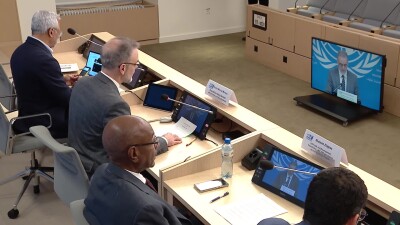
2. Briefing room
3. SOUNDBITE (English) Pedro Manuel Moreno, Deputy Secretary-General, UNCTAD: “The prolonged military operation, combined with long-standing restrictions, has pushed the economy of the occupied Palestinian territory into its deepest decline on record. Much of the infrastructure, productive assets and public services has been damaged or destroyed, wiping out decades of progress.
The result is one of the deepest and worst economic crises seen anywhere in recent decades. The situation in Gaza is especially severe. Gaza is going through the fastest and most damaging economic collapse ever recorded. In 2024, its GDP contracted by 83% compared with 2023. Following another sharp drop the previous year, GDP per capita fell to just $161 — or less than $0.50 per day — among the lowest in the world.”
4. Briefing room
5. SOUNDBITE (English) Pedro Manuel Moreno, Deputy Secretary-General, UNCTAD: “The destruction of infrastructure, the loss of productive capacity and the displacement of the population have caused long-term harm to people and to their ability to earn a living. The West Bank is also facing its worst downturn on record. Rising insecurity, strict movement and access restrictions, and the loss of productive opportunities in many sectors led to a 17% drop in GDP in 2020, and GDP per capita fell by almost 19%.”
6. Medium shot, journalists in the briefing room.
7. SOUNDBITE (English) Pedro Manuel Moreno, Deputy Secretary-General, UNCTAD: “At the same time, the Palestinian government's ability to respond has further weakened. Revenue shortfalls, withheld fiscal transfers and falling external support have put severe pressure on public finances, limiting essential public services. Since October 2023, the fiscal situation has deteriorated sharply, making 2024 one of the hardest years the government has faced. Under these stresses, urgent and steady international financial support is needed to stabilize public finances, protect key institutions and create the conditions for recovery and reconstruction.”
8. Medium shot, journalists in the briefing room.
9. SOUNDBITE (English) Pedro Manuel Moreno, Deputy Secretary-General, UNCTAD: “Our report calls for a comprehensive recovery plan for the occupied Palestinian territory. This includes coordinated international assistance, the restoration of fiscal transfers, and steps to ease restrictions on trade, movement and investment. According to estimates from the UN, the European Union and the World Bank, more than 70 billion USD will be needed to rebuild Gaza. This figure reflects both the scale of destruction and the long path to recovery — even with strong growth and generous aid. But above all, a lasting ceasefire reached in October 2025 is essential for any meaningful recovery. Humanitarian assistance also remains urgent and cannot wait. As our Secretary-General, Rebeca Grynspan, said yesterday, we welcome the Security Council resolution on the comprehensive plan to end the Gaza conflict. This ceasefire offers a critical opportunity not only to end the suffering of millions, but also to begin addressing the economic damage outlined in this report.”
10. Various shots, briefing room
UN Trade and Development (UNCTAD)
Subject:
Report 2025 on developments in the economy of the Occupied Palestinian Territory
Speakers:
- Pedro Manuel Moreno, UN Trade and Development, Deputy Secretary General
- Mutasim Elagraa, UN Trade and Development, Coordinator, UNCTAD Assistance to the Palestinian People
- Rami Alazzeh, UN Trade and Development, Economist
Similar Stories

1
1
1
Press Conferences | UNHCR
End of UNHCR's 77th Annual Executive Committee (ExCom) meeting week

1
1
1
Edited News | UNICEF
A little over one year since a ceasefire agreement was announced between Hamas fighters and Israel, more than 340 children have been reported killed and hundreds more injured, the UN Children’s Fund, UNICEF, said on Friday.

1
1
1
Press Conferences | UNICEF , IOM , UNHCR
UN Special Assistant to the Personal Envoy Office (SUDAN): Peace Initiatives and Efforts in Sudan; UNICEF: Dire situation of children in Gaza; IOM: Damaged Homes and Energy Attacks Risk Displacing Ukrainians for this winter; UNHCR: update on EXCOM week

1
1
1
Press Conferences | IOM , UNDRR
UN stresses importance of household preparedness for disaster risk reduction.

1
1
1
Edited News | UNICEF , IFRC
Six weeks after Nepal’s deadly flooding disaster, communities are still struggling to rebuild their lives, but they will need sustained help as global warming increases the risk of another Himalayan catastrophe, the UN Children’s Fund (UNICEF) said on Friday.

1
1
1
Statements , Press Conferences | OHCHR

1
1
1
Press Conferences | UNHCR , UNICEF , IFRC , OHCHR , UN WOMEN , IOM , OCHA , WHO
UNHCR – ExCom Meeting, UNICEF – Nepal Recovery, IFRC – Flash Floods, WHO – Mental Health, IOM – South Sudan Floods, OCHA – DRC Humanitarian aid, UNHCR – Sahel Displacement, UNICEF – Yemen Update, IOM – Gaza Shelter, UN Women – Gaza Women, OHCHR – Arrests and detentions of Syrians by Israeli force

2
1
2
Press Conferences | UNCTAD
Presentation of the Trade and Developement Report 2026
Embargoed until 9 October 2026 at 11 a.m. (Geneva Time)
UNCTAD: UNCTAD’s flagship report finds that governments increasingly use industrial, trade, financial and technology policies to pursue economic and national security objectives. Market access and the ability to move into higher-value activities now depend more heavily on technology, finance and geopolitics.
1
1
1
Press Conferences | UPU
Release of the State of the Postal Sector Report 2026

1
1
1
Edited News | WHO
In suspected Russia plague death, testing and monitoring underway – WHO
The death of a lab worker in Russia’s Siberia region has sparked concerns about plague being the cause, the UN World Health Organization (WHO) said on Tuesday, adding that it was following the situation closely.
1
1
1
Press Conferences | IOM , ITU , UNECE , UNICEF , WHO , WMO
UNICEF: Ebola, DRC - children orphans or separating them from parents and caregivers; IOM: Humanitarian needs in Djibouti amid arrivals from Yemen and increased migrant movements; WHO: Darfur, scale of health needs far exceeds available resources; WMO co-sponsored Global Heat Forum, Bangkok, monthly Global Seasonal Climate Update; UNECE: UN Forum of Mayors; ITU Plenipotentiary Conference 2026; WHO: child and adolescent obesity guidelines and new global roadmap to tackle pregnancy hypertension, a leading cause of maternal mortality

1
1
Edited News | OHCHR , UNOG
UN Human Rights Chief Volker Türk on Friday provided and oral update to the 63rd session of the Human rights Council on Ukraine.