

The United Nations Office at Geneva
Multimedia Newsroom
UN INFORMATION SERVICE GENEVA PRESS BRIEFING
6 March 2026
Conflict in the Middle East
Dr. Hanan Balkhy, World Health Organization (WHO) Regional Director for the Eastern Mediterranean, speaking from Cairo, said that today, 115 million people across the Eastern Mediterranean Region required humanitarian assistance, roughly half of global humanitarian needs. Across the Region, fourteen WHO-graded health emergencies were ongoing, including seven at the highest level. Eighty million people faced food insecurity, and 40 disease outbreaks were currently active. In recent days, more than 1,000 people had reportedly been killed and more than 7,000 injured, but the public health consequences extended far beyond immediate casualties. Hospitals were managing surges in trauma cases while facing disruptions to supplies, staff safety and access to care. One of WHO’s most immediate concerns was the disruption of humanitarian health supply chains. After a temporary pause, the WHO’s Hub for Global Health Emergencies Logistics was resuming operations today. The Government of the United Arab Emirates, in coordination with the World Food Programme and Dubai Humanitarian, confirmed that it stood ready to facilitate urgent humanitarian shipments.
In Iran, informed Dr. Balkhy, national authorities reported more than 925 deaths and more than 6,100 injuries; 14 attacks on health care had occurred since 28 February, resulting in four deaths among health workers. Hospitals remained operational and emergency services had expanded trauma capacity. In Lebanon, the humanitarian situation was deteriorating rapidly. Since 2 March, at least 683 injuries and 123 deaths had been reported. Nearly 96,000 people were currently displaced in more than 440 shelters. Several health facilities had closed due to evacuation orders in their areas, including 43 primary health care centres and two hospitals, further limiting access to care. In Gaza, Dr. Balkhy said, the health system remained extremely fragile. Stocks of essential medicines, trauma supplies and surgical consumables were critically low, while fuel shortages continued to constrain hospital operations. Medical evacuations through Rafah and Kerem Shalom had been suspended since 28 February, leaving many patients without access to specialized care outside Gaza.
WHO urgently needed greater access for humanitarian aid, including medicines, food and fuel, and the ability for patients to be evacuated to the West Bank and East Jerusalem for treatment. Above all, what people in Gaza needed most was sustained, lasting peace. Some USD 690 million would be needed to sustain WHO’s emergency operations across the Eastern Mediterranean Region in 2026—an estimate made before the current escalation, but the response remained 70 per cent underfunded.
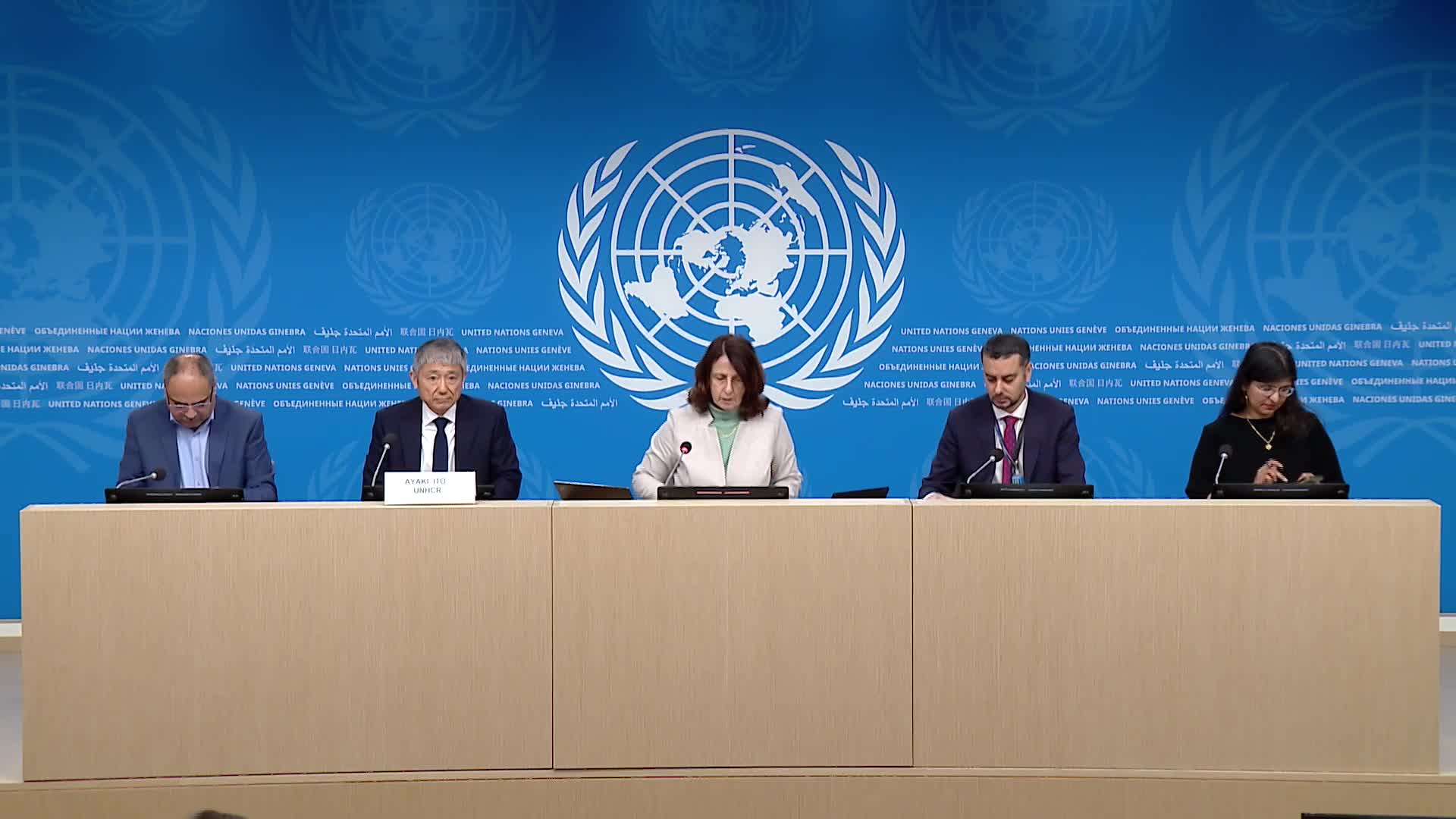
Ayaki Ito, United Nations Refugee Agency (UNHCR) Director of Emergency and Programme Support and the Cross‑Regional Refugee Coordinator, said that UNHCR declared the escalating crisis in the Middle East as a major emergency, as it had triggered significant population movements. The affected region had already hosted 25 million people as refugees. UNHCR would coordinate the refugee response on behalf of the humanitarian community, and efforts were underway to provide assistance in all affected countries. Within Iran, there had already been a large number of Afghan and Iraqi refugees for decades. In the aftermath of the 12-day war in 2025, many Afghans had returned from Iran to Afghanistan, putting an additional pressure on their fragile country. UNHCR staff in Iran were receiving some 250 calls per day and UNHCR centres were still operational. There was no major movement of Iranians fleeing Iran into any neighbouring countries, and UNHCR was on the ground and continued to monitor the situation. In Lebanon, the situation was deteriorating, with evacuation orders from the south of the country. Some 96,000 people were currently sheltered in over 400 collective shelters, but there were many others moving to the north and looking for safety. Syrian refugees residing in Lebanon were also returning to their country, with over 30,000 returns observed recently, along with some Lebanese crossing into Syria. UNHCR remained concerned about the conflict between Pakistan and Afghanistan, which was leading to an increased return of Afghan refugees to their country, putting an additional strain on their country.
Mohammedali Abunajela, for the International Organization for Migration (IOM), said that escalating violence across the Middle East, particularly in Iran, was raising serious concerns about further civilian suffering and displacement in a region that was already facing immense humanitarian pressures. Populations movements illustrated how instability in one country could rapidly generate displacement across borders. At the same time, widespread airspace closures and disruptions to maritime routes, particularly through the Strait of Hormuz, a critical maritime route for global trade and food supply, translated almost immediately into higher freight rates, increased fuel costs, and delays in the movement of life‑saving assistance. Prior to this conflict, said Mr. Abunajela, already 19 million people had been displaced. Any further escalation would trigger further displacement. People forced to flee required urgent support, and IOM teams were present across the region and coordinating with other humanitarian partners. De-escalation was necessary; international law had to be respected to avoid further human suffering.
Mathieu Luciano, Chief of Mission for the International Organization for Migration (IOM) in Lebanon, connecting from Beirut, stated that the situation in Lebanon had deteriorated rapidly on 5 March with Israeli air force attacks on the southern suburbs of Beirut and the Bekaa. IDF had issued evacuation orders for many villages in the south of Lebanon, the southern suburbs of Beirut, and the Bekaa valley. Some 469 collective centres were now hosting close to 100,000 displaced people, with many people also displaced outside of these collective shelters. The Ministry of Public Health had reported 123 deaths and 683 injuries. There was an increased number of patients with injuries, and the health system needed support. IOM had scaled up its humanitarian response, along with its humanitarian partners. IOM was also collecting data on internal displacement, which was difficult to measure given the fluid, rapidly changing situation. Diplomatic efforts were continuing, with the aim of deescalating the situation and decreasing human suffering.
Ann Kathrin Schaefer, Deputy Director Department of humanitarian response and recovery with the International Organization for Migration (IOM), stressed that the Strait of Hormuz was one of the world’s most critical maritime chokepoints: nearly one fifth of global oil trade and large volumes of commercial goods passed through it every day. Any disruption there can quickly tighten global energy and humanitarian supply chains, raise transport and insurance costs, and potentially push oil prices or make them unpredictable. For humanitarian agencies, this would translate into higher freight rates. Dubai was a major logistics hub for IOM, including for armoured vehicles and emergency stocks serving operations across Africa and the wider region. Major carriers had introduced additional charges, significantly increasing the cost of transport. Any further instability in the Red Sea would further affect availability of aid in Sudan, which was particularly exposed. IOM was closely monitoring the situation and actively looking for alternative routes for the Middle East and the wider region, including the African continent. The conflict in the Middle East had repercussions beyond the region, she stressed.
Full briefing note from IOM is here.
Ravina Shamdasani, for the Office of the High Commissioner for Human Rights (OHCHR), stated that Israel’s military ground incursions into southern Lebanon, blanket displacement orders for the population in Beirut’s southern suburbs, the Bekaa region and the full area to the south of the Litani river, and its continued airstrikes on different parts of the country, were bringing more misery and suffering to an already weary civilian population. Hundreds of thousands had now been affected by these Israeli displacement orders. Their breadth made them very difficult for the population to comply with and therefore brings into question their effectiveness, a requirement under international humanitarian law, and risked amounting to prohibited forced displacement. The devastating impact of this renewed conflict was already visible, with civilians paying a painfully heavy price: in an Israeli attack on 4 March, striking a residential building in Baalbek, at least eight people, including three girls and two women, had been reportedly killed. Another strike on 5 March had hit a building in Nabatyeh district, reportedly killing a family of four. Prompt and thorough investigations had to be conducted. At the same time, Hezbollah had continued launching barrages of rockets into Israel, striking residential areas in the north and the centre of the country, with at least three people reportedly injured, raising concerns, once again, about indiscriminate attacks against civilians. OHCHR urged the parties to step back from the brink of a major escalation of this conflict in Lebanon.
Full statement is available here.
Alessandra Vellucci, for the UN Information Service (UNIS), said that Tom Fletcher, the UN Emergency Coordinator, would be a guest at the UN Spokesman’s Noon Briefing.
Responding to questions, Babar Baloch, for UNHCR, said that Lebanon used to host over one million Syrian refugees before the current conflict. The national authorities in Lebanon had provided a figure of almost 100,000 people currently in collective shelters, but the numbers were rapidly changing as the situation was fluid. Mathieu Luciano, for IOM, stressed that the situation was changing rapidly, and there were many people outside of collective shelters, who were instead staying with their families and friends, or just sleeping outside on Beirut streets. He specified that some half a million people lived in the south of Lebanon, while some 500,000 to 700,000 people were believed to live in the southern parts of Beirut. Dr. Balkhy, for WHO, raised concern over the spread of infectious diseases in Lebanon. She said that more than 50 emergency supply requests had been affected by the closure of the airspace and the Strait of Hormuz. WHO was looking into alternative options in cooperation with partners. She stressed the importance of keeping open the airspace over Dubai, a major humanitarian hub.
On the funding, Mr. Baloch informed that for 2026, UNHCR needed USD 454 million for its Afghanistan response, which was 15 percent funded. With the rapidly changing scenario, all humanitarian agencies would be adjusting their estimated. He focused on the plight of Afghans, many of whom had now been displaced multiple times, fleeing from one crisis to another, and back. Ms. Schaefer, for IOM, said that USD 3.4 million was needed to properly run the displacement matrix across the entire region. Mr. Luciano, also for IOM, stressed that the capacity of IOM and other UN agencies to quickly move resources was limited given significant funding and staffing cuts experienced over the past year. Dr. Balkhy, for WHO, informed that WHO needed USD 690 million for the Eastern Mediterranean response 2026, and that figure was before the ongoing escalation. Because of the funding cuts, WHO had lost some 30 percent of emergency response staff in the region. The worst-case scenario, which Dr. Balkhy hoped would not happen, included chemical, biological or nuclear weapons, but WHO had protocols in place if such terrific warfare were to take place. Ms. Shamdasani, for OHCHR, said that the focus was rightly on the crisis in the Middle East, but other crises ought not be forgotten. Nearly half of Afghanistan’s population, 22 million people, needed humanitarian aid, she said. Those people were caught between a rock and a hard place, with increasing return from Iran, and the vicious cycle of violence and retaliation between Pakistan and Afghanistan.
Responding to a further question from the media on aid distribution to Sudan, Ms. Schaefer, for IOM, said that all traffic by sea had significantly slowed down, which was adversely affecting the supply chain. Rainy season was just around the corner, and if supplies were not distributed to Darfur in next six to eight weeks, it would be hard to do it afterwards. Regarding medical evacuations from Gaza, Dr. Balkhy, for WHO, said that most crossings into Gaza remained closed, restricting humanitarian aid and medical evacuations. On 4 March, WHO had delivered limited medical aid to Gaza through Kerem Shalom. She stressed the importance of allowing fuel into Gaza, which was necessary for hospitals to operate. Currently, 18 of the 36 hospitals in Gaza were not functional. Some 46 percent of essential medicine and 66 percent of medical consumables were now at zero stock, stressed Dr. Balkhy. Polio remained a public health threat, she said. Mr. Luciano, for IOM, on another question, said that more temporary shelters were to be open in Lebanon.
Announcements
Alessandra Vellucci, for the UN Information Service (UNIS), informed that today at 3:30 pm, the Inter-Parliamentary Union would present its new report on women in parliament. Speakers would be Martin Chungong, IPU Secretary General, and Mariana Mutzenberg, IPU gender programme.
On 10 March at 2 pm, the Group of Human Rights Experts on Nicaragua would hold a press conference to present their latest report.
On 12 March at 1 pm, the Independent International Commission of Inquiry on Ukraine would present its latest report.
On 12 March at 2:30 pm, Ben Saul, Special Rapporteur on the promotion and protection of human rights and fundamental freedoms while countering terrorism, would hold a press conference on “Counter-terrorism abuses challenging the international order.”
On 13 March at 9:30 am, the UN Special Rapporteur on the situation of human rights in Myanmar, Tom Andrews, would present his latest report.
The Human Right Committee was concluding this morning its review of the report of Chad.
The Committee on Enforced Disappearances would open on 9 March at 10 am its 30th session during which it would review the reports of Samoa, Malawi, and Ecuador. In the morning of 11 March, the Committee would also have a public dialogue with Iraq under article 29(4) of the Convention.
The Committee on the Rights of Persons with Disabilities would also open on 9 March at 10 am its 34th session, during which it would review the reports of Lesotho, Pakistan, Samoa, Marshall Islands, and Liberia, At noon, on 19 March, the Committee would meet in public to mark the World Down Syndrome Day.
The Conference on Disarmament would hold its next meeting on 10 March at 10 am.
UNHCR Babar Baloch (PR) with with Ayaki Ito, UNHCR’s Director of Emergency and Programme Support and the Cross‑Regional Refugee Coordinator (PR)
- UNHCR in emergency mode as humanitarian emergency unfolds in Middle East
WHO Tarik Jašarević (Zoom) with Dr Hanan Balkhy, WHO Regional Director for the Eastern Mediterranean (From Cairo)
· The impact of the recent escalation on the health situation in the Eastern Mediterranean Region
OHCHR Ravina Shamdasani (PR)
· Recent developments in Lebanon
IOM Mohammedali Abunajela (PR) with Ann Katherin Schaefer, Deputy Director Department of humanitarian response and recovery (Zoom), Mathieu Luciano, Chief of Mission Lebanon (From Beirut)
· Middle East Crisis
Similar Stories
1
1
1
Press Conferences | UNHCR
End of UNHCR's 77th Annual Executive Committee (ExCom) meeting week
1
1
1
Press Conferences | UNICEF , IOM , UNHCR
UN Special Assistant to the Personal Envoy Office (SUDAN): Peace Initiatives and Efforts in Sudan; UNICEF: Dire situation of children in Gaza; IOM: Damaged Homes and Energy Attacks Risk Displacing Ukrainians for this winter; UNHCR: update on EXCOM week

1
1
1
Press Conferences | IOM , UNDRR
UN stresses importance of household preparedness for disaster risk reduction.

1
1
1
Statements , Press Conferences | OHCHR

1
1
1
Press Conferences | UNHCR , UNICEF , IFRC , OHCHR , UN WOMEN , IOM , OCHA , WHO
UNHCR – ExCom Meeting, UNICEF – Nepal Recovery, IFRC – Flash Floods, WHO – Mental Health, IOM – South Sudan Floods, OCHA – DRC Humanitarian aid, UNHCR – Sahel Displacement, UNICEF – Yemen Update, IOM – Gaza Shelter, UN Women – Gaza Women, OHCHR – Arrests and detentions of Syrians by Israeli force

2
1
2
Press Conferences | UNCTAD
Presentation of the Trade and Developement Report 2026
Embargoed until 9 October 2026 at 11 a.m. (Geneva Time)
UNCTAD: UNCTAD’s flagship report finds that governments increasingly use industrial, trade, financial and technology policies to pursue economic and national security objectives. Market access and the ability to move into higher-value activities now depend more heavily on technology, finance and geopolitics.

1
1
1
Press Conferences | UPU
Release of the State of the Postal Sector Report 2026
1
1
1
Press Conferences | IOM , ITU , UNECE , UNICEF , WHO , WMO
UNICEF: Ebola, DRC - children orphans or separating them from parents and caregivers; IOM: Humanitarian needs in Djibouti amid arrivals from Yemen and increased migrant movements; WHO: Darfur, scale of health needs far exceeds available resources; WMO co-sponsored Global Heat Forum, Bangkok, monthly Global Seasonal Climate Update; UNECE: UN Forum of Mayors; ITU Plenipotentiary Conference 2026; WHO: child and adolescent obesity guidelines and new global roadmap to tackle pregnancy hypertension, a leading cause of maternal mortality
1
1
1
Press Conferences | OCHA , UN WOMEN , UNHCR , WFP , WHO , WTO , UNEP
OCHA – $160M CERF allocation to 12 underfunded crises; UNHCR – 5.8M refugee children remain out of school amid funding cuts; UN Women – Middle East escalation and food security among women/girls; WHO – Gaza supplies and overall situation; WFP – Yemen food insecurity and impact on global hunger ; UNEP - First International Conference of the Global Framework on Chemicals in Geneva | 16-20 November 2026
1
1
1
Press Conferences | UNHCR , WHO
Yemen's health system nears collapse amid conflict, causing rising casualties and medicine shortages.
1
1
1
Press Conferences | HRC
Update by the Expert Mechanism to Advance Racial Justice and Equality in Law Enforcement
1
1
1
Press Conferences | WIPO , WHO , UNICEF , UNHCR , IOM , WFP , FAO
WIPO Global Innovation Index 2026 launch and press conference, WHO Composition of influenza vaccines for the 2027 Southern Hemisphere flu season, UNICEF Yemen hunger and malnutrition; UNHCR Sudan displacement into Chad; IOM Ebola and population movements in DRC; WFP emergency food assistance in Nepal; and FAO food loss and waste.