

The United Nations Office at Geneva
Multimedia Newsroom
Statements , Conferences , Edited News | HRC
38th Special Session of the HRC on Sudan's El Fasher
UN Human Rights Council holds special session on Sudan as mass atrocities reported in El Fasher
The UN Human Rights Council convened an emergency session on Friday on the situation in and around El Fasher, Sudan, following reports of mass killings in the North Darfur capital. States passed a resolution that will mandate an investigation into likely mass atrocities during the capture of El Fasher by the paramilitary Rapid Support Forces (RSF) on 26 October.
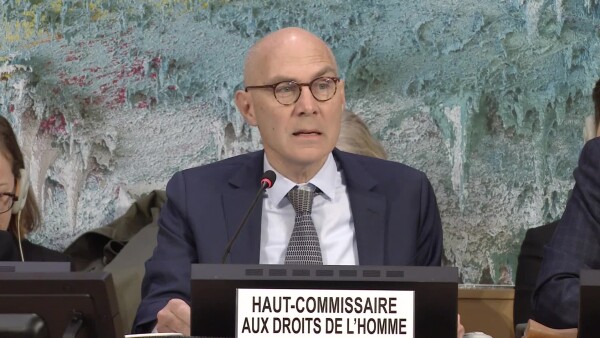
Addressing the Council in Geneva, the UN High Commissioner for Human Rights urged the international community to take immediate action, after repeated warnings from his Office. “Bloodstains on the ground in El Fasher have been photographed from space. The stain on the record of the international community is less visible, but no less damaging,” Volker Türk told delegates. He was referring to satellite imagery showing discolorations on the sand in El Fasher that Yale University’s Humanitarian Research Lab identified as bloodstains.
After a 500-day siege, RSF militia captured the North Darfur city amid credible accounts of widespread atrocities including summary executions, ethnically motivated killings, sexual violence, abductions and deliberate attacks on civilians. Women fleeing the city reported systematic rape, while civilians were shot in the streets and targeted by drones. The UN human rights office, OHCHR, condemned the reported mass killings and use of rape as a weapon of war.
Those atrocities in El Fasher were foreseen and preventable, according to the UN rights chief. “But they were not prevented,” he said. “They constitute the gravest of crimes. My Office has issued more than 20 statements on El Fasher alone over the past year, based on information verified by our team. We warned about the spread of famine, as people starved to death. And we warned that the fall of the city to the Rapid Support Forces would result in a bloodbath.”
Fighting in Sudan broke out in April 2023 between the Sudanese Armed Forces (SAF) and the paramilitary Rapid Support Forces (RSF) after the collapse of a fragile transition to civilian rule that began with the ousting of long-time leader Omar al-Bashir four years earlier. The war has devastated communities, displaced about 14 million people and triggered the world worst humanitarian crisis, with famine confirmed in conflict-hit locations that have been cut off from humanitarian assistance.
Out of Sudan’s 18 states, the RSF controls five in the Darfur region. The Sudanese army holds most of the remaining 13 states across the south, north, east and central regions, including Khartoum, the capital. But in the south-central Sudanese region of Kordofan which borders Darfur, the fighting is increasing. “All the signs are there: bombardments, blockades, people forced from their homes, a despicable disregard for civilian lives,” said Mr. Turk. “Kordofan must not suffer the same fate as Darfur.”
The Human Rights Council also condemned all forms of external interference that are fuelling the conflict.
In his call to the international community, Mr. Türk urged “everyone with influence to stand up for international law. That means advocating for an urgent referral by the Security Council of the situation in the entire country to the International Criminal Court. And it means making the arms embargo a reality.”
His call for accountability and justice was echoed by Mona Rishmawi, member of the Independent International Fact-Finding Mission for the Sudan, who detailed accounts of atrocities and torture and urged for a thorough investigation to establish the full extent of the violations. “Those who back, finance and arm this machinery of brutality have the power and the duty to halt it. States with influence bear particular responsibility. The individuals and entities behind these crimes must face justice,” she insisted.
The Fact-Finding Mission will also seek to identify all those who are responsible for alleged violations and abuses of international human rights law in and around El Fasher and will support efforts to ensure that the perpetrators of alleged abuses and violations are held accountable.
Hassan Hamid Hassan, Permanent Representative of Sudan to the United Nations Office at Geneva, accused the RSF of terrorism. “How long will the international community wait before classifying this entity as a terrorist entity?” he asked.
The special session on Sudan was convened at the official request of the UK, jointly with Germany, Ireland, Netherlands and Norway. The adopted resolution also demands unfettered humanitarian access and calls upon all parties to allow lifesaving aid to reach the many people – and potentially tens of thousands - who may still be trapped inside El Fasher.
Kumar Iyer, Permanent Representative of the UK to the UN in Geneva, emphasized the fact-finding mission’s work will be vital to document the truth and preserve the possibility of justice and reconciliation. “The Council must deliver a clear message. Impunity will not be tolerated and the international community stands ready to act. This war must end,” he insisted.
Ends
Story: “HRC Special session on Sudan” – Friday 14 November 2025
Speakers:
- Volker Türk, UN High Commissioner for Human Rights
- Mona Rishmawi, member of the Independent International Fact-Finding Mission for the Sudan
- Hassan Hamid Hassan, Permanent Representative of Sudan to the United Nations Office at Geneva (as country concerned)
- Kumar Iyer, Permanent Representative of the UK to the United Nations Office at Geneva (as country who requested special session)
TRT: 03’03”
SOURCE: UNTV CH
RESTRICTIONS: NONE
LANGUAGE: ENGLISH and ARABIC / NATS
ASPECT RATIO: 16:9
DATELINE: 14 November 2025 - GENEVA, SWITZERLAND
Human Rights Council special session on Sudan – UNOG - Geneva Assembly Hall
SHOTLIST
- Exterior medium shot: UN flag alley.
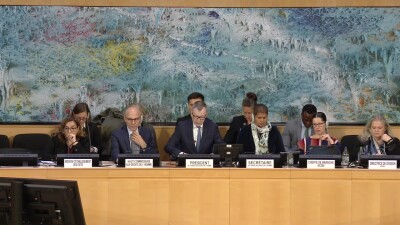
- Wide shot of the Assembly Hall.
- SOUNDBITE (English) Volker Türk, UN High Commissioner for Human Rights: “Bloodstains on the ground in El Fasher have been photographed from space. The stain on the record of the international community is less visible, but no less damaging.”
- Cutaway: wide shot of the Assembly Hall.
- SOUNDBITE (English) Volker Türk, UN High Commissioner for Human Rights: “The atrocities that are unfolding in El Fasher were foreseen and preventable – but they were not prevented. They constitute the gravest of crimes. My Office has issued more than 20 statements on El Fasher alone over the past year, based on information verified by our team.”
- Cutaway: medium shot of the Assembly Hall and delegates.
- SOUNDBITE (English) Volker Türk, UN High Commissioner for Human Rights: “We warned about the spread of famine, as people starved to death. And we warned that the fall of the city to the Rapid Support Forces would result in a bloodbath.”
- Cutaway: medium shot of videographers filming inside the Assembly Hall.
- SOUNDBITE (English) Volker Türk, UN High Commissioner for Human Rights: “I must issue another stark warning about surging violence in Kordofan. All the signs are there: bombardments; blockades; people forced from their homes; a despicable disregard for civilian lives. Kordofan must not suffer the same fate as Darfur.”
- Cutaway: Speakers at the podium in the Assembly Hall.
- SOUNDBITE (English) Volker Türk, UN High Commissioner for Human Rights: “I urge everyone with influence to stand up for international law. That means advocating for an urgent referral by the Security Council of the situation in the entire country to the International Criminal Court. And it means making the arms embargo a reality.”
- Cutaway: Speakers at the podium in the Assembly Hall.
- SOUNDBITE (English) Mona Rishmawi, member of the Independent International Fact-Finding Mission for the Sudan: “Those who back, finance and arm this machinery of brutality have the power and the duty to halt it. States with influence bear particular responsibility. The individuals and entities behind these crimes must face justice.”
- Cutaway: Assembly Hall podium and screen with speakers.
- SOUNDBITE (Arabic) Hassan Hamid Hassan, Permanent Representative of Sudan to the United Nations Office at Geneva: “This brutal militia has met all the criteria defining a terrorist entity. All definitions of terrorism found in all dictionaries apply to it. How long will the international community wait before designating this entity as a terrorist organization?"
- Cutaway: very wide shot of the Assembly Hall.
- SOUNDBITE (English) Kumar Iyer, Permanent Representative of the UK to the United Nations Office at Geneva: “We urge this Council to support a strong resolution that condemns the atrocities, demands unfettered humanitarian access and mandates an urgent inquiry by the Fact-Finding Mission. The Fact-Finding Mission's work is vital to document the truth and preserve the possibility of justice and reconciliation. The Council must deliver a clear message. Impunity will not be tolerated and the international community stands ready to act. This war must end.”
- Wide shot of the Assembly Hall.
CONTINUITY -- 38th special session on the human rights situation in and around El Fasher, in the context of the ongoing conflict in the Sudan
Speakers
- Volker Türk, UN High Commissioner for Human Rights
- Adama Dieng, Special Envoy of the African Union on the prevention of genocide and mass atrocities (video statement)
- Surya Deva, Chair of the Coordination Committee of the Special Procedures of the Human Rights Council (video statement)
- Mona Rishmawi, Member of the Independent International Fact-Finding Mission for the Sudan
- Niemat Ahmedib, President of the Darfur Women Action Group (video statement)
- Hassan Hamid Hassan, Permanent Representative of Sudan to the UN Office at Geneva (country concerned)
- Kumar Iyer, Permanent Representative of the United Kingdom to the UN Office at Geneva, on behalf of a group of countries
The video includes four audio tracks: first track Interlingua (= floor), second track English, third track French and fourth track Arabic.
Similar Stories

1
1
1
Edited News | UNICEF , IFRC
Six weeks after Nepal’s deadly flooding disaster, communities are still struggling to rebuild their lives, but they will need sustained help as global warming increases the risk of another Himalayan catastrophe, the UN Children’s Fund (UNICEF) said on Friday.

1
1
1
Statements , Press Conferences | OHCHR

1
1
1
Edited News | WHO
In suspected Russia plague death, testing and monitoring underway – WHO
The death of a lab worker in Russia’s Siberia region has sparked concerns about plague being the cause, the UN World Health Organization (WHO) said on Tuesday, adding that it was following the situation closely.

1
1
Edited News | OHCHR , UNOG
UN Human Rights Chief Volker Türk on Friday provided and oral update to the 63rd session of the Human rights Council on Ukraine.
2
1
2
Statements , Conferences | HRC , OHCHR
Interactive dialogue with the High Commissioner for Human Rights, Volker Türk on the oral update on Ukraine.

1
1
1
Edited News | OHCHR , UNOG
UN Human Rights Chief Volker Türk on Friday provided and oral update to the 63rd session of the Human rights Council on the human rights situation in Haiti.

1
1
1
Edited News | WHO
Repeated delays in bringing lifesaving medicines, prosthetics and more from Israel into Gaza risk having devastating consequences on Palestinians who urgently need them in the wartorn enclave, the UN World Health Organization (WHO) said on Friday. “A truck full of non-priority supplies or the right supplies arriving too late, doesn't save lives. That's the question that actually matters," said Dr Reinhilde Van De Weerdt, WHO Representative in the OPT.

1
1
1
Edited News | WHO
DRC: Early access to care and oxygen decisive for Ebola patients’ survival – WHO
In the Democratic Republic of the Congo (DRC), health workers fighting the country’s largest-ever Ebola outbreak are struggling to overcome critical challenges to patient care, the UN World Health Organization (WHO) warned on Tuesday.

1
1
1
Edited News | OCHA , UN
Civilians in Iran are continuing to feel the consequences of months of conflict and military escalation, the UN’s top official in the country has said, as loss of life, damage to civilian infrastructure and mounting economic pressures leave many facing continued uncertainty.
1
1
1
Edited News | WHO , UNICEF
Aid agencies in Yemen highlighted the growing hunger emergency sparked by renewed fighting between Houthi opposition forces and Government troops, after mobile health clinics reported that hundreds of children displaced by the violence are suffering from the most deadly form of malnutrition.
1
1
1
Edited News | UNHCR
Displacement on the rise in Yemen as fighting continues - UNHCR
As hostilities worsen in Yemen, more people have been fleeing their homes, further intensifying the humanitarian crisis within the region, the UN Refugee Agency (UNHCR) warned on Tuesday.
1
1
1
Statements , Conferences | HRC , OHCHR
Interactive dialogue on the oral update of the Independent International Commission of Inquiry on Ukraine at the 63rd regular session of the Human Rights Council