

The United Nations Office at Geneva
Multimedia Newsroom
Protéger les Soudanais épuisés par la guerre d'une deuxième épidémie mortelle de choléra s'avère être un énorme défi pour les équipes d'aide après plus de 16 mois de combats intenses, combinés à des inondations et des obstacles d'accès continus, ont-ils rapporté vendredi.
“Les besoins sont énormes au Soudan; nous parlons de personnes mourant de faim, nous avons des conflits, nous avons des problèmes de protection, nous avons des déplacements quotidiens; les besoins sont tout simplement énormes,” a déclaré Kristine Hambrouck, Représentante du HCR au Soudan.
La responsable du HCR a souligné la difficulté de tenter de faire face à cette dernière urgence au Soudan, où les combats entre militaires rivaux ont éclaté en avril 2023 à propos d'une transition proposée vers un régime civil, après un coup d'État militaire en 2021 et le renversement en 2019 du président de longue date Omar Al-Bashir.
“C'est juste un (défi), un de plus parmi tous les autres auxquels nous devons d'une manière ou d'une autre donner la priorité et nous assurer que des investissements sont réalisés,” a-t-elle déclaré.
Parlant par vidéo depuis Port-Soudan, Mme Hambrouck a souligné l'impact du choléra sur les communautés déplacées et réfugiées dans l'État de Kassala, qui a vu 119 cas de choléra dans trois sites de réfugiés, et cinq décès de réfugiés dus à la maladie à ce jour.
Réponse au choléra au Soudan – OCHA, UNHCR, OMS
TRT: 3 min 44s
SOURCE: UNTV CH
RESTRICTIONS: AUCUNE
LANGUE: ANGLAIS / NATS
FORMAT D'IMAGE: 16:9
DATE: 23 AOÛT 2024 GENÈVE, SUISSE
LISTE DE PLANS
- Vue extérieure: Allée des drapeaux de l'ONU à Genève.
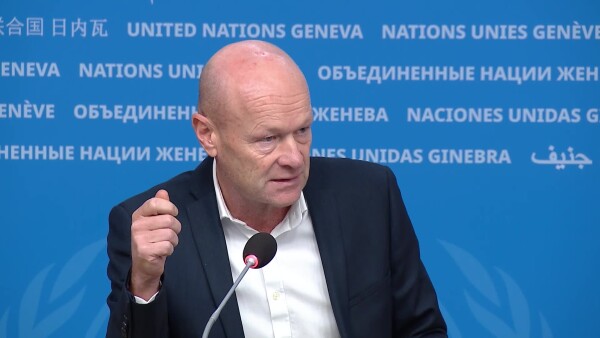
- Vue large, salle de presse de l'ONU à Genève, orateurs au podium et journalistes.
- EXTRAIT SONORE (Anglais) – Kristine Hambrouck, Représentante du HCR au Soudan (depuis Port-Soudan) : « Nous avons observé un nombre assez important de cas de choléra à Kassala ; Kassala est une zone importante pour nous, elle accueille un grand nombre de réfugiés, mais aussi des déplacés internes. Jusqu'à présent, nous avons 119 cas de choléra dans trois sites de réfugiés à Kassala et cinq réfugiés sont malheureusement décédés de la maladie. »
- Vue moyenne-large, journalistes et écrans de télévision montrant l'orateur externe.
- EXTRAIT SONORE (Anglais) – Kristine Hambrouck, Représentante du HCR au Soudan (depuis Port-Soudan) : « Vous pouvez imaginer les camps de réfugiés, les sites de déplacement où les gens vivent les uns sur les autres, ils sont extrêmement surpeuplés avec les mouvements des Soudanais (et) aussi des réfugiés de Khartoum, de Wad Madani, des Darfours vers l'est jusqu'à Kassala ; toutes ces zones sont devenues extrêmement surpeuplées, les systèmes d'eau en place n'ont pas la capacité de répondre, il faut vraiment des investissements massifs. »
- Vue moyenne, orateur au podium, écrans de télévision montrant l'orateur externe.
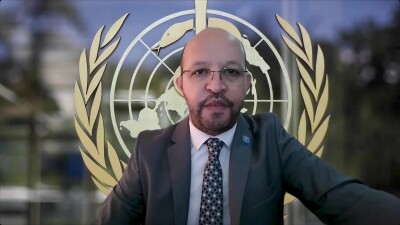
- EXTRAIT SONORE (Anglais) – Dr Shible Sahbani, Représentant de l'OMS au Soudan (depuis Port-Soudan) : « Sur le terrain, nous faisons encore face à certains obstacles et défis, soit parce qu'il y a une mauvaise communication entre les décideurs et ceux qui sont sur le terrain, soit en raison d'autres problèmes. Bien sûr, cela s'ajoute à d'autres défis dus aux inondations et à la qualité des routes. »
- Vue moyenne-large, journalistes, participants et écrans de télévision avec l'orateur externe.
- EXTRAIT SONORE (Anglais) – Dr Shible Sahbani, Représentant de l'OMS au Soudan (depuis Port-Soudan) : « La campagne de vaccination a déjà commencé et nous avons utilisé les 51 000 doses qui étaient déjà dans le pays. Ainsi, la vaccination dans l'État de Kassala s'est terminée hier. Nous visons à atteindre 97 % de la population cible. Maintenant, la bonne nouvelle, comme je l'ai mentionné, est que nous avons obtenu l'approbation pour recevoir 455 000 doses supplémentaires de vaccin contre le choléra. C'est donc la bonne nouvelle au milieu de cette horrible crise. »
- Vue moyenne-large, journalistes, participants et écrans de télévision avec l'orateur externe.
- EXTRAIT SONORE (Anglais) – Kristine Hambrouck, Représentante du HCR au Soudan (depuis Port-Soudan) : « Je pense que les besoins sont énormes au Soudan ; nous parlons de personnes mourant de faim, nous avons des conflits, nous avons des problèmes de protection, nous avons des déplacements quotidiens ; les besoins sont tout simplement énormes et cela s'ajoute à tous les autres que nous devons en quelque sorte re-prioriser et nous assurer que des investissements sont réalisés. »
- Vue moyenne-large, orateurs au podium, journalistes, participants et écrans de télévision montrant l'orateur.
- EXTRAIT SONORE (Anglais) – Jens Laerke, porte-parole, OCHA : « Les 15 camions qui ont traversé le Soudan depuis le Tchad via le passage d'Adre cette semaine sont un pas dans la bonne direction. Cependant, lutter contre la crise alimentaire croissante au Soudan signifie s'assurer que les camions d'aide peuvent continuer à traverser et garantir un flux régulier de nourriture, de nutrition, d'eau, d'assainissement, d'hygiène et de fournitures médicales d'urgence pour les personnes dans plus d'une douzaine de zones à risque de famine. »
- Vue moyenne-large, salle de presse de l'ONU à Genève.
- EXTRAIT SONORE (Anglais) – Jens Laerke, porte-parole, OCHA : « Certaines de ces fournitures sont des semences pour les agriculteurs au Darfour et je pense que c'est un point important, car ils doivent planter avant la fin de la saison des pluies. Stimuler la production alimentaire au Soudan est l'un des moyens les plus efficaces pour faire face à la crise alimentaire écrasante, qui ne fait qu'empirer après plus de 16 mois de conflit. »
- Vue moyenne-large, salle de presse de l'ONU à Genève.
- EXTRAIT SONORE (Anglais) – Kristine Hambrouck, Représentante du HCR au Soudan (depuis Port-Soudan) : « Je pense que les niveaux de financement sont extrêmement difficiles et ne nous permettent pas de répondre à tous les besoins, tant au Soudan qu'au-delà de la frontière. Cela nécessite donc vraiment un effort international pour s'assurer que nous pouvons au moins stabiliser cette situation de choléra. »
- Vue moyenne, participants, assis.
- Vue moyenne, participants, assis.
Similar Stories
1
1
1
Edited News | OCHA , UNICEF , WFP
Aid agencies warned on Friday of the fast-developing humanitarian emergency inside Taiz City in Yemen, which has been encircled by de facto Houthi forces fighting government troops along the country’s west coast.

2
17
1
2
Edited News , Press Conferences , Images | OCHA , WMO
Two UN agencies teamed up on Wednesday to issue an appeal for immediate assistance to help communities already being impacted by the strongest El Niño on record.

3
16
2
2
Edited News , B-roll , Conferences , Images | UNITED NATIONS , UNOG
Sixth Consultative Meeting on Enhancing Coordination of Peace Initiatives and Efforts for Sudan

1
1
1
Edited News | UNICEF , WHO , UNHCR
Yemen war continues to force families from homes amid hunger and disease
More than 250,000 people have now fled renewed fighting in Yemen, the UN said on Tuesday, citing particular concern for those sheltering in the southwestern city of Taiz and the wider governorate, where access is “essentially blocked”.

1
1
1
Edited News | UNICEF
A little over one year since a ceasefire agreement was announced between Hamas fighters and Israel, more than 340 children have been reported killed and hundreds more injured, the UN Children’s Fund, UNICEF, said on Friday.

1
1
1
Edited News | UNICEF , IFRC
Six weeks after Nepal’s deadly flooding disaster, communities are still struggling to rebuild their lives, but they will need sustained help as global warming increases the risk of another Himalayan catastrophe, the UN Children’s Fund (UNICEF) said on Friday.

1
1
1
Edited News | WHO
In suspected Russia plague death, testing and monitoring underway – WHO
The death of a lab worker in Russia’s Siberia region has sparked concerns about plague being the cause, the UN World Health Organization (WHO) said on Tuesday, adding that it was following the situation closely.

1
1
Edited News | OHCHR , UNOG
UN Human Rights Chief Volker Türk on Friday provided and oral update to the 63rd session of the Human rights Council on Ukraine.

1
1
1
Edited News | OHCHR , UNOG
UN Human Rights Chief Volker Türk on Friday provided and oral update to the 63rd session of the Human rights Council on the human rights situation in Haiti.

1
1
1
Edited News | WHO
Repeated delays in bringing lifesaving medicines, prosthetics and more from Israel into Gaza risk having devastating consequences on Palestinians who urgently need them in the wartorn enclave, the UN World Health Organization (WHO) said on Friday. “A truck full of non-priority supplies or the right supplies arriving too late, doesn't save lives. That's the question that actually matters," said Dr Reinhilde Van De Weerdt, WHO Representative in the OPT.

1
1
1
Edited News | WHO
DRC: Early access to care and oxygen decisive for Ebola patients’ survival – WHO
In the Democratic Republic of the Congo (DRC), health workers fighting the country’s largest-ever Ebola outbreak are struggling to overcome critical challenges to patient care, the UN World Health Organization (WHO) warned on Tuesday.

1
1
1
Edited News | OCHA , UN
Civilians in Iran are continuing to feel the consequences of months of conflict and military escalation, the UN’s top official in the country has said, as loss of life, damage to civilian infrastructure and mounting economic pressures leave many facing continued uncertainty.