

The United Nations Office at Geneva
Multimedia Newsroom
Iran: UN stays and delivers
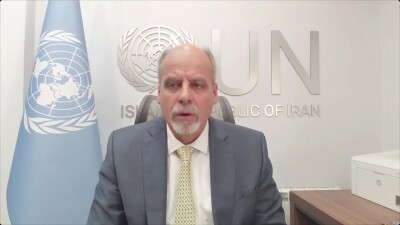
A clearer picture of needs across Iran is beginning to emerge after the conflict this month with Israel, which left hundreds dead, several hospitals hit and a spike in Afghan refugees returning home, the UN’s top official in Tehran said on Tuesday.
“In the early morning hours of 13 June, a number of attacks took place in Tehran, and other parts of Iran,” said Stefan Priesner, UN Resident Coordinator in Iran. “Then over the next 12 days there were multiple attacks by either side…we know that there have been at least 627 people killed and almost 5,000 injured in Iran.
Underlining that the UN remained in Iran through the duration of the conflict, Mr. Priesner noted that discussions are ongoing with the Government on "how to adapt existing UN programmes to meet the country’s post-conflict needs", he told journalists in Geneva via Zoom.
Tehran insight
Speaking from the Iranian capital, the UN official confirmed reports that several million residents left the city seeking safety from the missile strikes. He mentioned the solidarity that Iranians had shown towards each other, with families in the north and the countryside hosting those coming from Tehran.
Looking ahead, Mr. Priesner said: “We know that the health sector has very specific needs given the damage.”
The UN’s development and humanitarian presence in Iran spans 18 agencies with approximately 50 international staff and 500 national staff.
Last year’s budget amounted to around $75 million with two-thirds dedicated to the country’s roughly 3.5 million refugees or people in a refugee like situations. Iran has been hosting one of the largest – and most protracted – refugee situations in the world for over four decades with inclusive policies for example in the fields of access to health and education, and UN Iran has supported these efforts over the years.
The remainder of this budget is allocated to development projects including climate adaptation and mitigation work. The top UN official said there was need for significant additional funding to support the most vulnerable groups in Iran including children, the elderly, female-headed households and persons with disabilities in the post-conflict recovery process.
Mr. Priesner confirmed reports that increasing numbers of Afghan refugees have been heading back to their country across the Iranian border either voluntarily or through deportation.
According to the UN refugee agency, UNHCR, 36,100 Afghans returned on 26 June alone. The number of daily returns has continued to increase since 13 June, it said.
“Every day, and sometimes every few hours, buses arrive and stop at the Afghanistan-Iran border, carrying exhausted and desperate Afghan refugee families with all their belongings,” said Arafat Jamal, UNHCR Representative in Afghanistan.
Afghanistan returnees’ plight
“Many are returning to a country they barely know, forced out of Iran after decades of living there. The recent Israel-Iran war accelerated their return, pushing numbers to a record high, while deep funding cuts have made humanitarian aid operations increasingly challenging.”
Having just returned from the Islam Qala border area, UNHCR Representative Arafat Jamal told UN News that the flow of people into Afghanistan has surged since the conflict, rising from around 5,000 daily crossings to a recent peak of nearly 30,000.
The UNHCR official warned that Afghan returnees are arriving in an impoverished country that is unprepared to support them. Women and girls who had access to education and jobs in Iran now return to a country where “extreme gender injustice” makes such opportunities impossible, he said.
STORY: Iran update – OCHA
TRT: 2’48”
SOURCE: UNTV CH
RESTRICTIONS: NONE
LANGUAGE: ENGLISH/ NATS
ASPECT RATIO: 16:9
DATELINE: 1 JULY 2025 GENEVA, SWITZERLAND
Speaker
- UN Resident Coordinator in Iran, Stefan Priesner (from Teheran)
SHOTLIST
- Exterior wide shot: Palais des Nations, flag alley.
- Wide, Press room podium and journalists, TV screens showing external speaker.
SOUNDBITE (English) – UN Resident Coordinator in Iran, Stefan Priesner (from Teheran): “In the early morning hours of 13 June, a number of attacks took place in Tehran, and other parts of Iran. And then over the next 12 days there were multiple attacks by either side. As per government estimates, we know that there have been 627 people killed and almost 5,000 injured.”
- Wide, Press room podium and journalists.
- SOUNDBITE (English) – UN Resident Coordinator in Iran, Stefan Priesner: “In Tehran we could very clearly observe that, of course, from the first morning hours of that Friday, millions, you know, left the city mostly towards the north.”
- Medium, journalists, participants.
- SOUNDBITE (English) – UN Resident Coordinator in Iran, Stefan Priesner: “We know that the health sector has very specific needs because of you know the kind of hits on several hospitals, on health equipment such as ambulances.”
- Medium-wide, journalists, participants.
- SOUNDBITE (English) – UN Resident Coordinator in Iran, Stefan Priesner: “We, you know, stayed here throughout the conflict and are now in discussions with the Government how to adapt the programme to meet, you know, emerging needs that are only kind of becoming clear; you know, in these days it's only a few days since the conflict basically has stopped and a ceasefire was agreed upon.”
- Medium-wide, podium moderator, TV screen showing external speaker.
- SOUNDBITE (English) – UN Resident Coordinator in Iran, Stefan Priesner: “How the conflict impacts the refugee situation? It's a bit early to basically already assess this, but what we have seen is that the returns, you know, from Iran to Afghanistan have increased, partly probably through self-evacuation, but deportations.”
- Wide, podium moderator, TV screens showing external speaker, journalists and participants.
- SOUNDBITE (English) – UN Resident Coordinator in Iran, Stefan Priesner: “In recent days with I think the 26th – 26 June - being the day where the single biggest number of refugees cross the border, we have many of those are also voluntary returns, you know, moving away from the war, but we are aware that of course also a lot of deportations.”
- Wide, journalists, TV screens showing external speaker.
- Medium, participants.
- Medium, journalist.
Similar Stories

1
1
1
Edited News | OCHA , UNICEF , WFP
Aid agencies warned on Friday of the fast-developing humanitarian emergency inside Taiz City in Yemen, which has been encircled by de facto Houthi forces fighting government troops along the country’s west coast.

2
17
1
2
Edited News , Press Conferences , Images | OCHA , WMO
Two UN agencies teamed up on Wednesday to issue an appeal for immediate assistance to help communities already being impacted by the strongest El Niño on record.

3
16
2
2
Edited News , B-roll , Conferences , Images | UNITED NATIONS , UNOG
Sixth Consultative Meeting on Enhancing Coordination of Peace Initiatives and Efforts for Sudan

1
1
1
Edited News | UNICEF , WHO , UNHCR
Yemen war continues to force families from homes amid hunger and disease
More than 250,000 people have now fled renewed fighting in Yemen, the UN said on Tuesday, citing particular concern for those sheltering in the southwestern city of Taiz and the wider governorate, where access is “essentially blocked”.

1
1
1
Edited News | UNICEF
A little over one year since a ceasefire agreement was announced between Hamas fighters and Israel, more than 340 children have been reported killed and hundreds more injured, the UN Children’s Fund, UNICEF, said on Friday.

1
1
1
Edited News | UNICEF , IFRC
Six weeks after Nepal’s deadly flooding disaster, communities are still struggling to rebuild their lives, but they will need sustained help as global warming increases the risk of another Himalayan catastrophe, the UN Children’s Fund (UNICEF) said on Friday.

1
1
1
Edited News | WHO
In suspected Russia plague death, testing and monitoring underway – WHO
The death of a lab worker in Russia’s Siberia region has sparked concerns about plague being the cause, the UN World Health Organization (WHO) said on Tuesday, adding that it was following the situation closely.

1
1
Edited News | OHCHR , UNOG
UN Human Rights Chief Volker Türk on Friday provided and oral update to the 63rd session of the Human rights Council on Ukraine.

1
1
1
Edited News | OHCHR , UNOG
UN Human Rights Chief Volker Türk on Friday provided and oral update to the 63rd session of the Human rights Council on the human rights situation in Haiti.

1
1
1
Edited News | WHO
Repeated delays in bringing lifesaving medicines, prosthetics and more from Israel into Gaza risk having devastating consequences on Palestinians who urgently need them in the wartorn enclave, the UN World Health Organization (WHO) said on Friday. “A truck full of non-priority supplies or the right supplies arriving too late, doesn't save lives. That's the question that actually matters," said Dr Reinhilde Van De Weerdt, WHO Representative in the OPT.

1
1
1
Edited News | WHO
DRC: Early access to care and oxygen decisive for Ebola patients’ survival – WHO
In the Democratic Republic of the Congo (DRC), health workers fighting the country’s largest-ever Ebola outbreak are struggling to overcome critical challenges to patient care, the UN World Health Organization (WHO) warned on Tuesday.

1
1
1
Edited News | OCHA , UN
Civilians in Iran are continuing to feel the consequences of months of conflict and military escalation, the UN’s top official in the country has said, as loss of life, damage to civilian infrastructure and mounting economic pressures leave many facing continued uncertainty.