

The United Nations Office at Geneva
Multimedia Newsroom
Iran-Israel war: UN rights office concerned over strike on Tehran prison, reported espionage arrests
Tehran’s notorious Evin prison known for holding dissidents should not be a target, the UN Human Rights Office (OHCHR) said on Tuesday, a day after a reported Israeli strike on the complex.
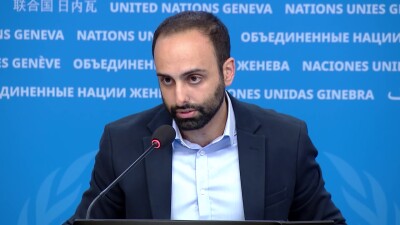
OHCHR spokesperson Thameen Al-Kheetan told media in Geneva that the prison is not a military objective according to the laws of war.
“Targeting it constitutes a grave breach of international humanitarian law”, he said.
OHCHR does not have specific details about what happened, Mr. Al-Kheetan said, but there have reportedly been fires inside the prison and a number of injuries.
Political prisoners including journalists are held at Evin prison, but whether they are detained “arbitrarily” or in connection with “crimes they've actually committed”, the inmates must be protected, Mr Al-Kheetan insisted.
According to media reports on Tuesday, Iran said that it transferred all the inmates out of the prison after it was hit by an Israeli strike, moving them to other prisons around the capital in order to repair damage.
A fragile ceasefire proposed by the United States seemed to take hold briefly on Tuesday morning, before reports of further Iranian missile strikes on Israel, disputed by Tehran.
The conflict began with Israeli air attacks on 13 June and escalated over the weekend with U.S. forces striking Iranian nuclear facilities. Hundreds of civilians have reportedly been killed in the Israeli airstrikes, while Iran’s retaliatory strikes killed close to 30 people in Israel.
Asked about signs of a crackdown on dissent by the Iranian authorities in the context of the Israeli and U.S military campaign against the country, the OHCHR spokesperson stressed that it was “difficult to verify information” coming from Iran, given the lack of access.
He confirmed seeing reports about Iranians being “arrested for cyber activities and publishing content related to the Israeli attacks on Iran, according to NGOs”.
Mr. Al-Kheetan also spoke of reports that nine men were executed in Iran since Israel attacked the country on 13 June. He called on the Iranian authorities to “completely respect the rights to freedom of expression and information, at all times”, insisting that journalists “must be able to do their work without any obstacles”.
Iranian citizens reportedly arrested and accused of espionage or collaboration with Israel “must have their full rights in terms of legal procedures and a fair trial”, he said.
“If these arrests are arbitrary, those persons must be freed immediately and unconditionally,” he concluded.
On Monday, independent human rights experts reiterated their concerns about Iran’s “use of broadly defined national security offences, some of which are punishable by death”, in the context of recent reported executions on espionage charges. Last week, the UN deputy human rights chief, Nada Al-Nashif, told the Human Rights Council that at least 975 people were executed in Iran last year - the highest number of reported executions since 2015. She also briefed the Council on the use of torture in Iranian prisons and the ongoing targeting of minorities, journalists and human rights defenders.
-ends-
STORY: Iran update – OHCHR 24 June 2025
TRT: 3:01”
SOURCE: UNTV CH
RESTRICTIONS: NONE
LANGUAGE: ENGLISH/ FRENCH/ NATS
ASPECT RATIO: 16:9
DATELINE: 24 JUNE 2025 GENEVA, SWITZERLAND
1. Exterior wide shot: Palais des Nations, Flag Alley.
2. Wide shot: Speakers at the podium of the press conference from rear; journalists in the Press room; speaker on screens.
3. SOUNDBITE (English) – Thameen Al-Kheetan, spokesperson, UN Human Rights Office (OHCHR): “Evin prison is not a military objective and targeting it constitutes a grave breach of international humanitarian law. We do not have specific reports on what happened. We know that there have been some fires inside the prison and a number of injuries.”
4. Wide shot: Journalists in the Press room; speaker on screens.
5. SOUNDBITE (English) – Thameen Al-Kheetan, spokesperson, UN Human Rights Office (OHCHR): “There are a number of political prisoners, journalists inside this prison. Whether they are imprisoned, whether all the inmates are imprisoned arbitrarily, for unlawful reasons or that they are spending a sentence for crimes they've actually committed, they must be protected. And the Evin prison should not have been targeted.”
6. Wide shot: Journalists in the Press room; speaker on screens.
7. SOUNDBITE (English) – Thameen Al-Kheetan, spokesperson, UN Human Rights Office (OHCHR): “It's very difficult to verify information coming from Iran because of the whole situation, as you know, and the lack of access. Now, we have seen these reports about Iranians being reportedly arrested for cyber activities and publishing content related to the Israeli attacks on Iran, according to NGOs.”
8. Close shot: Journalist in the Press room.
9. SOUNDBITE (English) – Thameen Al-Kheetan, spokesperson, UN Human Rights Office (OHCHR): “We have also seen reports of people being, nine men being executed in Iran since 13 June. So, what we can say about that is that Iranian authorities must completely respect the rights to freedom of expression and information, at all times. And journalists must be able to do their work without any obstacles.”
10. Medium shot: Journalists in the Press room.
11. SOUNDBITE (French) – Thameen Al-Kheetan, spokesperson, UN Human Rights Office (OHCHR): “Nous avons des ONG qui disent qu’il y a des citoyens iraniens qui ont été arrêtés et accusés d’espionnage ou de collaboration avec Israël ou de cyber-activités diverses. Ces personnes-là doivent avoir tous leurs droits en termes de procédure légale.”
12. Close shot: Journalist in the Press room.
13. SOUNDBITE (French) – Thameen Al-Kheetan, spokesperson, UN Human Rights Office (OHCHR): “Si ces arrestations sont arbitraires, ces personnes doivent être libérées immédiatement et sans conditions.”
14. Various shots of journalists in the Press room.
Similar Stories

2
17
1
2
Edited News , Press Conferences | OCHA , WMO
Two UN agencies teamed up on Wednesday to issue an appeal for immediate assistance to help communities already being impacted by the strongest El Niño on record.
3
16
2
2
B-roll , Conferences , Edited News | UNITED NATIONS , UNOG
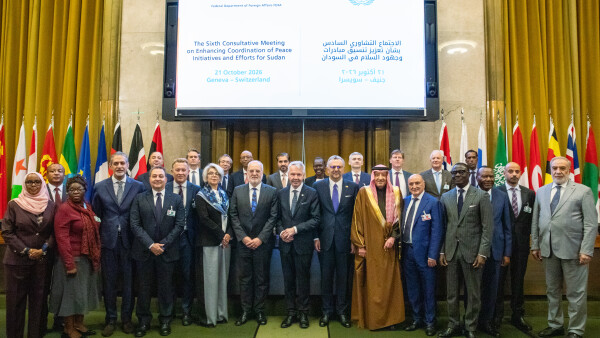
Sixth Consultative Meeting on Enhancing Coordination of Peace Initiatives and Efforts for Sudan

1
1
1
Edited News | UNICEF , WHO , UNHCR
Yemen war continues to force families from homes amid hunger and disease
More than 250,000 people have now fled renewed fighting in Yemen, the UN said on Tuesday, citing particular concern for those sheltering in the southwestern city of Taiz and the wider governorate, where access is “essentially blocked”.

1
1
1
Edited News | UNICEF
A little over one year since a ceasefire agreement was announced between Hamas fighters and Israel, more than 340 children have been reported killed and hundreds more injured, the UN Children’s Fund, UNICEF, said on Friday.

1
1
1
Edited News | UNICEF , IFRC
Six weeks after Nepal’s deadly flooding disaster, communities are still struggling to rebuild their lives, but they will need sustained help as global warming increases the risk of another Himalayan catastrophe, the UN Children’s Fund (UNICEF) said on Friday.

1
1
1
Edited News | WHO
In suspected Russia plague death, testing and monitoring underway – WHO
The death of a lab worker in Russia’s Siberia region has sparked concerns about plague being the cause, the UN World Health Organization (WHO) said on Tuesday, adding that it was following the situation closely.

1
1
Edited News | OHCHR , UNOG
UN Human Rights Chief Volker Türk on Friday provided and oral update to the 63rd session of the Human rights Council on Ukraine.

1
1
1
Edited News | OHCHR , UNOG
UN Human Rights Chief Volker Türk on Friday provided and oral update to the 63rd session of the Human rights Council on the human rights situation in Haiti.

1
1
1
Edited News | WHO
Repeated delays in bringing lifesaving medicines, prosthetics and more from Israel into Gaza risk having devastating consequences on Palestinians who urgently need them in the wartorn enclave, the UN World Health Organization (WHO) said on Friday. “A truck full of non-priority supplies or the right supplies arriving too late, doesn't save lives. That's the question that actually matters," said Dr Reinhilde Van De Weerdt, WHO Representative in the OPT.

1
1
1
Edited News | WHO
DRC: Early access to care and oxygen decisive for Ebola patients’ survival – WHO
In the Democratic Republic of the Congo (DRC), health workers fighting the country’s largest-ever Ebola outbreak are struggling to overcome critical challenges to patient care, the UN World Health Organization (WHO) warned on Tuesday.

1
1
1
Edited News | OCHA , UN
Civilians in Iran are continuing to feel the consequences of months of conflict and military escalation, the UN’s top official in the country has said, as loss of life, damage to civilian infrastructure and mounting economic pressures leave many facing continued uncertainty.
1
1
1
Edited News | WHO , UNICEF
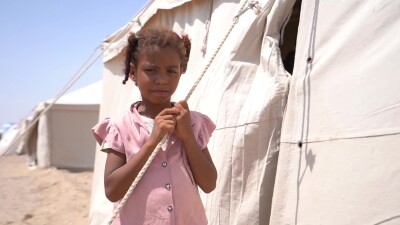
Aid agencies in Yemen highlighted the growing hunger emergency sparked by renewed fighting between Houthi opposition forces and Government troops, after mobile health clinics reported that hundreds of children displaced by the violence are suffering from the most deadly form of malnutrition.