

The United Nations Office at Geneva
Multimedia Newsroom
Gaza : Les humanitaires de l'ONU dénoncent des fournitures médicales vitales « délibérément brisées ».
De retour d'une mission de 10 jours à Gaza, un représentant senior du Fonds des Nations Unies pour la Population (FNUAP) a décrit la situation comme un « enfer humanitaire » après six mois et demi d'attaques israéliennes contre les soins de santé dans les hôpitaux en difficulté des gouvernorats nord, centre et sud.
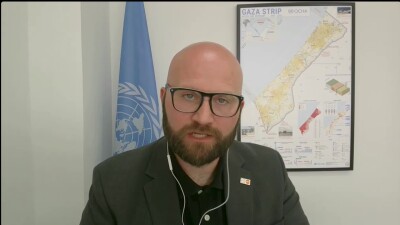
« Ce que j'ai vu, ça me brise le cœur, c'est indescriptible. Ce que nous voyons là-bas, c'est du matériel médical, délibérément brisé, des échographies, qui, comme vous le savez, sont un outil très important pour aider à assurer des naissances sûres, avec des câbles coupés, des écrans d'équipements médicaux complexes comme les échographies avec les écrans brisés », a rapporté Dominic Allen, représentant de l'UNFPA pour l'État de Palestine.
La mission de l'UNFPA, qui a commencé le lundi 8 avril et s'est terminée ce mercredi, a été menée en collaboration avec l'Organisation mondiale de la santé (OMS), le Bureau de la coordination des affaires humanitaires (OCHA) et l'Agence des Nations Unies pour les réfugiés de Palestine (UNRWA). Leur objectif était de visiter environ 10 hôpitaux à Gaza, y compris l'hôpital Al Aqsa dans le centre de Gaza, qui a été décrit comme "submergé par les patients traumatisés" et incapable de fournir un soutien aux soins de maternité.
« Je suis terrifié pour le million de femmes et de filles à Gaza en ce moment, et surtout pour les 180 femmes qui accouchent chaque jour dans des conditions inhumaines et inimaginables », a déclaré le représentant de l'UNFPA, qui s'est exprimé par vidéoconférence depuis Jérusalem aux journalistes à Genève.
Comparé à la situation avant la guerre à Gaza, lorsque environ 15 % des naissances nécessitaient une forme de soins obstétricaux d'urgence, le double de ce nombre est maintenant rapporté de manière anecdotique.
« Il y a absolument une augmentation des chiffres », a noté M. Allen. « Certains médecins ont signalé un doublement de ce qu'ils avaient précédemment traité en termes de complications à la naissance. Et cela est dû à la malnutrition, à la déshydratation et à la peur, qui impactent la capacité de la femme enceinte à accoucher en toute sécurité et à mener sa grossesse à terme en toute sécurité. »
Al-Shifa, qui était le plus grand hôpital de Gaza pour les soins tertiaires, est en ruines complètes, selon M. Allen. Au sud, à Rafah, l'hôpital émirati, qui est une bouée de sauvetage majeure pour les femmes enceintes à Gaza, soutient environ 50 à 60 naissances chaque jour, y compris 10 à 12 césariennes.
La mission de l'UNFPA, soutenue par le service de déminage de l'ONU, UNMAS, a également visité l'hôpital Nasser à Khan Younis dans la région sud, qui exploitait une maternité soutenue et approvisionnée par les équipes de l'UNFPA.
Lors de la visite de l'hôpital Nasser, « nous avons dû faire attention aux munitions non explosées, avec UNMAS nous traversions l'entrée, c'était méconnaissable par rapport à ma visite il y a deux mois », a déclaré M. Allen. « Il ne semblait pas y avoir de pièce d'équipement médical fonctionnel. La maternité, les salles d'accouchement que j'avais visitées plus tôt sont silencieuses. Elles devraient être un lieu de vie et elles ont juste une sensation étrange de mort. »
Trois écoles gérées par l'agence de l'ONU pour les réfugiés palestiniens, l'UNRWA, qui fonctionnent maintenant comme des abris désignés, sont en train d'être transformées en points médicaux d'urgence pour déployer des sages-femmes parce que les femmes enceintes n'ont pas suffisamment accès aux soins de santé prénatals et postnatals. Il s'agit d'un partenariat organisé par l'UNRWA, l'UNFPA et la Société de secours médical palestinienne.
En parlant de Rafah où plus de 1,2 million de personnes se réfugient et font face à des craintes continues d'une incursion israélienne, l'officier de l'UNFPA a souligné que « la peur reste omniprésente car une incursion militaire à Rafah aggraverait la catastrophe humanitaire ».
-fin-
HISTOIRE : Gaza : Destruction des hôpitaux - UNFPA
TRT : 3:23”
SOURCE : UNTV CH
RESTRICTIONS : AUCUNE
LANGUE : ANGLAIS / NATS
RAPPORT D'IMAGE : 16:9
LIEU : 19 avril 2024 GENÈVE, SUISSE
- Plan large extérieur : allée du drapeau de l'ONU
- Plan large : orateur au pupitre lors de la conférence de presse
- EXTRAIT SONORE (anglais) – Dominic Allen, représentant de l'UNFPA pour l'État de Palestine (s'exprimant depuis Jérusalem) : « Je suis terrifié pour le million de femmes et de filles à Gaza en ce moment, et surtout pour les 180 femmes qui accouchent chaque jour dans des conditions inhumaines et inimaginables.»
- Plan large : orateur au pupitre vu de derrière avec des journalistes dans la salle de presse
- EXTRAIT SONORE (anglais) – Dominic Allen, représentant de l'UNFPA pour l'État de Palestine (s'exprimant depuis Jérusalem) : « Ce que j'ai vu me brise le cœur. Encore une fois, c'est indescriptible. Ce que nous voyons là-bas, ce sont des équipements médicaux délibérément cassés. Des échographies, qui sont un outil très important pour garantir des accouchements sûrs, avec des câbles coupés. Des écrans d'équipements médicaux complexes comme les échographies et avec les écrans brisés.»
- Plan large : orateur au pupitre avec des journalistes dans la salle de presse
- EXTRAIT SONORE (anglais) – Dominic Allen, représentant de l'UNFPA pour l'État de Palestine (s'exprimant depuis Jérusalem) : « Nous devons faire attention aux engins explosifs non explosés, avec l'UNMAS nous traversions l'entrée là-bas, c'était méconnaissable par rapport à quand j'y suis allé et visité il y a deux mois. Il ne semblait pas y avoir un seul équipement médical en état de marche. La maternité, les salles d'accouchement que j'ai visitées plus tôt, sont silencieuses. Elles devraient être un lieu de vie et elles ont juste une atmosphère sinistre de mort.»
- Plan large : journalistes dans la salle de presse et écrans avec l'orateur
- EXTRAIT SONORE (anglais) – Dominic Allen, représentant de l'UNFPA pour l'État de Palestine (s'exprimant depuis Jérusalem) : « Il y a clairement une augmentation des chiffres. Certains médecins ont signalé un doublement de ce à quoi ils avaient précédemment été confrontés en termes de complications lors des accouchements. Et cela est dû à la malnutrition, à la déshydratation et à la peur, qui affectent la capacité des femmes enceintes à accoucher en toute sécurité et à mener leur bébé à terme en toute sécurité.»
- Plan moyen : opérateurs de zoom derrière la fenêtre dans la salle de contrôle
- EXTRAIT SONORE (anglais) - Dominic Allen, représentant de l'UNFPA pour l'État de Palestine (s'exprimant depuis Jérusalem) : « Mon impression, en revenant à Jérusalem-Est aujourd'hui, est que la peur reste omniprésente, car une incursion militaire à Rafah aggraverait la catastrophe humanitaire.»
- Gros plan : journaliste tapant
- Plan moyen, journalistes lors du briefing de presse
- Divers plans, Dominic Allen se promenant dans et autour de l'hôpital al-Shifa détruit à Gaza le 14 avril 2024 (Images UNFPA, veuillez créditer
Similar Stories

1
1
1
Edited News | OCHA , UNICEF , WFP
Aid agencies warned on Friday of the fast-developing humanitarian emergency inside Taiz City in Yemen, which has been encircled by de facto Houthi forces fighting government troops along the country’s west coast.

2
17
1
2
Edited News , Press Conferences , Images | OCHA , WMO
Two UN agencies teamed up on Wednesday to issue an appeal for immediate assistance to help communities already being impacted by the strongest El Niño on record.

3
16
2
2
Edited News , B-roll , Conferences , Images | UNITED NATIONS , UNOG
Sixth Consultative Meeting on Enhancing Coordination of Peace Initiatives and Efforts for Sudan

1
1
1
Edited News | UNICEF , WHO , UNHCR
Yemen war continues to force families from homes amid hunger and disease
More than 250,000 people have now fled renewed fighting in Yemen, the UN said on Tuesday, citing particular concern for those sheltering in the southwestern city of Taiz and the wider governorate, where access is “essentially blocked”.

1
1
1
Edited News | UNICEF
A little over one year since a ceasefire agreement was announced between Hamas fighters and Israel, more than 340 children have been reported killed and hundreds more injured, the UN Children’s Fund, UNICEF, said on Friday.

1
1
1
Edited News | UNICEF , IFRC
Six weeks after Nepal’s deadly flooding disaster, communities are still struggling to rebuild their lives, but they will need sustained help as global warming increases the risk of another Himalayan catastrophe, the UN Children’s Fund (UNICEF) said on Friday.

1
1
1
Edited News | WHO
In suspected Russia plague death, testing and monitoring underway – WHO
The death of a lab worker in Russia’s Siberia region has sparked concerns about plague being the cause, the UN World Health Organization (WHO) said on Tuesday, adding that it was following the situation closely.

1
1
Edited News | OHCHR , UNOG
UN Human Rights Chief Volker Türk on Friday provided and oral update to the 63rd session of the Human rights Council on Ukraine.

1
1
1
Edited News | OHCHR , UNOG
UN Human Rights Chief Volker Türk on Friday provided and oral update to the 63rd session of the Human rights Council on the human rights situation in Haiti.

1
1
1
Edited News | WHO
Repeated delays in bringing lifesaving medicines, prosthetics and more from Israel into Gaza risk having devastating consequences on Palestinians who urgently need them in the wartorn enclave, the UN World Health Organization (WHO) said on Friday. “A truck full of non-priority supplies or the right supplies arriving too late, doesn't save lives. That's the question that actually matters," said Dr Reinhilde Van De Weerdt, WHO Representative in the OPT.

1
1
1
Edited News | WHO
DRC: Early access to care and oxygen decisive for Ebola patients’ survival – WHO
In the Democratic Republic of the Congo (DRC), health workers fighting the country’s largest-ever Ebola outbreak are struggling to overcome critical challenges to patient care, the UN World Health Organization (WHO) warned on Tuesday.

1
1
1
Edited News | OCHA , UN
Civilians in Iran are continuing to feel the consequences of months of conflict and military escalation, the UN’s top official in the country has said, as loss of life, damage to civilian infrastructure and mounting economic pressures leave many facing continued uncertainty.