

The United Nations Office at Geneva
Multimedia Newsroom
Middle East war fallout: Hundreds of thousands flee Lebanon to Syria; vital food aid blocked – UN agencies
The trauma of mass displacement and humanitarian supply chain disruptions throughout the world are among the devastating impacts of the war raging in the Middle East, UN humanitarians warned on Tuesday.
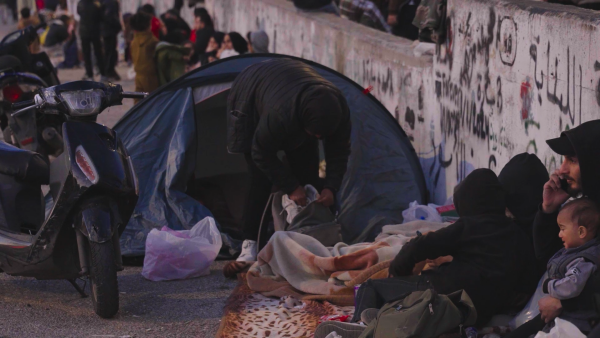
Speaking from Damascus, the UN Refugee Agency (UNHCR)’s representative in Syria, Asseer Al-Madaien, said that the country has seen a “sharp rise” in people crossing the border from Lebanon – more than 200,000 between 2 and 27 March.
“The vast majority, nearly 180,000, are Syrians, including Syrian refugees who had fled Syria seeking safety in the past in Lebanon and now forced to flee again,” she said.
More than 28,000 Lebanese also have crossed into Syria.
“Most are people fleeing the intense Israeli bombardments,” Ms. Al-Madaien told reporters in Geneva. “They arrive exhausted, traumatized and with very, very few belongings.”
The UNHCR representative said that the agency is preparing for as many as 350,000 to cross into Syria, depending on the course of the conflict.
As the humanitarian fallout continues to deepen over a month since Israeli and US airstrikes on Iran began, sparking a wider regional war, supply lines across the Middle East are already severely disrupted.
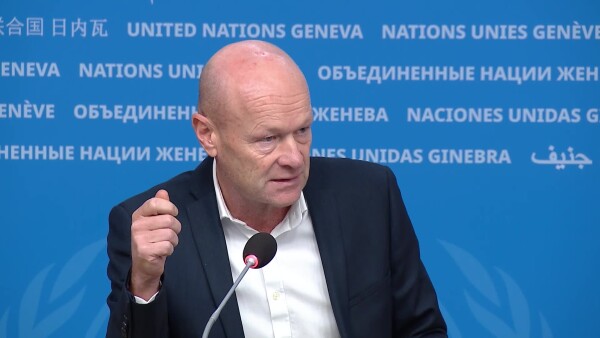
The UN World Food Programme (WFP)’s Director of Supply, Chain Corinne Fleischer, said that the agency is concerned about “all [its] big operations”.
WFP currently has “70,000 metric tonnes of food that is impacted by the war…About half of them are on chartered bulk vessels and the other half are on in containers which are either on route or stuck in a port and don't move,” she said.
Speaking from Rome, Ms. Fleischer clarified that WFP has no vessels in the Strait of Hormuz but is impacted “by the ripple effect of what's happening there… vessels being stuck in ports, not berthing to ports, not leaving ports, containers not being offloaded”.
The WFP official warned that similar global supply chain disruptions seen during COVID took “four to five months to get back into place once the situation's stabilized”.
Shipping costs have surged as carriers avoid the Suez Canal linked to the Middle East war and have to re-route around the Cape of Good Hope. This adds up to 30 days to the journey and has driven rates up 15 to 25 per cent, with fuel price hikes also hitting firms’ bottom lines.
Speaking about mitigating measures, Ms. Fleischer explained that WFP has been “asking for priority cargo for humanitarian operations” as it is the only UN organization with its own shipping department directly engaging with shipping lines and vessel owners.
She said that the agency has successfully negotiated a waiver for the surcharges that are being put in place by shipping lines and certain ports at risk in the Middle East, which represent between $2,000 to $4,000 per container – a saving of about $1.5 million so far.
WFP is also rerouting cargo, for instance to Afghanistan, where 17 million people are food insecure.
Earlier this year, food aid sourced in Pakistan was impacted by the Pakistan-Afghanistan war and initially re-routed through Iran, Ms. Fleischer said.
“While we were [rerouting] to get into Bandar Abbas port of Iran, the war broke out” she explained. “We had to put it in Jebel Ali [port] in Dubai and now we will truck it from Dubai through Saudi Arabia...That adds about 1,000 euros per tonne and of course another three weeks.”
The WFP official expressed further concern about Sudan, with 19 million people “acutely hungry”, as well as Somalia and South Sudan, where operations are buckling under longer lead times and higher costs.
“The financing of humanitarian operations has, since several years, not being where it should be,” she said. “We have eroded any buffer stocks. We're living from hand-to-mouth in these operations.”
With famine in areas of Sudan “there is no time”, she insisted. “Our operations and pipelines don't allow for a three-weeks-longer rerouting through the Horn of Africa.”
-ends-
STORY Middle East war impacts – UNHCR, WFP
TRT: 6:42”
SOURCE: UNTV CH
RESTRICTIONS: CREDIT UNHCR FOOTAGE
LANGUAGE: ENGLISH/NATS
ASPECT RATIO: 16:9
DATELINE: 31 MARCH 2026 GENEVA, SWITZERLAND and 5 MARCH 2026 BEIRUT, LEBANON, MASNAA BORDER CROSSING, LEBANON, JDEIDET YABOUS BORDER CROSSING, SYRIA.
1. Exterior wide shot: Palais des Nations, Flag Alley.
2. Medium reverse shot: Speakers at the podium of the press conference; speaker on screens; journalists in the Press room.
3. SOUNDBITE (English) – Asseer Al-Madaien, Representative in Syria, UN Refugee Agency (UNHCR): “Nearly a month after hostilities intensified in the region and in Lebanon, Syria has been, has seen a sharp rise in people crossing the border from Lebanon. Between 2 and 27 March, more than 200,000 people entered Syria, though the three official crossing points.”
4. Medium reverse shot: Speakers at the podium of the press conference; speaker on screens; journalists in the Press room.
5. SOUNDBITE (English) – Asseer Al-Madaien, Representative in Syria, UN Refugee Agency (UNHCR): “Nearly 180,000, are Syrians, including Syrian refugees who had fled Syria seeking safety in the past in Lebanon and now forced to flee again, unfortunately. More than 28,000 Lebanese also have crossed into Syria. Most are people fleeing the intense Israeli bombardments. They arrive exhausted, traumatized and with very, very few belongings.”
6. Medium reverse shot: Speaker at the podium of the press conference; speaker on screens.
7. SOUNDBITE (English) – Corinne Fleischer, Director of Supply Chain, World Food Programme (WFP): “The World Food Programme has currently 70,000 metric tonnes of food that is impacted by the war in the Middle East. About half of them are on chartered bulk vessel and the other half are in containers which are either en route or stuck in a port and don't move.”
8. Wide shot: Journalists in the Press room; speaker on screens.
9. SOUNDBITE (English) – Corinne Fleischer, Director of Supply Chain, World Food Programme (WFP): “The World Food Programme is the only UN organization with its own shipping department directly engaging, engaging with shipping lines and vessel owners. So, we're asking for priority cargo for humanitarian operations, number one, which we do in this type of situations and often time(s) it works.”
10. Medium-wide reverse shot: Speaker at the podium of the press conference; speaker on screens; journalists in the Press room.
11. SOUNDBITE (English) – Corinne Fleischer, Director of Supply Chain, World Food Programme (WFP): “We have negotiated a waiver of the surcharges that are being put in place by line, by shipping lines and certain ports at risk in the in the Middle East, of between $2,000 to $4,000 per container. That's about $200 per metric ton additional.”
12. Wide shot: Speaker on screens; journalists in the Press room.
13. SOUNDBITE (English) – Corinne Fleischer, Director of Supply Chain, World Food Programme (WFP): “Afghanistan, 17 million people are food insecure. We need to get there. We are sourcing quite a bit in Pakistan. That got impacted by the war between Pakistan and Afghanistan. So, we rerouted it to come in through Iran. While we were on the rerouting way to get into Bandar Abbas port of Iran, the war broke out. We had to put it in Jebel Ali in Dubai and now we will truck it from Dubai through Saudi Arabia.”
14. Wide reverse shot: Speaker at the podium of the press conference; speaker on screens; journalists in the Press room.
15. SOUNDBITE (English) – Corinne Fleischer, Director of Supply Chain, World Food Programme (WFP): “We're very concerned about, for example, Sudan, you know, Sudan, 19 million people acutely hungry, Somalia, you know, seven million people acutely hungry, South Sudan. Because they are affected by the carriers not using the Suez Canal and the longer lead time and the higher costs.”
16. Medium reverse shot: Speaker at the podium of the press conference; speaker on screens; journalists in the Press room.
17. SOUNDBITE (English) – Corinne Fleischer, Director of Supply Chain, World Food Programme (WFP): “The financing of humanitarian operations has, you know, since several years, not been where it should be. So, we have eroded any buffer stocks. We're living from hand-to-mouth in these operations. You have famine in pockets in areas in Sudan. So, there is no time. People don't have the time and our operations and pipelines don't allow for a three-weeks-longer rerouting through the Horn of Africa.”
18. Various shots of journalists in the Press room.
19. UNHCR BROLL – please credit UNHCR.
BEIRUT, LEBANON, MAR 05, 2026 - Various shots of road traffic
MASNAA BORDER, LEBANON, MAR 05, 2026 - Wide shot, people arriving at the border/ cars and buses with people fleeing at the border
BEIRUT, LEBANON, MAR 05, 2026 - VARIOUS OF CITY AS NIGHT FALLS
JDEIDET YABOUS BORDER CROSSING, SYRIA, MAR 05, 2026 – VARIOUS SHOTS OF BORDER POINT / PEOPLE ARRIVING AND REGISTERING WITH IMMIGRATION OFFICIALS / UNHCR STAFF
Similar Stories
1
1
1
Edited News | OCHA , UNICEF , WFP
Aid agencies warned on Friday of the fast-developing humanitarian emergency inside Taiz City in Yemen, which has been encircled by de facto Houthi forces fighting government troops along the country’s west coast.

2
17
1
2
Edited News , Press Conferences , Images | OCHA , WMO
Two UN agencies teamed up on Wednesday to issue an appeal for immediate assistance to help communities already being impacted by the strongest El Niño on record.
3
16
2
2
Edited News , B-roll , Conferences , Images | UNITED NATIONS , UNOG
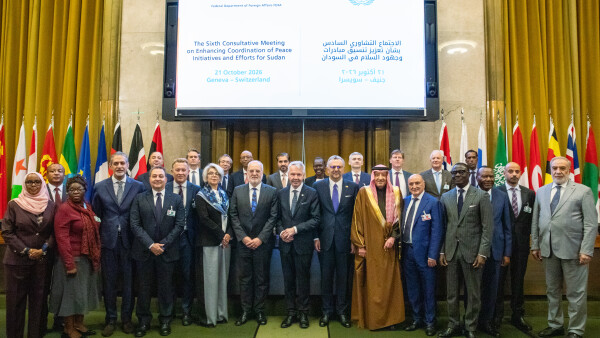
Sixth Consultative Meeting on Enhancing Coordination of Peace Initiatives and Efforts for Sudan

1
1
1
Edited News | UNICEF , WHO , UNHCR
Yemen war continues to force families from homes amid hunger and disease
More than 250,000 people have now fled renewed fighting in Yemen, the UN said on Tuesday, citing particular concern for those sheltering in the southwestern city of Taiz and the wider governorate, where access is “essentially blocked”.

1
1
1
Edited News | UNICEF
A little over one year since a ceasefire agreement was announced between Hamas fighters and Israel, more than 340 children have been reported killed and hundreds more injured, the UN Children’s Fund, UNICEF, said on Friday.

1
1
1
Edited News | UNICEF , IFRC
Six weeks after Nepal’s deadly flooding disaster, communities are still struggling to rebuild their lives, but they will need sustained help as global warming increases the risk of another Himalayan catastrophe, the UN Children’s Fund (UNICEF) said on Friday.

1
1
1
Edited News | WHO
In suspected Russia plague death, testing and monitoring underway – WHO
The death of a lab worker in Russia’s Siberia region has sparked concerns about plague being the cause, the UN World Health Organization (WHO) said on Tuesday, adding that it was following the situation closely.

1
1
Edited News | OHCHR , UNOG
UN Human Rights Chief Volker Türk on Friday provided and oral update to the 63rd session of the Human rights Council on Ukraine.

1
1
1
Edited News | OHCHR , UNOG
UN Human Rights Chief Volker Türk on Friday provided and oral update to the 63rd session of the Human rights Council on the human rights situation in Haiti.

1
1
1
Edited News | WHO
Repeated delays in bringing lifesaving medicines, prosthetics and more from Israel into Gaza risk having devastating consequences on Palestinians who urgently need them in the wartorn enclave, the UN World Health Organization (WHO) said on Friday. “A truck full of non-priority supplies or the right supplies arriving too late, doesn't save lives. That's the question that actually matters," said Dr Reinhilde Van De Weerdt, WHO Representative in the OPT.

1
1
1
Edited News | WHO
DRC: Early access to care and oxygen decisive for Ebola patients’ survival – WHO
In the Democratic Republic of the Congo (DRC), health workers fighting the country’s largest-ever Ebola outbreak are struggling to overcome critical challenges to patient care, the UN World Health Organization (WHO) warned on Tuesday.

1
1
1
Edited News | OCHA , UN
Civilians in Iran are continuing to feel the consequences of months of conflict and military escalation, the UN’s top official in the country has said, as loss of life, damage to civilian infrastructure and mounting economic pressures leave many facing continued uncertainty.