

The United Nations Office at Geneva
Multimedia Newsroom
Human Rights Council marks 20 years of dialogue and commitment to equality
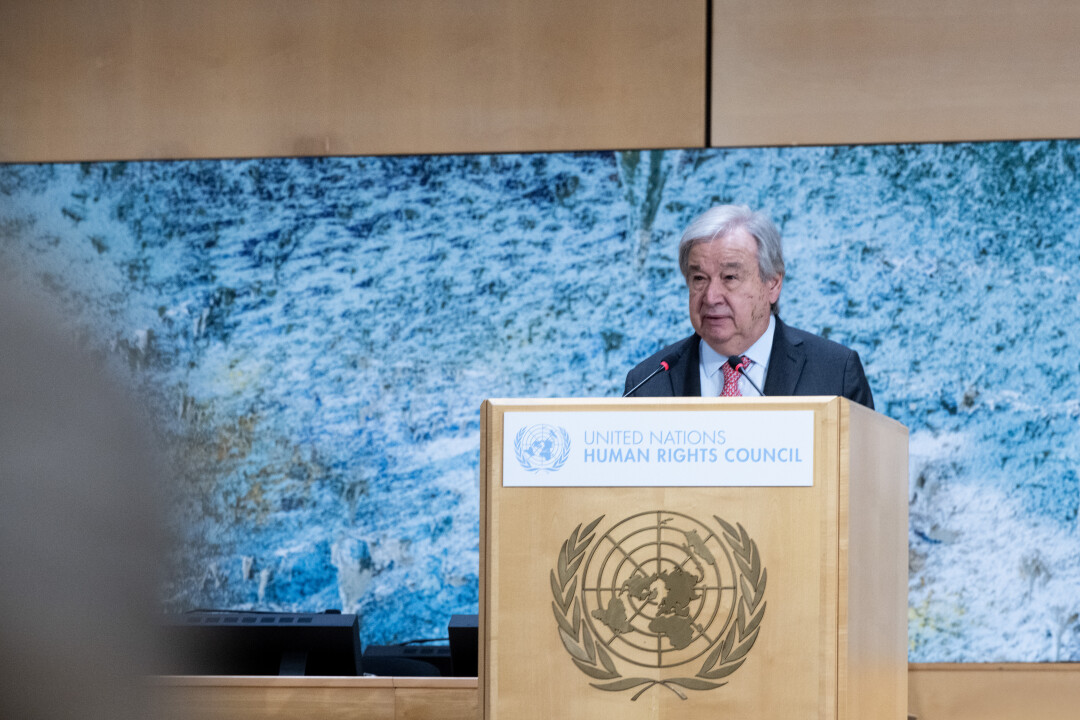
In Geneva, delegates from more than 120 countries gathered on Monday to mark 20 years of the UN Human Rights Council and a shared commitment to international law, amid runaway global instability and conflict, amid runaway global instability and conflict.
Acknowledging dizzying geopolitical uncertainty marked by conflict and war in Gaza, Myanmar, Ukraine, Sudan and beyond, Secretary-General António Guterres urged the Council’s Members to hold the line on human rights, which he warned were under a “full-scale attack…often led by those who hold the greatest power”.
On Ukraine, specifically, the UN chief noted that Tuesday will mark the fourth anniversary of Russia’s full-scale invasion of Ukraine, which has killed more than 15,000 civilians. “It is more than past time to end the bloodshed”, he insisted, his comments a precursor to those of UN human rights chief Volker Türk, who called for rights and justice to be the focus of any ceasefire or peace agreement.
Echoing those concerns, President of the UN General Assembly Annalena Baerbock insisted that human rights were “not a spectator sport” for Members of the Council, ambassadors, ministers or UN officials, for whom “silence is a choice…and it has consequences”.
“History teaches us that large systems rarely collapse in one dramatic moment; they erode slowly, rule by rule, commitment by commitment, with those who should defend them rather staying silent. Until one day, what seemed permanent simply vanishes,” Ms. Baerbock said.
In her opening comments to the Council, the General Assembly President highlighted the ongoing plight of Afghan women who under a new Taliban edict can reportedly be beaten by their husbands, so long as there are no visible marks.
“We should remember once and for all and again that appeasement in the light of the most severe human rights violations never prevails,” she said. “We are seeing not only a dramatic backlash in women’s but also human rights and other rules and standards which were believed to be set in stone and are now openly questioned, dismissed, or violated.”
The General Assembly President also appealed for “a clear commitment from every Member State that the abduction of Ukrainian children is a war crime”, a reference to the youngsters separated from their families since 2014 – when Moscow annexed Crimea – including those transferred within occupied Ukrainian territory and those deported to Russia.
On the occupied West Bank where Israeli settler expansion is accelerating, Mr. Guterres warned that the two-State solution was being “stripped away in broad daylight. The international community cannot allow it to happen.”
And amid multiplying conflicts where aggressors continue to act with impunity, Mr. Guterres maintained that this was because governments continued to ignore fundamental human rights enshrined in international law, at a time when needs are “exploding” and funding is collapsing.
“We are living in a world where mass suffering is excused away, where humans are used as bargaining chips, where international law is treated as a mere inconvenience,” he insisted.
In his last speech to the Council as UN Secretary-General before his second five-year term ends on 31 December, Mr. Guterres reiterated his long-held concerns about the drivers of insecurity and inequality which had left migrants “harassed, arrested and expelled”, refugees scapegoated and LGBTIQ+ communities vilified.
“Countries are drowning in debt and despair, climate chaos is accelerating,” he maintained, particularly small and vulnerable nations starved of adequate investment.
Even technology – and especially artificial intelligence – is increasingly being used to “suppress rights, deepen inequality and expose marginalized people to new forms of discrimination both online and offline”, the world’s top diplomat warned, before urging a renewed commitment to the values of multilateral solidarity set out in the UN Charter.
“Human rights are not West or East, North or South, they are not a luxury, they are not negotiable. They are the foundation of a more peaceful and secure world. And States are bound by their obligations under the Charter and international law.”
Expanding on that theme, UN rights chief Türk said that at a time when some governments were weakening the multilateral system, violations of international law needed to be called out, “regardless of the perpetrators”.
To confront today’s “top-down domination”, the High Commissioner noted the upcoming launch of his Office’s Global Alliance for Human Rights, bringing together States, businesses, cities, philanthropists, scientists, artists, philosophers, young people and civil society.
“Our future depends on our joint commitment to defend every person’s rights, every time, everywhere,” Mr. Türk insisted.
ends
Human Rights Council – António Guterres, Annalena Baerbock
TRT: 2 min 41s
SOURCE: UNTV CH
RESTRICTIONS: NONE
LANGUAGE: ENGLISH / FRENCH / NATS
ASPECT RATIO: 16:9
DATELINE: 23 FEBRUARY 2025 GENEVA, SWITZERLAND
Speakers:
- António Guterres, UN Secretary-General
- Annalena Baerbock, President of the UN General Assembly
SHOTLIST
- Exterior wide, UN Geneva flag alley.
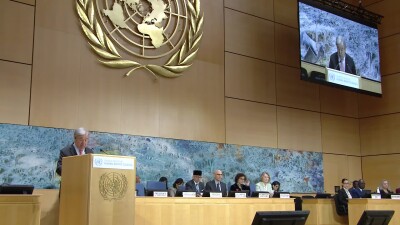
- Wide, delegates gathered at UN Geneva Assembly Hall for the 61st regular session of the Human Rights Council.
- SOUNDBITE (English) – António Guterres, UN Secretary-General: “Human rights are under a full-scale attack around the world. The rule of law is being outmuscled by the rule of force. And this assault is not coming from the shadows or by surprise. It is happening in plain sight and often led by those who hold the greatest power.”
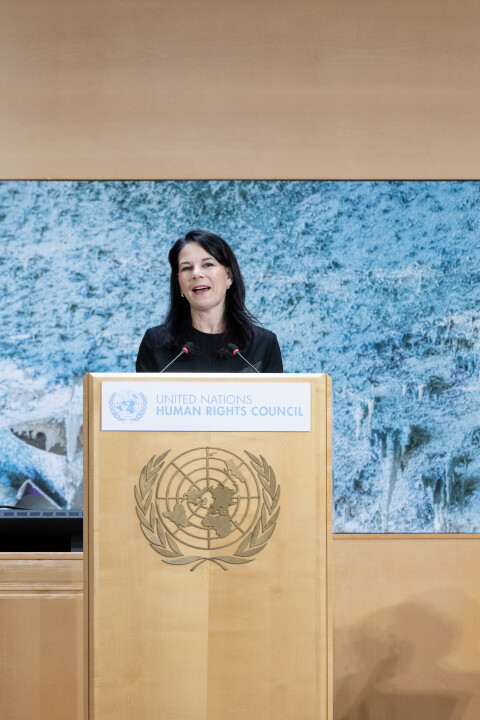
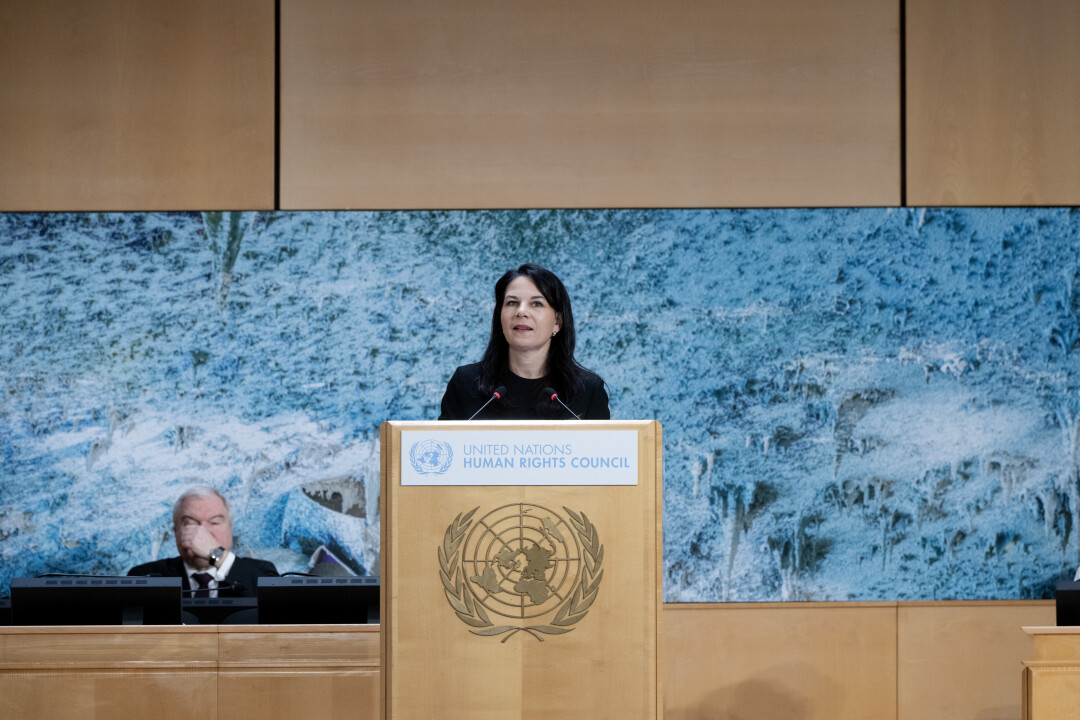
- Wide, Annalena Baerbock, President of the UN General Assembly speaking from lectern.
- SOUNDBITE (English) – Annalena Baerbock, President of the UN General Assembly: “History teaches us that large systems rarely collapse in one dramatic moment; they erode slowly, rule by rule, commitment by commitment, with those who should defend them rather staying silent. Until one day, what seemed permanent simply vanishes.”
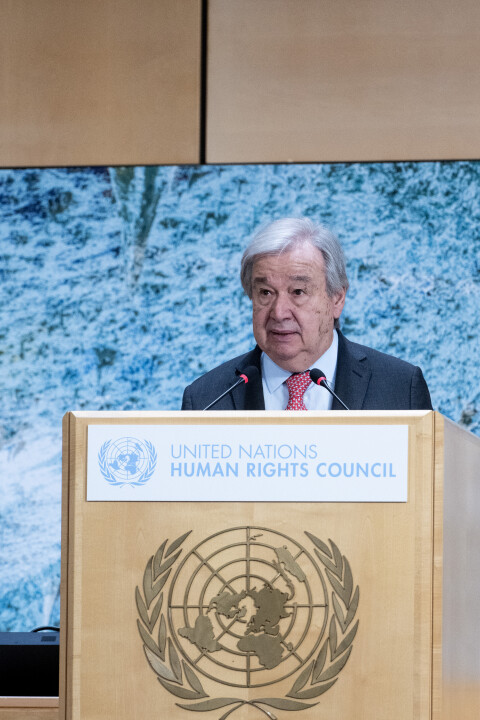
- Wide, Mr. Guterres speaking at lectern, Human Rights Council officials seated at podium.
- SOUNDBITE (English) – António Guterres, UN Secretary-General: “Tomorrow, I should address the Security Council on the fourth anniversary of Russia’s full-scale invasion of Ukraine, where more than 15,000 civilians have been killed. It is more than past time to end the bloodshed.”
- Wide, panning of delegates.
- SOUNDBITE (English) – António Guterres, UN Secretary-General: “Technology – especially artificial intelligence – is increasingly being used in ways that suppress rights, deepen inequality and expose marginalized people to new forms of discrimination both online and offline.”
- Medium-wide, photographers and Ms. Baerbock waiting to speak.
- SOUNDBITE (French) – António Guterres, UN Secretary-General: « Quand les pays les plus petits et les plus vulnérables sont pris au piège de la dette et privés d’investissements suffisants, leurs populations sont privées de leurs droits humains – y compris l’éducation, les soins de santé, la sécurité et la dignité. » When small and vulnerable countries are trapped in debt and deprived of adequate investment, their people are deprived of their human rights – including education, healthcare, safety and dignity.
- Wide, Mr. Guterres speaking at lectern, Human Rights Council officials seated at podium.
- SOUNDBITE (English) – António Guterres, UN Secretary-General: “Human rights are not West or East, North or South. They are not a luxury, they are not negotiable. They are the foundation of a more peaceful and secure world. And States are bound by their obligations under the Charter and international law.”
- Medium, photographers, delegates.
- Wide, Mr. Guterres finishing his address at lectern, Human Rights Council officials applaud.
Similar Stories

1
1
1
Edited News | OCHA , UNICEF , WFP
Aid agencies warned on Friday of the fast-developing humanitarian emergency inside Taiz City in Yemen, which has been encircled by de facto Houthi forces fighting government troops along the country’s west coast.

2
17
1
2
Edited News , Press Conferences , Images | OCHA , WMO
Two UN agencies teamed up on Wednesday to issue an appeal for immediate assistance to help communities already being impacted by the strongest El Niño on record.

3
16
2
2
Edited News , B-roll , Conferences , Images | UNITED NATIONS , UNOG
Sixth Consultative Meeting on Enhancing Coordination of Peace Initiatives and Efforts for Sudan

1
1
1
Edited News | UNICEF , WHO , UNHCR
Yemen war continues to force families from homes amid hunger and disease
More than 250,000 people have now fled renewed fighting in Yemen, the UN said on Tuesday, citing particular concern for those sheltering in the southwestern city of Taiz and the wider governorate, where access is “essentially blocked”.

1
1
1
Edited News | UNICEF
A little over one year since a ceasefire agreement was announced between Hamas fighters and Israel, more than 340 children have been reported killed and hundreds more injured, the UN Children’s Fund, UNICEF, said on Friday.

1
1
1
Edited News | UNICEF , IFRC
Six weeks after Nepal’s deadly flooding disaster, communities are still struggling to rebuild their lives, but they will need sustained help as global warming increases the risk of another Himalayan catastrophe, the UN Children’s Fund (UNICEF) said on Friday.

1
1
1
Edited News | WHO
In suspected Russia plague death, testing and monitoring underway – WHO
The death of a lab worker in Russia’s Siberia region has sparked concerns about plague being the cause, the UN World Health Organization (WHO) said on Tuesday, adding that it was following the situation closely.

1
1
Edited News | OHCHR , UNOG
UN Human Rights Chief Volker Türk on Friday provided and oral update to the 63rd session of the Human rights Council on Ukraine.

1
1
1
Edited News | OHCHR , UNOG
UN Human Rights Chief Volker Türk on Friday provided and oral update to the 63rd session of the Human rights Council on the human rights situation in Haiti.

1
1
1
Edited News | WHO
Repeated delays in bringing lifesaving medicines, prosthetics and more from Israel into Gaza risk having devastating consequences on Palestinians who urgently need them in the wartorn enclave, the UN World Health Organization (WHO) said on Friday. “A truck full of non-priority supplies or the right supplies arriving too late, doesn't save lives. That's the question that actually matters," said Dr Reinhilde Van De Weerdt, WHO Representative in the OPT.

1
1
1
Edited News | WHO
DRC: Early access to care and oxygen decisive for Ebola patients’ survival – WHO
In the Democratic Republic of the Congo (DRC), health workers fighting the country’s largest-ever Ebola outbreak are struggling to overcome critical challenges to patient care, the UN World Health Organization (WHO) warned on Tuesday.

1
1
1
Edited News | OCHA , UN
Civilians in Iran are continuing to feel the consequences of months of conflict and military escalation, the UN’s top official in the country has said, as loss of life, damage to civilian infrastructure and mounting economic pressures leave many facing continued uncertainty.