

The United Nations Office at Geneva
Multimedia Newsroom
Gaza newborns ‘scarred by war before first breath’ by preventable maternal malnutrition: UNICEF
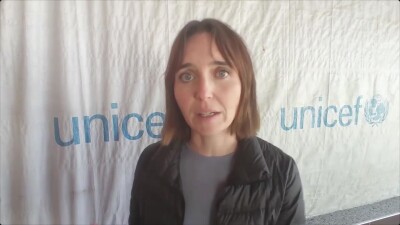
Starving mothers in Gaza are giving birth to underweight or premature babies who die in intensive care units or struggle to survive as they endure acute malnutrition, the UN Children’s Fund (UNICEF) warned on Tuesday.
Speaking from the shattered enclave, UNICEF Communication Manager Tess Ingram said that at least 165 children are reported to have died “painful, preventable deaths” related to malnutrition during the war between Hamas fighters and Israel.
A lesser-known scourge is acute hunger among pregnant and breastfeeding women and “the devastating domino effect” of this lack of a healthy diet on thousands of newborns.
“In Gaza's hospitals I have met several newborns who weighed less than one kilogramme, their tiny chests heaving with the effort of staying alive,” Ms. Ingram said.
Speaking to journalists in Geneva via video link, she explained that low birthweight infants are about 20 times more likely to die than infants of normal weight.
The UNICEF spokesperson pointed out that before the war in 2022, an average of 250 babies per month, or about five per cent, were born weighing less than 2.5 kilograms at birth according to the Gaza Ministry of Health.
In the first half of 2025, even with fewer births, that proportion rose to 10 per cent of all births, or about 300 babies per month, surging to 460 per month in the three months before the ceasefire.
That amounts to 15 a day – almost double the pre-war average.
“Low birthweight is generally caused by poor maternal nutrition, increased maternal stress and limited antenatal care,” Ms. Ingram explained.
“In Gaza, we witness all three, and the response to them is not moving fast enough, nor at the scale required.”
The UNICEF spokesperson added that in October alone, 8,300 pregnant and breastfeeding women were admitted for treatment for acute malnutrition, “in a place where there was no discernible malnutrition among this group before October 2023”.
“This pattern is a grave warning and it will likely result in low birthweight babies being born in the Gaza Strip for months to come,” she said, adding, “This is not over.”
The UN has responded to this dire situation by replacing incubators, ventilators and other life-saving equipment destroyed in the conflict.
UNICEF has also provided supplements to tens of thousands of pregnant and breastfeeding women to prevent malnutrition, screening young children for acute malnutrition and enrolling them in treatment.
But to improve the response, more aid urgently needs to enter the Gaza Strip.
The UN Office for the Coordination of Humanitarian Affairs (OCHA) said on Monday that “persistent impediments” to reach the most vulnerable with aid include insecurity, customs clearance challenges, delays and denials of cargo at the crossings. Aid teams also highlight that limited routes are provided for transporting humanitarian supplies within the Strip.
Opening the Rafah crossing in southern Gaza could help to increase the flow of humanitarian trucks and bring down the numbers of children with malnutrition, UNICEF’s Ms. Ingram explained.
“We really need to see all types of aid come in, particularly nutritious food through commercial routes as well,” she added, stressing that local markets need to be restocked with more commercial goods so that prices can drop and items such as fruit and vegetables, meat and dairy, can become affordable for families.
The UNICEF spokesperson insisted that the two-month-old ceasefire “should offer families safety, not more loss”, recalling that more than 70 children have been killed since it began on 10 October.
“Generations of families, including those being born now into this ceasefire, have been forever altered by what was inflicted upon them,” Ms. Ingram said, stressing that she sees and hears the generational impacts of the conflict on mothers and infants “almost every day in hospitals, in nutrition clinics, in family tents”.
“It is less visible than the blood and injury, but it is ubiquitous,” she said.
Ms. Ingram insisted that the “domino effect from mother to child” – the impact of malnutrition, stress and displacement on pregnant women and their babies – should have and could have been prevented.
“No child should be scarred by war before they have taken their first breath,” she said, pointing to the “brutal reality” of the conflict and the “Israeli aid restrictions, which depleted hospitals and starved and stressed mothers.”
“So much suffering could have been prevented if international humanitarian law had been respected,” she concluded.
-ENDS-
STORY Gaza malnutrition – UNICEF
TRT: 3:05”
SOURCE: UNTV CH
RESTRICTIONS: NONE
LANGUAGE: ENGLISH/NATS
ASPECT RATIO: 16:9
DATELINE: 9 DECEMBER 2025 GENEVA, SWITZERLAND
1. Exterior wide shot: Palais des Nations, Flag Alley.
2. Wide shot: Speakers at the podium of the press conference, speaker on screens; journalists in the Press room.
3. SOUNDBITE (English) – Tess Ingram, Communication Manager, UN Children’s Fund (UNICEF): “At least 165 children are reported to have died painful, preventable deaths related to malnutrition during the war in the Gaza Strip, but far less reported has been the scale of malnutrition among pregnant and breastfeeding women, and the devastating domino effect that that has had on thousands of newborns.”
4. Wide shot: Speakers at the podium of the press conference; speaker on screens; journalists in the Press room.
5. SOUNDBITE (English) – Tess Ingram, Communication Manager, UN Children’s Fund (UNICEF): “In Gaza's hospitals I have met several newborns who weighed less than one kilogram, their tiny chests heaving with the effort of staying alive. Low birth weight infants like these babies are about 20 times more likely to die than infants of normal weight.”
6. Wide shot: Speaker on screens; journalists in the Press room.
7. SOUNDBITE (English) – Tess Ingram, Communication Manager, UN Children’s Fund (UNICEF): “Low birth weight is generally caused by poor maternal nutrition, increased maternal stress and limited antenatal care. In Gaza, we witness all three, and the response to them is not moving fast enough, nor at the scale required.”
8. Medium shot: Speakers at the podium of the press conference; speaker on screens.
9. SOUNDBITE (English) – Tess Ingram, Communication Manager, UN Children’s Fund (UNICEF): “In October alone, we admitted 8,300 pregnant and breastfeeding women for treatment for acute malnutrition. That's about 270 women per day in a place where there was no discernible malnutrition among this group before October 2023. This pattern is a grave warning and it will likely result in low birth weight babies being born in the Gaza Strip for months to come. This is not over.”
10. Wide shot: Speakers at the podium of the press conference, speaker on screens; journalists in the Press room.
11. SOUNDBITE (English) – Tess Ingram, Communication Manager, UN Children’s Fund (UNICEF): “The opening of the Rafah crossing, if that allowed the flow of humanitarian trucks as we want it to, could be important in helping us bring down the numbers of children with malnutrition. We really need to see all types of aid come in, particularly nutritious food through commercial routes as well.”
12. Wide shot: Speaker on screens; journalists in the Press room.
13. SOUNDBITE (English) – Tess Ingram, Communication Manager, UN Children’s Fund (UNICEF): “I have spent many months in Gaza over the past two years and I see and hear the generational impacts of the conflict on mothers and infants almost every day in hospitals, in nutrition clinics, in family tents. It is less visible than the blood and injury, but it is ubiquitous.”
14. Wide shot: Journalists in the Press room.
15. SOUNDBITE (English) – Tess Ingram, Communication Manager, UN Children’s Fund (UNICEF): “This domino effect from mother to child should have and could have been prevented. No child should be scarred by war before they have taken their first breath. But in Gaza, this brutal reality was caused by the conflict and exacerbated by the Israeli aid restrictions, which depleted hospitals and starved and stressed mothers. So much suffering could have been prevented if international humanitarian law had been respected.”
16. Various shots of journalists in the Press room.
Similar Stories

1
1
1
Edited News | UNICEF , WHO , UNHCR
Yemen war continues to force families from homes amid hunger and disease
More than 250,000 people have now fled renewed fighting in Yemen, the UN said on Tuesday, citing particular concern for those sheltering in the southwestern city of Taiz and the wider governorate, where access is “essentially blocked”.

1
1
1
Edited News | UNICEF
A little over one year since a ceasefire agreement was announced between Hamas fighters and Israel, more than 340 children have been reported killed and hundreds more injured, the UN Children’s Fund, UNICEF, said on Friday.

1
1
1
Edited News | UNICEF , IFRC
Six weeks after Nepal’s deadly flooding disaster, communities are still struggling to rebuild their lives, but they will need sustained help as global warming increases the risk of another Himalayan catastrophe, the UN Children’s Fund (UNICEF) said on Friday.

1
1
1
Edited News | WHO
In suspected Russia plague death, testing and monitoring underway – WHO
The death of a lab worker in Russia’s Siberia region has sparked concerns about plague being the cause, the UN World Health Organization (WHO) said on Tuesday, adding that it was following the situation closely.

1
1
Edited News | OHCHR , UNOG
UN Human Rights Chief Volker Türk on Friday provided and oral update to the 63rd session of the Human rights Council on Ukraine.

1
1
1
Edited News | OHCHR , UNOG
UN Human Rights Chief Volker Türk on Friday provided and oral update to the 63rd session of the Human rights Council on the human rights situation in Haiti.

1
1
1
Edited News | WHO
Repeated delays in bringing lifesaving medicines, prosthetics and more from Israel into Gaza risk having devastating consequences on Palestinians who urgently need them in the wartorn enclave, the UN World Health Organization (WHO) said on Friday. “A truck full of non-priority supplies or the right supplies arriving too late, doesn't save lives. That's the question that actually matters," said Dr Reinhilde Van De Weerdt, WHO Representative in the OPT.

1
1
1
Edited News | WHO
DRC: Early access to care and oxygen decisive for Ebola patients’ survival – WHO
In the Democratic Republic of the Congo (DRC), health workers fighting the country’s largest-ever Ebola outbreak are struggling to overcome critical challenges to patient care, the UN World Health Organization (WHO) warned on Tuesday.

1
1
1
Edited News | OCHA , UN
Civilians in Iran are continuing to feel the consequences of months of conflict and military escalation, the UN’s top official in the country has said, as loss of life, damage to civilian infrastructure and mounting economic pressures leave many facing continued uncertainty.
1
1
1
Edited News | WHO , UNICEF
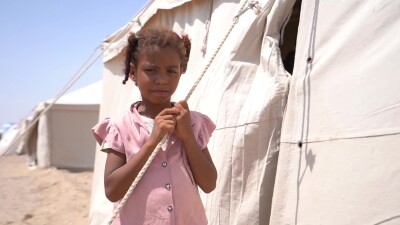
Aid agencies in Yemen highlighted the growing hunger emergency sparked by renewed fighting between Houthi opposition forces and Government troops, after mobile health clinics reported that hundreds of children displaced by the violence are suffering from the most deadly form of malnutrition.
1
1
1
Edited News | UNHCR
Displacement on the rise in Yemen as fighting continues - UNHCR
As hostilities worsen in Yemen, more people have been fleeing their homes, further intensifying the humanitarian crisis within the region, the UN Refugee Agency (UNHCR) warned on Tuesday.
1
1
1
Edited News | IOM , OHCHR , UNFPA , UNOG , UNHCR , WHO
Yemen’s humanitarian crisis growing by the hour amid spike in displacement
Yemenis displaced by renewed fighting have described fleeing for their lives amid shelling and gunfire, aid agencies reported on Friday, while highlighting the dramatic increase in humanitarian needs in the country and in Djibouti, where thousands have sought shelter.