

The United Nations Office at Geneva
Multimedia Newsroom
Mozambique’s displaced facing massive needs as attacks intensify, OCHA warns
The humanitarian situation in northern Mozambique continues to deteriorate sharply as prolonged attacks by non-State armed groups in Nampula trigger one of the largest displacement surges of the year, the UN warned on Friday.
According to the UN aid coordination office, OCHA, 107,000 people have fled their homes in recent weeks, pushing total displacement in just the past four months to 330,000.
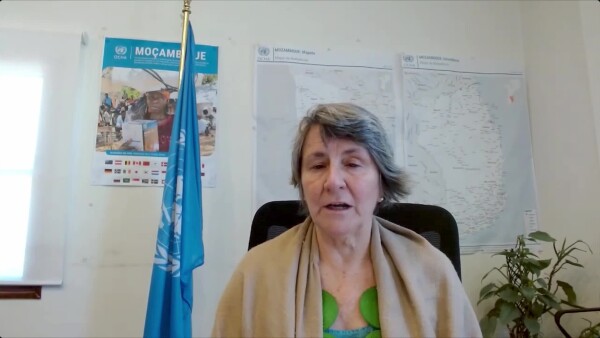
“They barely had time to recover when they again had to leave, due to attacks or fear of attacks,” said Paola Emerson, OCHA Head of Office in Mozambique.
The veteran humanitarian explained that violence has often uprooted families multiple times as they endure weeks of attacks - an unusual pattern, compared to previous hit-and-run tactics.
Data indicates that nearly nine in 10 of those fleeing violence have already fled at least once this year.
Ms. Emerson added that this latest wave of attacks has been particularly destabilising for communities already battered by three cyclones in 2025.
“A vast majority are children, 67 per cent,” Ms. Emmerson said. “There are huge concerns about protection, with reports of gender-based violence and children who are separated or unaccompanied.”
Most displaced families now shelter in overcrowded host communities, open areas and damaged schools where exams have been disrupted in several districts.
Aid distribution is far below needs, the UN aid official noted, with only around 40 per cent of people receiving “woeful” food assistance, amid “major stockouts”.
Ms. Emmerson warned that gaps in aid are already forcing some families to return to unsafe areas “with very little information about whether the situation has stabilised”.
UN agencies have issued repeated alerts this week. On Tuesday, the UN refugee agency (UNHCR) said civilians described nighttime attacks, homes burned and people killed as armed groups pushed into previously unaffected districts. The agency highlighted severe resource shortages, describing the response as “insufficient”.
The UN Children’s Fund (UNICEF) added on Friday that children are being pushed to breaking point. It warned of “staggering” levels of displacement and rising grave violations, including abductions and recruitment. The UN agency said that essential services - health, education, water and protection - are “straining under the weight of need”, just as the cyclone season is set to intensify.
Humanitarian partners are calling for urgent funding to prevent further deterioration, warning that without rapid support, the crisis will deepen and families may face renewed displacement within weeks.
ENDS
STORY: Mozambique displacement UNICEF
TRT: 01:45
SOURCE: UNTV CH
RESTRICTIONS: NONE
LANGUAGE: ENGLISH, NATS
ASPECT RATIO: 16:9
DATELINE: 5 DECEMBER 2025, GENEVA, SWITZERLAND
SHOTLIST
Speaker:
- Paola Emerson, Head of Office, OCHA Mozambique (speaking from Maputo)
1. Exterior wide shot, United Nations flag flying.
2. Wide shot of panel at press briefing.
3. SOUNDBITE: (ENGLISH) Paola Emerson, Head of Office, OCHA Mozambique: “So far, 107,000 people have left their homes in Nampula. This is the third largest major wave of displacement that has occurred, certainly in the last four months. Altogether, 330,000 people were displaced. This year, the majority had spread more than once, 89 per cent had already fled in the past. They barely had time to recover when they again had to leave, due to attacks or fear of attacks.
4. Attendees at briefing and screens.
5. SOUNDBITE: (ENGLISH) Paola Emerson, Head of Office, OCHA Mozambique: “These were areas that have been affected by the cyclones; this year, there were three cyclones. A vast majority are children; 67 per cent of them are children. There are huge concerns about the protection of people, with reports of gender-based violence and women and girls being affected, but also children who are separated and unaccompanied by their carers.”
5. Panel at briefing.
7. SOUNDBITE: (ENGLISH) Paola Emerson, Head of Office, OCHA Mozambique: “The humanitarians are trying to do the best that they can with available stocks, but they are major stockouts. So far, a total of 40,000 - about 40 per cent of the total number - has received some food for about two weeks. And they're also receiving voucher assistance and some other support. But this is woeful and inadequate.”
8. Medium of attendee at briefing.
8. Medium of attendee at briefing.
8. Medium of attendee at briefing.
Similar Stories

2
17
1
2
Edited News , Press Conferences | OCHA , WMO
Two UN agencies teamed up on Wednesday to issue an appeal for immediate assistance to help communities already being impacted by the strongest El Niño on record.

3
16
2
2
B-roll , Conferences , Edited News | UNITED NATIONS , UNOG
Sixth Consultative Meeting on Enhancing Coordination of Peace Initiatives and Efforts for Sudan

1
1
1
Edited News | UNICEF , WHO , UNHCR
Yemen war continues to force families from homes amid hunger and disease
More than 250,000 people have now fled renewed fighting in Yemen, the UN said on Tuesday, citing particular concern for those sheltering in the southwestern city of Taiz and the wider governorate, where access is “essentially blocked”.

1
1
1
Edited News | UNICEF
A little over one year since a ceasefire agreement was announced between Hamas fighters and Israel, more than 340 children have been reported killed and hundreds more injured, the UN Children’s Fund, UNICEF, said on Friday.

1
1
1
Edited News | UNICEF , IFRC
Six weeks after Nepal’s deadly flooding disaster, communities are still struggling to rebuild their lives, but they will need sustained help as global warming increases the risk of another Himalayan catastrophe, the UN Children’s Fund (UNICEF) said on Friday.

1
1
1
Edited News | WHO
In suspected Russia plague death, testing and monitoring underway – WHO
The death of a lab worker in Russia’s Siberia region has sparked concerns about plague being the cause, the UN World Health Organization (WHO) said on Tuesday, adding that it was following the situation closely.

1
1
Edited News | OHCHR , UNOG
UN Human Rights Chief Volker Türk on Friday provided and oral update to the 63rd session of the Human rights Council on Ukraine.

1
1
1
Edited News | OHCHR , UNOG
UN Human Rights Chief Volker Türk on Friday provided and oral update to the 63rd session of the Human rights Council on the human rights situation in Haiti.

1
1
1
Edited News | WHO
Repeated delays in bringing lifesaving medicines, prosthetics and more from Israel into Gaza risk having devastating consequences on Palestinians who urgently need them in the wartorn enclave, the UN World Health Organization (WHO) said on Friday. “A truck full of non-priority supplies or the right supplies arriving too late, doesn't save lives. That's the question that actually matters," said Dr Reinhilde Van De Weerdt, WHO Representative in the OPT.

1
1
1
Edited News | WHO
DRC: Early access to care and oxygen decisive for Ebola patients’ survival – WHO
In the Democratic Republic of the Congo (DRC), health workers fighting the country’s largest-ever Ebola outbreak are struggling to overcome critical challenges to patient care, the UN World Health Organization (WHO) warned on Tuesday.

1
1
1
Edited News | OCHA , UN
Civilians in Iran are continuing to feel the consequences of months of conflict and military escalation, the UN’s top official in the country has said, as loss of life, damage to civilian infrastructure and mounting economic pressures leave many facing continued uncertainty.
1
1
1
Edited News | WHO , UNICEF
Aid agencies in Yemen highlighted the growing hunger emergency sparked by renewed fighting between Houthi opposition forces and Government troops, after mobile health clinics reported that hundreds of children displaced by the violence are suffering from the most deadly form of malnutrition.