

The United Nations Office at Geneva
Multimedia Newsroom
In Gaza, mounting evidence of famine and widespread starvation
Aid agencies echoed wider warnings of growing signs of widespread starvation in Gaza on Tuesday, as UN-partnered international food security experts released their most dire assessment yet of the situation in the wartorn enclave.
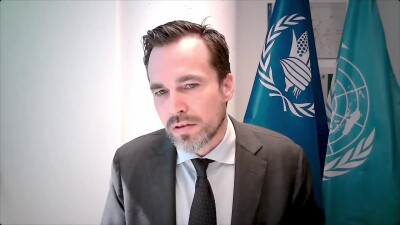
“What we're seeing is mounting evidence that a famine is there; all the signals are there,” said Jean-Martin Bauer, Director of Food Security and Nutrition Analysis at the UN World Food Programme (WFP).
Underscoring the seriousness of the latest assessment from the Integrated Food Security Phase Classification (IPC) platform, Ross Smith, WFP Director of Emergencies insisted that “this is unlike anything we have seen in this century, it reminds us of previous disasters in Ethiopia or Biafra in the past century. And it's clear we need urgent action now, so this is definitely not a warning, this is a call for action.”
Both WFP speakers insisted that the only way to provide support inside Gaza is with humanitarian assistance, because markets “are not functioning at all and people are not able to provide for themselves”.
“The data that we have on Gaza shows that when there is access or when the trucks do come in, that when the humanitarians are able to carry out distributions, these food security indicators improve dramatically,” insisted Mr. Bauer.
According to the IPC experts, two out of three famine thresholds have been reached in Gaza: plummeting food consumption and acute malnutrition.
There is mounting evidence that “widespread starvation, malnutrition and disease” are driving a rise in hunger-related deaths, which is the third famine indicator.
The context to the alert is stark: one in three people is now going without food for days at a time, the IPC said. Hospitals are also overwhelmed and have treated more than 20,000 children for acute malnutrition since April. At least 16 children under five have died from hunger-related causes since mid-July.
The alert follows a May 2025 IPC analysis that projected catastrophic levels of food insecurity for the entire population of Gaza by September. According to the platform’s experts, at least half a million people are expected to be in IPC Phase 5 – catastrophe – which is marked by starvation, destitution, and death.
Reports indicated on Tuesday that 60,000 Gazans have been killed since Hamas-led terror attacks in Israel sparked the war in October 2023.
“In Gaza, women and girls are facing the impossible choice of starving to death at their shelters or venturing out in search of food and water at extreme risk of being killed,” said Sofia Calltorp, Director of UN Women in Geneva.
Ms. Calltorp also reiterated UN Women’s demand for unrestricted access to humanitarian assistance for all women and girls, the release of all hostages and an immediate ceasefire.
“We also echo the hopes that this week's high level International Conference for the Peaceful Settlement of the Question of Palestine is a turning point, leading to a viable two-State solution, with Israel and Palestine living side by side in peace and security,” she added, referring to the French and Saudi Arabian-led initiative at the UN in New York to push for a peaceful future for Israelis and Palestinians.
Asked about the effectiveness of air-dropped aid missions that have just begun in Gaza, WFP’s Mr. Smith described it as “a last resort where there are no other logistics or transport options”.
Air-drops are also “far too expensive and inefficient”, carrying “extreme risks” for populations living in overcrowded conditions, he continued, amid reports of injuries to at least 11 Gazans on Sunday.
UN aid agencies have insisted on the need for full access across Gaza to reach vulnerable populations, over and above the Israeli military’s announcement of weeklong humanitarian pauses from 10am to 8pm.
“We welcome these humanitarian pauses, and we would like to see the full spirit of them implemented all along, right down to the distribution points, so that we can move quickly and effectively,” said Mr. Smith. “Until those different delays and approvals clearances, the interaction with armed forces and civilians on the ground - until that is improved - we're not going to see that sufficient enough change to turn the dial on humanitarian situation inside Gaza.”
ends
STORY: Widespread starvation in Gaza – IPC, UN Women
TRT: 2’43”
SOURCE: UNTV CH
RESTRICTIONS: NONE
LANGUAGE: ENGLISH/ NATS
ASPECT RATIO: 16:9
DATELINE: 29 JULY 2025 GENEVA, SWITZERLAND
Speakers:
- Jean-Martin Bauer, WFP Director of Food Security and Nutrition Analysis (via Zoom from Rome)
- Ross Smith, WFP Director of Emergencies (via Zoom from Rome)
- Sofia Calltorp, Director of UN Women in Geneva
SHOTLIST
- Exterior wide shot: Palais des Nations, flag alley.
- Medium-wide, Press room podium and journalists.
- SOUNDBITE (English) – Jean-Martin Bauer, WFP Director of Food Security and Nutrition Analysis: “What we're seeing is mounting evidence that a famine is there; all the signals are there.”
- Medium, TV camera operator.
- SOUNDBITE (English) – Ross Smith, WFP Director of Emergencies: “It's clearly a disaster is unfolding in front of our eyes, in front of our television screens. This is not a warning, this is a call to action. This is unlike anything we have seen in this century, it reminds us of previous disasters in Ethiopia or Biafra in the past century. And it's clear we need urgent action now, so this is definitely not a warning, this is a call for action.”
- Medium-wide, Press room podium and journalists.
- SOUNDBITE (English) – Sofia Calltorp, Director of UN Women in Geneva: “In Gaza, women and girls are facing the impossible choice of starving to death at their shelters or venturing out in search of food and water at extreme risk of being killed.”
- Medium-wide, Press room podium and journalists.
- SOUNDBITE (English) – Jean-Martin Bauer, WFP Director of Food Security and Nutrition Analysis: “The data that we have on Gaza shows that when there is access or when the trucks do come in, that when the humanitarians are able to carry out distributions, these food security indicators improve dramatically.”
- Medium, journalist.
- SOUNDBITE (English) – Ross Smith, WFP Director of Emergencies: “We have extensive experience in other operational contexts on airdrops and it really is a last resort where there are no other logistics or transport options. In addition to being, you know, far too expensive and inefficient, it's just not a practical solution in this context. It carries extreme risks for populations that are, you know, in very dense populations based in different parts of Gaza and we've seen some of those reports of injuries already.”
- Medium-wide, video journalist filming on mobile phone.
- SOUNDBITE (English) – Ross Smith, WFP Director of Emergencies: “We welcome these humanitarian pauses, and we would like to see the full spirit of them implemented all along, right down to the distribution points, so that we can move quickly and effectively. Until those different delays and approvals clearances, the interaction with armed forces and civilians on the ground - until that is improved - we're not going to see that sufficient enough change to turn the dial on humanitarian situation inside Gaza.”
- Medium, podium speakers and TV screen showing speaker.
- SOUNDBITE (English) – Sofia Calltorp, Director of UN Women in Geneva: “We reiterate our demand for unrestricted access to humanitarian assistance for all women and girls, the release of all hostages and an immediate ceasefire leading to sustainable peace. We also echo the hopes that this week's high level International Conference for the Peaceful Settlement of the Question of Palestine is a turning point, leading to a viable two-State solution, with Israel and Palestine living side by side in peace and security.”
- Medium-wide, participants.
- Medium, journalist.
Similar Stories

2
17
1
2
Edited News , Press Conferences | OCHA , WMO
Two UN agencies teamed up on Wednesday to issue an appeal for immediate assistance to help communities already being impacted by the strongest El Niño on record.
3
16
2
2
B-roll , Conferences , Edited News | UNITED NATIONS , UNOG
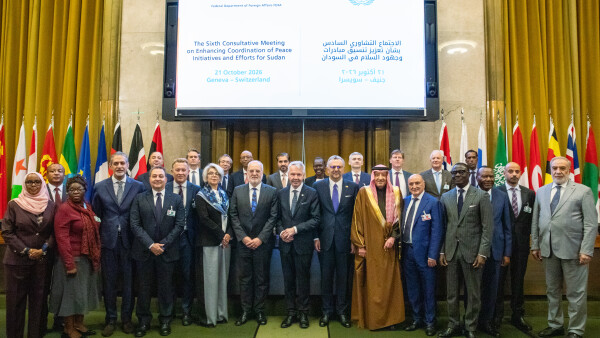
Sixth Consultative Meeting on Enhancing Coordination of Peace Initiatives and Efforts for Sudan
1
1
1
Edited News | UNICEF , WHO , UNHCR
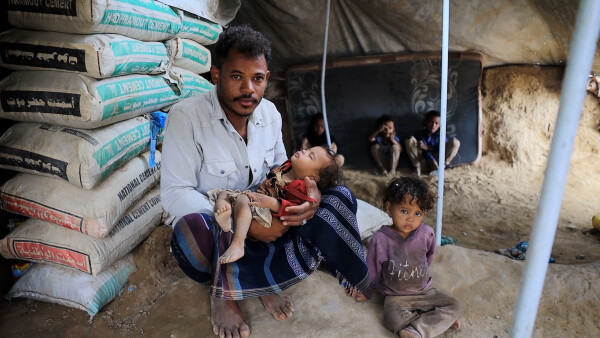
Yemen war continues to force families from homes amid hunger and disease
More than 250,000 people have now fled renewed fighting in Yemen, the UN said on Tuesday, citing particular concern for those sheltering in the southwestern city of Taiz and the wider governorate, where access is “essentially blocked”.

1
1
1
Edited News | UNICEF
A little over one year since a ceasefire agreement was announced between Hamas fighters and Israel, more than 340 children have been reported killed and hundreds more injured, the UN Children’s Fund, UNICEF, said on Friday.

1
1
1
Edited News | UNICEF , IFRC
Six weeks after Nepal’s deadly flooding disaster, communities are still struggling to rebuild their lives, but they will need sustained help as global warming increases the risk of another Himalayan catastrophe, the UN Children’s Fund (UNICEF) said on Friday.

1
1
1
Edited News | WHO
In suspected Russia plague death, testing and monitoring underway – WHO
The death of a lab worker in Russia’s Siberia region has sparked concerns about plague being the cause, the UN World Health Organization (WHO) said on Tuesday, adding that it was following the situation closely.

1
1
Edited News | OHCHR , UNOG
UN Human Rights Chief Volker Türk on Friday provided and oral update to the 63rd session of the Human rights Council on Ukraine.

1
1
1
Edited News | OHCHR , UNOG
UN Human Rights Chief Volker Türk on Friday provided and oral update to the 63rd session of the Human rights Council on the human rights situation in Haiti.

1
1
1
Edited News | WHO
Repeated delays in bringing lifesaving medicines, prosthetics and more from Israel into Gaza risk having devastating consequences on Palestinians who urgently need them in the wartorn enclave, the UN World Health Organization (WHO) said on Friday. “A truck full of non-priority supplies or the right supplies arriving too late, doesn't save lives. That's the question that actually matters," said Dr Reinhilde Van De Weerdt, WHO Representative in the OPT.

1
1
1
Edited News | WHO
DRC: Early access to care and oxygen decisive for Ebola patients’ survival – WHO
In the Democratic Republic of the Congo (DRC), health workers fighting the country’s largest-ever Ebola outbreak are struggling to overcome critical challenges to patient care, the UN World Health Organization (WHO) warned on Tuesday.

1
1
1
Edited News | OCHA , UN
Civilians in Iran are continuing to feel the consequences of months of conflict and military escalation, the UN’s top official in the country has said, as loss of life, damage to civilian infrastructure and mounting economic pressures leave many facing continued uncertainty.
1
1
1
Edited News | WHO , UNICEF
Aid agencies in Yemen highlighted the growing hunger emergency sparked by renewed fighting between Houthi opposition forces and Government troops, after mobile health clinics reported that hundreds of children displaced by the violence are suffering from the most deadly form of malnutrition.