

The United Nations Office at Geneva
Multimedia Newsroom
Nicaragua’s ‘systemic’ repression in human right spotlight in Geneva
Investigators tasked by the UN Human Rights Council to track alleged grave abuses of power by top Nicaraguan officials on Wednesday insisted that the International Court of Justice should prosecute what they called the systematic and systemic repression of the country’s people.
The Group of Experts on Nicaragua - who act in an independent capacity and are not UN staff - have previously reported that the Government’s violations appear to constitute crimes against humanity of murder, imprisonment and torture - including rape.
Their latest report will be presented later this week to the Council, where UN human rights chief Volker Türk on Wednesday addressed ongoing violations across the Occupied Palestinian Territories as part of its scheduled session of work.
In its latest report, the Group of Experts on Nicaragua maintain that President Daniel Ortega and his wife, Rosario Murillo, have created “an authoritarian State where no independent institutions remain, opposition voices are silenced and the population…faces persecution, forced exile, and economic retaliation”.
Stifling dissent
It was in response to grave concerns about the severe repression of civil rights in Nicaragua that the international community decided in 2018 to establish an investigative body to report back to the Human Rights Council.
“We call on States to hold Nicaragua accountable for its violations of the UN Convention on Torture for the UN Convention on Statelessness before the International Court of Justice…the international community cannot just bear witness. It needs to take concrete measures,” said Reed Brody, member of the Group of Experts on Nicaragua.
“No country in the world has used the arbitrary detention of nationality against political opponents at the same scale that Nicaragua has done; and this is a violation of its obligations under international law under the Convention on the Reduction of Statelessness,” Mr. Brody continued.
‘Machine of repression’
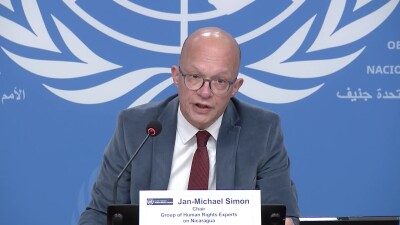
According to the panel’s chair, Jan-Michael Simon, State machinery and the ruling Sandinista party “have virtually fused into a unified machine of repression with domestic and transnational impact”.
This development - which has reduced the judicial, legislative and electoral powers “to mere bodies coordinated by the presidency” - has resulted in myriad deaths, “arbitrary detentions, enforced disappearances, torture, expulsion of nationals, arbitrary deprivation of nationality”, Mr. Simon insisted.
The experts also established that the Nicaraguan army, police and paramilitary groups in 2018 crushed mass public protests that left more than 300 people dead.
Today, arbitrary detention, depriving Nicaraguans of their nationality and forced expulsions are also on the rise, they insisted.
The Government is targeting “anyone perceived as a threat”, their report continues, noting the authorities’ ongoing non-cooperation with their inquiry.
“This is a government at war with its own people,” said panel member Ariela Peralta.
“Nicaragua has become a place of surveillance and enforced silence for those who remain, while those who dare to resist, or are merely suspected of doing so, face a life of statelessness and exile,” said Mr. Brody.
ends
- Exterior medium shot: UN flag alley.
- Wide shot of the podium with speakers in the Press room.
- SOUNDBITE (English) Jan-Michael Simon, Chair of the Group of Experts on Nicaragua: “We can today conclude that the State of Nicaragua and the ruling Sandinista party have virtually fused into a unified machine of repression. This machine is responsible for myriad cases of deaths, arbitrary detentions, enforced disappearances, torture, expulsion of nationals, arbitrary deprivation of nationality, et cetera.”
- Medium-wide, TV screens showing speaker, journalists, photographers.
- SOUNDBITE (English) Jan-Michael Simon, Chair of the Group of Experts on Nicaragua: “The human rights violations of this machinery in the hands of the Nicaraguan regime are not only widespread and systematic, more than that, they are systemic. Thousands of victims, many now in the diaspora, demand the international community to prevent this machinery from continuing to violate human rights.”
- Medium-wide: journalists, photographers and podium speakers.
- SOUNDBITE (English) Reed Bródy, member of Group of Experts on Nicaragua: “Among other provisions, the reform deletes the explicit constitutional prohibition against torture, eliminates the ban on censorship of the Press and enshrines the removal of citizenship for those declared to be, quote ‘enemies’ sorry – ‘traitors’ to the homeland.”
- Medium-wide: journalists, photographers and podium speakers.
- SOUNDBITE (English) Reed Bródy, member of Group of Experts on Nicaragua: “Ortega and Maria can now strip away all rights, almost at will, summon the military to act as their police enforcers and unleash masked volunteer police now enshrined in the Constitution to do their dirty work.”
- Medium-wide, podium speakers, journalists, TV screens showing speakers.
- SOUNDBITE (English) Reed Bródy, member of Group of Experts on Nicaragua: “We call on States to hold Nicaragua accountable for its violations of the UN Convention on Torture for the UN Convention on Statelessness before the International Court of Justice. The international community cannot just bear witness, it needs to take concrete measures. These include targeted sanctions against members of the Government.”
- Medium-wide, TV journalist, control booths, podium speakers reflected in glass.
- Medium, photographer.
- Wide, Press room, TV journalist, photographer, control booths.
Similar Stories

1
1
1
Edited News | UNICEF
A little over one year since a ceasefire agreement was announced between Hamas fighters and Israel, more than 340 children have been reported killed and hundreds more injured, the UN Children’s Fund, UNICEF, said on Friday.

1
1
1
Edited News | UNICEF , IFRC
Six weeks after Nepal’s deadly flooding disaster, communities are still struggling to rebuild their lives, but they will need sustained help as global warming increases the risk of another Himalayan catastrophe, the UN Children’s Fund (UNICEF) said on Friday.

1
1
1
Edited News | WHO
In suspected Russia plague death, testing and monitoring underway – WHO
The death of a lab worker in Russia’s Siberia region has sparked concerns about plague being the cause, the UN World Health Organization (WHO) said on Tuesday, adding that it was following the situation closely.

1
1
Edited News | OHCHR , UNOG
UN Human Rights Chief Volker Türk on Friday provided and oral update to the 63rd session of the Human rights Council on Ukraine.

1
1
1
Edited News | OHCHR , UNOG
UN Human Rights Chief Volker Türk on Friday provided and oral update to the 63rd session of the Human rights Council on the human rights situation in Haiti.

1
1
1
Edited News | WHO
Repeated delays in bringing lifesaving medicines, prosthetics and more from Israel into Gaza risk having devastating consequences on Palestinians who urgently need them in the wartorn enclave, the UN World Health Organization (WHO) said on Friday. “A truck full of non-priority supplies or the right supplies arriving too late, doesn't save lives. That's the question that actually matters," said Dr Reinhilde Van De Weerdt, WHO Representative in the OPT.

1
1
1
Edited News | WHO
DRC: Early access to care and oxygen decisive for Ebola patients’ survival – WHO
In the Democratic Republic of the Congo (DRC), health workers fighting the country’s largest-ever Ebola outbreak are struggling to overcome critical challenges to patient care, the UN World Health Organization (WHO) warned on Tuesday.

1
1
1
Edited News | OCHA , UN
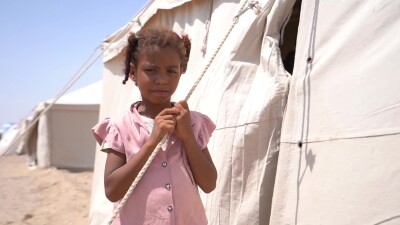
Civilians in Iran are continuing to feel the consequences of months of conflict and military escalation, the UN’s top official in the country has said, as loss of life, damage to civilian infrastructure and mounting economic pressures leave many facing continued uncertainty.
1
1
1
Edited News | WHO , UNICEF
Aid agencies in Yemen highlighted the growing hunger emergency sparked by renewed fighting between Houthi opposition forces and Government troops, after mobile health clinics reported that hundreds of children displaced by the violence are suffering from the most deadly form of malnutrition.
1
1
1
Edited News | UNHCR
Displacement on the rise in Yemen as fighting continues - UNHCR
As hostilities worsen in Yemen, more people have been fleeing their homes, further intensifying the humanitarian crisis within the region, the UN Refugee Agency (UNHCR) warned on Tuesday.
1
1
1
Edited News | IOM , OHCHR , UNFPA , UNOG , UNHCR , WHO
Yemen’s humanitarian crisis growing by the hour amid spike in displacement
Yemenis displaced by renewed fighting have described fleeing for their lives amid shelling and gunfire, aid agencies reported on Friday, while highlighting the dramatic increase in humanitarian needs in the country and in Djibouti, where thousands have sought shelter.
1
1
1
Edited News | OHCHR , UNOG
The UN Human Rights Office issued on Friday a report documenting a shocking pattern of sexual violence amid Russia’s full-scale armed attack on Ukraine.