

The United Nations Office at Geneva
Multimedia Newsroom
Edited News | OHCHR , UNOG
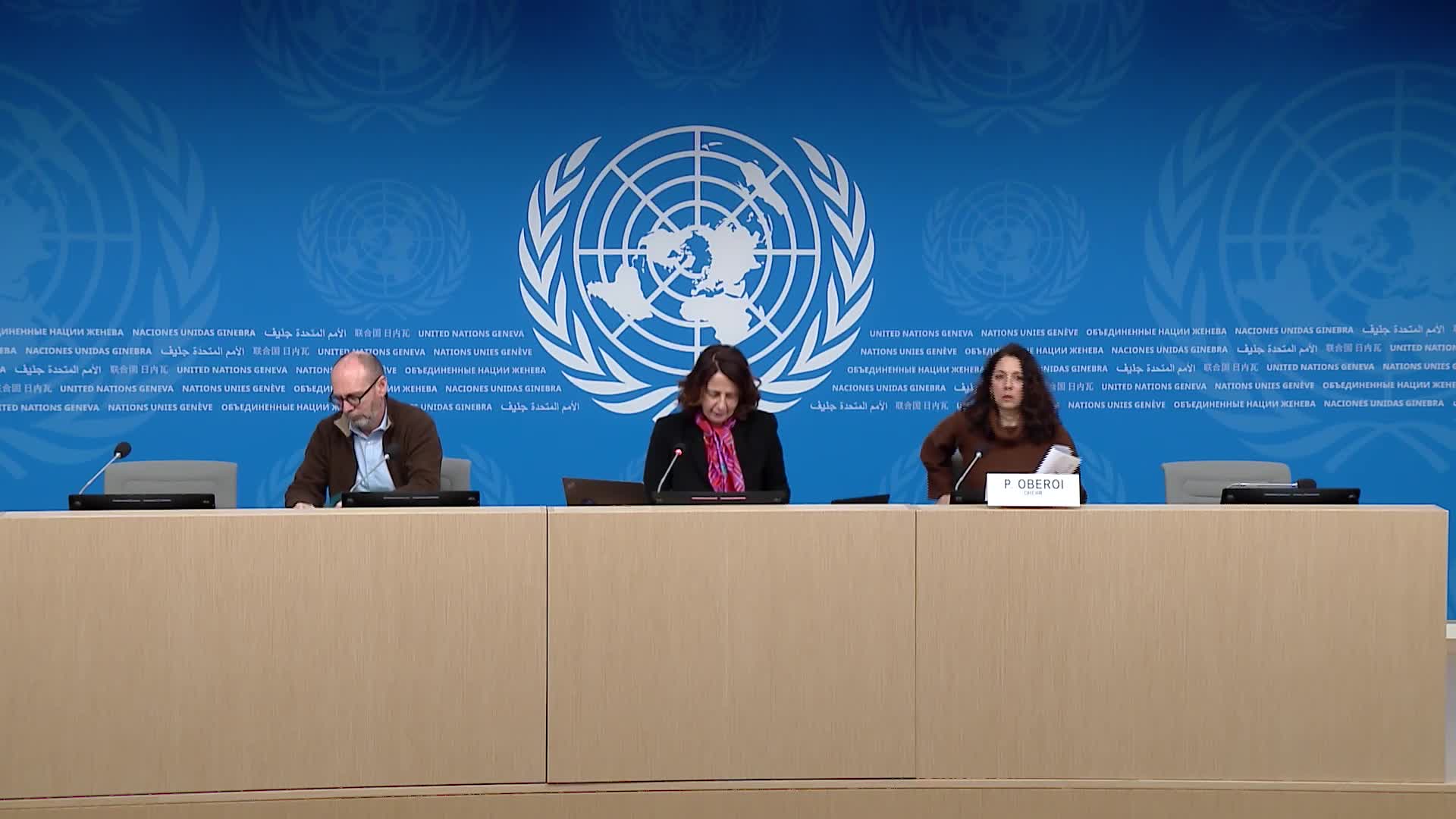
Jeremy Laurence, porte-parole de l'ONU pour les droits de l'homme, et Pia Oberio, haut responsable des droits de l'homme, sur les abus commis lors d'opérations d'escroquerie
“Les victimes décrivent avoir été attirées dans des emplois d'escroquerie sous de faux prétextes et ensuite contraintes à commettre des fraudes en ligne allant des escroqueries d'usurpation d'identité, à l'extorsion en ligne, aux fraudes financières ainsi qu'aux escroqueries amoureuses,” a-t-il déclaré.
“Les images satellites et les rapports sur le terrain montrent que près des trois quarts des opérations d'escroquerie se trouvent dans la région du Mékong, qui se sont également étendues à certains pays insulaires du Pacifique et à l'Asie du Sud, ainsi qu'aux États du Golfe, à l'Afrique de l'Ouest et aux Amériques,” a déclaré Laurence.
“Les opérations décrites sont fluides, certains survivants partageant des expériences de détention dans d'immenses complexes ressemblant à des villes autonomes, certains de plus de 500 acres, composés de bâtiments à plusieurs étages fortement fortifiés avec des murs élevés surmontés de barbelés, gardés par du personnel de sécurité armé et en uniforme,” a-t-il déclaré.
“Le rapport détaille les expériences de certaines victimes. Une victime du Sri Lanka raconte comment ceux qui n'ont pas atteint les objectifs mensuels d'escroquerie étaient soumis à une immersion dans des conteneurs d'eau, connus sous le nom de ‘prisons d'eau’, pendant des heures,” a ajouté Laurence.
Les victimes ont raconté avoir été forcées de témoigner ou même de commettre de graves abus sur d'autres personnes comme moyen d'assurer la conformité ; une victime bangladaise a déclaré qu'il avait reçu l'ordre de battre d'autres travailleurs et une victime du Ghana a raconté avoir été forcée de regarder son ami se faire battre devant lui.
Ils ont raconté que des personnes perdaient la vie en tentant de s'échapper, y compris en tombant des balcons et des toits dans les complexes.
“Les tentatives de sauvetage échouées ont également été sévèrement punies. Une victime vietnamienne décrit comment sa sœur a été battue, tasée et enfermée dans une pièce sans nourriture pendant sept jours après que sa sœur ait tenté d'organiser son évasion. Il a été constaté que les trafiquants appelaient en vidéo les membres de la famille pour les faire assister à la maltraitance de leur proche afin de faire pression sur les familles pour qu'elles paient des rançons exorbitantes,” a déclaré Laurence.
Pia Oberio, une haute responsable des droits de l'homme de l'ONU et l'une des auteurs du rapport, a déclaré :
“La question à laquelle nous avons cherché à répondre était : Plus de deux ans après que l'alarme ait été donnée, pourquoi les gens continuent-ils d'être recrutés frauduleusement dans des opérations d'escroquerie dans la région ? Comprendre comment et pourquoi les gens prennent des décisions peut aider à expliquer pourquoi ils font des choix qui pourraient être inattendus ou indésirables.”
“Dans le cas des victimes attirées dans des opérations d'escroquerie, la plupart ont estimé qu'elles avaient peu d'options lors de la décision de recrutement. Les survivants nous ont dit qu'ils étaient sous de fortes pressions économiques, notamment pour rembourser des dettes familiales, envoyer des enfants ou des frères et sœurs à l'école et payer des traitements médicaux pour des parents âgés. Face à des perspectives stagnantes à domicile, beaucoup ont cherché à se déplacer vers des zones urbaines ou au-delà des frontières à la recherche d'emplois plus stables et de travail décent.”
“Le rôle de la confiance était significatif dans ce recrutement – dans notre recherche, près des trois quarts des survivants ont déclaré avoir été recrutés par quelqu'un en qui ils avaient confiance,” a-t-elle ajouté.
De puissants moteurs comportementaux attirent les victimes dans ces opérations d'escroquerie violentes et coercitives. Nous avons constaté que les campagnes d'information à elles seules sont donc peu susceptibles de prévenir le recrutement frauduleux,” a déclaré Oberoi.
Le rapport est disponible ici.
FIN
Pour plus d'informations et demandes des médias, veuillez contacter
À Genève:
Jeremy Laurence jeremy.laurence@un.org
Taguez et partagez - X: @UNHumanRights et Facebook: unitednationshumanrights
HISTOIRE : Orateur des droits de l'homme de l'ONU Jeremy Laurence et Pia Oberio, Officier supérieur des droits de l'homme, sur les abus dans les opérations d'escroquerie
TRT : 04:24
SOURCE : OHCHR/ UNOG
RESTRICTIONS : AUCUNE
LANGUE : Anglais/NATS
RAPPORT D'ASPECT : 16:9
DATELINE : 20 février 2026, GENÈVE, SUISSE
LISTE DE PLANS
- Plans extérieurs : Palais des Nations
- Plan intérieur : Salle de briefing
- EXTRAIT SONORE (Anglais)—Jeremy Laurence, Orateur pour le Bureau du Haut-Commissaire des Nations Unies aux droits de l'homme (OHCHR) : “Les victimes décrivent être attirées dans des emplois d'escroquerie sous de faux prétextes et ensuite être contraintes de commettre des fraudes en ligne allant des escroqueries par usurpation d'identité, extorsion en ligne, fraude financière ainsi que des escroqueries romantiques.”
- Plans de coupe : Salle de briefing
- EXTRAIT SONORE (Anglais)—Jeremy Laurence, Orateur pour le Bureau du Haut-Commissaire des Nations Unies aux droits de l'homme (OHCHR) : “Les images satellites et les rapports sur le terrain montrent que près des trois quarts des opérations d'escroquerie se trouvent dans la région du Mékong, qui se sont également étendues à certains pays insulaires du Pacifique et à l'Asie du Sud, ainsi qu'aux États du Golfe, à l'Afrique de l'Ouest et aux Amériques.”
- Plans de coupe : Salle de briefing
- EXTRAIT SONORE (Anglais)—Jeremy Laurence, Orateur pour le Bureau du Haut-Commissaire des Nations Unies aux droits de l'homme (OHCHR) : “Les opérations décrites sont fluides, certains survivants partageant des expériences d'être retenus dans d'immenses complexes ressemblant à des villes autonomes, certains de plus de 500 acres, composés de bâtiments à plusieurs étages fortement fortifiés avec des murs hauts surmontés de fils barbelés, gardés par du personnel de sécurité armé et en uniforme.”
- Plans de coupe : Salle de briefing
- EXTRAIT SONORE (Anglais)—Jeremy Laurence, Orateur pour le Bureau du Haut-Commissaire des Nations Unies aux droits de l'homme (OHCHR) : “Le rapport détaille les expériences de certaines victimes. Une du Sri Lanka raconte comment ceux qui n'atteignaient pas les objectifs mensuels d'escroquerie étaient soumis à une immersion dans des conteneurs d'eau, connus sous le nom de 'prisons d'eau', pendant des heures.”
- Plans de coupe : Salle de briefing
- EXTRAIT SONORE (Anglais)—Jeremy Laurence, Orateur pour le Bureau du Haut-Commissaire des Nations Unies aux droits de l'homme (OHCHR) : “D'autres ont raconté avoir été forcés de témoigner ou même de commettre de graves abus sur d'autres comme moyen d'assurer la conformité ; une victime bangladaise a déclaré qu'il avait été ordonné de battre d'autres travailleurs et une victime du Ghana a raconté avoir été forcée de regarder son ami se faire battre devant lui.”
- Plans de coupe : Salle de briefing
- EXTRAIT SONORE (Anglais)—Jeremy Laurence, Orateur pour le Bureau du Haut-Commissaire des Nations Unies aux droits de l'homme (OHCHR) : “Ils ont raconté des personnes perdant la vie en tentant de s'échapper, y compris en tombant des balcons et des toits dans les complexes.”
- Plans de coupe : Salle de briefing
- EXTRAIT SONORE (Anglais)—Jeremy Laurence, Orateur pour le Bureau du Haut-Commissaire des Nations Unies aux droits de l'homme (OHCHR) : “Les tentatives de sauvetage échouées ont également été sévèrement punies. Une victime vietnamienne décrit comment sa sœur a été battue, électrocutée et enfermée dans une pièce sans nourriture pendant sept jours après que sa sœur ait tenté d'organiser son évasion. Il a été constaté que les trafiquants passaient des appels vidéo aux membres de la famille pour les faire assister à l'abus et au mauvais traitement de leur proche afin de faire pression sur les familles pour qu'elles paient des rançons exorbitantes.”
- Plans de coupe : Salle de briefing
- EXTRAIT SONORE (Anglais)—Pia Oberio, Officier supérieur des droits de l'homme (OHCHR) : “La question que nous avons cherché à répondre était : Plus de deux ans après que l'alarme ait été donnée, pourquoi les gens continuent-ils d'être recrutés frauduleusement dans des opérations d'escroquerie dans la région ? Comprendre comment et pourquoi les gens prennent des décisions peut aider à expliquer pourquoi ils font ce qui pourrait être des choix inattendus ou indésirables.”
- Plans de coupe : Salle de briefing
- EXTRAIT SONORE (Anglais)—Pia Oberio, Officier supérieur des droits de l'homme (OHCHR) : “Dans le cas des victimes attirées dans des opérations d'escroquerie, la plupart ont estimé qu'elles avaient peu d'options lors de la décision de recrutement. Les survivants nous ont dit qu'ils étaient sous de fortes pressions économiques, notamment pour rembourser des dettes familiales, envoyer des enfants ou des frères et sœurs à l'école et payer des traitements médicaux pour des parents âgés. Face à des perspectives stagnantes chez eux, beaucoup ont cherché à se déplacer vers des zones urbaines ou à traverser les frontières à la recherche d'emplois plus stables et de travail décent.”
- Plans de coupe : Salle de briefing
- EXTRAIT SONORE (Anglais)—Pia Oberio, Officier supérieur des droits de l'homme (OHCHR) : “Le rôle de la confiance était significatif dans ce recrutement – dans notre recherche, près des trois quarts des survivants ont rapporté avoir été recrutés par quelqu'un en qui ils avaient confiance.
- Plans de coupe : Salle de briefing
- EXTRAIT SONORE (Anglais)—Pia Oberio, Officier supérieur des droits de l'homme (OHCHR) : “Des moteurs comportementaux puissants attirent les victimes dans ces opérations d'escroquerie violentes et coercitives. Nous avons constaté que les campagnes d'information à elles seules sont donc peu susceptibles de prévenir le recrutement frauduleux.”
Similar Stories

1
1
1
Edited News | UNICEF
A little over one year since a ceasefire agreement was announced between Hamas fighters and Israel, more than 340 children have been reported killed and hundreds more injured, the UN Children’s Fund, UNICEF, said on Friday.

1
1
1
Edited News | UNICEF , IFRC
Six weeks after Nepal’s deadly flooding disaster, communities are still struggling to rebuild their lives, but they will need sustained help as global warming increases the risk of another Himalayan catastrophe, the UN Children’s Fund (UNICEF) said on Friday.

1
1
1
Edited News | WHO
In suspected Russia plague death, testing and monitoring underway – WHO
The death of a lab worker in Russia’s Siberia region has sparked concerns about plague being the cause, the UN World Health Organization (WHO) said on Tuesday, adding that it was following the situation closely.

1
1
Edited News | OHCHR , UNOG
UN Human Rights Chief Volker Türk on Friday provided and oral update to the 63rd session of the Human rights Council on Ukraine.

1
1
1
Edited News | OHCHR , UNOG
UN Human Rights Chief Volker Türk on Friday provided and oral update to the 63rd session of the Human rights Council on the human rights situation in Haiti.

1
1
1
Edited News | WHO
Repeated delays in bringing lifesaving medicines, prosthetics and more from Israel into Gaza risk having devastating consequences on Palestinians who urgently need them in the wartorn enclave, the UN World Health Organization (WHO) said on Friday. “A truck full of non-priority supplies or the right supplies arriving too late, doesn't save lives. That's the question that actually matters," said Dr Reinhilde Van De Weerdt, WHO Representative in the OPT.

1
1
1
Edited News | WHO
DRC: Early access to care and oxygen decisive for Ebola patients’ survival – WHO
In the Democratic Republic of the Congo (DRC), health workers fighting the country’s largest-ever Ebola outbreak are struggling to overcome critical challenges to patient care, the UN World Health Organization (WHO) warned on Tuesday.

1
1
1
Edited News | OCHA , UN
Civilians in Iran are continuing to feel the consequences of months of conflict and military escalation, the UN’s top official in the country has said, as loss of life, damage to civilian infrastructure and mounting economic pressures leave many facing continued uncertainty.
1
1
1
Edited News | WHO , UNICEF
Aid agencies in Yemen highlighted the growing hunger emergency sparked by renewed fighting between Houthi opposition forces and Government troops, after mobile health clinics reported that hundreds of children displaced by the violence are suffering from the most deadly form of malnutrition.
1
1
1
Edited News | UNHCR
Displacement on the rise in Yemen as fighting continues - UNHCR
As hostilities worsen in Yemen, more people have been fleeing their homes, further intensifying the humanitarian crisis within the region, the UN Refugee Agency (UNHCR) warned on Tuesday.
1
1
1
Edited News | IOM , OHCHR , UNFPA , UNOG , UNHCR , WHO
Yemen’s humanitarian crisis growing by the hour amid spike in displacement
Yemenis displaced by renewed fighting have described fleeing for their lives amid shelling and gunfire, aid agencies reported on Friday, while highlighting the dramatic increase in humanitarian needs in the country and in Djibouti, where thousands have sought shelter.
1
1
1
Edited News | OHCHR , UNOG
The UN Human Rights Office issued on Friday a report documenting a shocking pattern of sexual violence amid Russia’s full-scale armed attack on Ukraine.