

The United Nations Office at Geneva
Multimedia Newsroom
Ukraine enters fifth year of war: Attacks and displacement deepen human suffering amid mounting recovery challenges
On the fourth anniversary of Russia’s full-scale invasion of Ukraine, UN officials took stock of the immense human and economic toll of the conflict while appealing to the world to “never get used to war.”
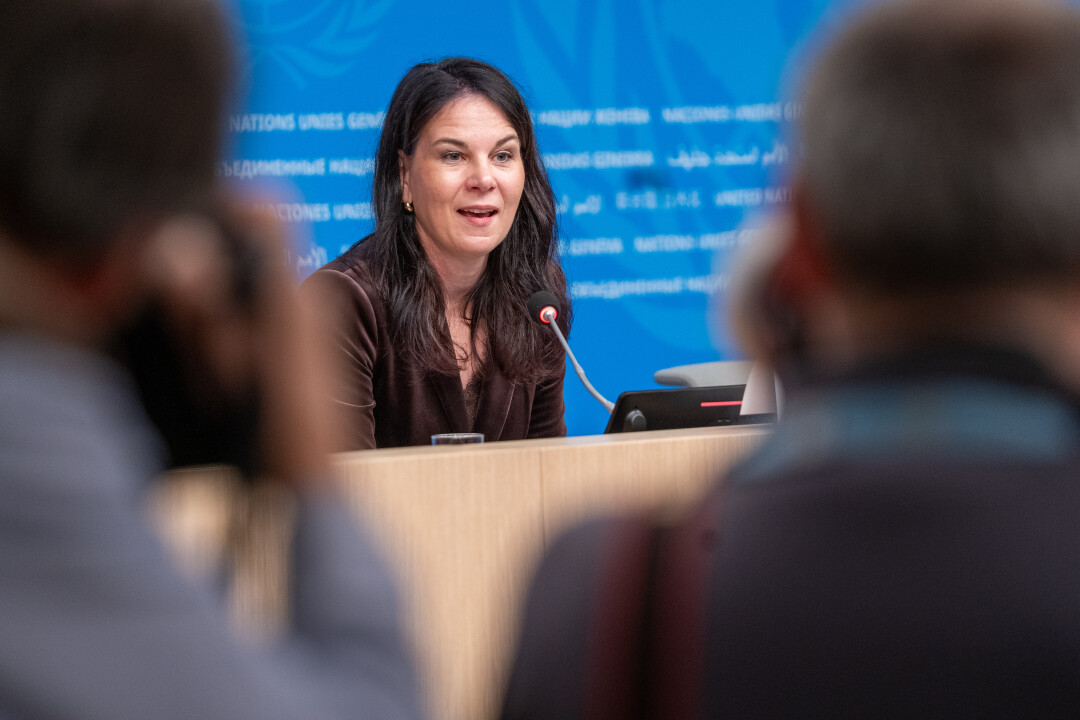
Speaking to reporters in Geneva on Tuesday Annalena Baerbock, President of the UN General Assembly, said that four years ago, people in Europe “woke up in another world because generations like mine have always had the privilege to live a life in peace.”
Calling on the international community to “work every day for peace,” Ms. Baerbock reiterated the need for an “immediate, full and unconditional cease-fire.”
“This war needs to finally end… Any peace agreement must be grounded in the UN Charter, international law and General Assembly resolutions,” she said, stressing that this meant respect for the sovereignty, territorial integrity and independence of Ukraine.
Ms. Baerbock’s comments came ahead of an emergency special session of the General Assembly which was to take place in New York later on Tuesday, during which countries were expected to take action on a draft resolution calling for a cease-fire, a just and lasting peace in line with international law, as well as a number of confidence-building measures such as the complete exchange of prisoners of war, the release of all unlawfully detained persons and the return of all internees and civilians forcibly transferred and deported, including children.
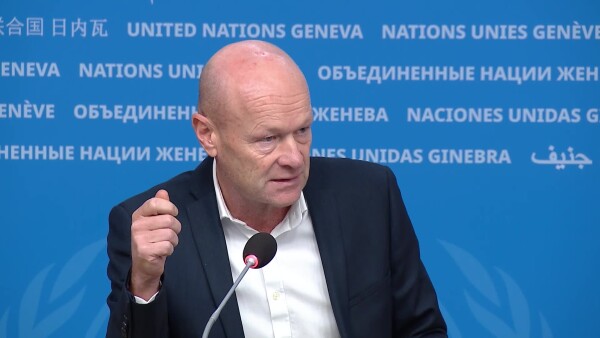
Speaking from Kyiv the UN’s Resident and Humanitarian Coordinator in Ukraine Matthias Schmale said that 2025 was the deadliest year for civilians since the start of the full-scale invasion in 2022, with at least 2,500 civilians killed and over 12,000 injured last year - a 30 per cent increase compared to 2024.
He underscored the devastating impact of systematic attacks on energy infrastructure that have disrupted electricity, heating and water supplies across the country, in some cases leaving entire towns without electricity and water supply for weeks.
“In Kyiv, I'm told that there are more than 3,000 high-rise buildings that are now out of order, not inhabitable for the rest of the winter, putting the most vulnerable, older people, people with limited mobility and health conditions, as well as families with children at serious risk of harm,” Mr. Schmale said.
“This kind of weaponization of energy must stop,” he insisted.
Philippe Leclerc, the Regional Director for Europe and Refugee Regional Coordinator for Ukraine at the UN refugee agency (UNCHR) said that because of the ongoing war, 5.9 million refugees remain outside of Ukraine and 5.7 million in Europe.
The displacement continues, he said, and the number of people who had to be evacuated from zones adjacent to the frontlines has “grown tremendously in the last six months because of the pressure exercised by the military attacks and by this combined extreme cold winter.”
Mr. Leclerc said that while extraordinary solidarity continues to be shown to Ukrainians by European Union countries providing temporary protection, “Ukrainians are looking at the future, at the recovery of their state, of their oblast [region], of their economy and for that, they will need the refugees.”
More than 60 per cent of refugees asked by UNHCR are envisaging to return, he said, despite four years of war and continuing uncertainty.
Turning to the challenges which are part of the reconstruction and recovery process, Mr. Schmale said that there are up to one million veterans who need to be reintegrated into Ukrainian society, many of whom have suffered lifelong injuries, including amputations.
He also stressed that Ukraine is “among the most mined countries in the world,” with almost a quarter of its territory potentially contaminated by landmines.
Referring to a “rapid damage and needs report” launched on Monday by the UN in conjunction with the Ukrainian Government, the World Bank and the European Union, Mr. Schmale said that the estimated costs of recovery are “a staggering $590 billion over a 10-year horizon, which amounts to three times Ukraine's GDP (gross domestic product) last year.”
What this kind of report fails to fully capture is “the destruction of the lives of human beings and their souls and mental well-being,” Mr. Schmale said.
“Recovery must be human-centred and community-based,” he insisted.
-ends-
STORY Ukraine 4 years of war UN, OCHA, UNHCR
TRT: 3:58”
SOURCE: UNTV CH
RESTRICTIONS: NONE
LANGUAGE: ENGLISH/NATS
ASPECT RATIO: 16:9
DATELINE: 24 FEBRUARY 2026 GENEVA, SWITZERLAND
1. Exterior wide shot: Palais des Nations, Flag Alley.
2. Medium shot: Speakers at the podium of the press conference.
3. SOUNDBITE (English) – Annalena Baerbock, President of the UN General Assembly: “Four years ago, people in Europe woke up in another world because generations like mine have always had the privilege to live a life in peace. But this changed four years ago with the full invasion of Russia, of the neighboring country of Ukraine.”
4. Wide shot: Speaker on screens; journalists in the Press room.
5. SOUNDBITE (English) – Annalena Baerbock, President of the UN General Assembly: “We need an immediate, full and unconditional cease-fire. This war needs to finally end. And let me also reiterate, any peace agreement must be grounded in the UN Charter, international law and the General Assembly resolutions, meaning respect the sovereignty, territorial integrity and independence of Ukraine.”
6. Wide reverse shot: Speakers at the podium of the press conference, speaker on screens, journalists in the Press room.
7. SOUNDBITE (English) – Matthias Schmale, UN Resident and Humanitarian Coordinator in Ukraine: “2025 was the deadliest year for civilians since the start of the full-scale invasion in 2022. At least 2,500 civilians were killed and over 12,000 injured last year. This is a more than 30 per cent increase compared with 2024.”
8. Medium reverse shot: Speakers at the podium of the press conference, speaker on screens.
9. SOUNDBITE (English) – Matthias Schmale, UN Resident and Humanitarian Coordinator in Ukraine: “We are witnessing the devastating impact of systematic attacks on energy infrastructure that have disrupted electricity, heating and water supplies across the country, in some cases leaving entire towns without electricity and water supply for weeks.”
10. Medium reverse shot: Speakers at the podium of the press conference, speaker on screens, journalists in the Press room.
11. SOUNDBITE (English) – Matthias Schmale, UN Resident and Humanitarian Coordinator in Ukraine: “In Kyiv, I'm told that there are more than 3,000 high-rise buildings that are now out of order, not inhabitable for the rest of the winter, putting the most vulnerable, older people, people with limited mobility and health conditions, as well as families with children at serious risk of harm. This kind of weaponization of energy must stop.”
12. Medium shot: Speakers at the podium of the press conference.
13. SOUNDBITE (English) – Philippe Leclerc, Regional Director for Europe and Refugee Regional Coordinator for Ukraine, UN Refugee Agency (UNHCR): “The number of people who had to be evacuated from adjacent zones to the front lines have grown tremendously in the last six months because of the pressure exercised by the military attacks and by this combined extreme cold winter.”
14. Wide reverse shot: Speakers at the podium of the press conference, speaker on screens, journalists in the Press room.
15. SOUNDBITE (English) – Philippe Leclerc:, Regional Director for Europe and Refugee Regional Coordinator for Ukraine, UN Refugee Agency (UNHCR): “Ukrainians are looking at the future, at the recovery of their state, of their oblast, of their economy and for that, they will need the refugees. And we see that despite four years of an atrocious war, most of the refugees that we ask about return are envisaging to return. More than 60 per cent of them are envisaging to return.”
16. Wide shot: Speaker on screens, journalists in the Press room.
17. SOUNDBITE (English) – Matthias Schmale, UN Resident and Humanitarian Coordinator in Ukraine: “There are up to one million veterans that need to be reintegrated into society and of course many of them have suffered lifelong injuries and are coming with amputations and disabilities.”
18. Medium shot: Journalist in the Press room.
19. SOUNDBITE (English) – Matthias Schmale, UN Resident and Humanitarian Coordinator in Ukraine: “It is now estimated that it will the costs of recovery are a staggering $590 billion over a 10-year horizon, which amounts to three times Ukraine's GDP last year.”
20. Various shots of journalists in the Press room.

Similar Stories
1
1
1
Edited News | OCHA , UNICEF , WFP
Aid agencies warned on Friday of the fast-developing humanitarian emergency inside Taiz City in Yemen, which has been encircled by de facto Houthi forces fighting government troops along the country’s west coast.

2
17
1
2
Edited News , Press Conferences , Images | OCHA , WMO
Two UN agencies teamed up on Wednesday to issue an appeal for immediate assistance to help communities already being impacted by the strongest El Niño on record.

3
16
2
2
Edited News , B-roll , Conferences , Images | UNITED NATIONS , UNOG
Sixth Consultative Meeting on Enhancing Coordination of Peace Initiatives and Efforts for Sudan

1
1
1
Edited News | UNICEF , WHO , UNHCR
Yemen war continues to force families from homes amid hunger and disease
More than 250,000 people have now fled renewed fighting in Yemen, the UN said on Tuesday, citing particular concern for those sheltering in the southwestern city of Taiz and the wider governorate, where access is “essentially blocked”.

1
1
1
Edited News | UNICEF
A little over one year since a ceasefire agreement was announced between Hamas fighters and Israel, more than 340 children have been reported killed and hundreds more injured, the UN Children’s Fund, UNICEF, said on Friday.

1
1
1
Edited News | UNICEF , IFRC
Six weeks after Nepal’s deadly flooding disaster, communities are still struggling to rebuild their lives, but they will need sustained help as global warming increases the risk of another Himalayan catastrophe, the UN Children’s Fund (UNICEF) said on Friday.

1
1
1
Edited News | WHO
In suspected Russia plague death, testing and monitoring underway – WHO
The death of a lab worker in Russia’s Siberia region has sparked concerns about plague being the cause, the UN World Health Organization (WHO) said on Tuesday, adding that it was following the situation closely.

1
1
Edited News | OHCHR , UNOG
UN Human Rights Chief Volker Türk on Friday provided and oral update to the 63rd session of the Human rights Council on Ukraine.

1
1
1
Edited News | OHCHR , UNOG
UN Human Rights Chief Volker Türk on Friday provided and oral update to the 63rd session of the Human rights Council on the human rights situation in Haiti.

1
1
1
Edited News | WHO
Repeated delays in bringing lifesaving medicines, prosthetics and more from Israel into Gaza risk having devastating consequences on Palestinians who urgently need them in the wartorn enclave, the UN World Health Organization (WHO) said on Friday. “A truck full of non-priority supplies or the right supplies arriving too late, doesn't save lives. That's the question that actually matters," said Dr Reinhilde Van De Weerdt, WHO Representative in the OPT.

1
1
1
Edited News | WHO
DRC: Early access to care and oxygen decisive for Ebola patients’ survival – WHO
In the Democratic Republic of the Congo (DRC), health workers fighting the country’s largest-ever Ebola outbreak are struggling to overcome critical challenges to patient care, the UN World Health Organization (WHO) warned on Tuesday.

1
1
1
Edited News | OCHA , UN
Civilians in Iran are continuing to feel the consequences of months of conflict and military escalation, the UN’s top official in the country has said, as loss of life, damage to civilian infrastructure and mounting economic pressures leave many facing continued uncertainty.