

The United Nations Office at Geneva
Multimedia Newsroom
Gaza’s health system ‘on its knees’ with almost 70 per cent of hospitals not functioning - WHO
The UN health agency (WHO) warned on Friday that Gaza’s health system is “on its knees”. Due to intense hostilities and limited connectivity, WHO has not received updated data for the past four days on injuries and deaths from the enclave’s ministry of health.
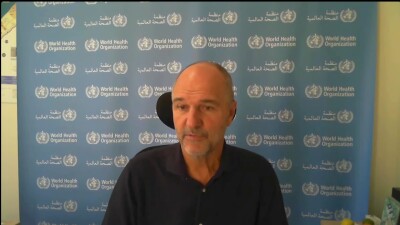
“We know that the health system is on its knees and that currently 65 per cent - that is 47 out of 72 primary care facilities - are not functioning and the ones which are functioning are partly functioning,” reported Dr Richard Peeperkorn, WHO Representative in the Occupied Palestinian Territory from Jerusalem, briefing journalists at the United Nations in Geneva. “More than 70 per cent of the hospitals are currently nonfunctioning - 25 out of the 36.”
This situation is clearly insufficient to meet the “endless” needs arising from more than five weeks of Israeli bombardment in response to the 7 October Hamas terror attacks. Active ground operations in Gaza city and near the hospitals, along with the lack of fuel, have halted the movement of rescue teams and ambulances in many areas, UN aid coordination office OCHA reported.
“Before the conflict we talked about 3,500 hospital beds operational in Gaza. And today we talked about an estimated 1,400. The minimum occupancy raised over 150 (per cent). Based on our plans, the needs at the moment will be 5,000 beds,” stressed Dr. Peeperkorn.
The WHO is extremely concerned about the spread of diseases as the rainy season and winter arrive. Overcrowded shelters and the overall lack of water and sanitation across Gaza could increase the risk of transmission.
Since mid-October the Ministry of Health, UNRWA and WHO have recorded “more than 70,000, 72,000 cases of acute respiratory infections, 44,000 cases of diarrhea, 808 cases of chickenpox, 15,000 skin rashes, the scabies, lice, and we also got patients now of hepatitis A,” according to Dr. Peeperkorn.
The WHO reiterated its call for daily sustained, orderly, unimpeded and safe medical evacuations of critically injured and sick patients into Egypt.
“We need a mechanism for medical evacuation. Over the coming months, we will work out that the patients in needs, and that it's not just multiple traumas, it's all kinds of patients which are critical need for evacuation, also think cancer patients which cannot get their treatments,” said Dr. Peeperkorn. “So, there's many other patients which should be prioritized for every medical evacuation into Egypt.”
The WHO also reported on Friday that a mechanism for the entry of fuel into the war-torn Palestinian enclave has reportedly been agreed upon so that urgently needed humanitarian operations can be restored.
“There is a mechanism for the entry of fuel, which would be, I think, the best news of today. And of course, we really hope and plea that this mechanism is being going to be sustained to make sure that humanitarian operation can function, that UNWRA can do its job keeping the operation going.”
WHO remains extremely worried for the safety of patients, health workers and IDPs sheltering not only at Al-Shifa but all other hospitals that are besieged and facing intense hostilities. The UN health agency reminded again that under international humanitarian law health facilities, health workers, ambulances, patients must be safeguarded and protected against all acts of war. International humanitarian law must be respected.
-ends-
STORY Update on Health in Gaza - WHO
TRT: 2:32”
SOURCE: UNTV CH
LANGUAGE: ENGLISH
ASPECT RATIO: 16:9
DATELINE: 17 November 2023 - GENEVA, SWITZERLAND
SHOTLIST
- Exterior medium shot: UN building with UN flag, UN Geneva.
- Wide shot, press briefing room with journalists and screens, UN Geneva
- SOUNDBITE (ENGLISH) – Dr Richard Peeperkorn, WHO Representative in the occupied Palestinian territory: “We know that the health system is on its knees and that currently 65 per cent - that is 47 out of 72 primary care facilities - are not functioning and the ones which are functioning are partly functioning, so to say more than 70 per cent, almost 70 per cent of the hospitals are currently nonfunctioning - 25 out of the 36.”
- Cutaway: Medium shot, press briefing room with a spokespersons and a journalists, UN Geneva
- SOUNDBITE (ENGLISH) – Dr Richard Peeperkorn, WHO Representative in the occupied Palestinian territory: “We've recorded already more than 70,000, 72,000 cases of acute respiratory infections, 44,000 cases of diarrhea, 808 cases of chickenpox, 15,000 skin rashes, the scabies, lice, and we also got patients now of hepatitis A.”
- Cutaway: Medium shot, press briefing room with a technician and a journalist, UN Geneva
- SOUNDBITE (ENGLISH) – Dr Richard Peeperkorn, WHO Representative in the occupied Palestinian territory: “Before the conflict we talked about 3,500 hospital beds operational in Gaza. And today we talked about an estimated 1,400. The minimum occupancy raised over 150 (per cent). Based on our plans, the needs at the moment will be 5,000 beds.”
- Cutaway: Medium shot, press briefing room with a spokesperson and a journalist, UN Geneva
- SOUNDBITE (ENGLISH) - Dr Richard Peeperkorn, WHO Representative in the occupied Palestinian territory: “We need a mechanism for medical evacuation. Over the coming months, we will work out that the patients in needs, and that it's not just multiple traumas, it's all kinds of patients which are critical need for evacuation, also think cancer patients which cannot get their treatments. So there's many other patients which should be prioritized for every medical evacuation into Egypt.”
- Cutaway: Wide shot, press briefing room with spokesperson, journalists and screens, UN Geneva
- SOUNDBITE (ENGLISH) – Dr Richard Peeperkorn, WHO Representative in the occupied Palestinian territory: “There is a mechanism for the entry of fuel, which would be, I think, the best news of today. And of course, we really hope and plea that this mechanism is being going to be sustained and that it's going to be sustained to make sure that humanitarian operation can function that UNWRA can do its job keeping the operation going.”
- Cutaway: Wide shot, press briefing room with journalists and screens, UN Geneva
- Cutaway: close up, journalist listening, UN Geneva
- Cutaway: close up, journalist listening, UN Geneva
Similar Stories
1
1
1
Edited News | OCHA , UNICEF , WFP
Aid agencies warned on Friday of the fast-developing humanitarian emergency inside Taiz City in Yemen, which has been encircled by de facto Houthi forces fighting government troops along the country’s west coast.

2
17
1
2
Edited News , Press Conferences , Images | OCHA , WMO
Two UN agencies teamed up on Wednesday to issue an appeal for immediate assistance to help communities already being impacted by the strongest El Niño on record.

3
16
2
2
Edited News , B-roll , Conferences , Images | UNITED NATIONS , UNOG
Sixth Consultative Meeting on Enhancing Coordination of Peace Initiatives and Efforts for Sudan

1
1
1
Edited News | UNICEF , WHO , UNHCR
Yemen war continues to force families from homes amid hunger and disease
More than 250,000 people have now fled renewed fighting in Yemen, the UN said on Tuesday, citing particular concern for those sheltering in the southwestern city of Taiz and the wider governorate, where access is “essentially blocked”.

1
1
1
Edited News | UNICEF
A little over one year since a ceasefire agreement was announced between Hamas fighters and Israel, more than 340 children have been reported killed and hundreds more injured, the UN Children’s Fund, UNICEF, said on Friday.

1
1
1
Edited News | UNICEF , IFRC
Six weeks after Nepal’s deadly flooding disaster, communities are still struggling to rebuild their lives, but they will need sustained help as global warming increases the risk of another Himalayan catastrophe, the UN Children’s Fund (UNICEF) said on Friday.

1
1
1
Edited News | WHO
In suspected Russia plague death, testing and monitoring underway – WHO
The death of a lab worker in Russia’s Siberia region has sparked concerns about plague being the cause, the UN World Health Organization (WHO) said on Tuesday, adding that it was following the situation closely.

1
1
Edited News | OHCHR , UNOG
UN Human Rights Chief Volker Türk on Friday provided and oral update to the 63rd session of the Human rights Council on Ukraine.

1
1
1
Edited News | OHCHR , UNOG
UN Human Rights Chief Volker Türk on Friday provided and oral update to the 63rd session of the Human rights Council on the human rights situation in Haiti.

1
1
1
Edited News | WHO
Repeated delays in bringing lifesaving medicines, prosthetics and more from Israel into Gaza risk having devastating consequences on Palestinians who urgently need them in the wartorn enclave, the UN World Health Organization (WHO) said on Friday. “A truck full of non-priority supplies or the right supplies arriving too late, doesn't save lives. That's the question that actually matters," said Dr Reinhilde Van De Weerdt, WHO Representative in the OPT.

1
1
1
Edited News | WHO
DRC: Early access to care and oxygen decisive for Ebola patients’ survival – WHO
In the Democratic Republic of the Congo (DRC), health workers fighting the country’s largest-ever Ebola outbreak are struggling to overcome critical challenges to patient care, the UN World Health Organization (WHO) warned on Tuesday.

1
1
1
Edited News | OCHA , UN
Civilians in Iran are continuing to feel the consequences of months of conflict and military escalation, the UN’s top official in the country has said, as loss of life, damage to civilian infrastructure and mounting economic pressures leave many facing continued uncertainty.