

The United Nations Office at Geneva
Multimedia Newsroom
“The documented violations and abuses have been perpetrated by the Government, de facto authorities and other armed groups across the country, the report states. They include arbitrary detention, torture and ill-treatment, sexual and gender-based violence, enforced disappearance and abduction,” Throssell said.
The report paints an alarming picture of the suffering of returnees, in particular women, amid the increasing number of deportations of Syrians from other countries. The situation of these returnees raises serious questions about the commitment of States to due process and non-refoulement.
“The report says that women returnees face specifically discriminatory restrictions on their liberty to move freely and independently. It also documents a number of cases of women being forced by male family members to return to Syria to assess the conditions for safe and sustainable return for the rest of the family,” she said.
“Economic hardship, abuse, increasingly hostile speech and rhetoric against refugees, raids and mass arrests in some host countries have compelled many to return to Syria, the report says,” spokesperson said.
Türkiye announced in May 2022 what it called the “resettlement” of one million Syrian refugees back to Syria, with reports of increased restrictions and forced deportations. In Lebanon, following months of increasing tensions and animosity towards Syrian refugees, Lebanese security forces conducted more than 70 raids targeting Syrian refugee communities in camps and residential areas across the country in the spring of 2023. At least 1,455 Syrians were arrested and 712 of them deported.
“There are reasonable grounds to believe that the overall conditions in Syria do not permit safe, dignified and sustainable returns of Syrian refuges to their home country, the report says. It also notes that most of the interviewees said they had decided to flee again, even though, once back abroad, it was likely they would face precarious economic conditions and harassment,” Throssell stated.
ENDS
For more information and media requests, please contact:
In Geneva
Liz Throssell - + 41 22 917 9296 / elizabeth.throssell@un.org or
Ravina Shamdasani - + 41 22 917 9169 / ravina.shamdasani@un.org or
Jeremy Laurence - +41 22 917 9383 / jeremy.laurence@un.org
Tag and share
Twitter @UNHumanRights
Facebook unitednationshumanrights
Instagram @unitednationshumanrights
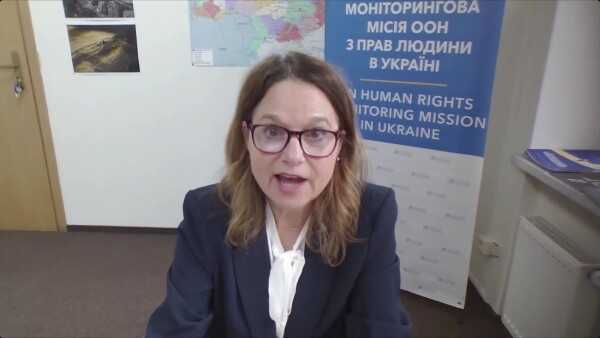
STORY: UN Human Rights Spokesperson Liz Throssell on Syrian returnees subjected to “gross human rights violations and abuses”
TRT: 01:37
SOURCE: UNTV / OHCHR
RESTRICTIONS: NONE
LANGUAGE: English/NATS
ASPECT RATIO: 16:9
DATELINE: 13 February 2024 GENEVA, SWITZERLAND
1. Exterior shot: Palais des Nations, Geneva
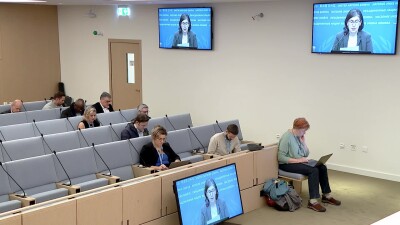
2. Cut Away: Briefing room
3. SOUNDBITE (English)—Liz Throssell, Spokesperson for the Office of the UN High Commissioner for Human Rights (OHCHR): “The documented violations and abuses have been perpetrated by the Government, de facto authorities and other armed groups across the country, the report states. They include arbitrary detention, torture and ill-treatment, sexual and gender-based violence, enforced disappearance and abduction.”
4. Cut Away: Briefing room
5. SOUNDBITE (English)—Liz Throssell, Spokesperson for the Office of the UN High Commissioner for Human Rights (OHCHR): “The report says that women returnees face specifically discriminatory restrictions on their liberty to move freely and independently. It also documents a number of cases of women being forced by male family members to return to Syria to assess the conditions for safe and sustainable return for the rest of the family.”
6. Cut Away: Briefing room
7. SOUNDBITE (English)—Liz Throssell, Spokesperson for the Office of the UN High Commissioner for Human Rights (OHCHR): “Economic hardship, abuse, increasingly hostile speech and rhetoric against refugees, raids and mass arrests in some host countries have compelled many to return to Syria, the report says.”
8. Cut Away: Briefing room
9. SOUNDBITE (English)—Liz Throssell, Spokesperson for the Office of the UN High Commissioner for Human Rights (OHCHR): “There are reasonable grounds to believe that the overall conditions in Syria do not permit safe, dignified and sustainable returns of Syrian refuges to their home country, the report says. It also notes that most of the interviewees said they had decided to flee again, even though, once back abroad, it was likely they would face precarious economic conditions and harassment.”
10. Cut Away: Briefing room
Similar Stories

1
1
1
Edited News | UNICEF
A little over one year since a ceasefire agreement was announced between Hamas fighters and Israel, more than 340 children have been reported killed and hundreds more injured, the UN Children’s Fund, UNICEF, said on Friday.

1
1
1
Edited News | UNICEF , IFRC
Six weeks after Nepal’s deadly flooding disaster, communities are still struggling to rebuild their lives, but they will need sustained help as global warming increases the risk of another Himalayan catastrophe, the UN Children’s Fund (UNICEF) said on Friday.

1
1
1
Edited News | WHO
In suspected Russia plague death, testing and monitoring underway – WHO
The death of a lab worker in Russia’s Siberia region has sparked concerns about plague being the cause, the UN World Health Organization (WHO) said on Tuesday, adding that it was following the situation closely.

1
1
Edited News | OHCHR , UNOG
UN Human Rights Chief Volker Türk on Friday provided and oral update to the 63rd session of the Human rights Council on Ukraine.

1
1
1
Edited News | OHCHR , UNOG
UN Human Rights Chief Volker Türk on Friday provided and oral update to the 63rd session of the Human rights Council on the human rights situation in Haiti.

1
1
1
Edited News | WHO
Repeated delays in bringing lifesaving medicines, prosthetics and more from Israel into Gaza risk having devastating consequences on Palestinians who urgently need them in the wartorn enclave, the UN World Health Organization (WHO) said on Friday. “A truck full of non-priority supplies or the right supplies arriving too late, doesn't save lives. That's the question that actually matters," said Dr Reinhilde Van De Weerdt, WHO Representative in the OPT.

1
1
1
Edited News | WHO
DRC: Early access to care and oxygen decisive for Ebola patients’ survival – WHO
In the Democratic Republic of the Congo (DRC), health workers fighting the country’s largest-ever Ebola outbreak are struggling to overcome critical challenges to patient care, the UN World Health Organization (WHO) warned on Tuesday.

1
1
1
Edited News | OCHA , UN
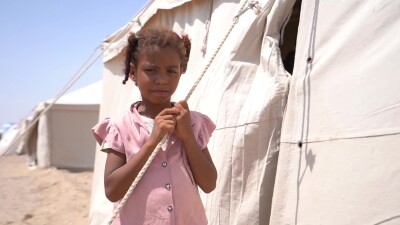
Civilians in Iran are continuing to feel the consequences of months of conflict and military escalation, the UN’s top official in the country has said, as loss of life, damage to civilian infrastructure and mounting economic pressures leave many facing continued uncertainty.
1
1
1
Edited News | WHO , UNICEF
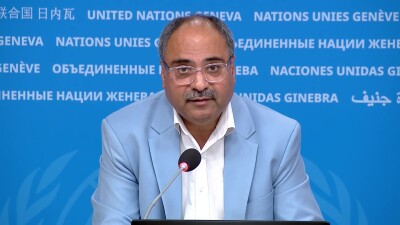
Aid agencies in Yemen highlighted the growing hunger emergency sparked by renewed fighting between Houthi opposition forces and Government troops, after mobile health clinics reported that hundreds of children displaced by the violence are suffering from the most deadly form of malnutrition.
1
1
1
Edited News | UNHCR
Displacement on the rise in Yemen as fighting continues - UNHCR
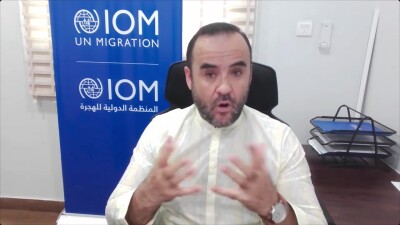
As hostilities worsen in Yemen, more people have been fleeing their homes, further intensifying the humanitarian crisis within the region, the UN Refugee Agency (UNHCR) warned on Tuesday.
1
1
1
Edited News | IOM , OHCHR , UNFPA , UNOG , UNHCR , WHO
Yemen’s humanitarian crisis growing by the hour amid spike in displacement
Yemenis displaced by renewed fighting have described fleeing for their lives amid shelling and gunfire, aid agencies reported on Friday, while highlighting the dramatic increase in humanitarian needs in the country and in Djibouti, where thousands have sought shelter.
1
1
1
Edited News | OHCHR , UNOG
The UN Human Rights Office issued on Friday a report documenting a shocking pattern of sexual violence amid Russia’s full-scale armed attack on Ukraine.