

The United Nations Office at Geneva
Multimedia Newsroom
STORYLINE
UNICEF issues alert over growing needs and shrinking resources for 2024
At a time where humanitarian and protection needs “have never been greater”, the UN Children’s Fund (UNICEF) is concerned that their ability to meet these needs will be under increasing strain in 2024 amid a funding crunch.
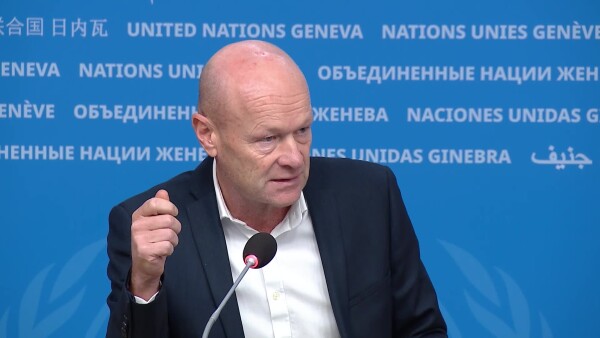
“Earlier this week, UNICEF launched the $9.3 billion emergency funding appeal to reach at least 94 million children in 155 countries,” said Ted Chaiban, UNICEF Deputy Executive Director, briefing journalists on Friday at the UN in Geneva. “Yet at a time where humanitarian needs and protection needs have never been greater, we are approaching 2024 facing an increasingly bleak funding forecast. Flexible funding, which allows us to respond that speed, scale and nimbleness, is shrinking, restricting our ability to respond quickly.”
Around 300 million people desperately need humanitarian assistance as devastating earthquakes, climate-related disasters, disease outbreaks and new and surging conflicts have left tens of millions of children and their families reeling. Through its 2024 Humanitarian Action for Children appeal, UNICEF aims to continue assisting children with life-saving interventions.
“Among the most critically underfunded emergencies right now, we have Sudan, Burkina Faso, the Democratic Republic of Congo, Myanmar, Haiti, Ethiopia, Yemen, Somalia, South Sudan and Bangladesh,” said Mr. Chaiban.
The UNICEF official recalled that for humanitarian organizations, the “work has rarely been as important, and may never have been more complex. The horrendous situation in Gaza, which shakes us to the core of our humanity, exemplifies this.”
“What we're seeing is increased need in a fiscally tight space […] increasing the instability because of conflict and climate, the overhang of COVID and the economic consequences of COVID,” he said. “It's a triple threat that children around the world are facing.”
Using funds requested for 2024, UNICEF plans to vaccinate more than 17 million children against measles, enable more than 19 million children to access formal and informal education, support 26.7 million children and their caregivers in receiving mental health care and psychosocial support and provide 52 million people with access to safe water, among other programmes.
Mr. Chaiban said it was crucial that immunization “continues to be available, that primary health care continues to function, that children have access to treatment against severe acute malnutrition, and that some of the basics around child protection, psycho-social support, mental health, addressing grave violations against children, recruitment of children by armed groups, as well as education, which is a life-saving intervention in emergencies, that all those continue to exist.”
The UNICEF official stressed that “beyond the headline-grabbing areas affected by conflict and other crises, there are other children suffering as well”, combined with a rise in climate-related disasters, disease outbreaks and displacement, meaning that children continue to endure the unimaginable impact of protracted crises and emerging threats.
-ends-
STORY: Emergency Funding Appeal 2024 - UNICEF
TRT: 2:25”
SOURCE: UNTV CH
LANGUAGE: ENGLISH
ASPECT RATIO: 16:9
DATELINE: 15 December 2023 - GENEVA, SWITZERLAND
SHOTLIST
- Exterior wide shot: UN building with UN flag, UN Geneva.
- Medium shot, press briefing room with moderator UN Geneva
- SOUNDBITE (ENGLISH) – Ted Chaiban, UNICEF Deputy Executive Director: “Earlier this week, UNICEF launched the 9.3 billion emergency funding appeal to reach at least 94 million children in 155 countries. Yet at a time where humanitarian needs and protection needs have never been greater, we are approaching 2024, facing an increasingly bleak funding forecast. Flexible funding, which allows us to respond that speed, scale and nimbleness is shrinking, restricting our ability to respond quickly.”
- Cutaway: Wide shot, press briefing room with journalists, UN Geneva
- SOUNDBITE (ENGLISH) – Ted Chaiban, UNICEF Deputy Executive Director: “At a time when humanitarian protection needs have never been greater, we are concerned that our ability to meet these needs is going to come under increasing strain. Among the most critically underfunded emergencies right now, we have Sudan, Burkina Faso, the Democratic Republic of Congo, Myanmar, Haiti, Ethiopia, Yemen, Somalia, South Sudan and Bangladesh.”
- Cutaway: Medium shot, press briefing room with spokesperson and speaker on podium and journalists, UN Geneva
- SOUNDBITE (ENGLISH) - Ted Chaiban, UNICEF Deputy Executive Director: “What we're seeing is increased need in a fiscally tight space affected by, you know, increasing the instability because of conflict i climate, the overhang of COVID and the economic consequences of COVID, if you will. It's a triple threat that children around the world are facing.”
- Cutaway: Medium shot, journalists listening, UN Geneva
- SOUNDBITE (ENGLISH) - Ted Chaiban, UNICEF Deputy Executive Director: “Immunization continues to be available, that primary health care continues to function, that children have access to treatment against severe acute malnutrition, and that some of the basics around child protection, psycho-social support, mental health, addressing grave violations against children, recruitment of children by armed groups, as well as education, which is a life saving intervention in emergencies, that all those continue to exist.
- Cutaway: Medium shot, camerawomen looking at their cell phones, UN Geneva
- Cutaway: Wide shot, press briefing room with journalists and camera women, UN Geneva
- Cutaway: Medium shot, journalists listening, UN Geneva
- Cutaway: close up, journalists listening, UN Geneva
Similar Stories
1
1
1
Edited News | OCHA , UNICEF , WFP
Aid agencies warned on Friday of the fast-developing humanitarian emergency inside Taiz City in Yemen, which has been encircled by de facto Houthi forces fighting government troops along the country’s west coast.

2
17
1
2
Edited News , Press Conferences , Images | OCHA , WMO
Two UN agencies teamed up on Wednesday to issue an appeal for immediate assistance to help communities already being impacted by the strongest El Niño on record.

3
16
2
2
Edited News , B-roll , Conferences , Images | UNITED NATIONS , UNOG
Sixth Consultative Meeting on Enhancing Coordination of Peace Initiatives and Efforts for Sudan

1
1
1
Edited News | UNICEF , WHO , UNHCR
Yemen war continues to force families from homes amid hunger and disease
More than 250,000 people have now fled renewed fighting in Yemen, the UN said on Tuesday, citing particular concern for those sheltering in the southwestern city of Taiz and the wider governorate, where access is “essentially blocked”.

1
1
1
Edited News | UNICEF
A little over one year since a ceasefire agreement was announced between Hamas fighters and Israel, more than 340 children have been reported killed and hundreds more injured, the UN Children’s Fund, UNICEF, said on Friday.

1
1
1
Edited News | UNICEF , IFRC
Six weeks after Nepal’s deadly flooding disaster, communities are still struggling to rebuild their lives, but they will need sustained help as global warming increases the risk of another Himalayan catastrophe, the UN Children’s Fund (UNICEF) said on Friday.

1
1
1
Edited News | WHO
In suspected Russia plague death, testing and monitoring underway – WHO
The death of a lab worker in Russia’s Siberia region has sparked concerns about plague being the cause, the UN World Health Organization (WHO) said on Tuesday, adding that it was following the situation closely.

1
1
Edited News | OHCHR , UNOG
UN Human Rights Chief Volker Türk on Friday provided and oral update to the 63rd session of the Human rights Council on Ukraine.

1
1
1
Edited News | OHCHR , UNOG
UN Human Rights Chief Volker Türk on Friday provided and oral update to the 63rd session of the Human rights Council on the human rights situation in Haiti.

1
1
1
Edited News | WHO
Repeated delays in bringing lifesaving medicines, prosthetics and more from Israel into Gaza risk having devastating consequences on Palestinians who urgently need them in the wartorn enclave, the UN World Health Organization (WHO) said on Friday. “A truck full of non-priority supplies or the right supplies arriving too late, doesn't save lives. That's the question that actually matters," said Dr Reinhilde Van De Weerdt, WHO Representative in the OPT.

1
1
1
Edited News | WHO
DRC: Early access to care and oxygen decisive for Ebola patients’ survival – WHO
In the Democratic Republic of the Congo (DRC), health workers fighting the country’s largest-ever Ebola outbreak are struggling to overcome critical challenges to patient care, the UN World Health Organization (WHO) warned on Tuesday.

1
1
1
Edited News | OCHA , UN
Civilians in Iran are continuing to feel the consequences of months of conflict and military escalation, the UN’s top official in the country has said, as loss of life, damage to civilian infrastructure and mounting economic pressures leave many facing continued uncertainty.